
EPSOM COACHES
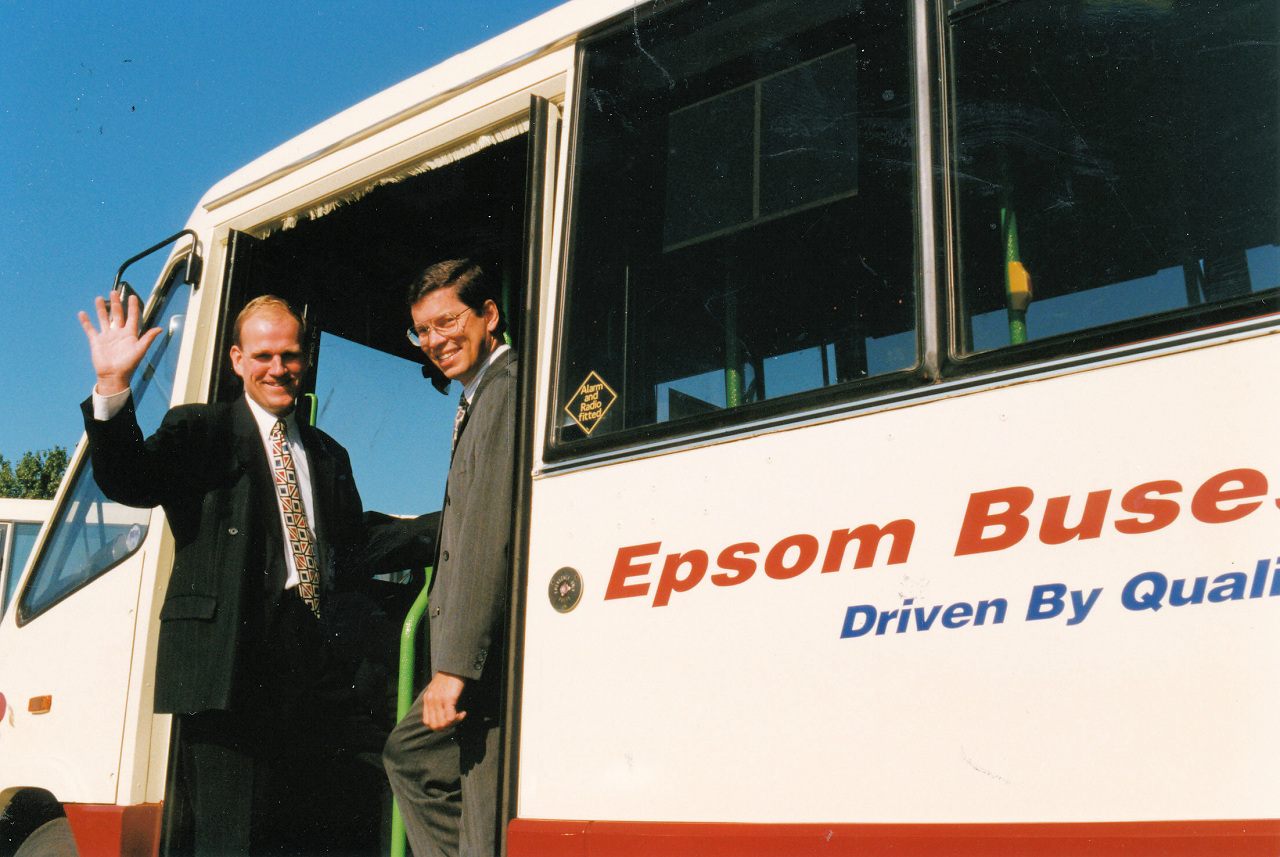
Steve Whiteway (l), former M.D. of Epsom Coaches with Andrew Richmond (r)
Image courtesy of Bourne Hall Museum
Long-standing family firms are becoming fewer and fewer, frequently going out of business, either voluntarily or through necessity, or being gobbled up by much larger entities, often foreign. Epsom Coaches, founded by Herbert Roderick ‘Roddy’ Richmond and his brother-in-law, Jim Reeves, achieved nearly a century before being sold to the French, state-owned, RATP Group in 2012. The coach part of the business was picked up by Gardiners NMC, a relatively young company based in Northumberland. The Epsom Coaches brand may have disappeared, but we are fortunate to have plenty of information and images to chart the story of the enterprise. The main source for the information below is a book entitled ‘Epsom Coaches – A Driving Force since 1920’ by Roy and Andrew Richmond (published 2002).
Roddy’s background
Herbert Roderick Richmond was born on 31 August 1891, son of Frederick and Clara, who were farmers in Reepham, Norfolk. Roddy attended a boarding school in Norwich, but cut his engineering teeth on repairing the farm machinery; at 15 he became an apprentice with Argyll Motors Ltd, a car manufacturer with headquarters in Alexandria, West Dunbartonshire.
By 1914 he had become foreman of Argyll’s repair works in Leeds, but with the outbreak of World War 1 he joined the Royal Engineers and was stationed in Ireland for a time: however, in 1916 he was drafted to Ruston & Hornsby (then just Ruston’s) as an aircraft fitter, the firm being notable at the time for producing the Sopwith Camel. He was placed in charge of the Inspection Department in 1917 and, when he left the company in 1919, took up a similar role at the Air Navigation and Engineering Company in Addlestone.
Also in 1919, Roddy married Bessie Harriet Reeves, who then lived in Bow, and in 1920 he went to work for Sopwith Aviation at Kingston. Unfortunately (or fortunately for Epsom), he lost his job that same year, owing to the downturn in aircraft production after the war. Roddy and Bessie had two children – John Roderick (born 1920 and known as Jack) and Roydon Bircham (born 1925, known as Roy).
Richmond & Reeves
Roddy and his brother-in-law, Jim Reeves, decided to go into business together, starting out at Wernham’s Yard in Epsom High Street. Wernham was a blacksmith and there were a number of buildings on the premises, including one that was big enough to house and maintain two vehicles, and a large shed where Roddy and Jim kept horse-boxes, charabancs and coaches.
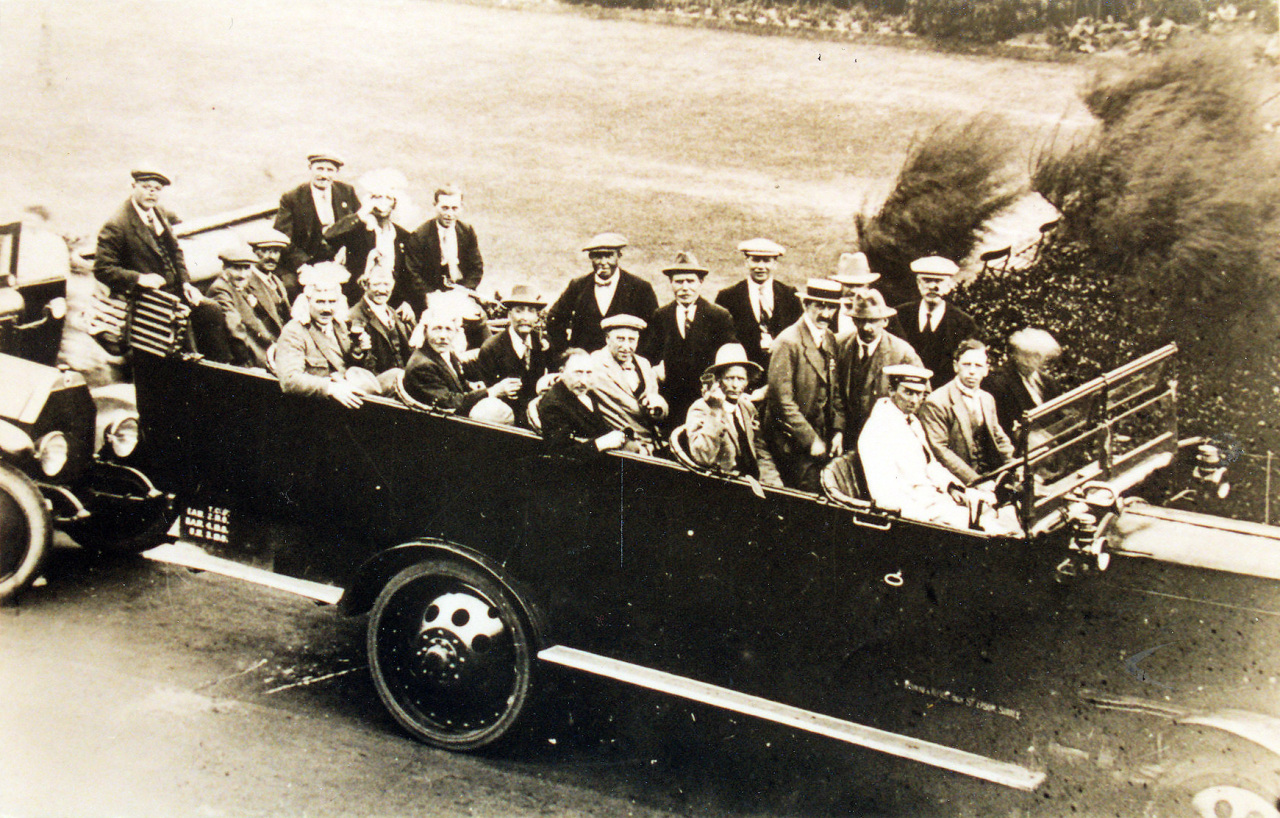
An Epsom Coaches charabanc outing, 1920s
Image courtesy of Bourne Hall Museum
There was no available accommodation at the yard, so the Richmonds moved into a flat in East Street, whilst Roddy and Jim steadily added vehicles to their fleet. The charabancs operated until about 1930 and were usually converted from wartime army vehicles, which explains their somewhat utilitarian appearance; they were used primarily to convey racegoers to meetings, but there were also outings for patients who were convalescing at St Ebba’s and Horton, which were still war hospitals.
The source book tells us that charabancs rarely ventured out after dark, since street lighting was poor and the headlights fairly dim – power for the latter came from the engine rather than a battery and the side and rear lights were oil-powered. 3-day tours were trialled in the 1920s, with an excursion to Brighton priced at £1 return.
Jim (James Henry) Reeves died in 1926, aged only 44 (he lived at 68 Station Road), but Roddy carried on with the business and in 1933 the company became H R Richmond Ltd, although it traded under the name of Epsom Coaches.
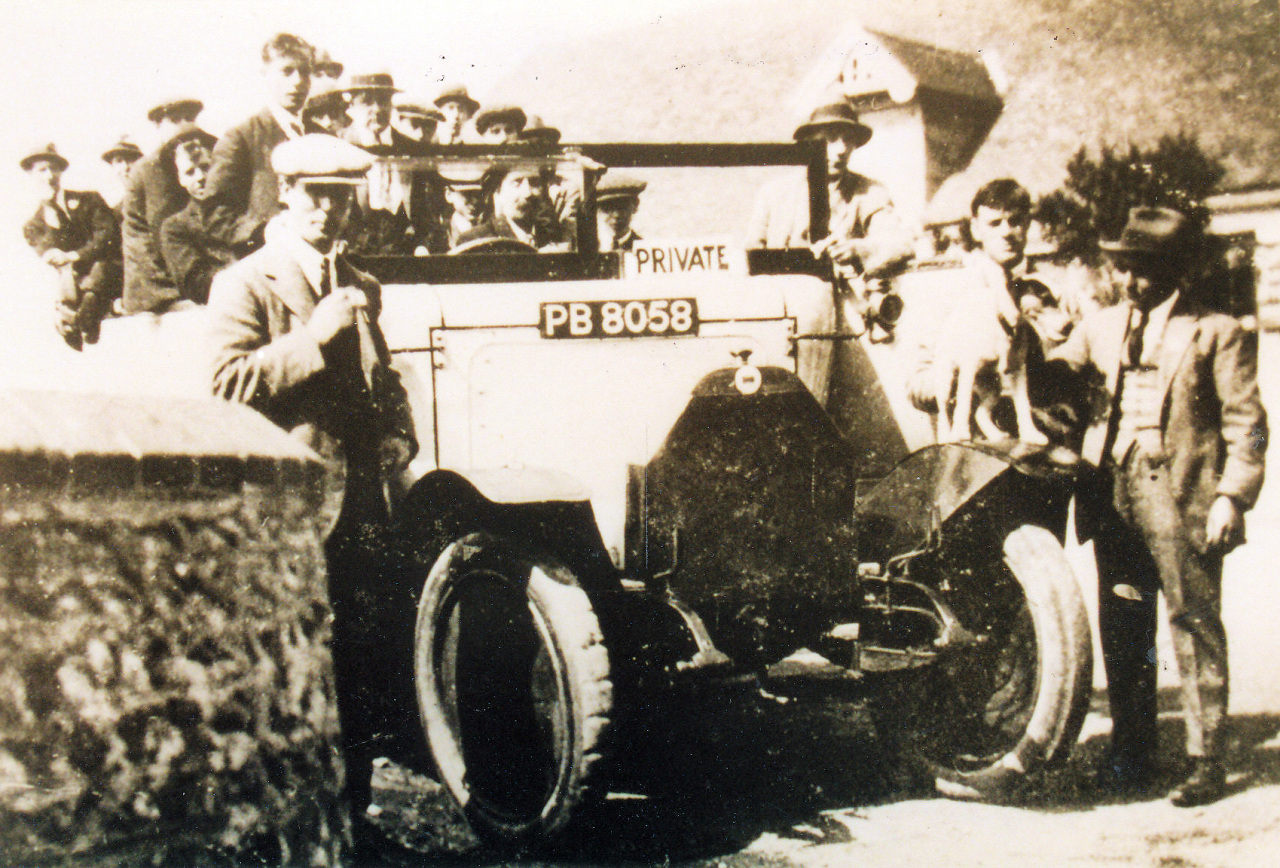
An Epsom Coaches charabanc on private hire, 1920s
Image courtesy of Bourne Hall Museum
The Thirties and Forties
Following the decision to widen the High Street in 1934, Roddy needed to find other premises, so moved to the back of Trower’s Granary at 37 South Street.
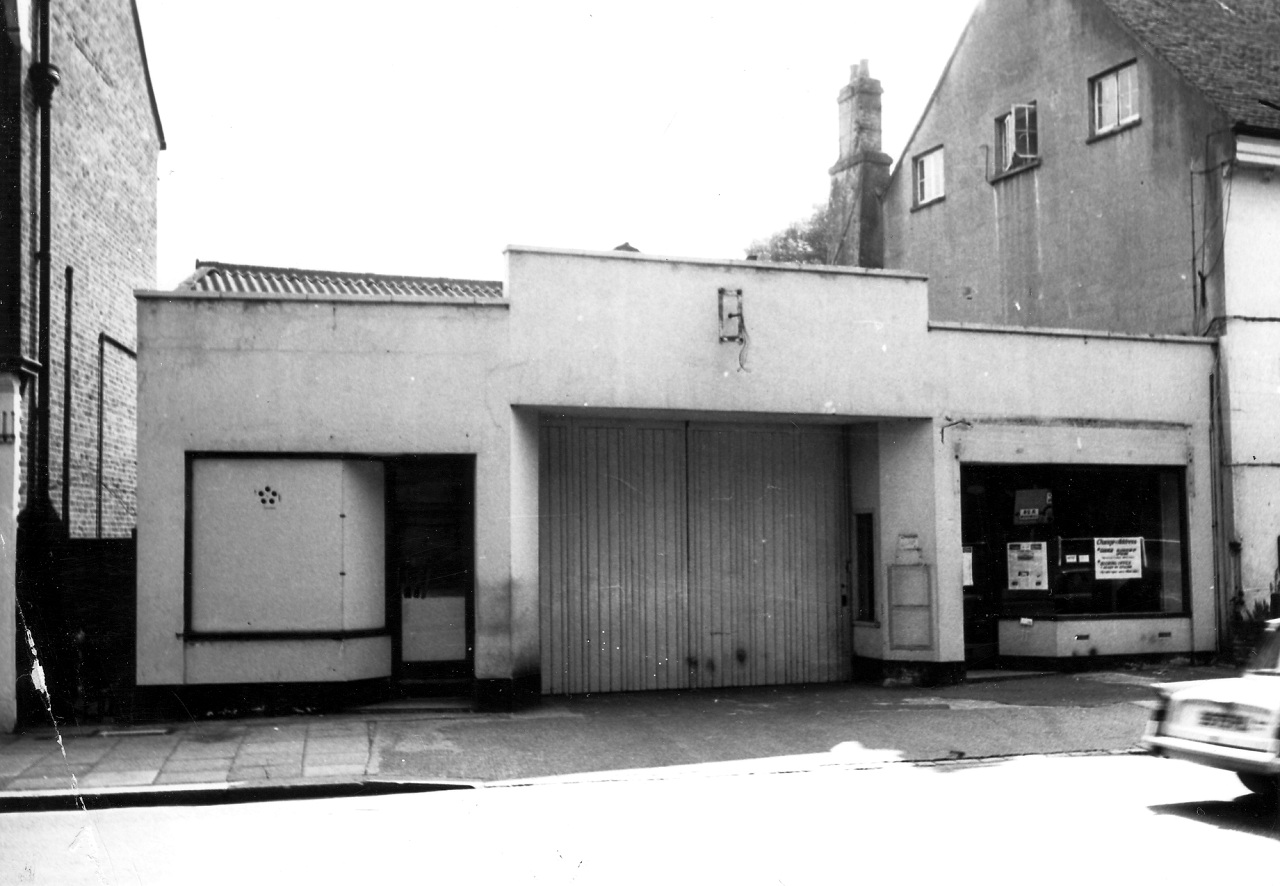
37 South Street, formerly the Richmond Garage (demolished 1972)
Photographed in 1971 by L R James
Image source: Epsom & Ewell Local & Family History Centre

Epsom Coaches advertisement from the South Street era
Image courtesy of Bourne Hall Museum
As World War 2 approached, Jack joined the Territorials: meanwhile Roy was attending Epsom County School for Boys, but he left on attaining his 16th birthday. When war was declared Jack was at a Territorial summer camp and he joined up immediately.
By 1939 the business possessed six horseboxes and six coaches, but the Army soon commandeered five of the latter, so Roddy drove the remaining coach throughout the war, transporting schoolchildren, workmen, wounded soldiers and, later, even taking German Prisoners of War to their work.
Jack was stationed with the Royal Engineers at farms in Sussex, maintaining mobile searchlights and generator units, and after two years in the Army, performing very necessary but probably mundane tasks, he joined the RAF as a trainee pilot. He learned to fly heavy bombers in the United States and became a Sergeant Pilot on Wellingtons. Very sadly, he was killed on 2 May 1943, when his aircraft exploded, killing everyone on board. (See Jack’s entry on our War Memorials page.)
Roy had started work in the Epsom branch of the Westminster Bank on leaving school, but in the spring of 1944 he enlisted in the Army, ending up in the Royal Corps of Signals. He had a strange war, escorting German Prisoners of War on a ship and then spent two years at a transmitter site in Maadi, a suburb of Cairo. Next, the powers-that-be discovered his banking credentials and ‘detained’ him in financial administration duties for a further period. Nobody was in any rush to repatriate his unit when the war ended, so he didn’t come home and obtain his discharge until 1947.
The coach travel business generally had been in the doldrums during the war and petrol was rationed, so it didn’t recover properly until the mid-1950s. However, Roddy had managed to buy a new utility coach in 1944 and in due time more coaches were added. The choice of vehicle was very limited after the war, so the company gradually acquired a variety of makes and models.
Roddy had wanted to retire or semi-retire at the end of the war, but Jack had died and Roy was still marooned in Egypt, so he carried on and built back up to four coaches, plus six horseboxes which needed considerable work done on them. And so, when Roy returned, he decided to join the business.
In 1948 Roy married Doris Law at Christ Church and they ultimately had three children, being Christopher, Andrew and Rosemary.
The Fifties and Sixties
The business was outgrowing the South Street garage and, when the leases of the two shops at the front expired, the Richmonds took them over. By now Roddy was afflicted by the early onset of Parkinson’s disease, so Bessie would drive him to work and encourage him to exercise. In the mid-1950s the company acquired Bookham Saloon Coaches and EE Law of Leatherhead, which brought their fleet up to 20 vehicles. In the late 1950s you could go to Eastbourne, Bexhill and Hastings for 9s.6d (47.5p), Southend for 6s.9d (34.5p) or indulge yourself on a day trip to the Wye Valley for 25s (112.5p).
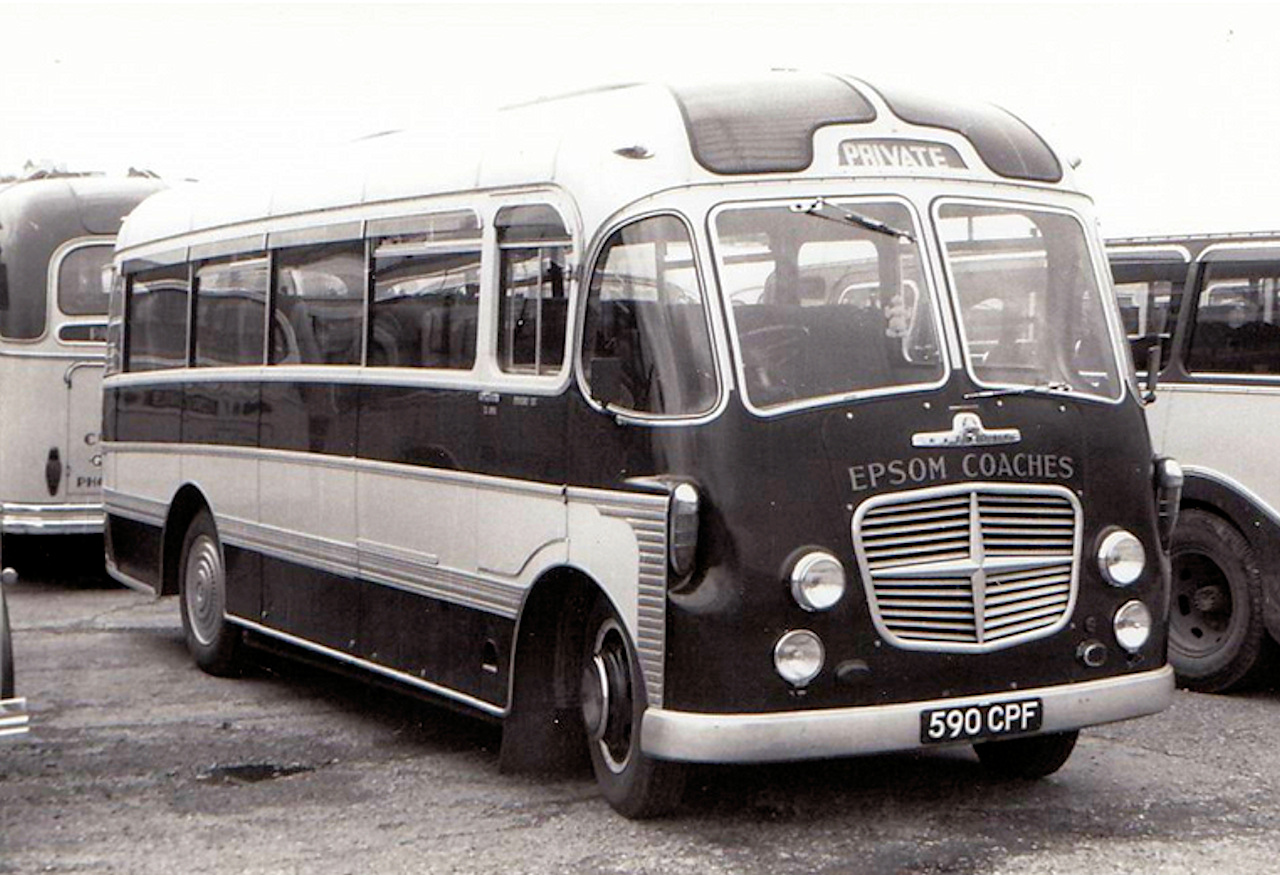 An Epsom Coaches Bedford A4/L7 with Plaxton coachwork, from 1957
Image courtesy of the Linda Jackson Collection
 Frontispiece of the 1958 tour programme
Image source: Epsom & Ewell Local& Family History Centre
In 1960 the company applied to operate a bus service from Tattenham Corner to Epsom Railway Station, in competition with the mighty London Transport. Permission was refused, so the intending passengers formed a subscription club to get round the impediment. The Richmonds then acquired a cottage at the rear of the garage and built an extension to house eight coaches; they also bought an adjoining granary.
The procedure for obtaining licences to operate specific routes was bureaucratic and difficult, plus the fact that larger competitors did everything they could to thwart an application, and often succeeded. This anti-competitive rigmarole continued until the late 1970s. The company carried on widening its activities, developing a role as a travel agency and acting as agents for other coach companies, such as Wallace Arnold. By 1965 the holiday programme had expanded and, for example, you could have eight days on the Isle of Wight for £17 or £19.50 (depending on the standard of hotel you required). Trips to France and Belgium also became available.
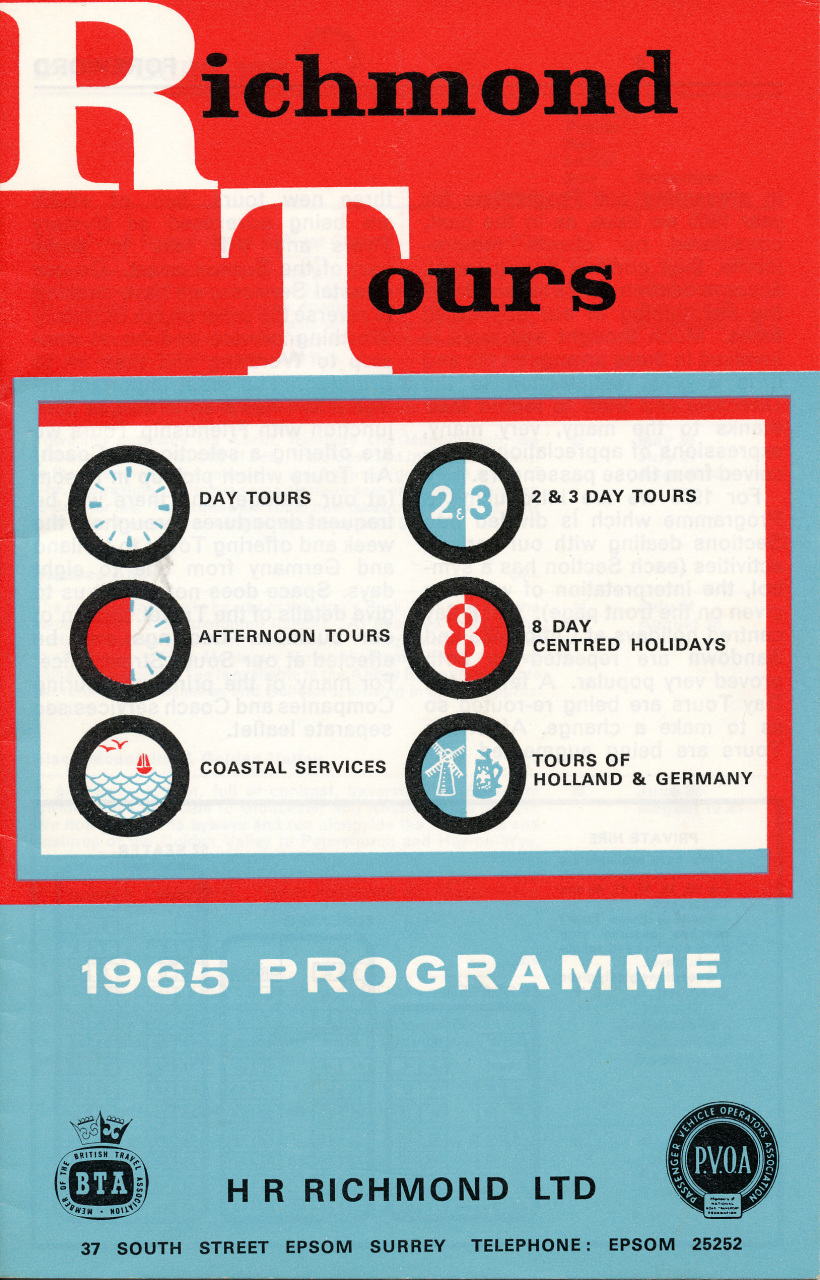
Richmond Tours 1965 programme
Image courtesy of Bourne Hall Museum
In the late 1960s the then Labour Government wanted to nationalise road transport, so Roy decided on further expansion of the travel business. Additionally, the council was putting pressure on them to move out of their premises in connection with the proposed construction of the Ashley Centre. Roy opened a new shop, called Epsom Travel at 1 Ashley Road in 1968.
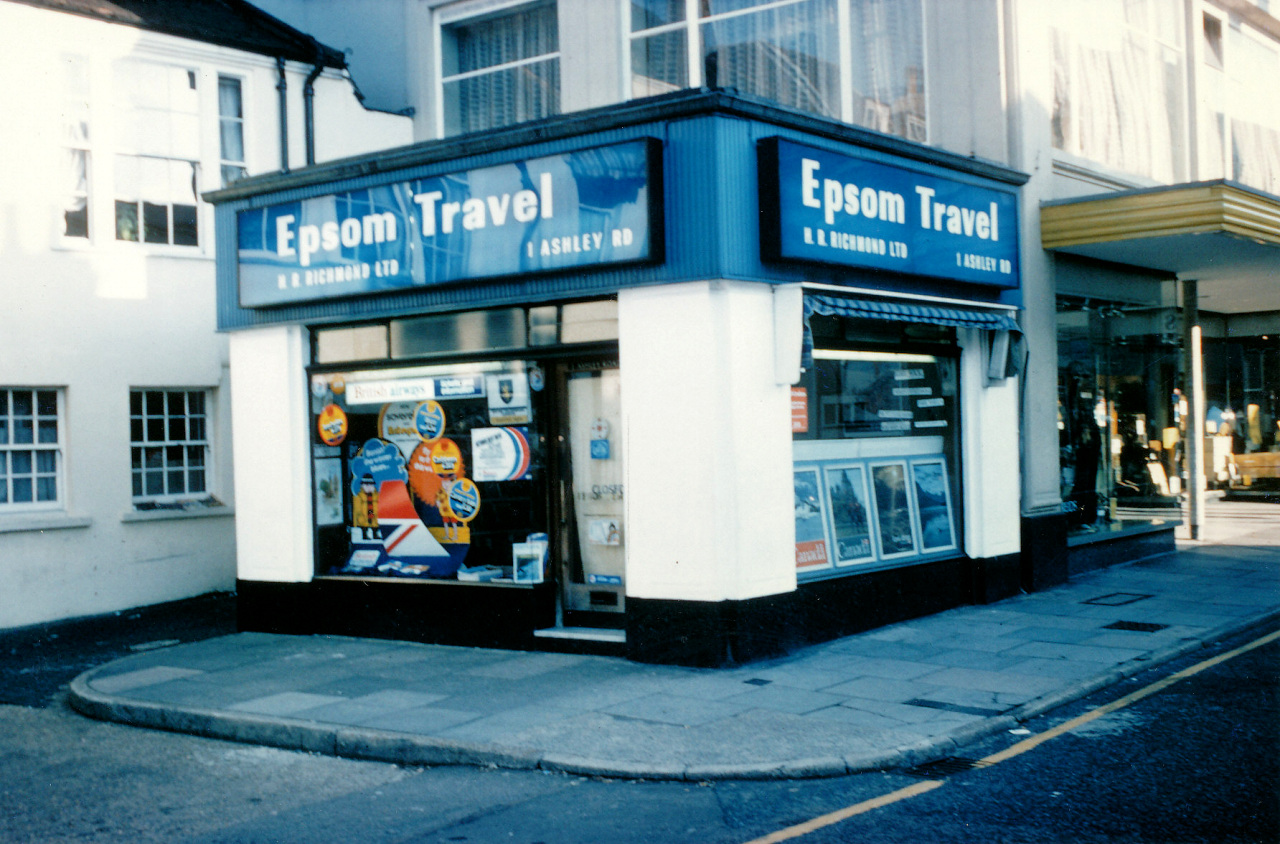
The Epsom Travel shop at 1 Ashley Road
Image courtesy of Bourne Hall Museum
In due course the business outgrew the original shop and moved into larger premises at 73 High Street, which, at the time of writing, is Amplifon. Further shops followed in Leatherhead and Banstead.
Bringing the sixties section to a close, Roddy died in a nursing home on 31 July 1969. Bessie survived until 1975.
The Seventies and Eighties
In 1970 Roy’s eldest son, Christopher, joined the company as Tours Director, swiftly followed by his younger brother, Andrew. A purpose-built garage was constructed at Longmead, which started operations in July 1971, at which point there were 37 coaches.
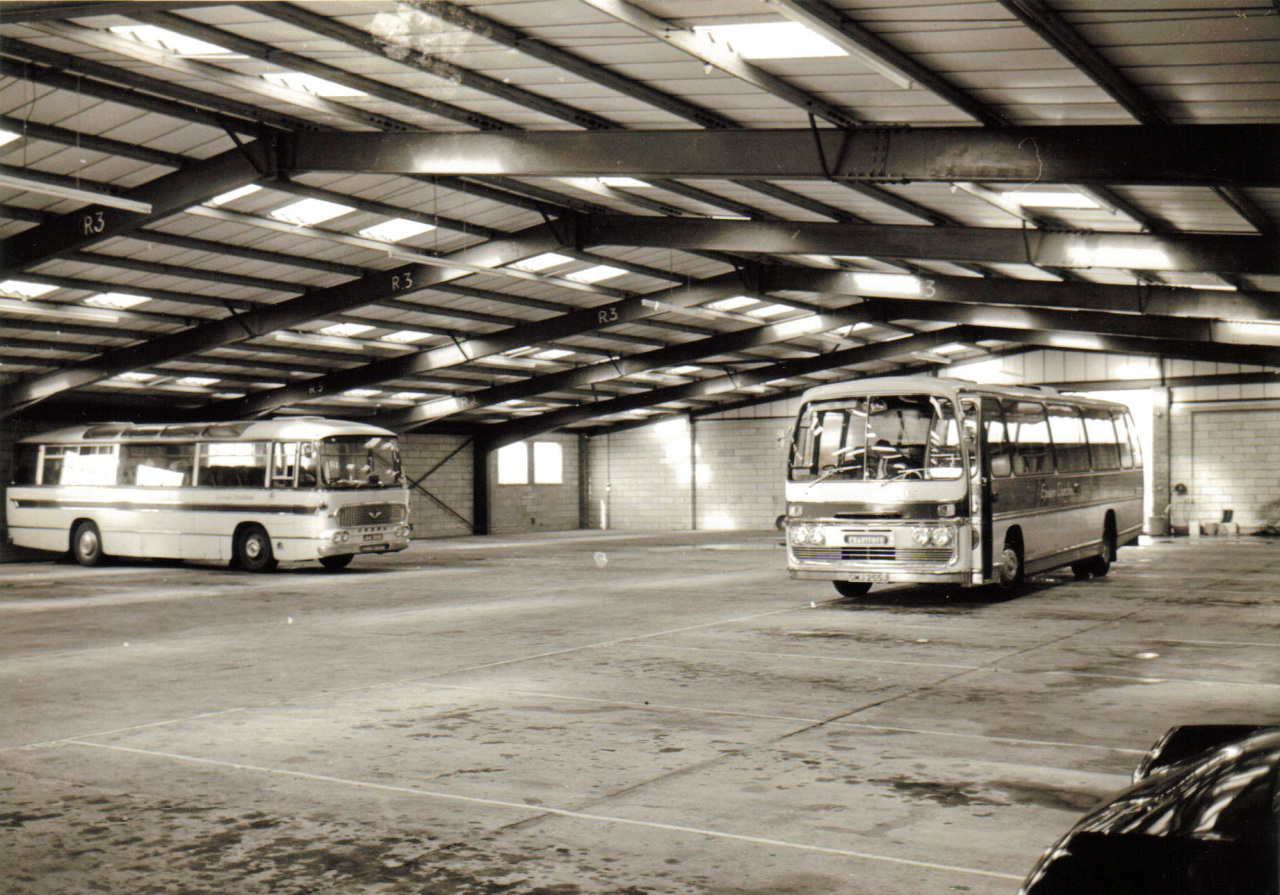
The new garage at Longmead, photographed in October 1971 by L R James
Image source: Epsom & Ewell Local & Family History Centre
It wasn’t all that long before the coaches literally outgrew the garage, one of the reasons being that the vehicles were becoming bigger, so the company acquired a site next-door for an extension and other facilities.
Roy’s daughter, Rosemary, had joined the family firm in 1982 and the major development in that decade was the deregulation of local bus services, facilitated by the Transport Act 1985. Surrey County Council had put some routes out to tender and Epsom Coaches was looking at the viability of a new service to Tolworth, which started on 26 October 1986. They also got the council contracts for route 598 (Epsom to Croydon via Banstead) and route 516, which then ran from Box Hill to Leatherhead via Headley.

A number 5 being operated by a Mercedes 709D with Marshall body (bought in 1992)
Image courtesy of Bourne Hall Museum
In 1987 the company won the Small Operator Group category at the UK Bus Company of the Year awards, which was just one of many accolades. And, to top off the awards, Roy Richmond received the MBE in 1988 for services to the passenger transport industry.
The Nineties and beyond
Unless you’re a real bus fanatic, it’s the early days of an enterprise that are most interesting. Aesthetically, old vehicles, locomotives etc are much more pleasing to the casual ‘fan’ than modern ones. That’s why I’ve spent more time on the early years of Epsom Coaches than its later history. However, I do have a penchant for models of vehicles etc, whatever their vintage.
This next photo is Andrew Richmond showing off two Corgi models of an Epsom Coaches Dennis Javelin/Plaxton Premiere, released in 1998. Behind him is the very vehicle in real life, sporting its fleet number of 613.
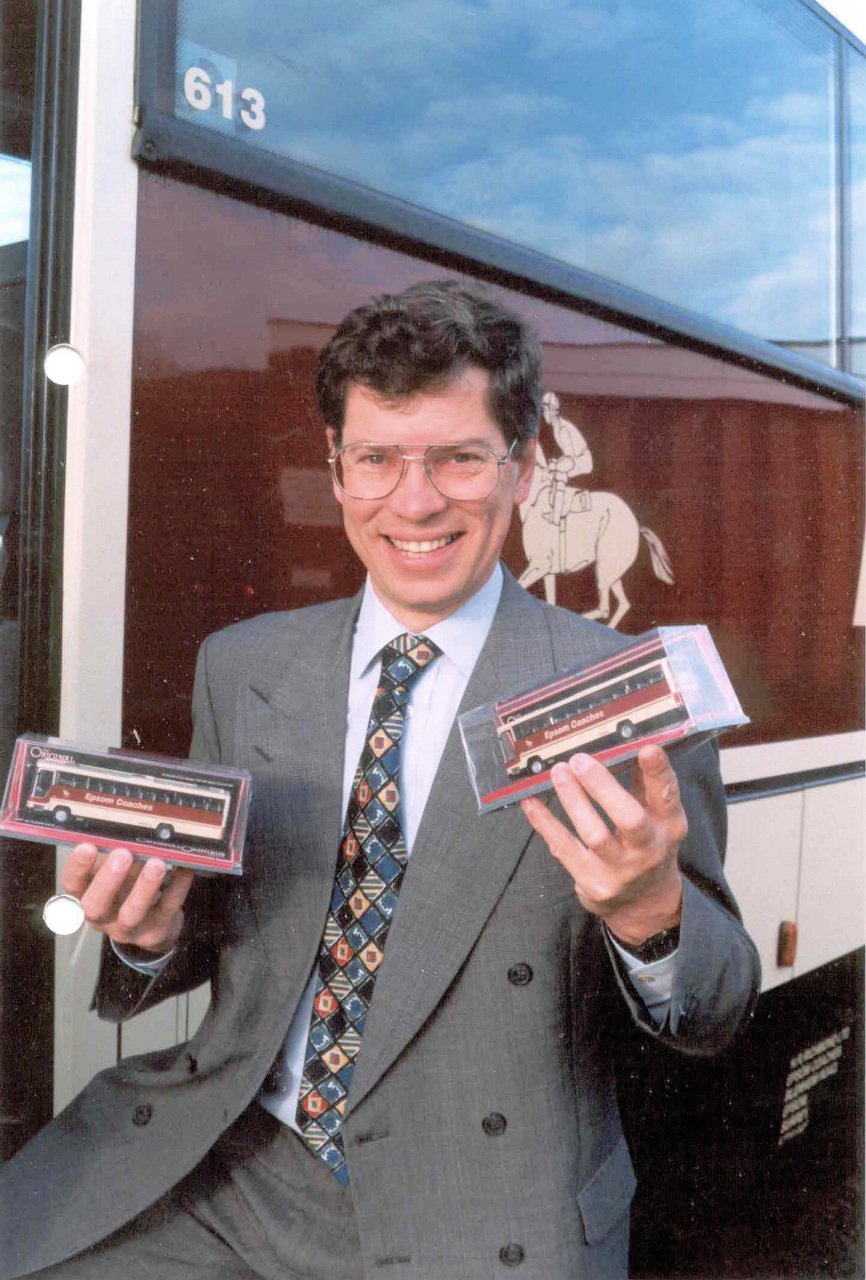
Andrew Richmond with the Corgi models and the actual coach
Image courtesy of Bourne Hall Museum
The first photo in this article featured Steve Whiteway and I should certainly say something about him. Steve started with the company as a driver in 1980, working his way up until he became Managing Director.
2003 was the year that the bus operation was re-branded as Quality Line and here’s Steve with a whole line of them.
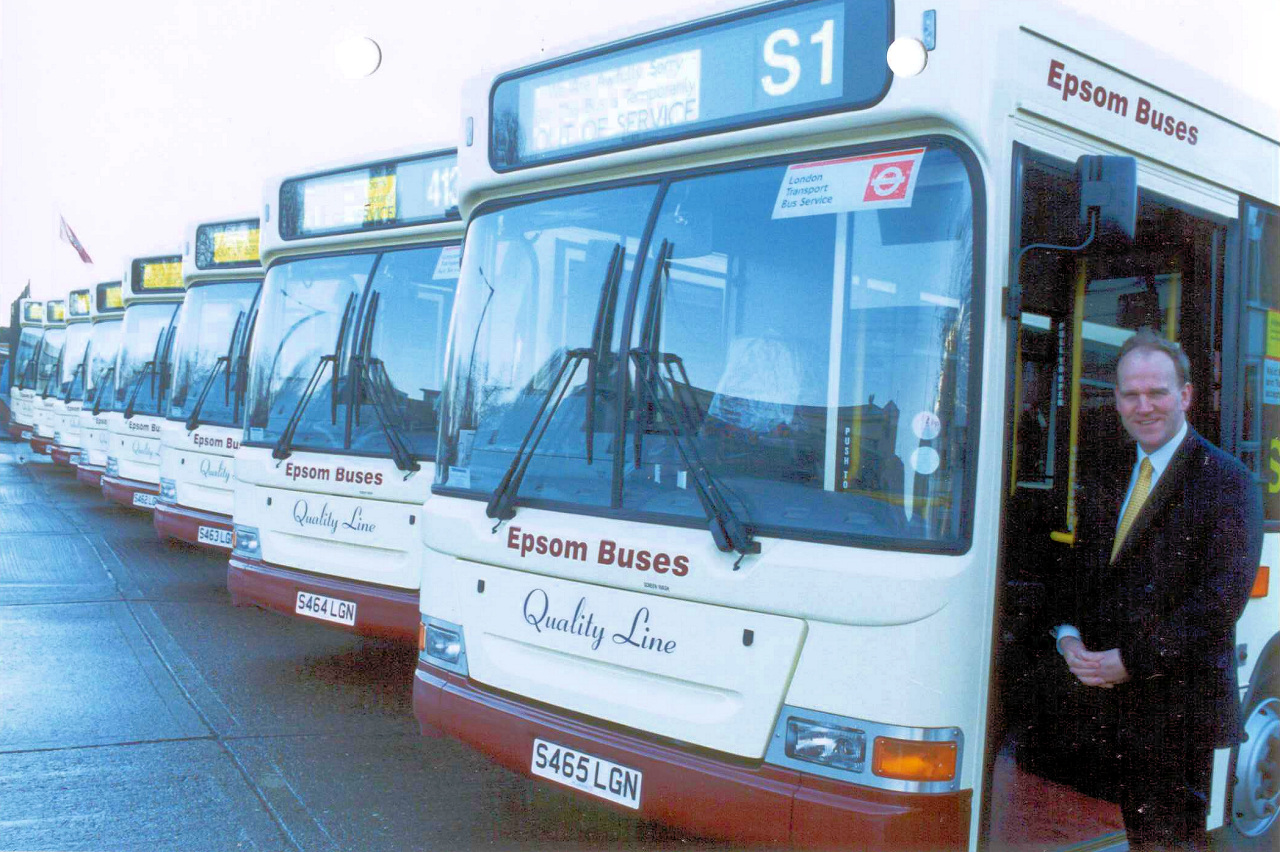
Steve Whiteway with the re-branded Quality Line buses
Image courtesy of Bourne Hall Museum
Roy Richmond died on 23 January 2011 and the northern part of Blenheim Road, which leads to his premises, was renamed Roy Richmond Way in his honour. It’s ironic that, after all the battles with the big operators, and London Transport in particular, Epsom Coaches should have been bought by a (French) state-owned company, which then divested itself of the coaches to concentrate on the buses. And in that process the enterprise started by Roddy Richmond and Jim Reeves lost its unique identity as a family business which had been built up over many decades with an impeccable local connection. RATP DEV now looks mainly like a London bus operation and the parent company, RATP Group, has transport operations of all descriptions worldwide. Basically, though, it started out as the London Transport of its day, but in Paris.
This last photo, taken in October 2019, is particularly interesting on the subject of identity. The K5 route was a Quality Line operation before the company was sold to RATP. Apart from the fact that they are two different models of Dennis bus on different routes, you’d be pushed to spot any distinction between them.
 London Bus Routes 371 & K5 | YX60 BZH (DE20127) & YX14 RYY (SDE20285)
London United Alexander Dennis Dart 4 Enviro200 (Euro 5) &
Quality Line Alexander Dennis E20D Enviro200 (Euro 6)
@Cromwell Road Bus Station, Kingston
Photo by DaniThePancake via Flickr (CC BY-NC 2.0)
Linda Jackson 2019
YouTube video showing that there is more to running a
modern transport company than just driving the bus.