
Bill Richmond
(5 August 1763 – 28 December 1829)
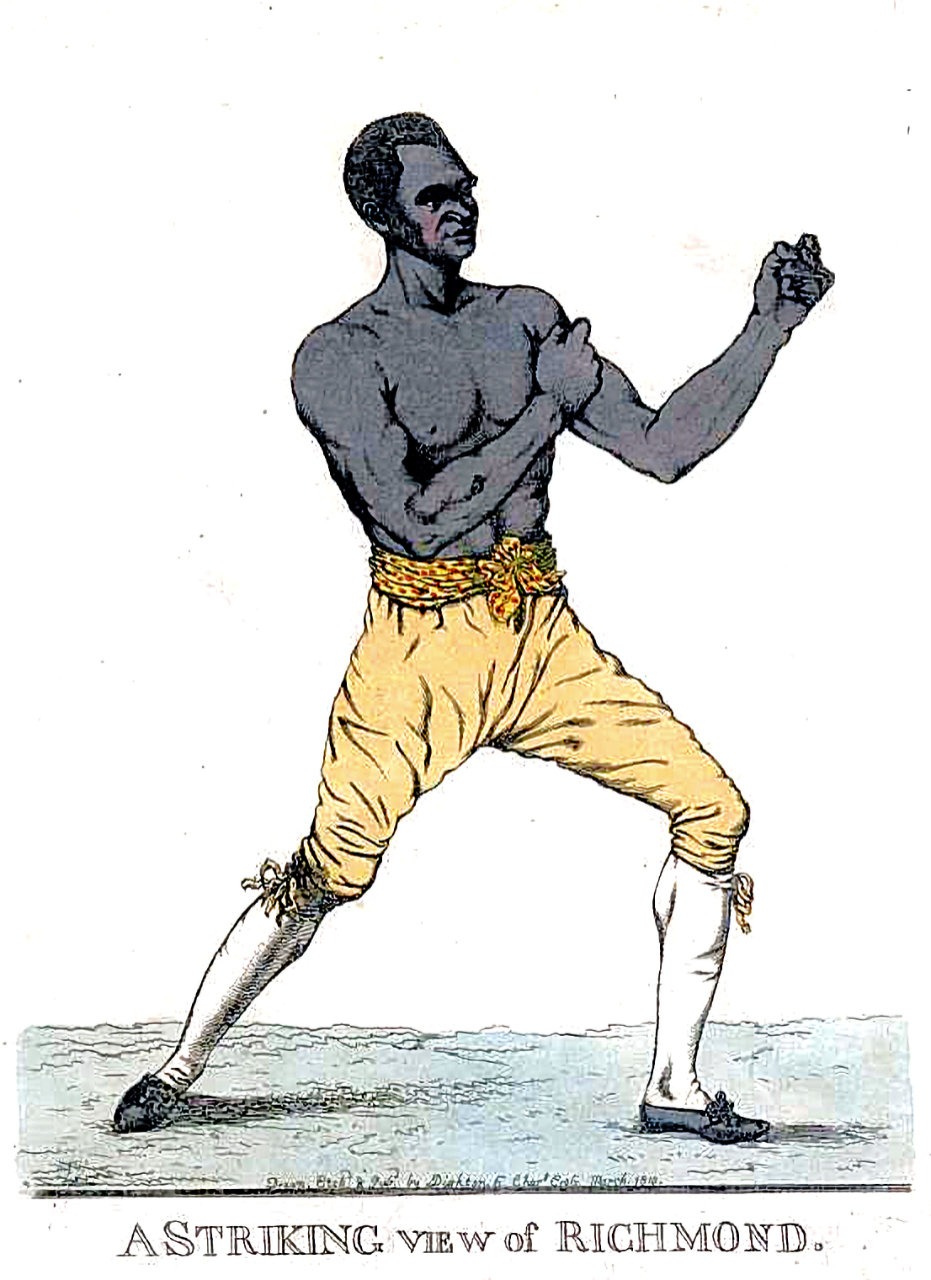 Bill Richmond
Bill Richmond had a remarkable life. Born (on 5 August 1763) into slavery in Staten Island USA, he went on to build a life as a bare-knuckle boxer or pugilist – in the process becoming this country’s first black sporting super star.
He was brought to England by Lord Percy (who had fought against the rebels in the American War of Independence) and given an education, learning to read and write and then set up with a cabinetmakers apprenticeship. He married a white lady, but it was it was not until he was in his forties that he took up boxing. Going on to win 17 out of his 19 fights, and teaching the upper classes, including Lord Byron, how to box and as a celebrated professor of the fist was chosen to spar for Frederick William III on a visit in 1814. And at King George IV’s coronation banquet, with 18 other boxers, he formed a guard of honour. He acted as one of the playwright Sheridan’s enforcers when he was trying to get elected to parliament. He was hired to teach Cambridge students how to box. In 1809 he undertook to fight against an unmuzzled bear for 500 guineas armed with only with a quarterstaff! The outcome is not recorded.
In the 19th century (along with horse racing) boxing was the country’s most popular sport – much to do with the love of gambling. Crowds flocked to them, filling the area full of all kinds of transport. Sometimes, as many as 20,000 would attend. In the summer, it was said that you could not see your horse’s head for dust. Around the ring, the front row of gentlemen would sit, the second row would kneel, rows 3, 4, and 5 would stand but would take their hats off, then came those on horseback and the carriages.
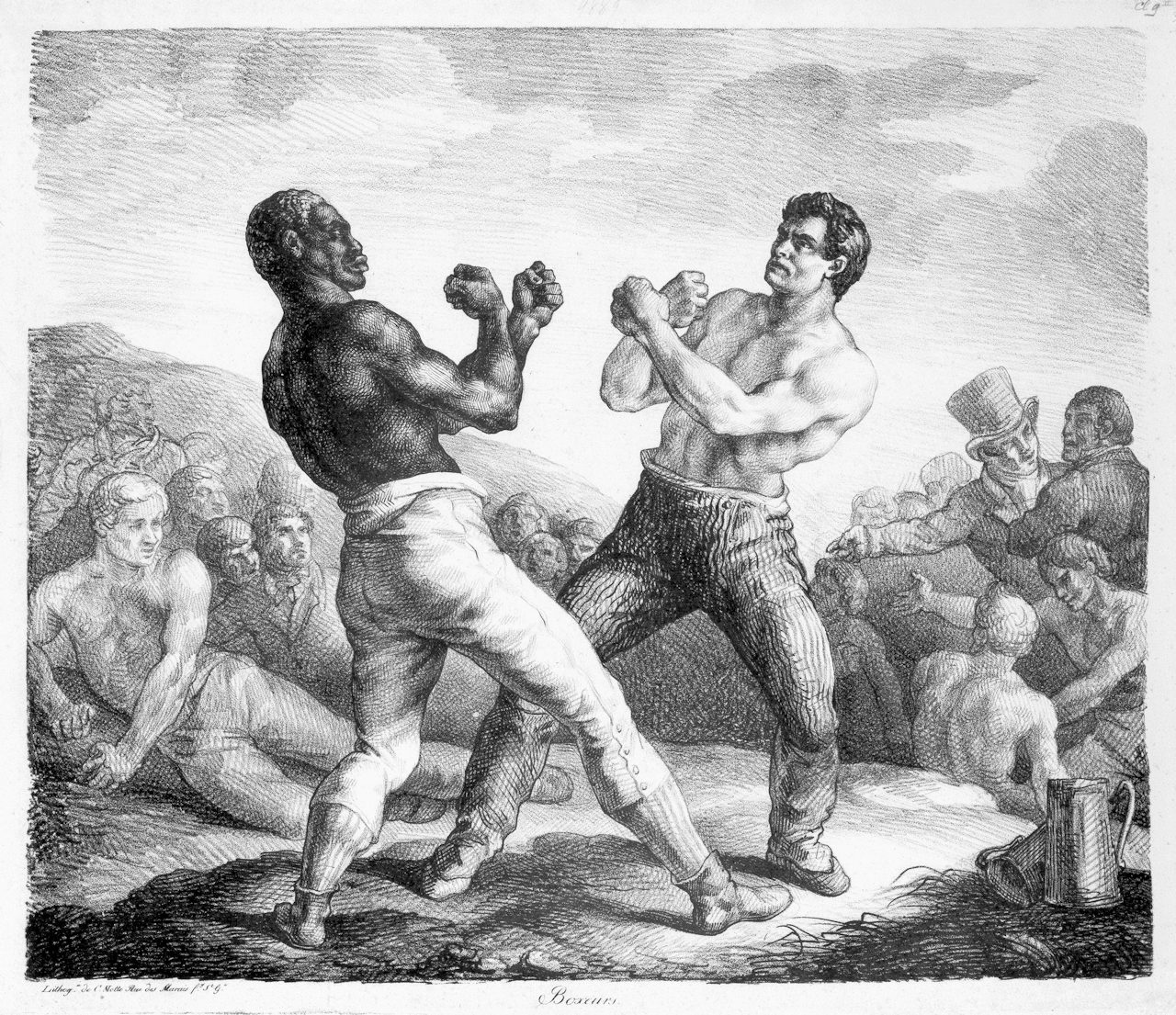 Bare-knuckle Boxing
Boxers by Théodore-Gericault 1818
Bare-knuckle boxing involved standing upright and trading blows with burly men, but Bill was too small to absorb such incessant punishment. Instead, he developed pioneering footwork, dancing around the ring and delivering sharp, swift counter strikes.
On 14 of April 1808 he boxed on Epsom Downs of which the Morning Post wrote “We regret to find another of these disgraceful exhibitions was permitted to take place so near the Metropolis”. However, they were not so disgusted to write a long description of the fight! Richmond took on a man named only as “the Westcountryman”, and possibly a boxer called Carter. This was a subscription fight, the prize money being that collected from the crowd. Being the smaller man, Richmond began the fight at a disadvantage and, by round 4, it looked like he would lose and the odds against him dropped to 20 to 1. But using his skill he turned the fight around making Carter miss with his punches. Carter became tired and worn out by showboating to the crowd and missing his punches and after some left hand blows to the face he gave up. In the accounts of the fight, it is said that Carter had a little of the white feather about him – a slang term for cowardice. Throughout the fight Richmond was abused by a heckler; as soon as the fight ended Richmond jumped the ropes and caught hold of the heckler and was about to serve him out but was prevented from doing so.
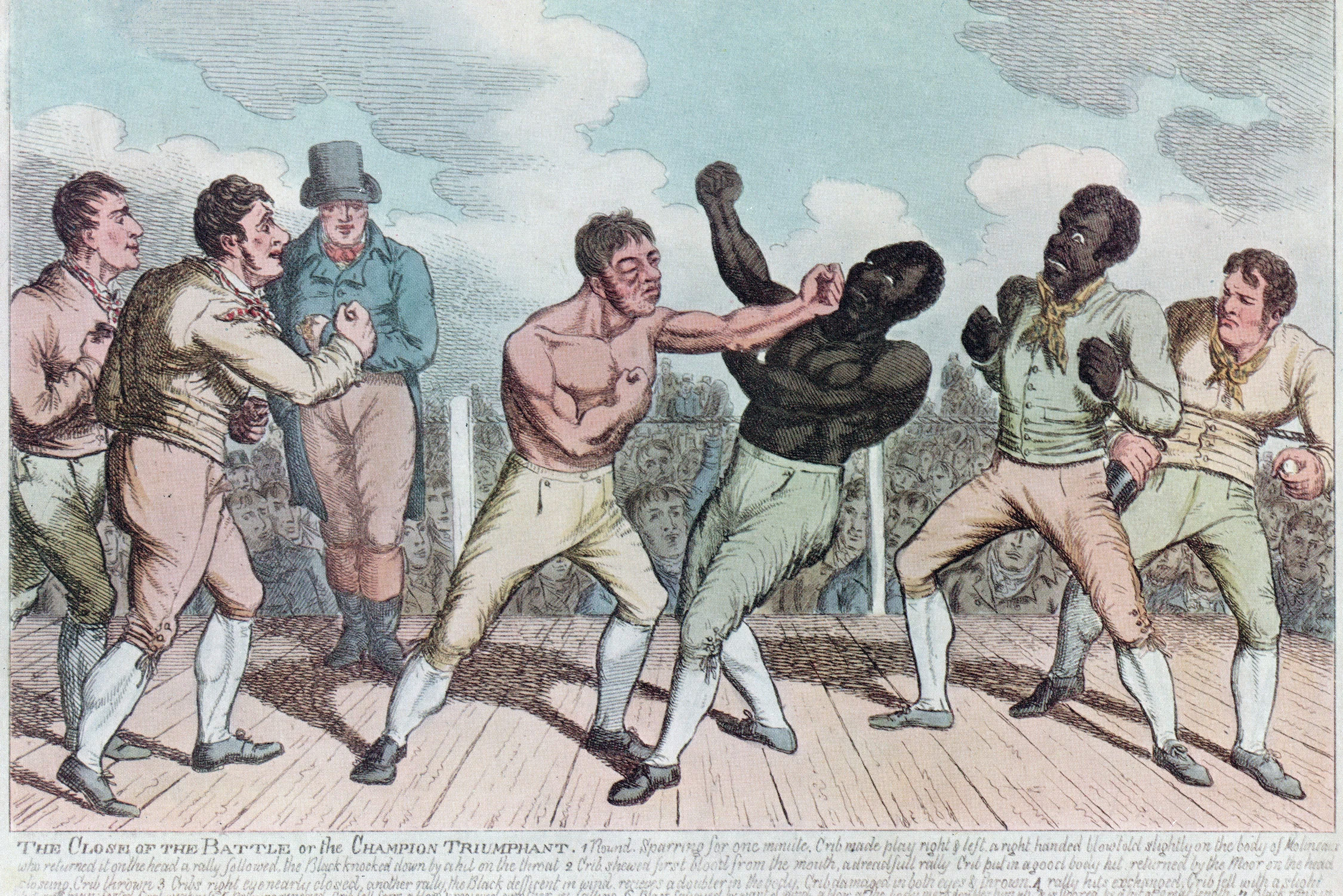 The Close of the Battle or the Champion Triumphant
with boxers Tom Cribb fighting Tom Molineaux
with Richmond acting as Molineaux’s second.
Richmond took to training other boxers running training camps on Epsom Downs and at his boxing academy in London including Tom Molineaux another black former slave who in 1810 and 1811 boxed Tom Cribb for English championship which were possibly the two most significant sporting events of the Georgian period.
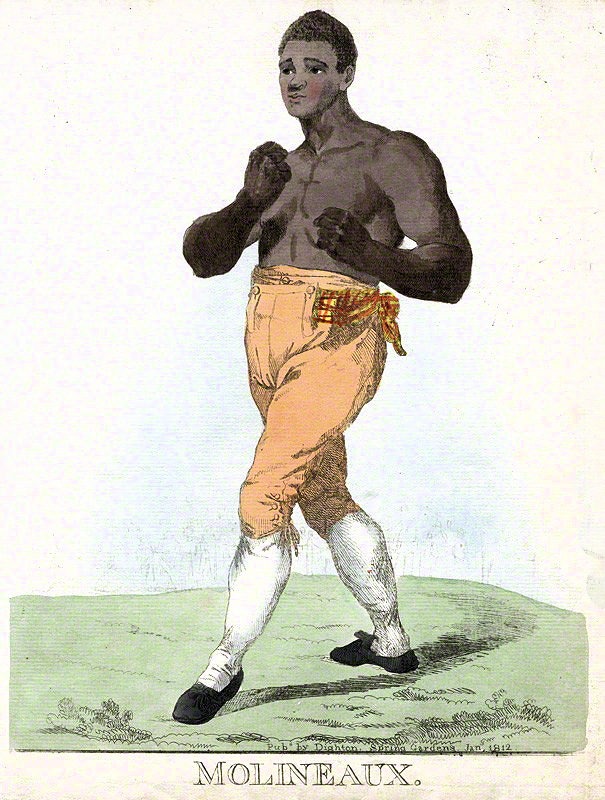

Tom Molineaux (Left) & Tom Cribb (right)
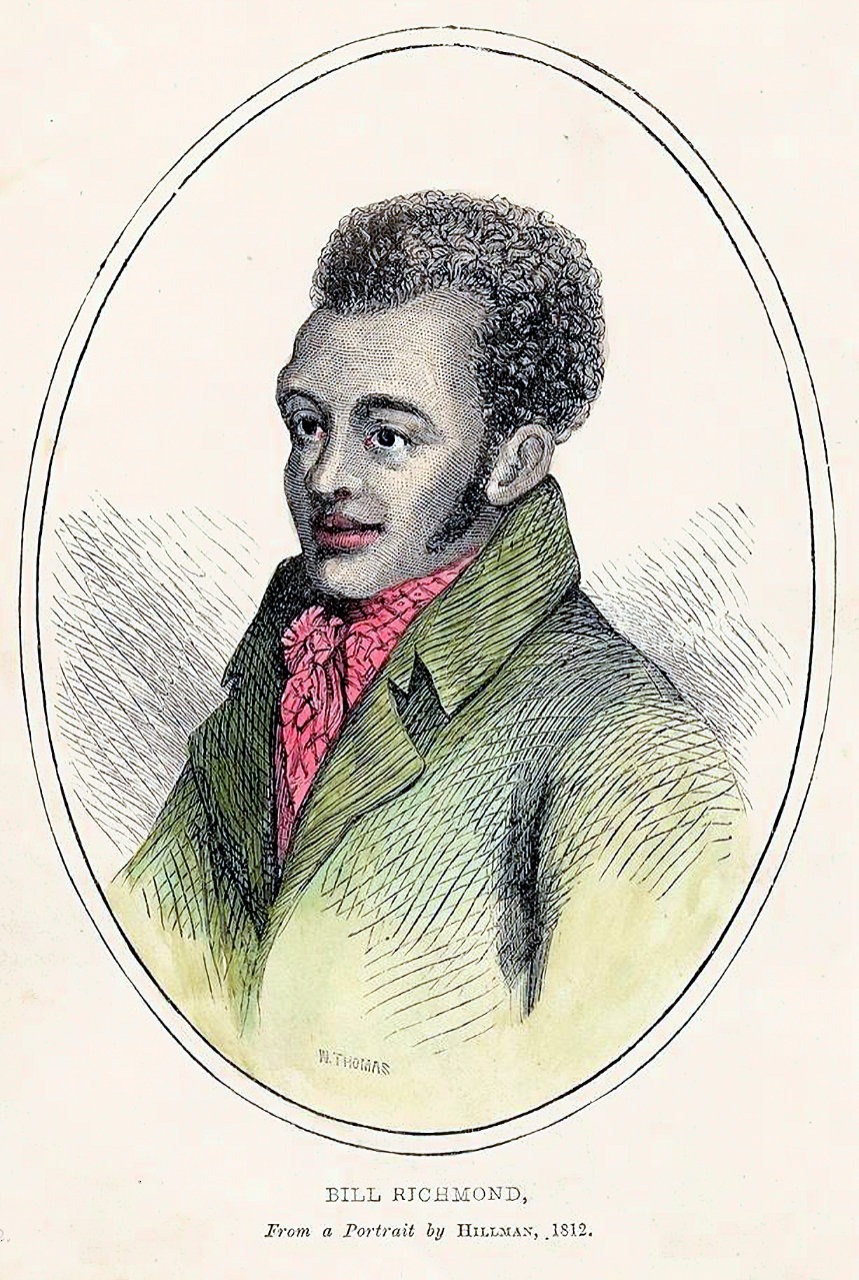 Bill Richmond
From a portrait by Hillman 1812
In 1820, he seconded a local man nicknamed Johnny Raw in an impromptu match on Epsom Downs. The fight finished in the first round. Richmond had to scrape him off the floor the confused local said to Richmond “Who done that? What’s that for? Where am I?”
William Mondrich (played by Martins Imhangbe), the boxer in the Regency TV Show Bridgerton, is based on him.
David Brooks
Bourne Hall Museum 2023
Read more about Bill Richmond in this extract from Boxiana; or, Sketches of ancient and modern pugilism by Pierce Egan.
You may also be interested in our parges on Prize Fight near Epsom and Jack Cooper.