
LEWIS HERBERT SAVIN
1901-83
Ophthalmologist
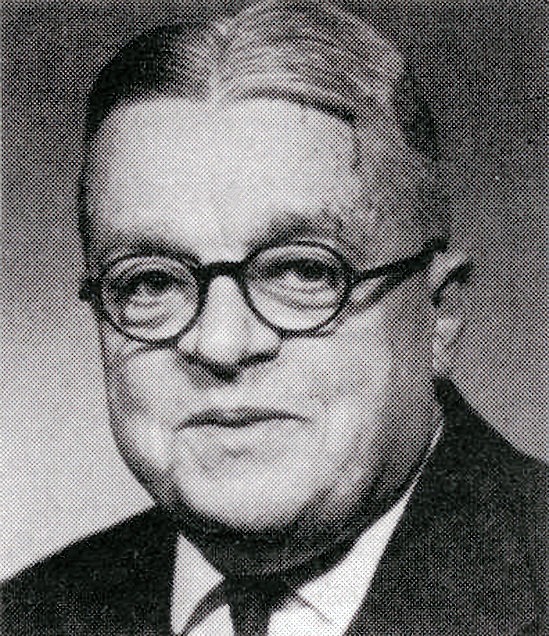 Lewis Herbert Savin
Image courtesy of British Journal of Ophthalmology
Introduction
Lewis Herbert Savin and his family lived at 9 Ashdown Road, Epsom for many years and during and after WW2 Lewis worked at Horton Emergency Hospital.
Background
Don’t worry, this is not a protracted ‘family tree’ article, but we need to go back to the 19th century for an understanding of what shaped our subject and his path in life.
John Savin, Lewis Herbert’s grandfather, was involved with wool in Faversham, Kent and then became a mariner before returning to wool. John’s father had been a labourer, so the family beginnings were quite humble and they were Faversham folk through and through, having gravitated to the town itself from villages in the area. The family home was in Abbey Street, now a picturesque historic thoroughfare which is still there today, having been rescued from demolition in the 1950s.
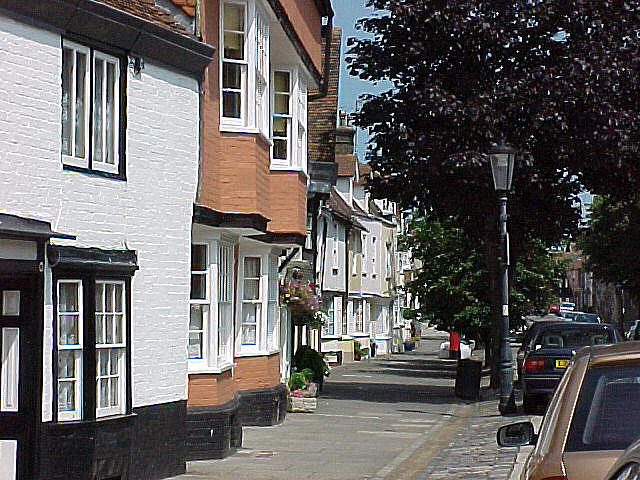 Abbey Street, Faversham, photographed in 2002
Photo © Tony Wheeler (cc-by-sa/2.0) via Geograph
Lewis Savin, our subject’s father, became a pupil teacher whilst still in his teens and by 1891 he was a student of medicine at the establishment of James Laidlaw Maxwell in Highbury. The clue is in Mr Maxwell’s job description on the census form: it says ‘Duly Registered MD, Medical Missionary, Surgeon’ and if you look him up he was the first Presbyterian missionary in Formosa (Taiwan).
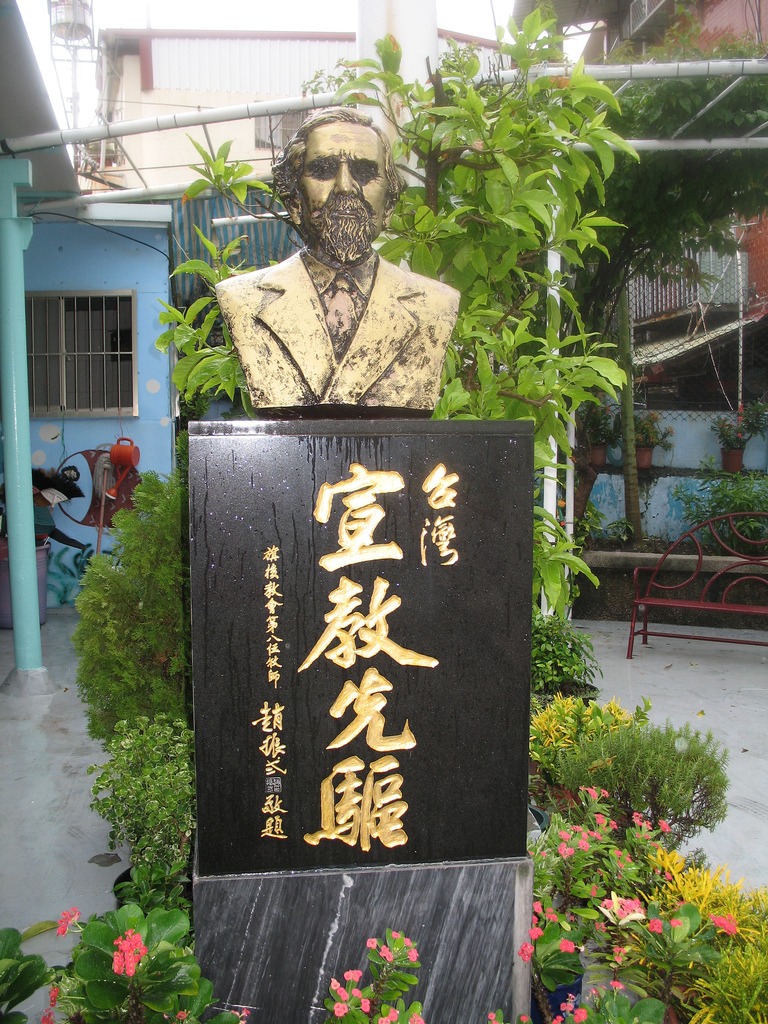 Statue of James Laidlaw Maxwell in Kaohsiung, Taiwan
Photo by dmcdevit via Flickr (CC BY-SA 2.0)
Chinese history is a very complicated matter but we must grapple with a few morsels because it was key to the life of Lewis and affected Lewis Herbert’s life too.
China
China in the mid/late 19th century was heading for a crossroads, both politically and culturally. Lewis went there in the 1890s under the auspices of a Methodist organisation, which had asked him to become a doctor. In 1898 he married Kate Clara Howe, also a missionary in China. They were based in Yunnan Province and here’s a map (ignore all the territorial carving-up on the image; this is just to show the position of Yunnan in relation to the rest of China – it’s in the south-west, landlocked and has borders with several other countries).
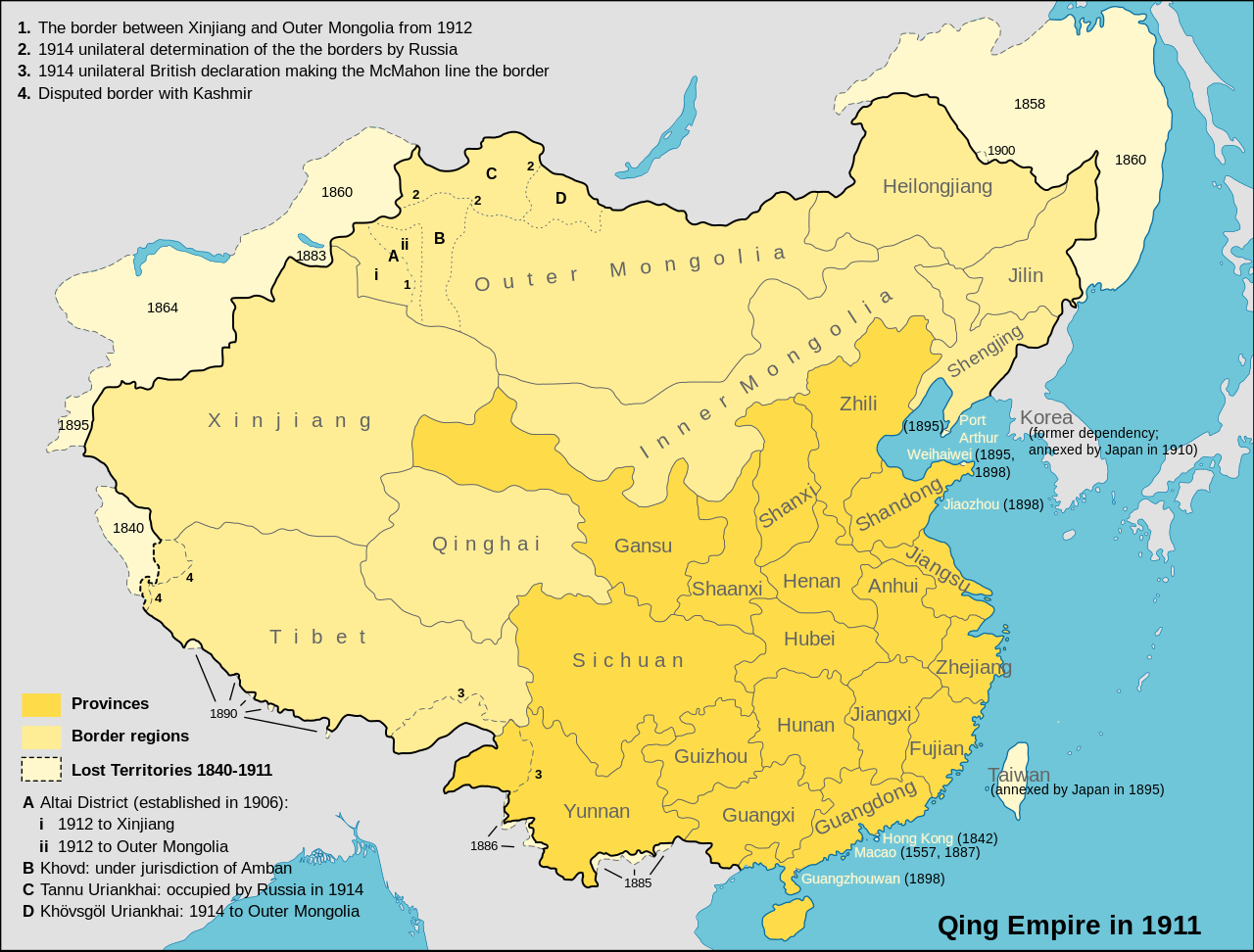 Qing Empire in 1911 (Click to enlarge)
Drawn by SilverStar54 via wikimedia
Mention of the Qing dynasty is timely, as it/they had been ruling China since the 17th century. However, by the time Lewis Savin had established himself in Yunnan, the old Empire was in its death throes and everything really kicked off in 1899 with the start of the Boxer Rebellion. (If you saw the old film ‘55 Days at Peking’ and told yourself constantly that Charlton Heston with his impossibly wonderful teeth didn’t actually sort the whole thing single-handedly and that Ava Gardner was there just for the Hollywood glamour, then it wasn’t too bad a general depiction of what happened in 1900.)
The Boxers wanted foreigners and missionaries out of China and were prepared to use extreme violence to eject them. Meanwhile, the foreign diplomats demanded protection for their legations and nationals. Nobody at all was blameless in this – something had to give and it did. The Dowager Empress Cixi, who was de facto ruler of China at the time, sat on the fence for a while and then supplied the Chinese Imperial Army to support the Boxers. Meanwhile, the cavalry was coming (literally in the case of the US 7th ) in the shape of troops and ships from eight nations with interests and diplomats in China. It came to a head in June 1900 when diplomats and foreign troops in Peking (Beijing) were trapped by the Boxers and the Chinese Army. To cut a very long and confusing story short, reinforcements arrived to relieve the siege in the nick of time (mid-August) and Cixi escaped to somewhere safer. She did, however, return at a later date and died in 1908; there were no direct heirs and her successor would likely have been the Guangxu Emperor, who was something of a reformer, but he mysteriously died the day before she did – tests carried out in this century apparently showed that there were massive levels of arsenic in his body – so Cixi’s handpicked successor, Piyu, became Emperor. The boy, who wasn’t even three years old at the time, became the last of the Qing Emperors, was deposed, used as a puppet by various factions, and died in 1967. You can read his story here or it was all in the Bernardo Bertolucci film ‘The Last Emperor’.
 The Dowager Empress Cixi with her Palace Eunuchs c.1903
Image source: http://puyi.netor.com/gallery via Wikimedia Commons
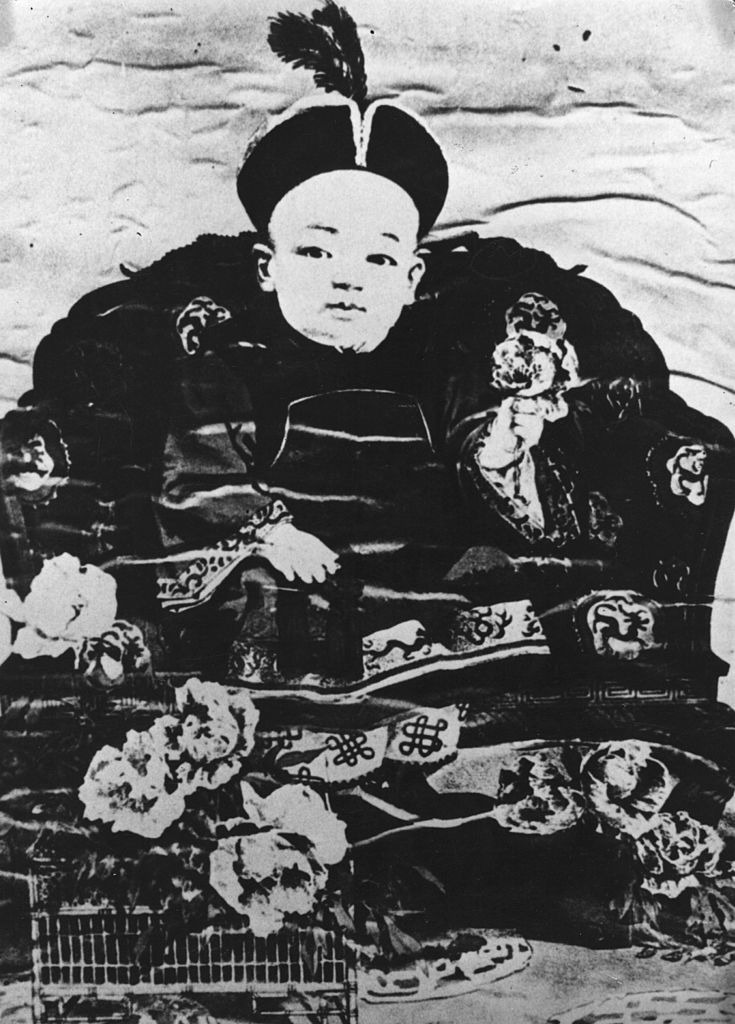 Portrait of Puyi, the last Emperor of China, 1908
Image source: Wikipedia
Having galloped through the history of the period, we can now return to Lewis and Kate Savin.
Escape
If you were foreign missionaries in China and also expecting your first child, as Lewis and Kate were at the time of the Boxer Rising, then you were in deadly danger.
A document entitled ‘The Female Itinerant Preachers of the Bible Christian Church’ is a collation of material found by the late Mrs Joan Mills of Solihull in old publications, which she passed to Colin C Short, a Methodist minister and chronicler of the Bible Christians, who published everything online in 2015. The following passage will tell us about Lewis and Kate’s perilous escape from China.
“There is no record of Kate’s doings from then on (apart from her marriage to Lewis Savin) until 12th June 1900, when Lewis himself had a letter published in the Bible Christian Magazine. It was written from Yunnan Fu and told of their problems in the same riot experienced by the Dymonds. Both of their houses were looted and the Savins lost everything apart from the clothes they were wearing. They were kindly treated by the Mandarin and at the time of writing were expecting to leave for Hong Kong. They had not heard from their colleagues stationed at Chao Tong and Tong Chu’an and were fearful for their safety. He said how sorry he felt for the Dymonds with their family of four. Everyone was, in fact, safe but not without having gone through a very stressful time.
Lewis described their departure as being ‘driven from China’. They had an anxious journey to the French border as there was an Imperial edict out that they should be killed. Some officials helped but the travelling was made more difficult by the rains and the porters could only cover ten miles a day. On their way to the Red River, lodgings were difficult to find and the heat was terrific. They managed to charter two small boats and so began a most uncomfortable journey. ‘The junk was small, the people many, the smells were more and every kind of creeping and flying things seemed present to pester us..’ The beds were uncomfortable at first but seemed to improve as time went on. Hong Kong was reached ten days later, having had help on their way from a hospitable Frenchman. There they attended a service.”
In the 1901 census, taken on 31 March 1901, Lewis and Kate were ensconced in Lewisham with young Lewis Herbert, who was under one month old. In due course the family returned to Yunnan, where three more children (all girls) were born. I am not going to delve deeply into the exact place where Lewis Senior had his mission hospital, since there are several spellings of the name and, of course, the nature of such places has changed markedly since his time. Nowadays, however, the area is called Zhaotong in the north-east corner of Yunnan province.
In due course Lewis Herbert was sent back to England for schooling at Christ’s Hospital, although his parents did return to the UK from time to time. However, on 30 January 1918 Lewis Senior died of typhus in China and the rest of the family then settled in Faversham, where they were in the 1921 census. At that point Lewis Herbert was a medical student.
Lewis Herbert
Lewis became very highly qualified in both general medicine and surgery, but his particular field of speciality and interest was ophthalmology. After qualifying to practise medicine in 1923, his very first appointment as a house surgeon was at the Royal Eye Hospital. Subsequently, he practised general medicine and surgery for five years while he gained further qualifications. In 1931 he was appointed honorary consultant ophthalmic surgeon to the Royal Free Hospital, which, given his youth, was indicative of his diligence and talent. Also in 1931 he married Mary Helen Griffith (born 5 November 1904, daughter of a merchant).
During the war years he shared ‘business’ premises at 6 Church Street, Epsom with two ladies I have described in an earlier article as The Church Street Doctors and worked at Horton Emergency Hospital, where he conducted eye operations and general surgery too. There was often something particular about the type of eye injury incurred during WW2 and, without getting over-technical, it involved non-ferrous metals (i.e. metals or alloys not containing iron, such as aluminium, which was used extensively in aircraft and tank engines). This may not seem highly significant to the layperson – and, by all accounts, Lewis was not given to blowing his own trumpet or indulging in the spectacular – but in medical terms it was. According to the British Journal of Ophthalmology, “he carried out valuable pioneer work which culminated in a Hunterian oration in 1943 on ‘Nonmagnetisable intraocular foreign bodies’ and in 1947 a beautifully produced Report for the Vision Committee of the Medical Research Council entitled ‘The effect of aluminium alloys on the eye.’” He became President of the Faculty of Ophthalmologists (now part of the Royal College of Ophthalmologists) and, in 1953, a Fellow of Kings College, London.
As I mentioned earlier, the Savins lived at 9 Ashdown Road for many years but they also had a farm in West Sussex (Knowles, Horton Corner, Upper Beeding), where, apparently, Lewis thought up many unusual and practical innovations for agricultural issues; they eventually retired to the farm. Altogether, Lewis Herbert Savin seems to have been a most talented and much undersung man.
 9 Ashdown Road in 2023
Image © Roger Morgan 2023
Mary died on 12 April 1983, followed by Lewis on 11 July of that same year. His obituary from the Royal College of Surgeons noted:
‘His death was hastened by his being set upon by a gang of hooligans late one night whilst on his way home. They left him lying in the road semi-conscious and he suffered a series of heart attacks that led to his death.’
John Andrew Savin
It would be remiss of me not to mention Lewis and Mary’s son, John Andrew Savin (1935 – 2006), who attended Epsom College from 1948 to 1953, and followed in father’s footsteps, except that his speciality was dermatology. He also amassed a vast array of qualifications and became a consultant dermatologist in Scotland, again at a fairly young age. Reading his obituary, I was struck by many similarities with his father – not in the type of speciality, but in the ways he communicated and innovated.
John’s older brother, Lewis Edward, was also at Epsom College (1945-48).
Linda Jackson 2023
Main sources for L H Savin:
- Plarrs Lives of the Fellows (Royal College of Surgeons)
- British Journal of Ophthalmology 1983 Obituary