
Epsom Fairings
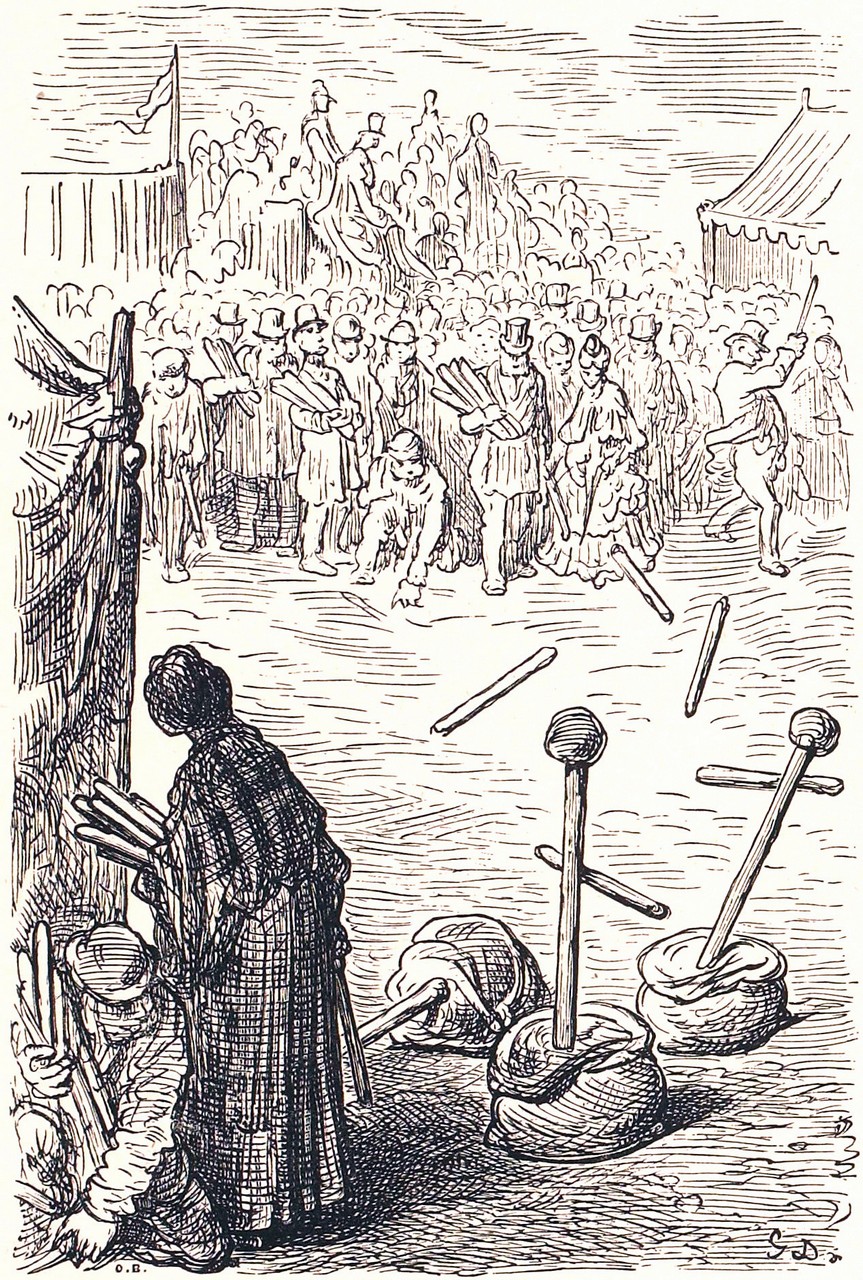 Three sticks a penny from London – A Pilgrimage
By Gustave Doré
Ceramic fairings are small porcelain ornaments depicting a variety of scenes, often humorous or domestic. These were frequently given away as prizes at fairs from around the middle of the nineteenth century till the start of the First World War.
 A woman wagging her finger while cycling to Epsom,
the man at the rear with folded arms is being stubborn.
The ornament almost always incorporates a base to allow for a caption usually describing the scene or making some point. The Epsom Derby was a huge annual event in this period and always attracted a wide variety of fairground stalls – hence the To Epsom on these examples.
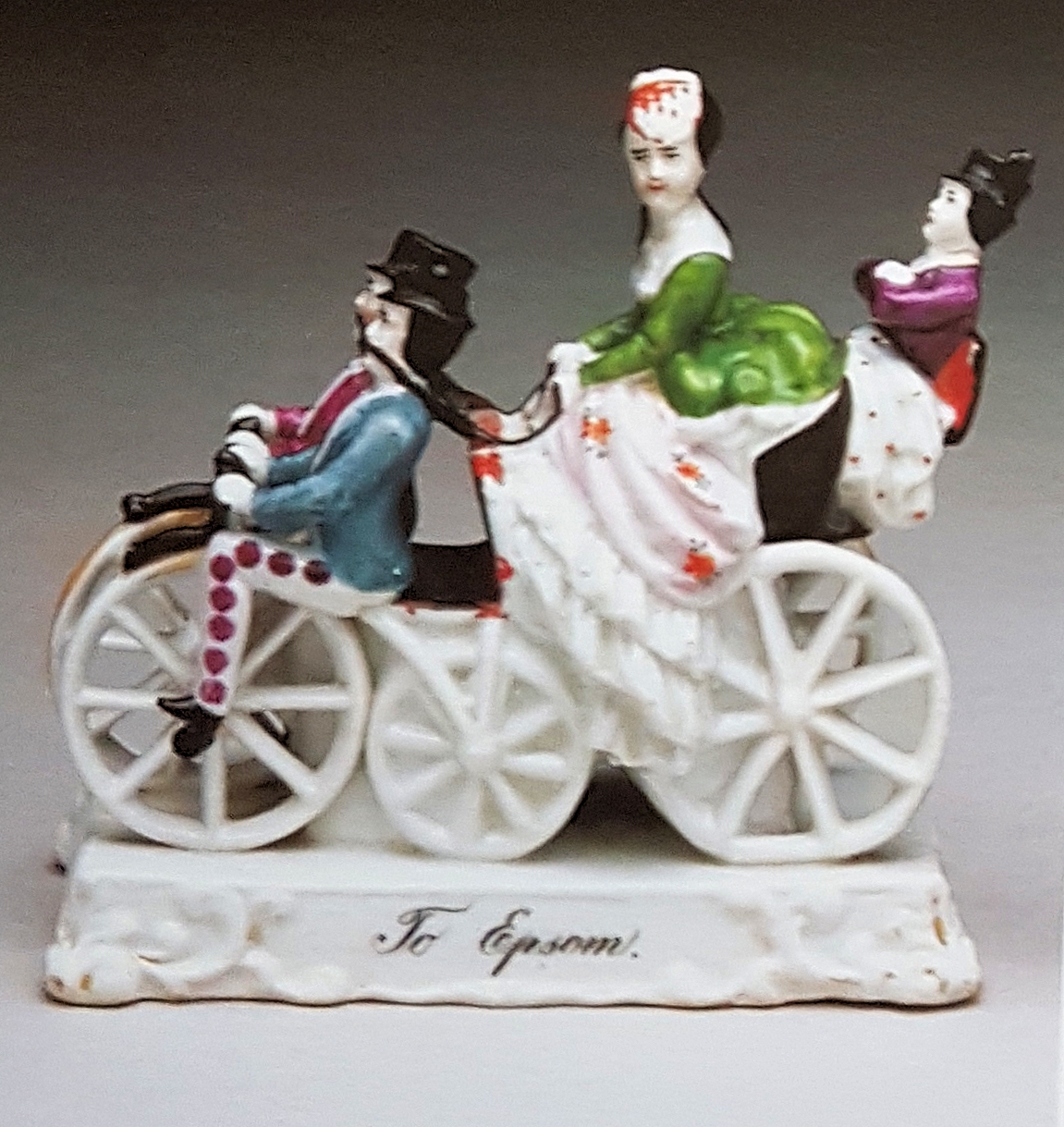 A cycle carriage powered by two men whose very long mustaches
are being held by a woman passenger in the manner of reins.
The majority of fairings were manufactured in Germany by Conta and Boehme between 1850 and 1890 using mass production methods. Then other unknown German manufacturers took over until 1914 when the trade ceased due to the First World War. Today genuine fairings can range in price from a few pounds to several hundred pounds for the rarer undamaged ones. To cash in on the collectors market modern copies have been made but usually loose definition due to poor quality casting.
With special thanks to Clive Vaisey
for suggesting this topic.