
London : A Pilgrimage
by
The following two chapters are taken for from the 1872 book by
‘London: A Pilgrimage’ was conceived in 1868 by the journalist and playwright Blanchard Jerrold. Accompanied by the famous artist Gustave Doré, Jerrold prowled every corner of the heaving metropolis, sometimes with plain-clothes police for protection. ‘London: A Pilgrimage’ is a forgotten classic of social journalism, a frank and brutal look at the poverty striken, gin-swilling London of the nineteenth century, written in a perceptive, bold and gripping style.
CHAPTER VII
The Derby

 OW many days in the course of the year are there when London wears a peculiar aspect, when you can tell the date by the appearance of the streets, the excitement in the clubs, the vivacity of the mob; and the abnormal mixture of classes and of strangers. In truth the influx of foreign elements must be vast to alter the complexion of Cockayne. But while the Christmas Cattle Show is on; on Christmas eve when people of every degree are bent on one absorbing mission, and the schools have disgorged their pupils; on Boxing Day, on Easter and Whit Mondays when pleasure is the watchword of the people, and on the two national race-days — ‘the boat-race and the Derby — London is not the old familiar, hard-working, solemn-envisaged place of .every day. On these far-between holidays there is a downright general determination to agree with Æsop, as interpreted by Dickens, that “the bow must be sometimes loose.”
London at play! The foreigner will be inclined to maintain stoutly that the Londoner never amuses himself. What are these 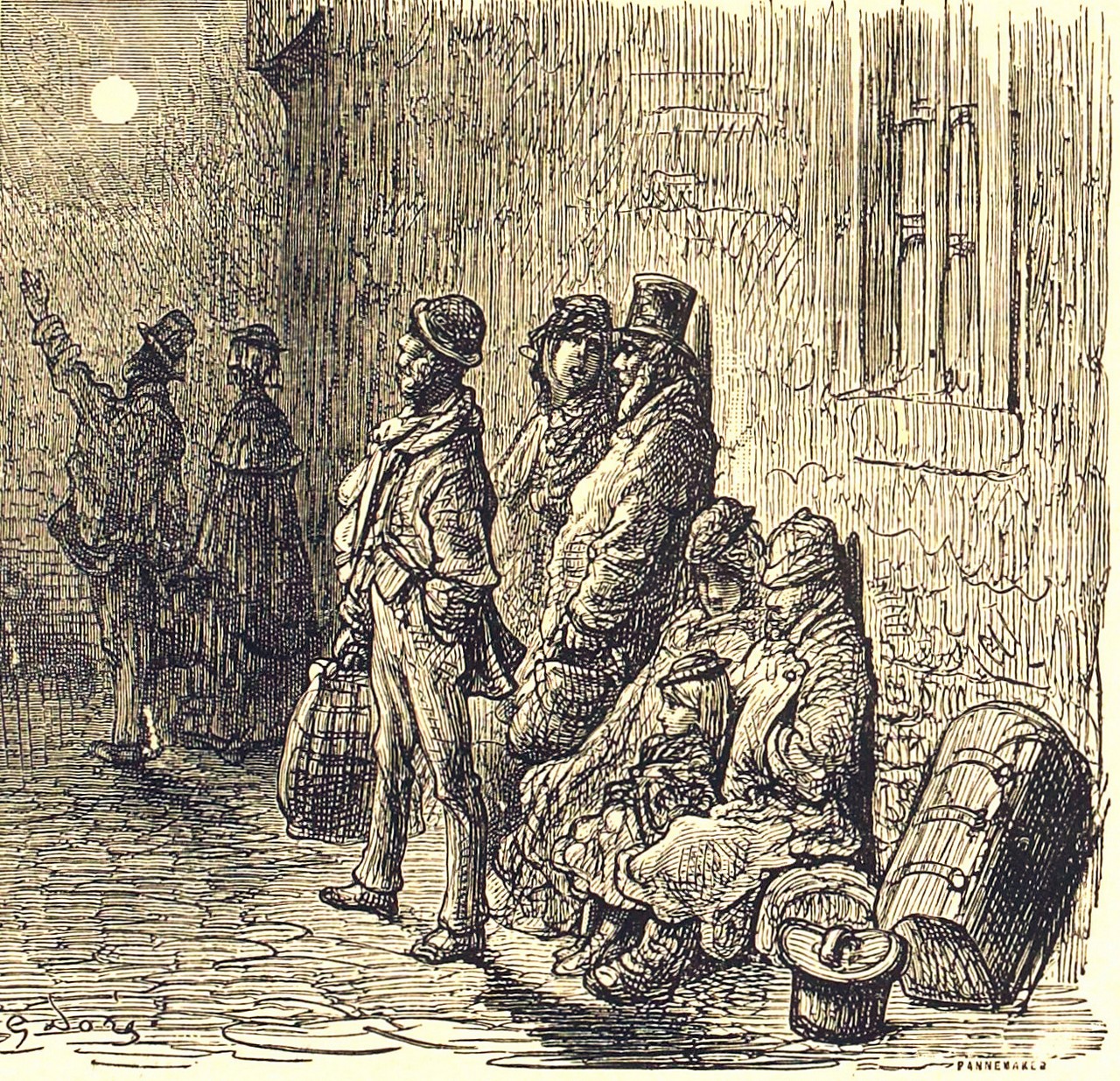 scores of poor urchins and men about? Are they not enjoying themselves among the keenest; cheering and chaffing well-to-do London on its way to the Downs? The maypole has disappeared the fairs have been put down. We have become too polite to suffer the continuance of the annual orgies of Greenwich. May-day rejoicings have faded out of mind. The Lord and Lady of the May are as dead as Gog and Magog. The broad archery grounds of old London have been given up to the builders long since Quarter-staff and single-stick, foot-ball and bowling-alleys are lost English games, which have gone the way of bull and bear baiting, prize and cock fighting; and young England has tried in vain, to revive the best of them. Still the workers and the non-workers; the rich and the poor do sometimes amuse themselves — if “moult tristement” — as we shall assuredly see on this day, when many a traveller finds it impossible to get a bed, even in mighty London .
Mr. Gladstone admirably illustrated the English character when he defined recreation — calling it a change of employment. — the exchange of the debate and the Council-chamber ‘ for the preparation of Juventus Mundi. Among the educated classes, who are of the workers, this definition holds good, and it explains the suburban home life which is the relaxation and the delight of Londoners.
The late Bishop of Norwich* said “Cheerfulness is the daughter of employment; and I have known a man come home in high spirits from a funeral, merely because he had had the management of it ”. The English mechanic can neither dance nor sing — whereas the Frenchman has both these wholesome amusements at command — and they lead him from intoxication and its cognate vices. He is employed, and consequently cheerful without stimulants John Bull has the river-boats, the delights of Gipsy Hill, the Blackheath and Hampstead donkeys, the parks, with full liberty to feed the ducks, the Red House at Battersea, the improving spectacle of occasional pigeon-shooting, the gay amenities of Hornsey — with beer and ginger-beer and nuts everywhere, but these witcheries in the open, are seldom available under the skies, where fog, the snow-cloud and the summer sun, play the most fantastic tricks together Londoners are not to be judged by their amusements — because they are not satisfied with them themselves. It is because their feasts are few and far between that we see “the violent delights ” in which they indulge by the banks of the Thames at Easter, and on the Epsom Downs in May.
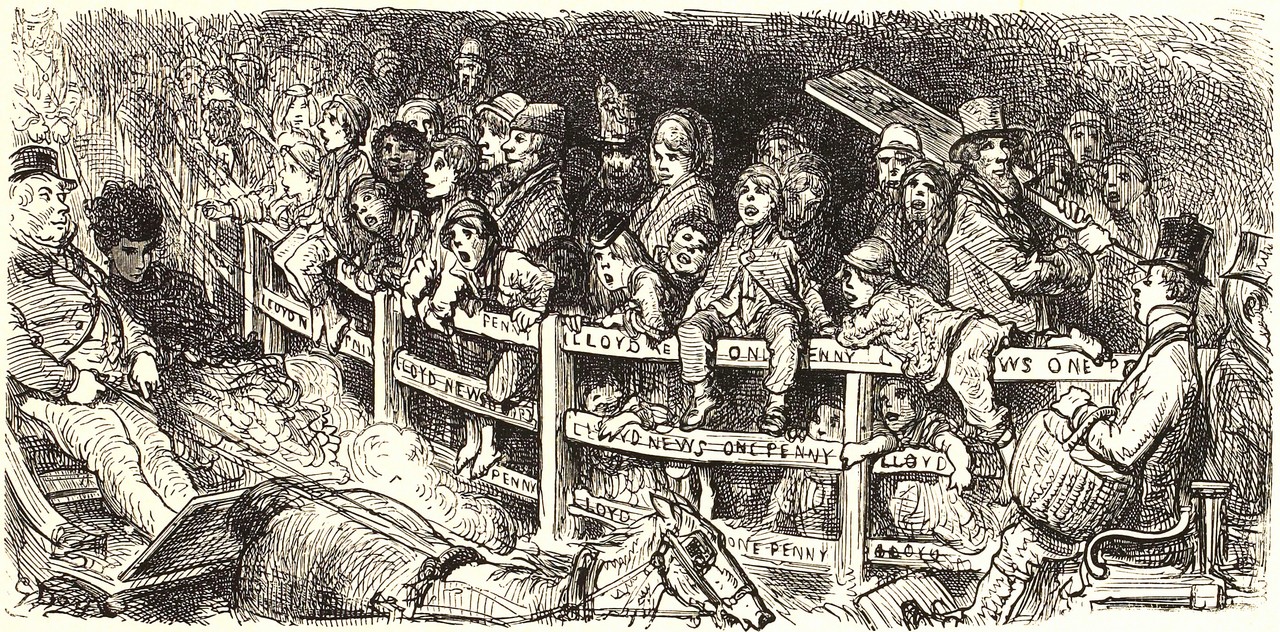
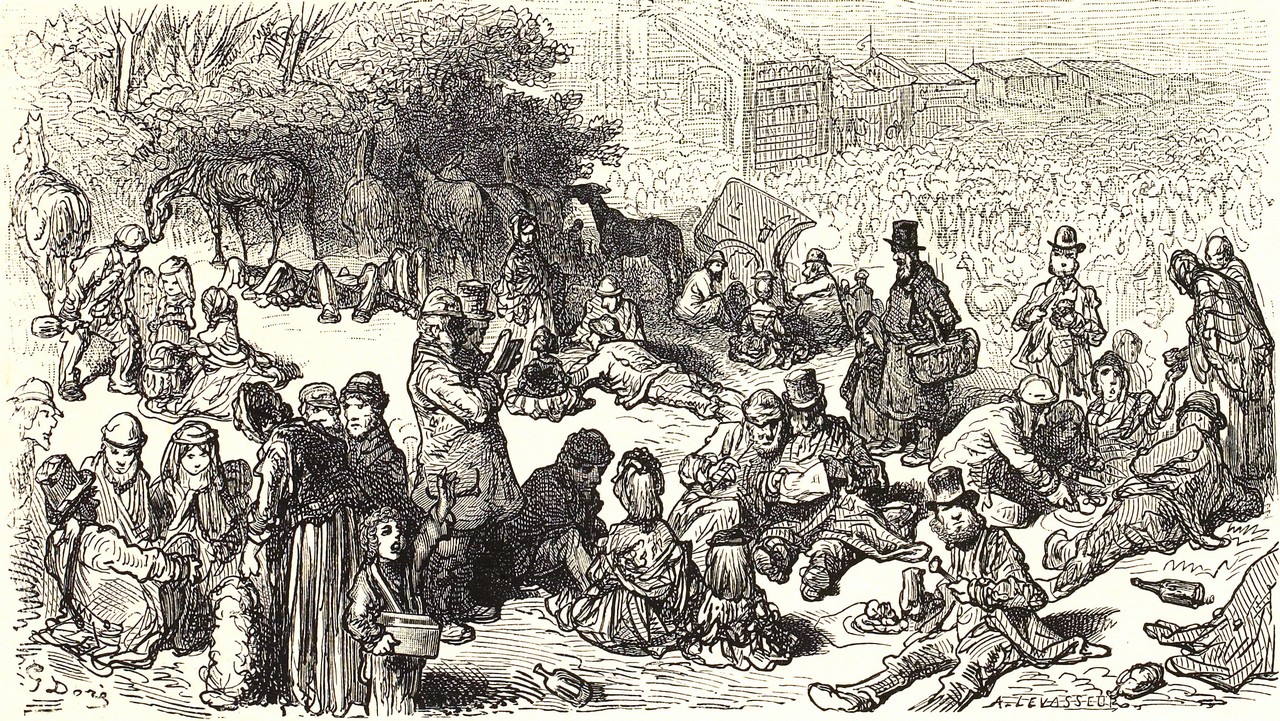
On the Derby morning, all London wakes at cock-crow. The first flicker of light breaks upon thousands of busy men in misty stables breaks upon a vast encampment of the Romans and other less reputable wandering tribes on the Downs; breaks upon lines of loaded pedestrians footing it from London, to turn a penny on the great event Horsey folk issue from every beer-shop and inn on the road. The beggars are in mighty force, the tattered children take up their stations. Who wants to see samples of all degrees of Cockneys, has his golden opportunity to-day. From the Heir Apparent, with his handsome, manly English face, to the vilest of Fagin’s pupils; the observer may pass all our Little Villagers in review. The sharp-faced, swaggering betting man, the trim, clean groom with a flower in his button-hole, the prosperous, heavy-cheeked tradesman, the ostentatious clerk, the shambling street singer, the hard, coarse-visaged costermonger, the pale and serious artisan, the frolicsome apprentice in flaming neck-tie, the bandy-legged jockey; the nouveau-riche smug in his ostentation; the merchant splendid in every appointment of his barouche and of his person, the would-be aristocrat flashing his silver mug of foaming Rœderer in the eyes of the Vulgar packed close as pigs in a butcher’s cart ,— these— catching a branch here or encountering a “spill” there— pass under the observer’s eyes in a never-ending tide. And then the ladies! The ladies of the opera, and the Mile, and Almack’s, are not here. But if you desire to see the fresh buxom wives and daughters of the lower middle class, delight in their ideas of the fashion; if you wish to study the outward belongings of the workman’s spouse and girl, if you would get a true idea of the apple-woman, the work-girl in holiday finery, the beggar’s female companion, in a cart with Dick Swiveller and his pals — and all in the highest spirits, now is your opportunity, and it will last clear through the day, and even a fair stretch into the night.
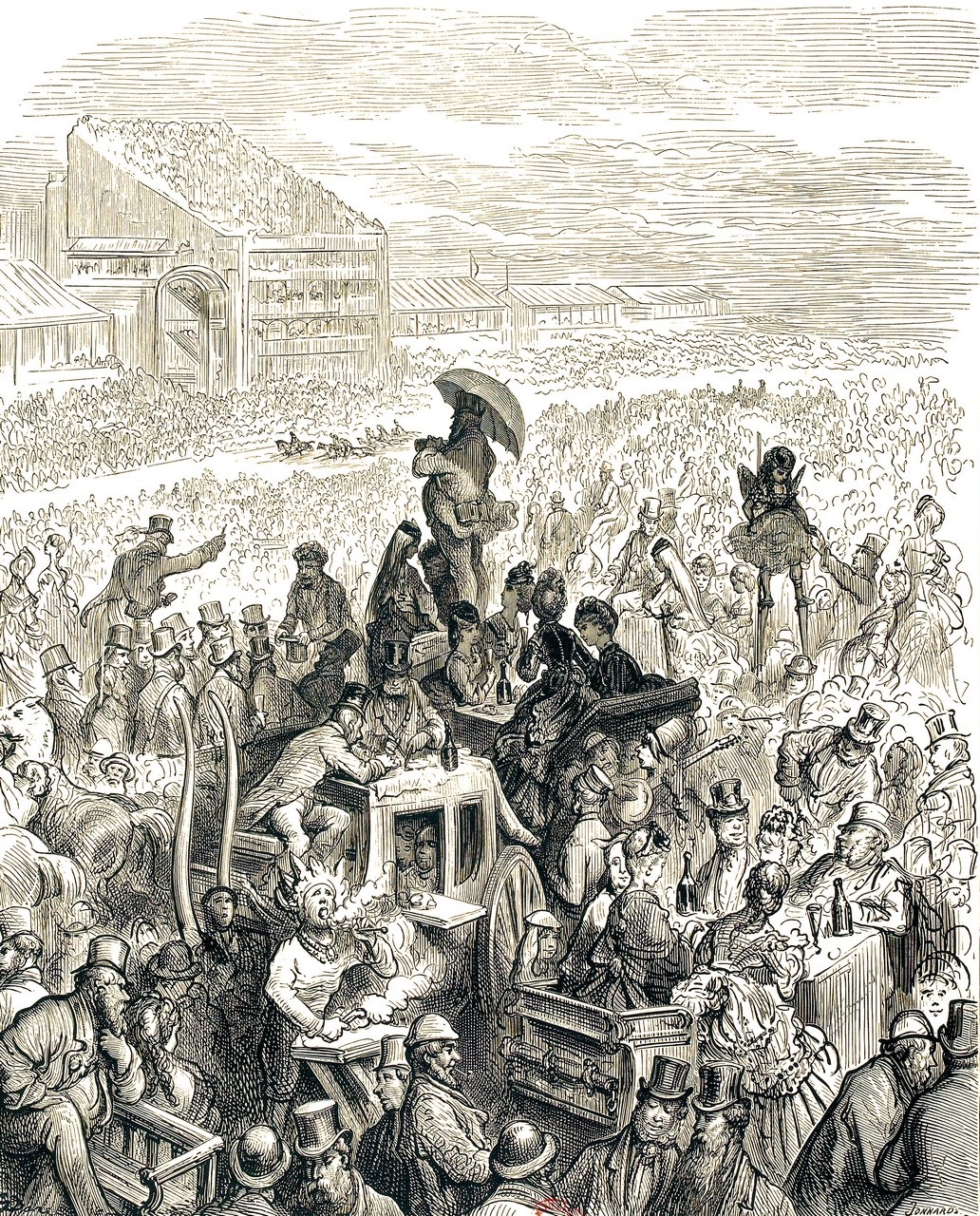
The Derby is emphatically, all England’s day. It culminates in a result in which millions are keenly interested. The English people love the water and the road, the boat and the horse the scull and the saddle. Every school-boy affects to know a good mount and the rig of a ship. On the eve of the Derby, urchins pretend to be knowing in their play-grounds on the relative chances of the horses and the maid of all work will trip round to the butcher’s to have early intimation of the winner.
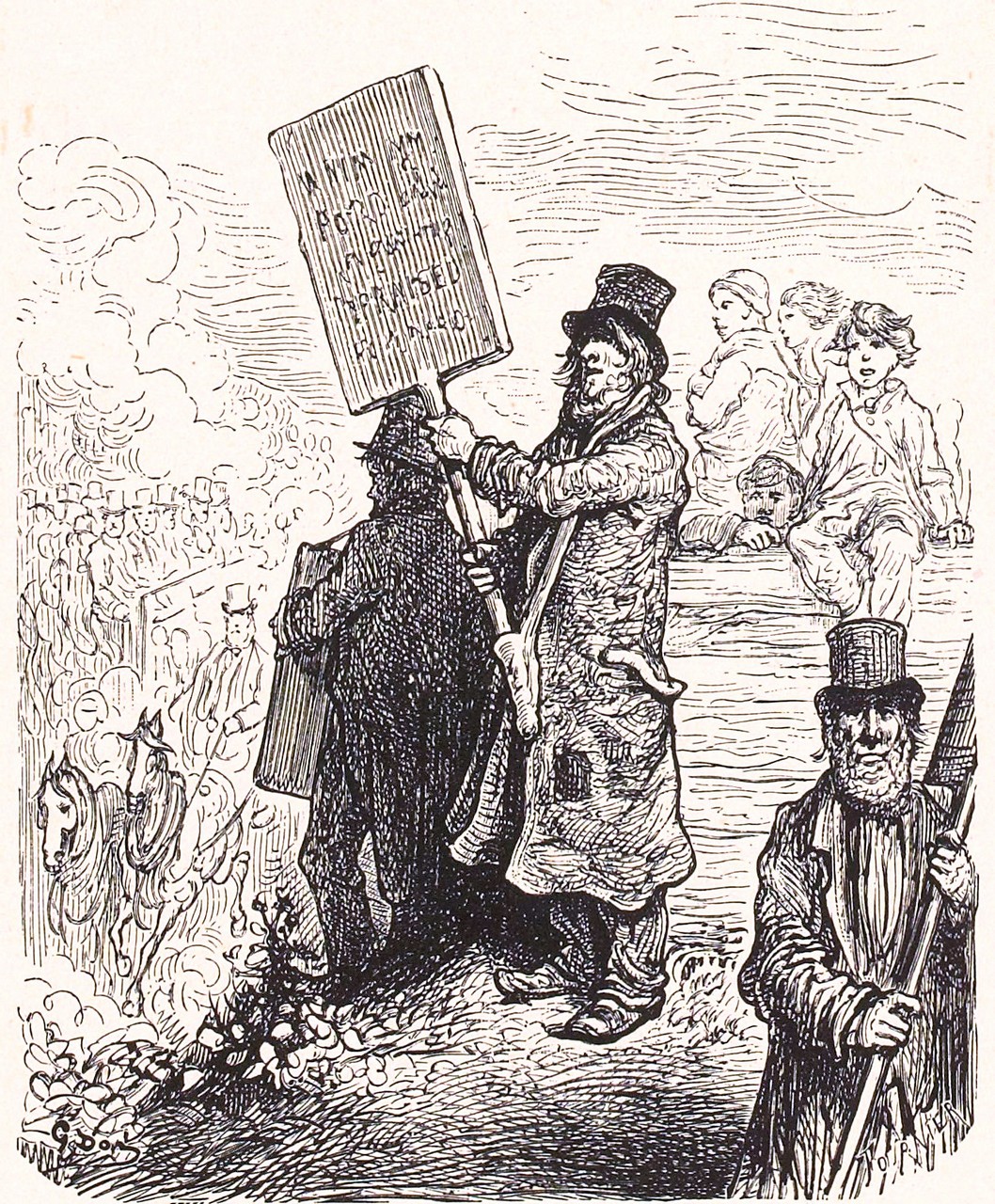 On the road, and at the Derby, it is Dickens’ children you meet, rather than Thackeray’s. All the company of Pickwick — Sam Weller and his father, a hundred times. Mr Pickwick benevolent and bibulous; Jingle on the top of many a coach and omnibus. Pushing through the crowd, nimble, silent and unquiet-eyed, Mr Fagin’s pupils are shadows moving in all directions. The brothers Cheeryble pass in a handsome’ barouche, beaming on the crowd, and taking any passing impertinence as intended for a compliment. Their clerks are not far behind them, in the latest paletots — their beardless faces shining behind blue and green veils Tom Allalone offers to dust you down, as you get within the ropes Mr Jonas Chuzzlewit has travelled in the congenial company of Scrooge to mark their prey Mr Dombey is here, solemn — so that you wonder what on earth can have drawn him to the hurly-burly, and why he has planted himself in the thick of the grand stand Barkiss is as willing as ever, planted delightedly next a buxom country wench, and threading his way through the tangle of vehicles, with a cheery and prosperous audacity; and few if any notice the solemn man who carries aloft a board, on which the wicked are warned to repent in time.
We admit that the halt at the road-side public house falls naturally into a very English scene. Pots of beer flash through the crowd are lifted to the roofs of omnibuses, passed inside through the windows, raised to the lips of ladies who are giggling in spring carts, handed to postillions who drink while -their horses plunge, and not an unwilling lip is seen anywhere.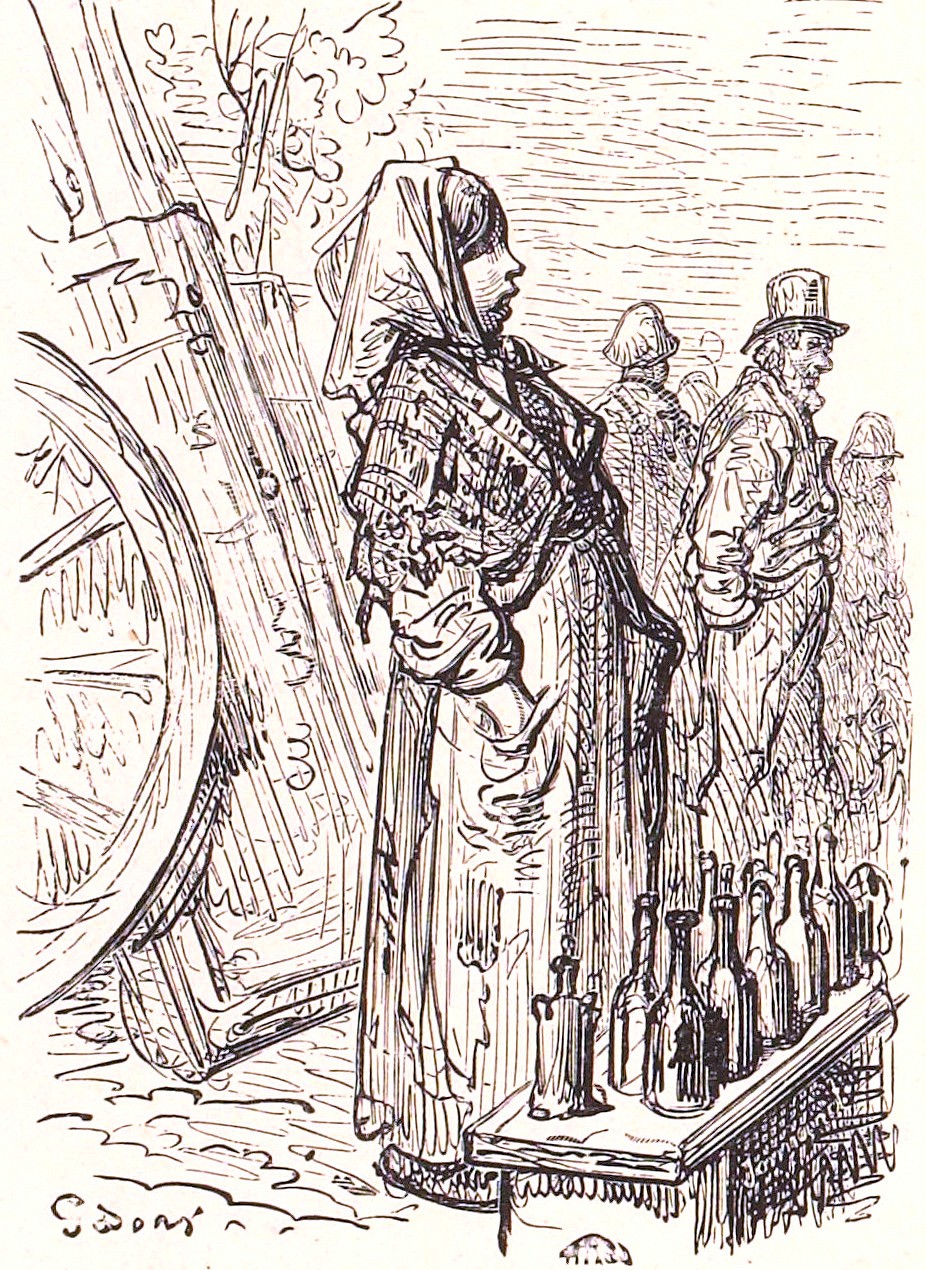
“Again!’’ is the exclamation as our horses are brought to a sharp stand at an angle of the road. Beer is ahead once more — and will be ahead many times before we get back to town. “The Big Pint” will .have worked some strange scenes before it is put by for the night. Let us not shirk the responsibility of the whole scene, from thimble-rigger to the peer armed with flour-bags. We are told that Englishmen take delight in providing themselves with frequent chances of breaking their necks; and that this is a very strange trait in our character. Our lads love perilous games our men form a club for mutual encouragement in the art of passing a holiday on the edge of a crevasse, with chances of avalanches overhead to keep the mind fully engaged. For such a people, this mad scamper of “a whole city full ” through the lovely sylvan scenes of our island, to see two or three races, with the anticipation of a hundred accidents in the twilight on the way home, is a logical form of national holiday. To take an active part in it, a man must be robust And this is the quality which pervades the marvellous assemblage. Stroll through the enormous encampment that lights up the Downs on the eve of the Derby, and mark the strange hordes of men 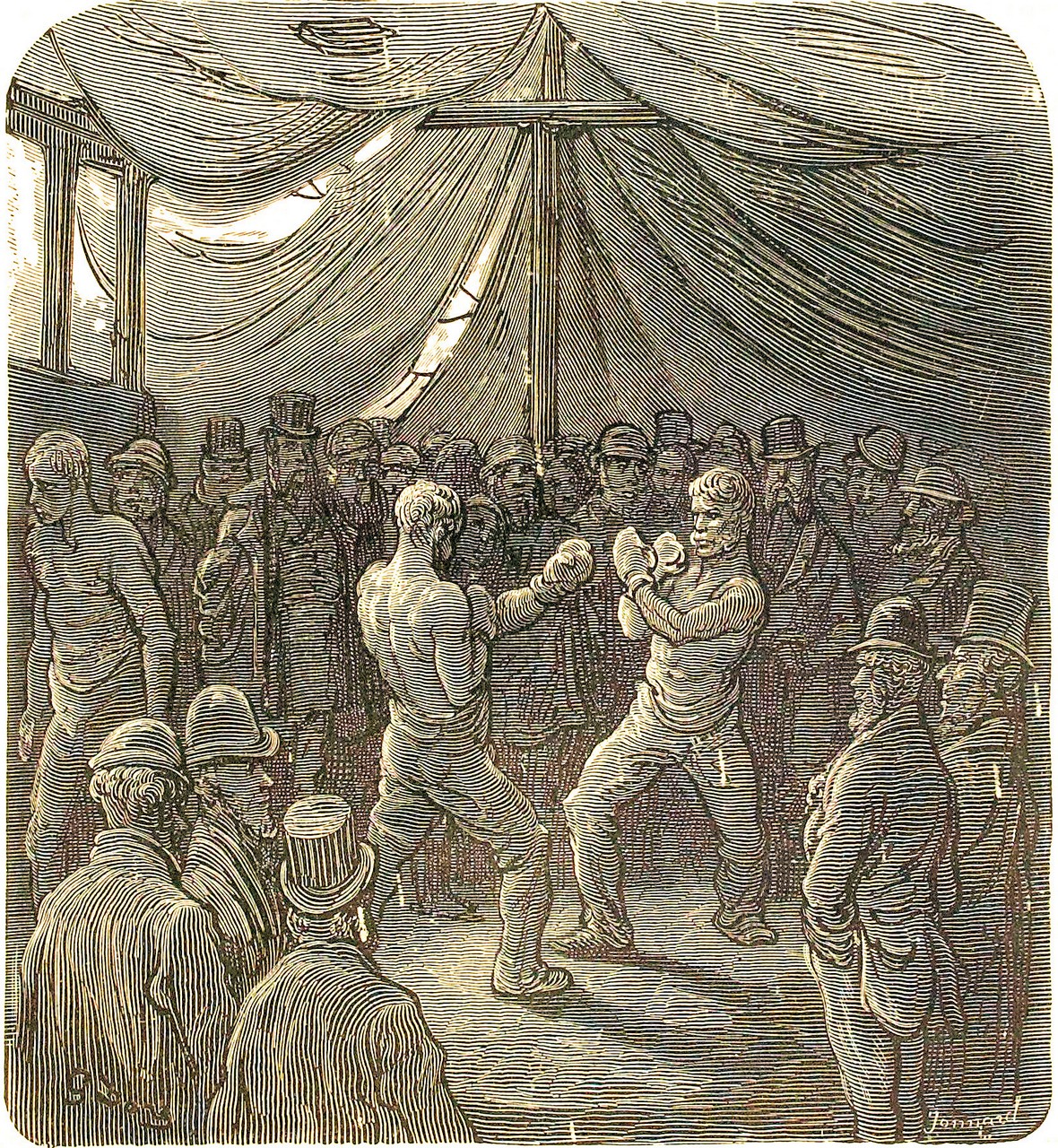 and women who are preparing to receive half London to-morrow — from the gipsies to the governors of the games, the proprietors of the great refreshment booths, and the thick-throated fighting-men who are to put on the gloves, for shillings In the throng are whole battalions of the vagrant poor intent on turning a few pence on The Event but there is robust Will amid the poorest and feeblest None are halfhearted. The shoe-black holds it a fine thing to be within sight of the Grand Stand, and has a boisterous spirit at the morning dawn, in defiance of chill and wet — of sleet and wind. He will warm, with the richest and happiest, to the event of the day, as the hours creep on, and the mighty tide of dusty travellers, streams upon the downs, creeps along the lines of the course, fills the Grand Stand with its dark flood, and ripples round The Corner There is a brave, contentious spirit in the vast concourse, as the dealers in hundreds of articles, the tricksters, the mountebanks, the gipsies, and the betting men bend to their work, and fill the air with a hoarse, bewildering sound.
CHAPTER VIII
London on the Downs
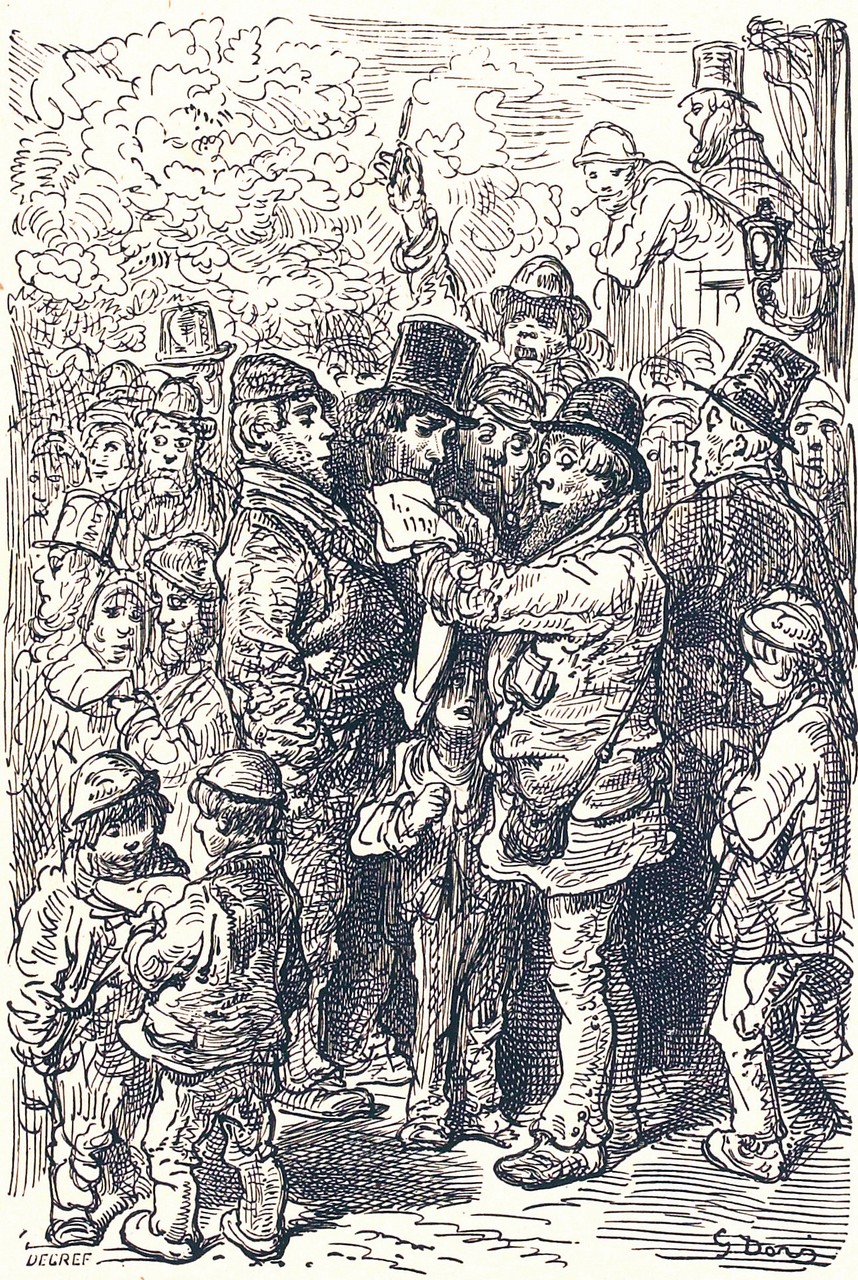 London on the Downs; London waking on the Derby morning London on the road to the race London in the evening after the race I Here are studies each of which illustrates salient features of our metropolitan life.
On the Downs London is in the highest spirits, and all classes are intermingled for a few hours on the happiest terms.
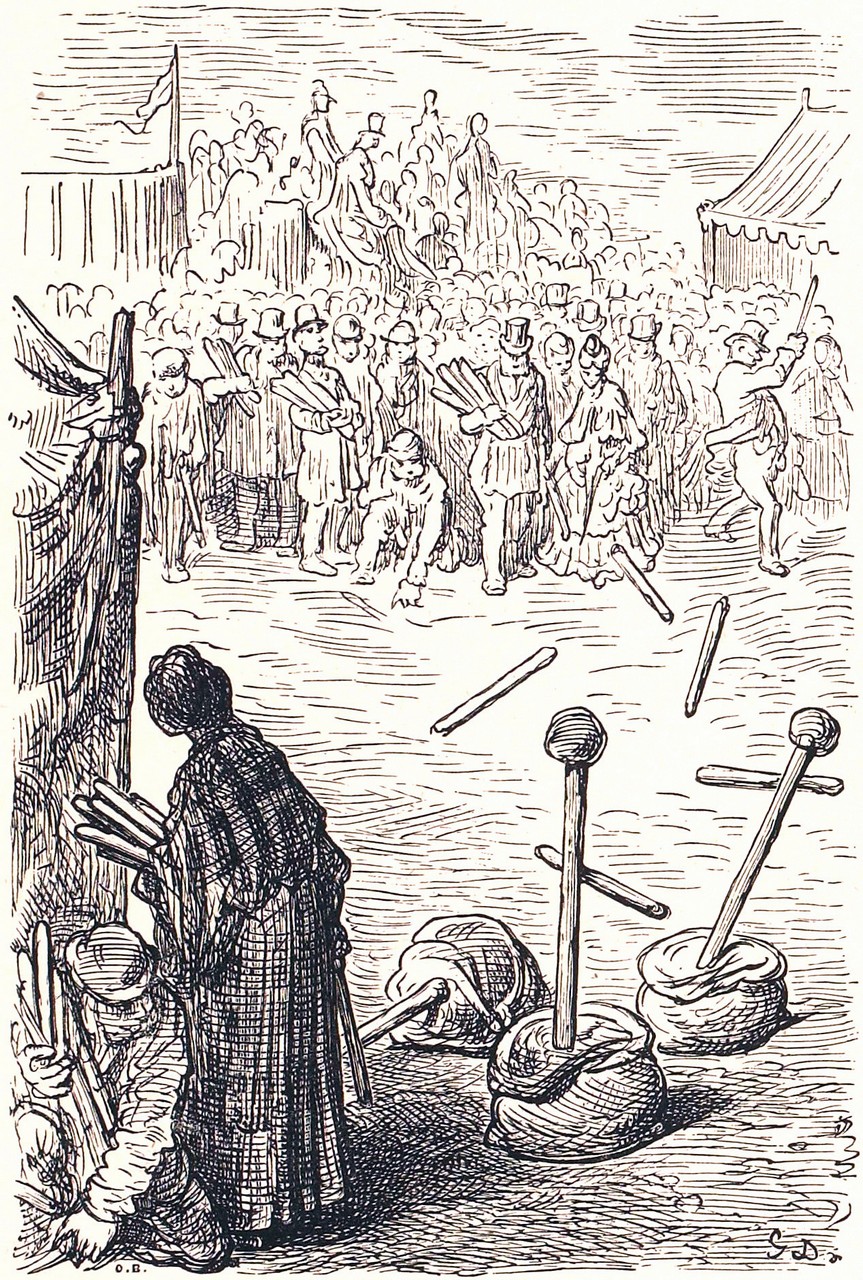
Strolling amid the booths and tents we find elbowing each other, bantering, playing, drinking, eating and smoking, shoals of shop-boys and clerks, tradesmen, in fast attire, mechanics in holiday dress, wondering foreigners, gaudy ladies, generally of loud voice and unabashed manner. We come upon a noble earl indulging in three throws for a penny. He has been recognised by a few bystanders; and the whisper that a peer is casting sticks at cocoa-nuts and dolls has travelled apace. His lordship has taken heartily to the fun, and is reckless of the shillings he is spending. His cuffs turned back, his hat tilted upon his head, his face red and shining, he beams upon the applauding crowd, when he has deftly consigned a jack-in-the-box to the bag which makes it his. We press onward through packs of noisy lads, past negro serenaders, fortune-tellers, tattered sellers of fusees, stable-men of every degree, groups of men-servants finishing up luncheons, — to the course. Way is cleared a little, and a calm-faced Nawab passes, followed by his silent retinue. Not far off we come upon a personage upon whom many hopes are centred — the patient exile waiting for his crown. Then there is the beauty of the hour, flushed with champagne, and haughty to the slaves whose elbows are planted in rows round her carriage.
 Clear the course ! We suddenly find the crowd tighten about us A flutter goes through the sea of heads on the Grand Stand the men climb to the roofs of the carriages the general murmur deepens, the betting men are in a fever of excitement, a fight or two may be descried from the vantage-ground of a rumble.
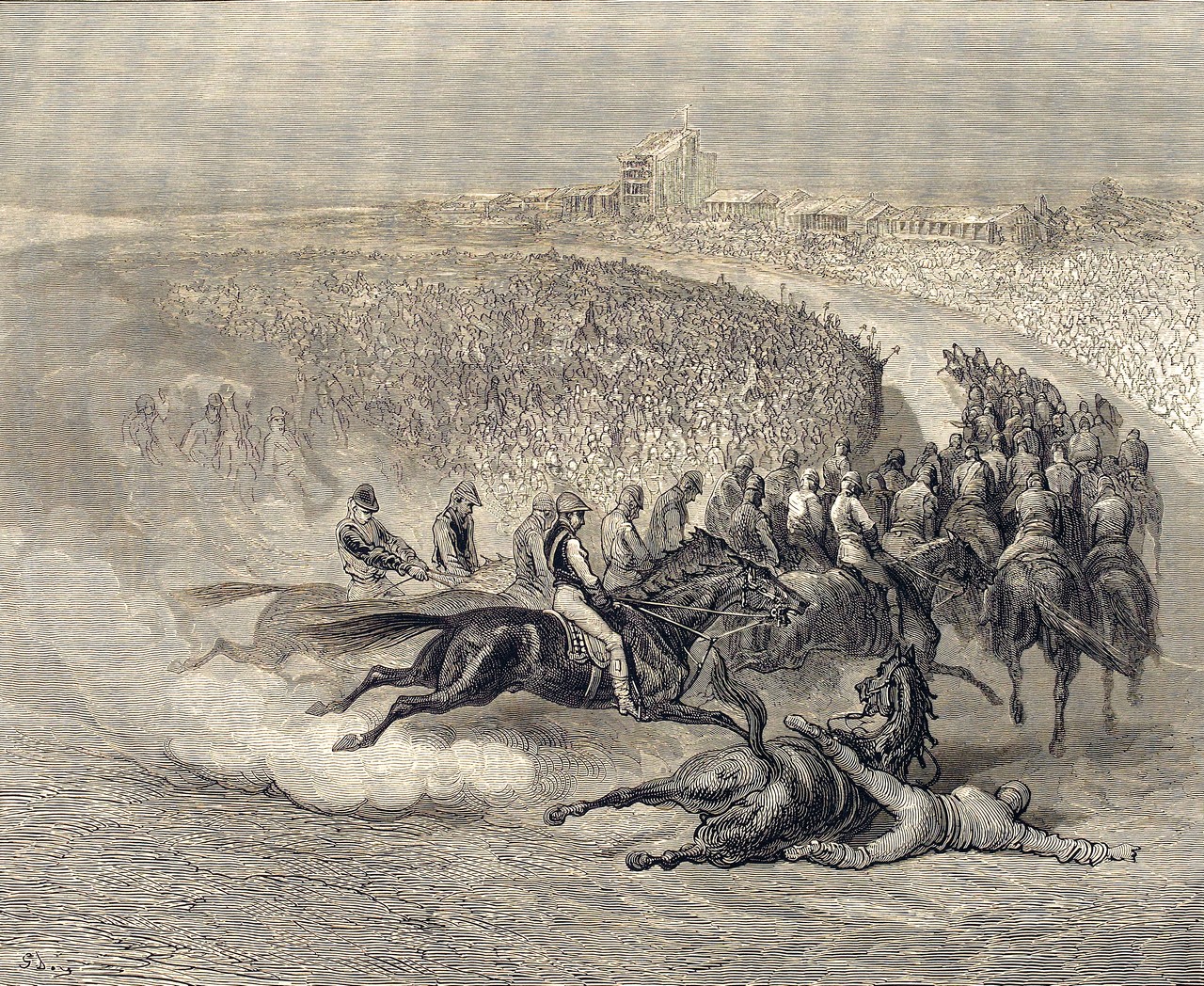
They’re off ! The emotion is quiet at first. The Grand Stand suddenly becomes white with a thousand faces turned in one direction — an observer remarks, “like the heads of geese upon’ a common”. Then a low, hoarse sound travels about the Downs, deepening in waves of thrilling vibration at every instant. Then a roar breaks upon the frantic people, answered by a second roar. The multitude is divided into two prodigious camps. Faster and shriller come the shouts. The Grand Stand is in convulsions The bellowing is fearful to hear : the frantic commotion along the lines of coaches is frightful to see — as the horses, lying like a handful, sweep to the winning-post. Cheers and counter cheers, fluttering of handkerchiefs, waving of hats upon sticks, cries, fierce as though wild beasts had been let loose; all tend to a final crash of ten thousand voices, and — the Derby is won.
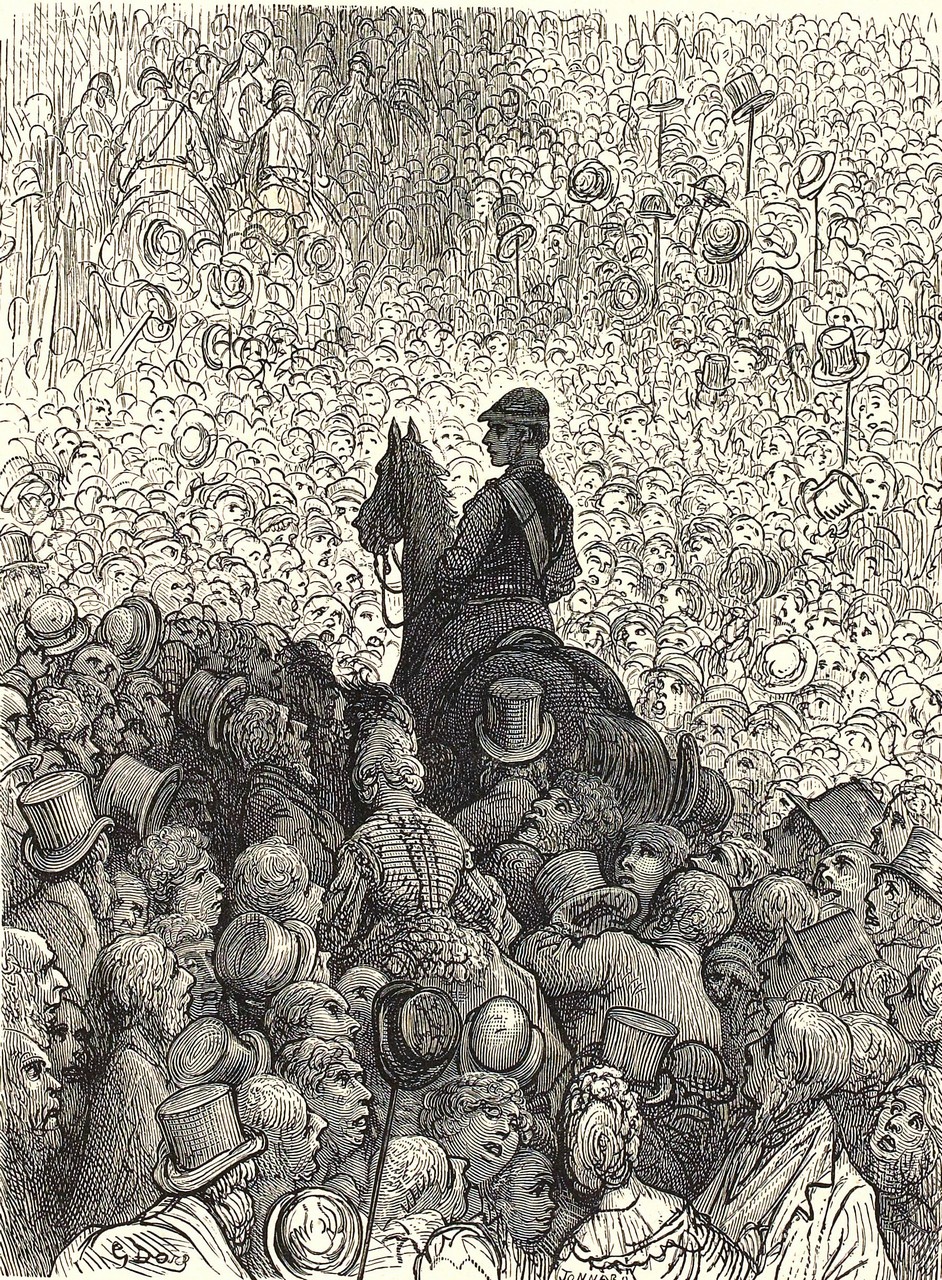
”The tooth is out!” was the expression that fell upon my ear — as a young buck, with a purple face, jumped from his coach and buried himself in the heaving throng.
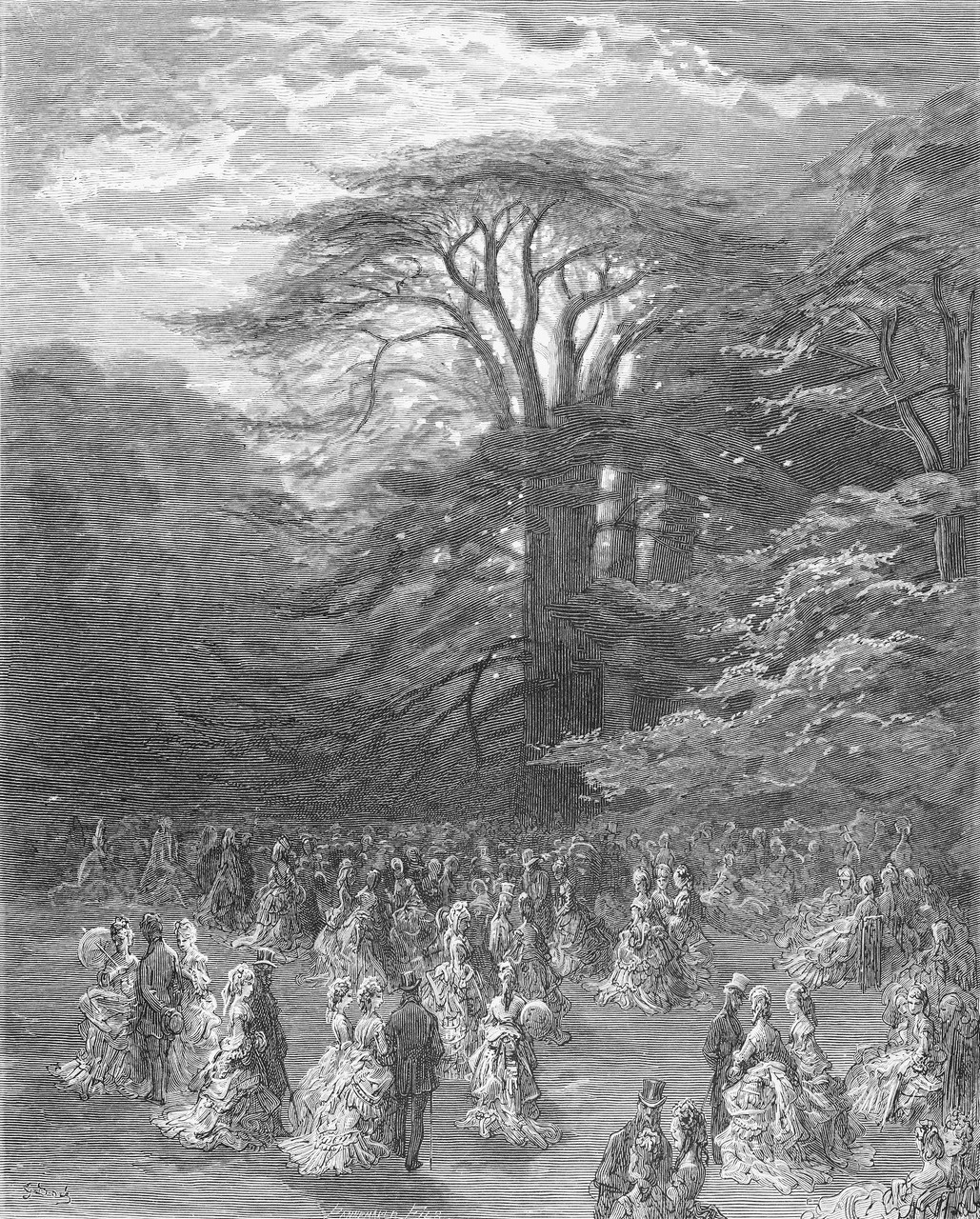
Epsom is not Ascot we all know; but the Downs discover an extraordinary variety of superb “traps every Derby day, bearing considerable burdens of such beauty’ as is not easily matched on any Continental racecourse. The Countess Crême de la Crême is not here (unless she be among the beauties grazing disdainfully from lofty balcony by the way) the Duchess of Surrey is of opinion that the scene is not one for the serene eyes of her daughters, the feminine gentilities of Kensington and Westbournia are consequently absent also — but there are whole parterres of honest, pretty women of humble social pretensions — plebeian beauties — whom the critical Frenchman must have overlooked or misunderstood.
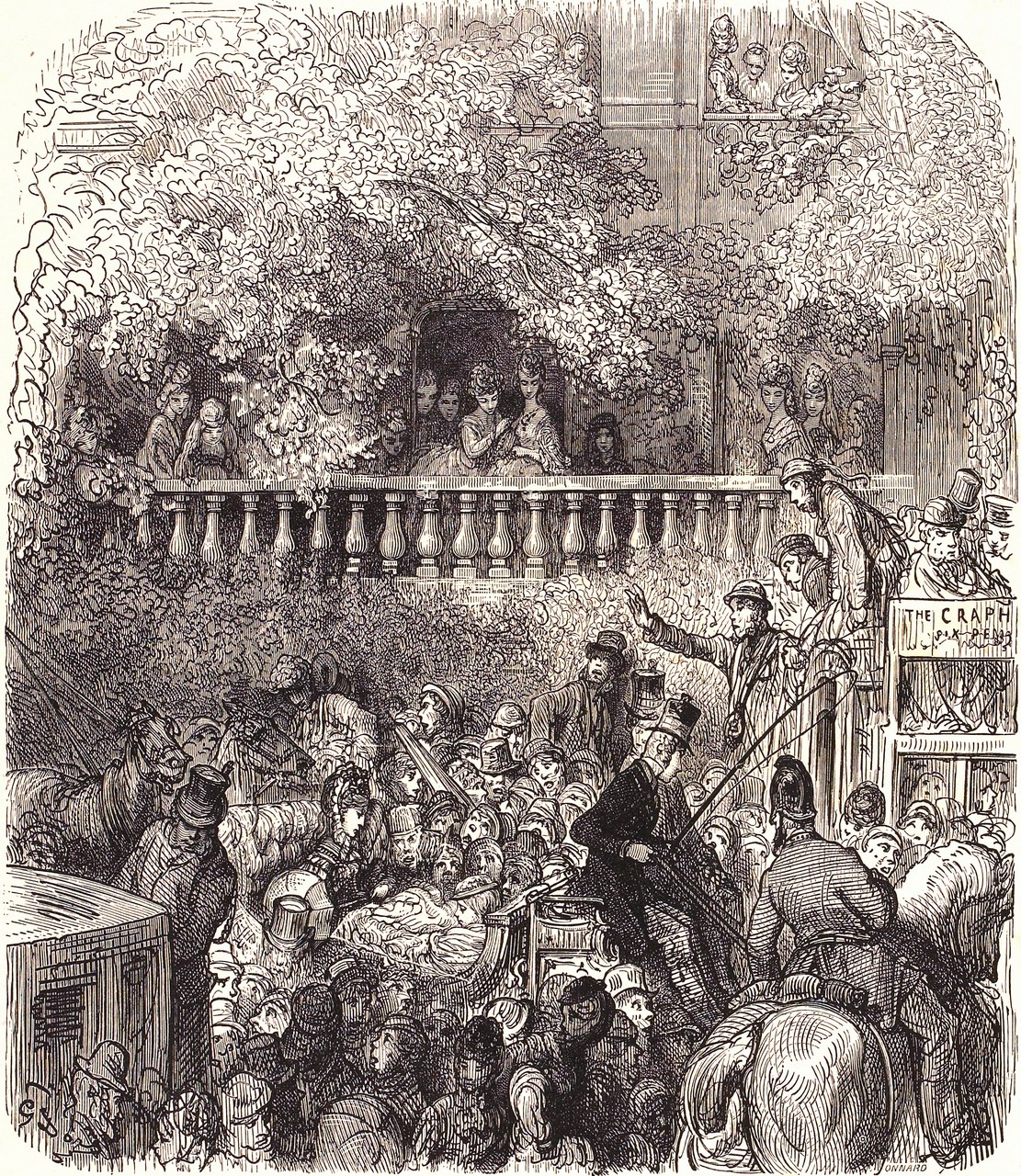 The delights of the Downs are to M Taine’s mind our carnival — and a very noisy one — noise being essential to the over-muscular, thick- throated Englishman, who delights in every opportunity of showing his manly vigour.
I have already observed how strongly the general wearing of cast-off clothes by our poorer country-men and country-women had struck upon the mind of my fellow-Pilgrim. The sadness and meanness of the habit were impressed upon us scores of times during our wanderings; so that when on a certain Sunday we turned into Petticoat Lane, we had the key to the activity of the clothes market of Lazarus. The Lane clothes thousands at Epsom.

M Taine will not admit that there is anything grandiose in the great race-day on the Downs. The crowd is an ant-heap the horsemen and the carriages moving about resemble beetles, May-bugs, large sombre drones on a green cloth “ The jockeys in red, in blue, in yellow, in mauve, form a small group apart, like a swarm of butterflies which has alighted ” M Taine mistrusts his moralising, as he unfolds it. “ Probably I am wanting in enthusiasm, but I seem to be looking at a game of insects ” His description of the actual race is excellent :
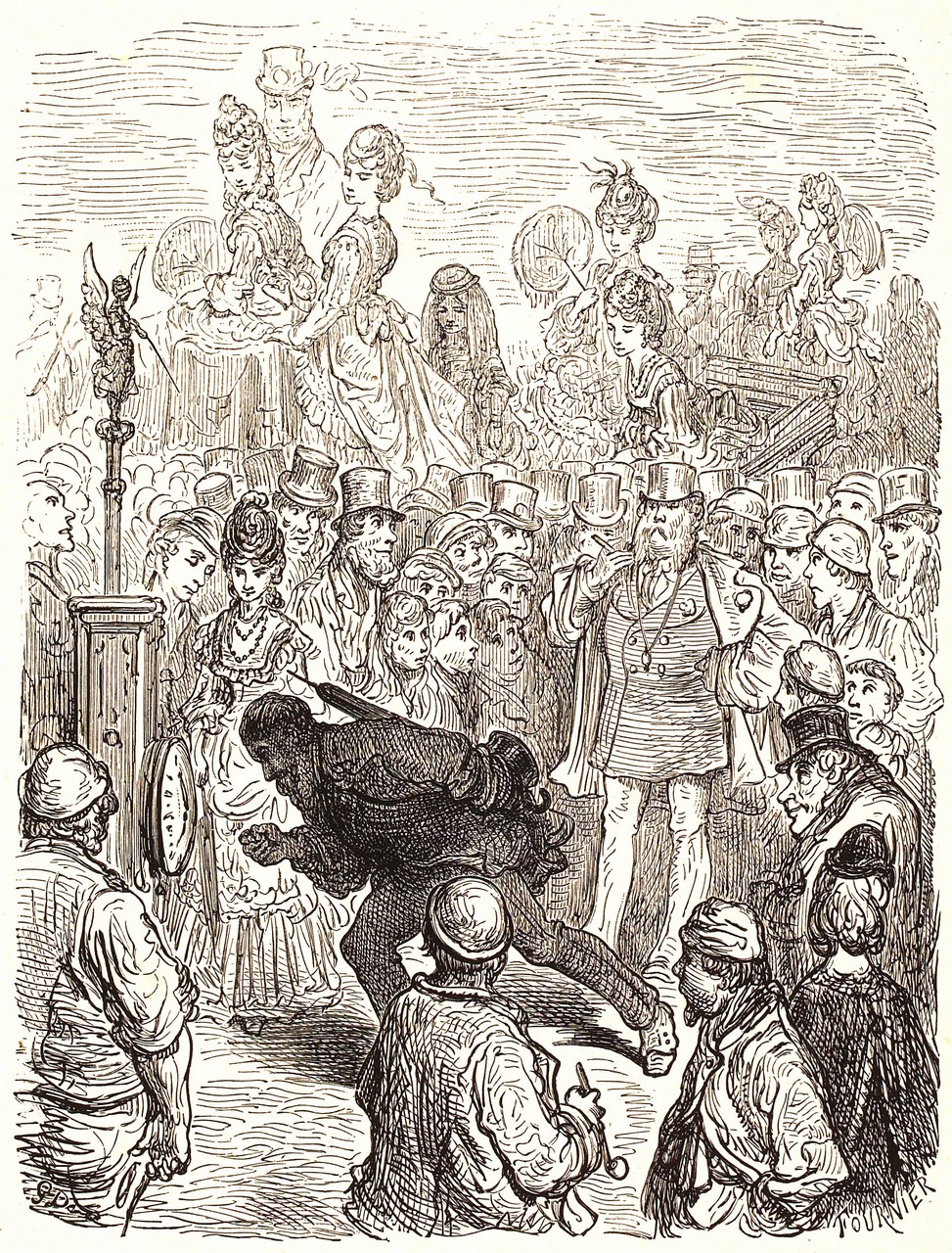 “ Thirty-four run After three false starts they are off, fifteen or twenty keep together, the others are in small groups, and one sees them moving the length of the ring. To the eye the speed is not very great; it is that of a railway train seen at the distance of half a league; in that case, the carnages have the appearance of toy-coaches which a child draws tied to a string. Certainly, the impression is not stronger here, and it is a mistake to speak either of a hurricane or a whirlwind. During several minutes, the brown patch, strewn with red and bright spots, moves steadily over the distant green. It turns, one perceives the first group approach ‘Hats off!’ and all heads are uncovered, and every one rises. A suppressed hurrah pervades the stands. The frigid faces are on fire, brief, nervous gestures suddenly stir the phlegmatic bodies. Below, in the betting ring, the agitation is extraordinary — like a general St Vitus’s dance. Picture a mass, of puppets receiving an electric shock, and gesticulating with all their members like mad semaphores. But the most curious spectacle is the human tide which, instantaneously and in a body, pours forth and rolls over the course behind the runners, like a wave of ink; the black and motionless crowd has suddenly melted and become molten; in a moment it spreads itself abroad in vast proportions till the eye cannot follow it, and appears in front of the stands. The policemen make a barrier in two or three ranks, using force when necessary to guard the square to which the jockeys and horses are led. Measures are taken to weigh and see that all is right ”.
Perhaps the company just in our rear are extravagant enough, for an illustration of British wildness on the return frolic from a race.
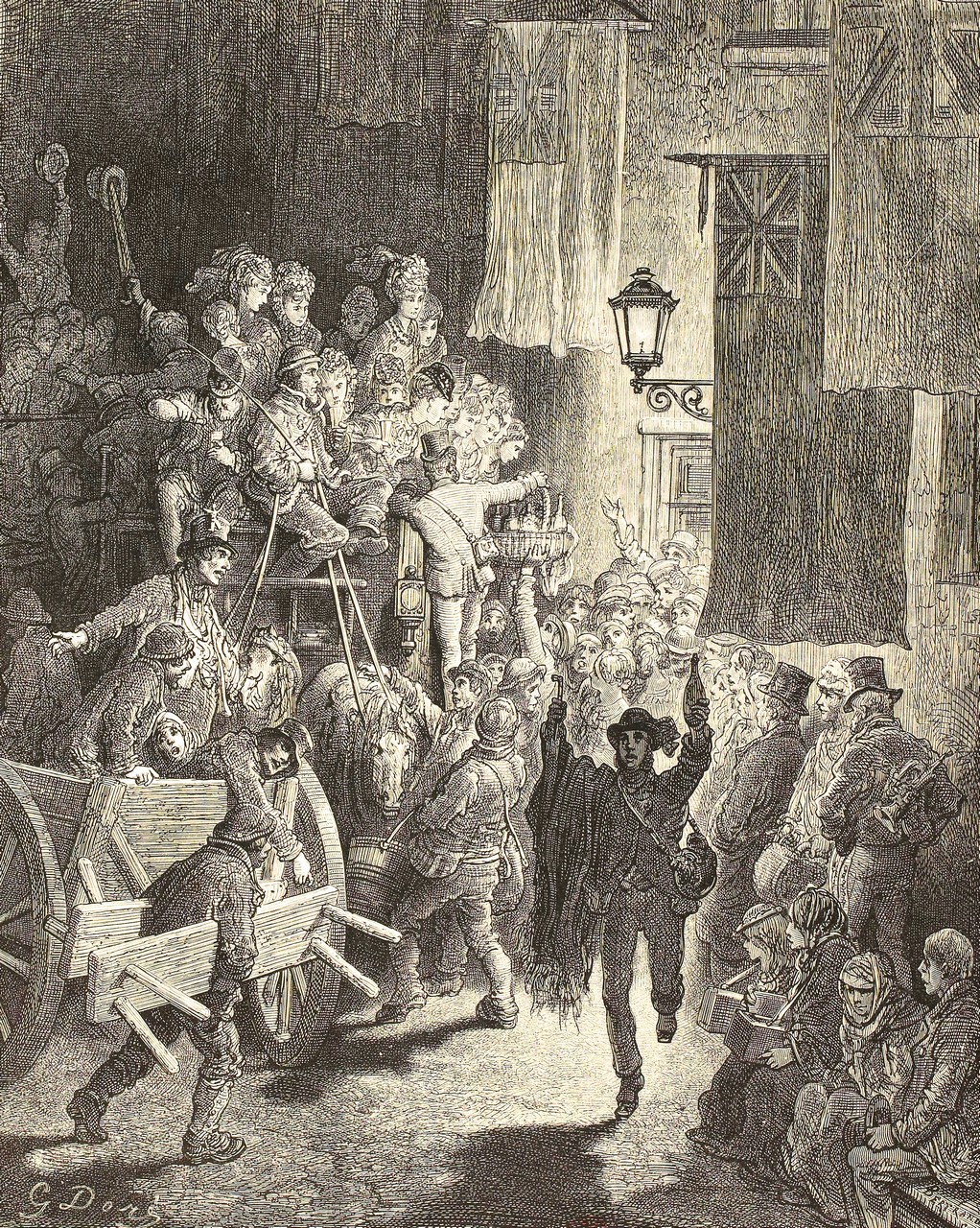
When the brilliant French observer goes on to say that the betting fever is so intense and general that “several cabmen have lost their horses and their vehicles,” we can only exclaim “Gently M Taine — or the reader will imagine that not the least active holder of a champagne glass, was the moraliser himself”. Let us moralise on the way home, with the empty baskets in the boot : but don’t let us make a note of every extravagant story we shall hear before we get to Kennington Common.
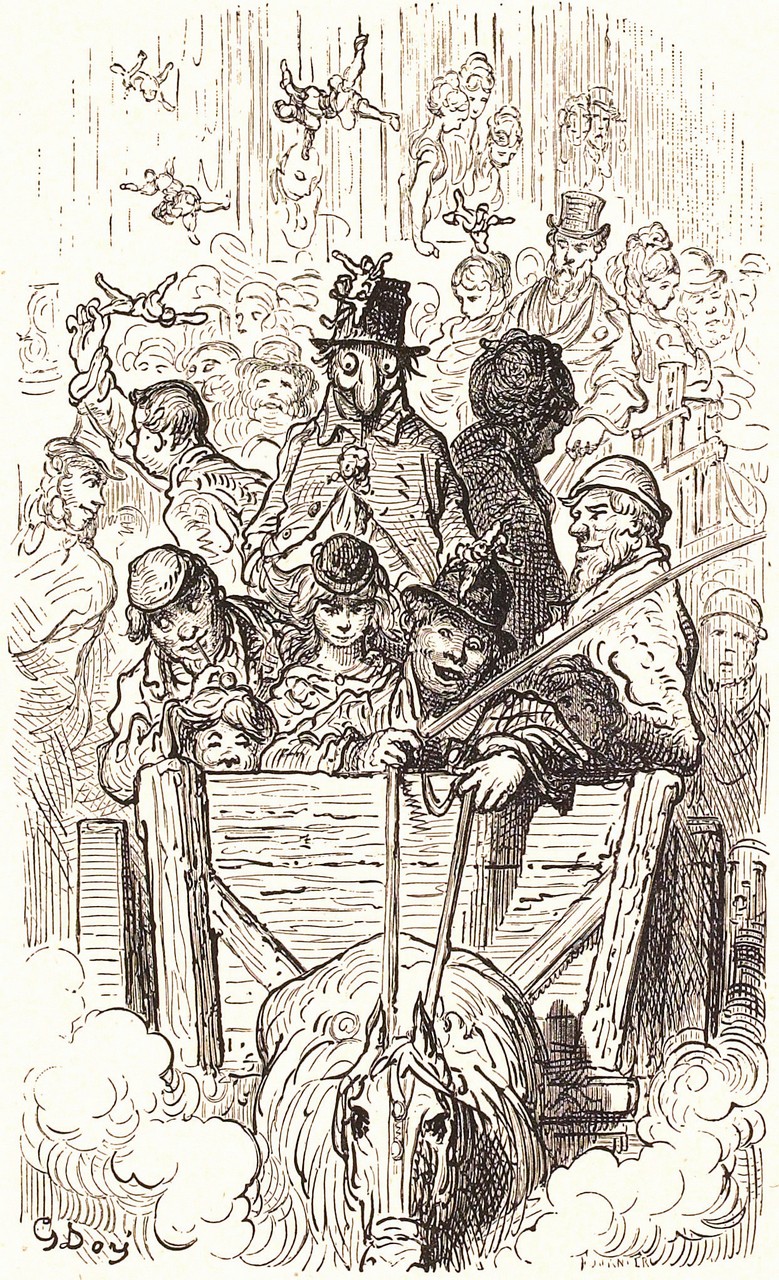 The stories we may believe are wild and startling enough for the most earnest lover of the sensational. We find the revellers divided into two distinct, easily-recognised sections — viz, the Winners and the Losers. The Winners are uproarious and bibulous; the Losers are bibulous and sullen. It cannot be pretended by the keenest lover of the course and the hunting-field that racing promotes any virtues. On the other hand it fosters a general love of gambling. But this Derby-day has its bright — even its useful side too. It gives all London an airing, an “outing”; makes a break in our over-worked lives; and effects a beneficial commingling of classes. This latter result is more importance than appears on the face of it: and I commend it to the attention of the moralists on the road — especially of the zealots who pay the religious board-men. These silent itinerant preachers provoke the tipsy blasphemer: and never make a penitent. There is a time for all things; and most certainly the Derby-day is not the time for missionary work.

* Aphonsms and Opinions of Dr George Home, late Lord Bishop of Norwich