
Other Ewells
Where else in the World is there an Ewell?
The following articles first appeared in various editions of
Lives and Times
the newsletter of
Epsom & Ewell Local & Family History Centre.
Index
Click on the name to jump to the relevant entry
Click for our page on Other Epsoms.
Ewell, Smith’s Island, Maryland, USA
Google Maps Satellite View
The community of Ewell in Maryland is the largest of three settlements on Smith Island in Chesapeake Bay. It is Maryland’s lone offshore island in the Bay accessible only by boat. The five by three mile island has a resident population of about 350 people, which is boosted by some 5,000 tourists.
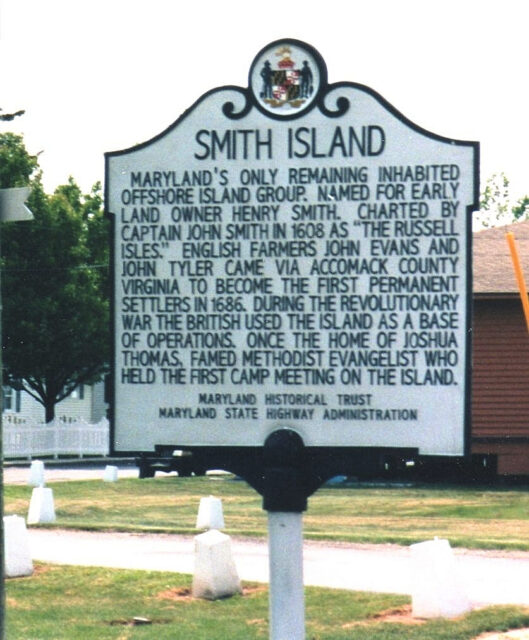 Smith Island Marker
Photographed By Amy Wilson, June 2005
Image Source The Historical Marker Database
Smith Island was discovered by Captain John Smith (1580-1631) who reached Jamestowne in 1606. In June 1608 he set out on the Phoenix on the first exploration of the Chesapeake. Landing on an island at the mouth of the bay, Smith chartered the island as “the Russell Isles.” The island was first settled between 1659 and 1686 by English and Welsh settlers, to whom today’s inhabitants can trace their genealogy going back twelve generations. Smith Island is named not after John Smith, but Henry Smith, an early landowner.
Google Street View Image
Captain Smith recorded the first pirates in the Bay as early as 1610. ‘For the next two centuries, a dazzling array of pirates, picaroons, and sea rovers raided and plundered ships, towns, and plantations in the Bay area. The most famous Chessy buccaneer was Blackbeard. Many of these seaborne hoodlums controlled islands in the Bay. The governments of Virginia and Maryland constantly launched anti-pirate cruises, which led to the capture of dozens of pirates. Chesapeake piracy ended peacefully in 1807.’
The residents are descended from the original settlers who arrived in 1659. The original English and Welsh settlers inhabit possibly Maryland’s most isolated and intact enclave of traditional culture. Families are said to be able to trace their genealogy back 12 generations. Islanders speak a distinctive dialect that they call a “backward language” – they employ certain turns of phrase that only an islander would understand correctly. For example, instead of at night you might hear a night. Some features of the dialect can be traced to Elizabethan era English, such as using the prefix a – with verbs ending in – ing, giving you ‘to go afishing’. Yet other distinctive features involving vowels have arisen in the last 50 years. Examples: brown may sound more like brain and side may sound like sad.
Once an island of farmers, today’s inhabitants make a living harvesting blue crabs and oysters and fishing; it is a hard occupation, sometimes involving 12-hour days. The local tourist trade is a welcome addition to the community. However, there is no local government or police to maintain order on the island. Instead, each community has its own Methodist church where local decisions are made, thus providing political as well as religious cohesion.
One of the famous products of the island is the decadent Smith Island Cake. Known as ‘Frosting with the Cake’ it contains between 6 -12 pencil-thin yellow cake layers with rich chocolate fudge icing in between!! Imagine nine of the most delicate layers of spongy yellow cake separated by the thinnest layers of an old fashioned cooked chocolate icing that sets like fudge. Women of Smith Island started to stack layers as a form of competition.
No one is quite sure who developed the concept of the “Smith Island Cake”. Some
people believe it can be traced to an English torte, brought by Welsh settlers who came to the Smith Island in the late 1600’s. Many residents of Smith Island say, “It has always been here”.
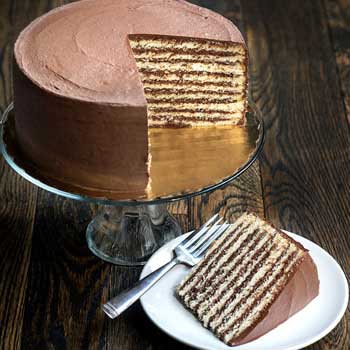 Smith Island Cake
Image courtesy of smithislandcake.com
Click if you want to try the Smith Island Cake recipe but don’t blame me when you check your weighing scales afterwards.
As for the future of Ewell, Smith Island MD, there is a long-term ecological threat. Seawater in the Chesapeake has risen about a foot in the last century, drowning once inhabited islands. St. Clements Island has lost about 90% of the 400 acres of forestland … first beheld in 1634.’The U.S. Army Corps of Engineers has begun a $2m project ‘to erect bulkheads to protect homes in Tylerton,’ one of three Smith Island towns. Says Ewell resident Jennings Evans, 69, ‘People here aren’t going to leave.’
Researched and written by Ian Parker 2013
Sources:
- The Library of Congress
- http://www.smithisland.us/history.htm
- http://www.nativeamericanchurch.com/Signs/VanishingIslands.html
- https://smithisland.org/
- http://maps.google.co.uk/maps?hl=en&tab=wl
Ewell, Virginia, USA
Google Maps Satellite View
Ewell was a town in James City County west of Williamsburg, in the U.S. state of Virginia. It was named for Benjamin Stoddert Ewell (1810-1894) who was a U.S. and Confederate army officer, and civil engineer. A local farmer, he is best remembered for his presidency of the College of William and Mary in nearby Williamsburg during turbulent times for the school before and after the American Civil War. Ewell’s tireless efforts to restore the historic school and its programs during and after Reconstruction became legendary in Williamsburg and at the College and were ultimately successful, with funding from both the U.S. Congress and the Commonwealth of Virginia.
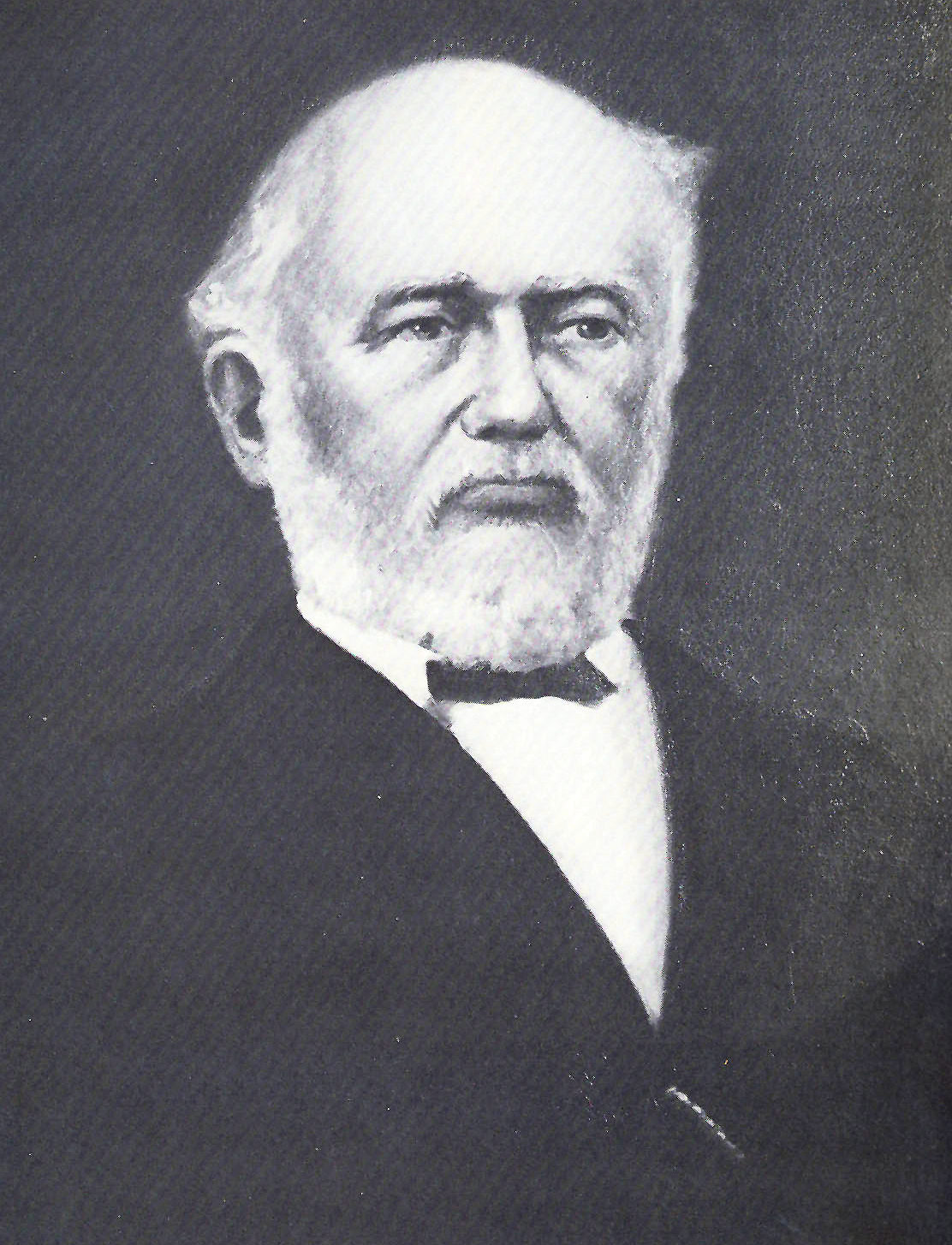 Benjamin Stoddert Ewell
Image Source Wikipedia
Benjamin Ewell remained in Williamsburg as President Emeritus of the College until his death in 1894.
In 1881, the Chesapeake and Ohio Railway (C&O) was extended east from Richmond to a new coal pier at Newport News on the harbor of Hampton Roads.
The railroad’s new Peninsula Subdivision opened new shipping opportunities for the farmers of the region. In James City County, new railroad stations were established every few miles, at Diascund, Toano, Vaiden’s Siding (Norge), Kelton (Lightfoot) and Ewell, Williamsburg, and Grove.
In the mid 20th century, the smaller stations along the line were discontinued as trucking assumed most of the shipping business, although Williamsburg remained open for passenger services. The wooden station from Ewell was relocated a short distance away and was in alternate use as of June 2013. The larger station building from Norge has also been preserved, and was relocated to a site adjacent to the Williamsburg Regional Library branch on Croaker Road.
As the Williamsburg community expanded even beyond the city limits, Ewell lost its individual identity and became part of an area popular with tourists for outlet shopping, hotels, restaurants and attractions. Ewell is no longer a mailing address, and is now considered one of the Former counties, cities, and towns of Virginia.
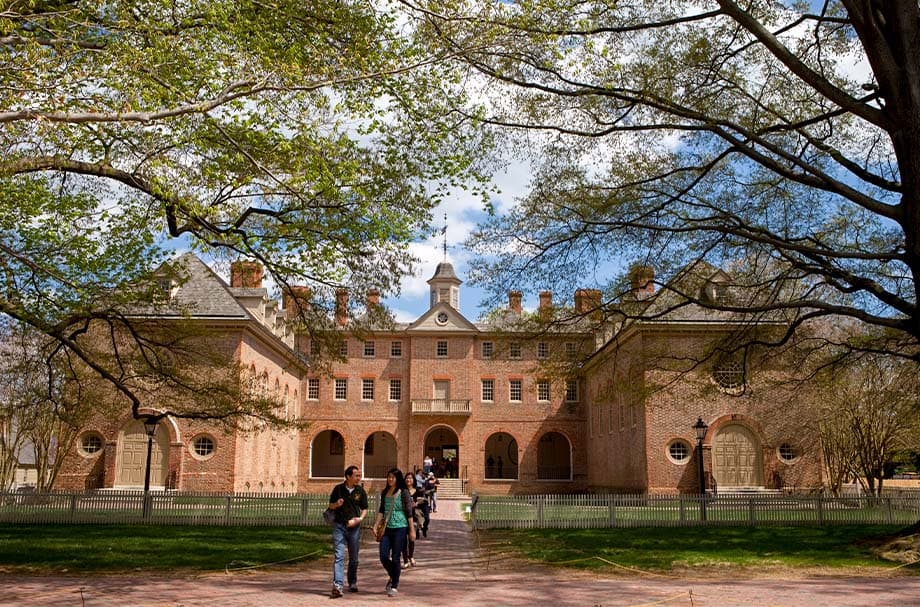 A building on the William and Mary College campus
Source not Known
One of the many fine buildings on The William and Mary College campus is shown above. The history of The College can be traced back to a 1693 royal charter establishing “a perpetual College of Divinity, Philosophy, Languages, and the good arts and sciences” in the British Colony of Virginia. It was named for the reigning joint monarchs of Great Britain, King William III and Queen Mary II. In 1918, William and Mary became the first of Virginia’s state-supported colleges and universities to admit women as well as men to its under graduate programs. One of the many fine buildings on the campus is shown left.
Researched and written by Ian Parker 2014
Source:
- Wikipedia
Still Awaiting Research
These Ewells still need to be researched. If you can help or have any information on these and other Ewells please contact us.
- Ewell USA-Alabama-Dale
- Ewell USA-Florida
- Ewell USA-Kansas
- Ewell USA-Texas
- Ewell USA-Utah
- Ewell Hall USA-Virginia
- Ewell Zimbabwe
There are even more places called Ewell (see geonames.org) but these appear to be tiny places which we can find little or no readily available information..