
ASHDOWN ROAD, EPSOM (KT17 3PL)
The story of a street
 Ashdown Road, looking towards Links Road (2016)
 Ashdown Road, looking towards Alexandra Road (2016)
Introduction
Some time ago I was researching a specific family who lived in Ashdown Road for more than 40 years. It was once the kind of road with very few houses and people tending to stay put until they died.
However, since there was no Ashdown Road until about 1906, we currently have just one census to give us information about the residents and then it becomes a trawl through electoral registers and street directories. Adding to the difficulties, there were originally no house numbers and new occupants might change the name of their house.
So, what follows represents the story of Ashdown Road as far as I have been able to establish the facts and, inevitably, there are gaps. This is not by any means an exhaustive history of the street, but hopefully it will provide a flavour of who lived there and when.
The first houses
The first time houses appeared in an Ashdown Road was in Kelly’s Directory for 1907: it hadn’t been there in the 1905 edition and there wasn’t a Kelly’s in 1906.
The original houses and occupants were as follows (the eventual numbers have been added to assist matters). The lowest numbers run from the Alexandra Road end of the road upwards to the Links Road end.
| 1 – Lidsdale – David Aitken Horner | 2 – Braeside -Col. John Henry Augustus Spyer |
| 7 – Holly Lodge – Mrs Edith Taylor | |
| 11 – Wanganui – Arthur Henry Johnson | |
| 13 – Clipston – Herbert William Smith | |
Note: The blank rows represent plots where houses would appear in due course.
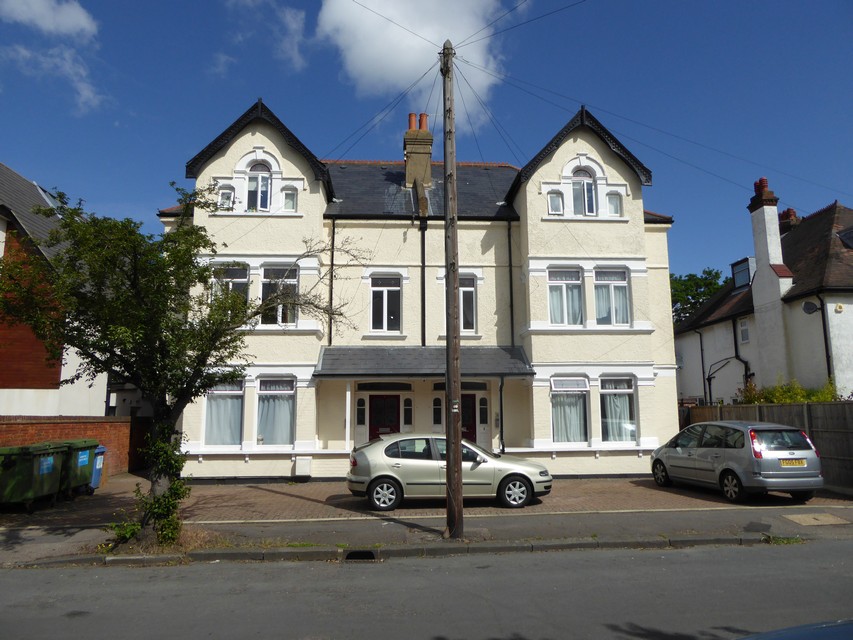 1 Ashdown Road (2016) on left, now part of 1-3 (care home)
A quick search through early records indicates generally the sort of person who would live in Ashdown Road – respectable, professional, likely to be in/retired from something like the military, law, business or banking. Mr Horner of Lidsdale, for example, a Scotsman, was a Secretary in Foreign Banking according to the 1911 census. He moved on quite quickly, but the other original residents were there for a very long time so we’ll have a peek at them.
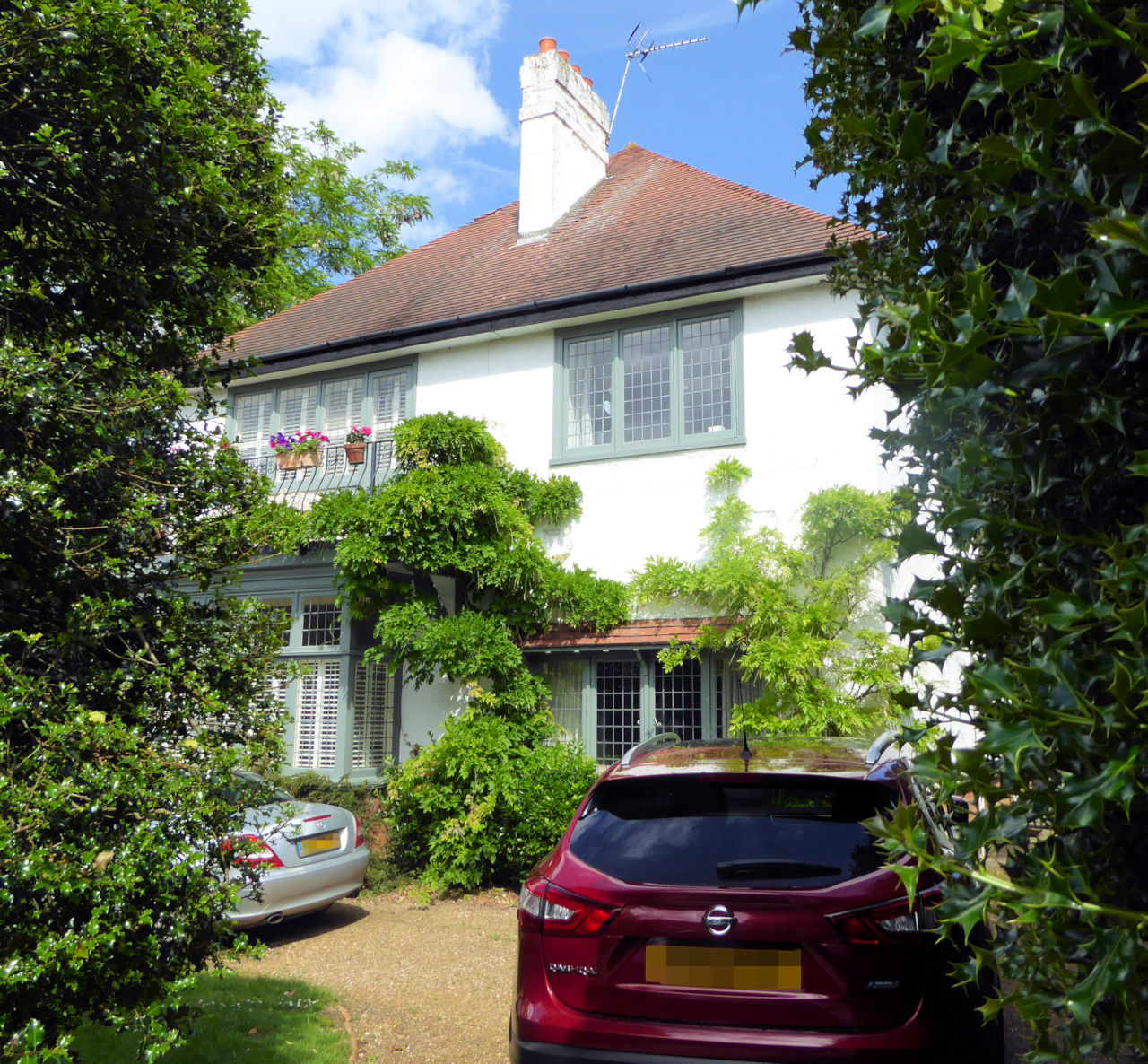 7 Ashdown Road (2016)
Mrs Edith Taylor, at Number 7, was a local, the widow of Joseph Taylor, about 23 years her senior – he had farmed at Longdown Farm. There was a previous Mrs Taylor, roughly 20 years his junior (Harriet, also née Taylor, married 1876). Joseph died in an asylum in 1906, leaving effects of £8206 (around £1 million in today’s money). I had no intention of delving deeply into Mrs Taylor but the money grabbed my attention: she turned out to have been the last child left at home out of the very large brood of Reverend Thomas Lee, Congregational Minister, who was, according to other items on this website, eccentric and difficult, and his daughter Alice Agnes could certainly testify to that – see Marital Mayhem. Reverend Lee died in February 1893, so one presumes that Edith was left rattling around in the Lee house on College Road, and in 1898 she married Mr Taylor in Brighton – he owned a couple of houses in College Road. There was no happy ending, as I have mentioned, so she settled herself in Holly Lodge for the duration. Let us move on.
Mr Arthur Henry Johnson was a railway signal and telegraph engineer who had been in New Zealand for a time, which is undoubtedly how Number 11 came to be called Wanganui. He retired to Hunstanton, Norfolk in about 1918 and died in 1921. The Norfolk house was also named Wanganui.
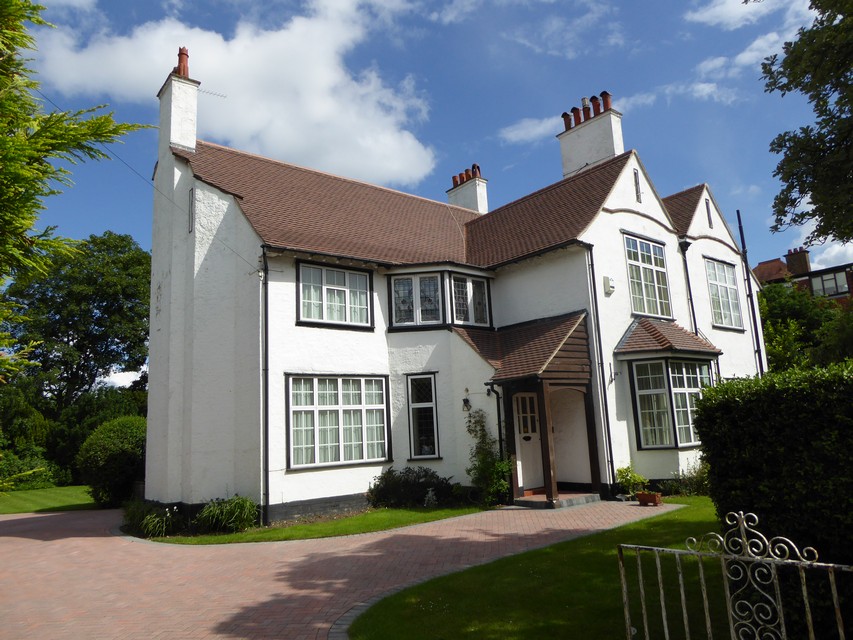 11 Ashdown Road (2016)
Herbert William Smith at Number 13, which is no longer there as an identifiable entity, was a member of the Stock Exchange. Clipston had eleven rooms (not including bathroom, scullery etc) and he kept as many servants as children – three of each. Mrs Florence Smith, who was some years older than her husband, died in 1929, but Herbert remained at Clipston until his own death in 1937.
Marooned in splendid isolation on the other side of the road we just had Colonel and Mrs Spyer at Braeside (10 rooms). He had been born in Colombo in about 1851 and died in 1918, having quite recently moved to Banstead. The Colonel, formerly of the Royal Irish Regiment, had been involved in the Afghan War and a very exciting voyage up the Nile in the 1880s. In 1894, as a Lieutenant-Colonel, he was appointed to command the 1st Battalion of the Regiment, then based at Limerick. By 1899 he was a full Colonel commanding the 18th Regimental District at Clonmel. He should have retired by then but had been granted an extension, presumably owing to a shortage of experienced senior officers. He finally relinquished his command at the beginning of 1904. His first wife had been Emily Katherine Stuart, whom he married in Bengal in 1880: she died in Clonmel at the end of 1903 and when the Colonel appeared in Ashdown Road he had acquired a new wife (married January 1906), one Edith Rowat from Paisley, who returned to Scotland after his death and died in 1949.
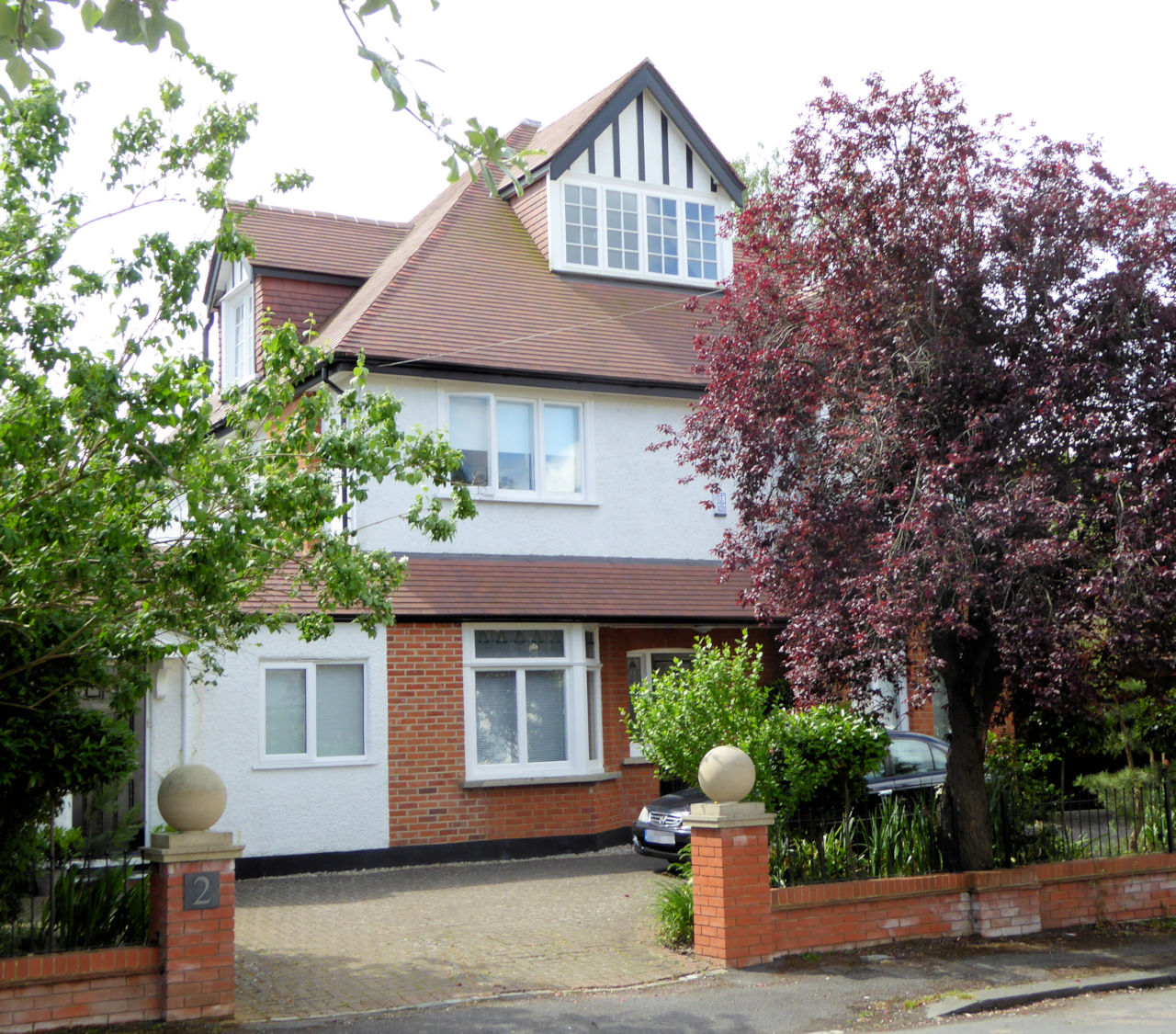 2 Ashdown Road (2016)
Nearly complete
By the time the 1909 edition of Kelly’s Directory appeared, there were nine houses in the road. Again I have inserted the eventual numbers.
| 1 – Lidsdale – Mr Horner | 2 – Braeside – Colonel Spyer |
| 3 – Hillcroft – Colonel Alexander Stewart Orr | 4 – Cairnbank – Arthur Parnell Jones |
| 5 – Ashdown – Mrs Helen Emma Hill | |
| 7 – Holly Lodge – Mrs Taylor | |
| 9 – Coniston – Harry Tilden | |
| 11 – Wanganui – Mr Johnson | |
| 13 – Clipston – Mr Smith | |
Numbers 3, 5, 9 and 4 have now appeared.
3 Ashdown Road (2016) on right, now part of 1-3 (care home)
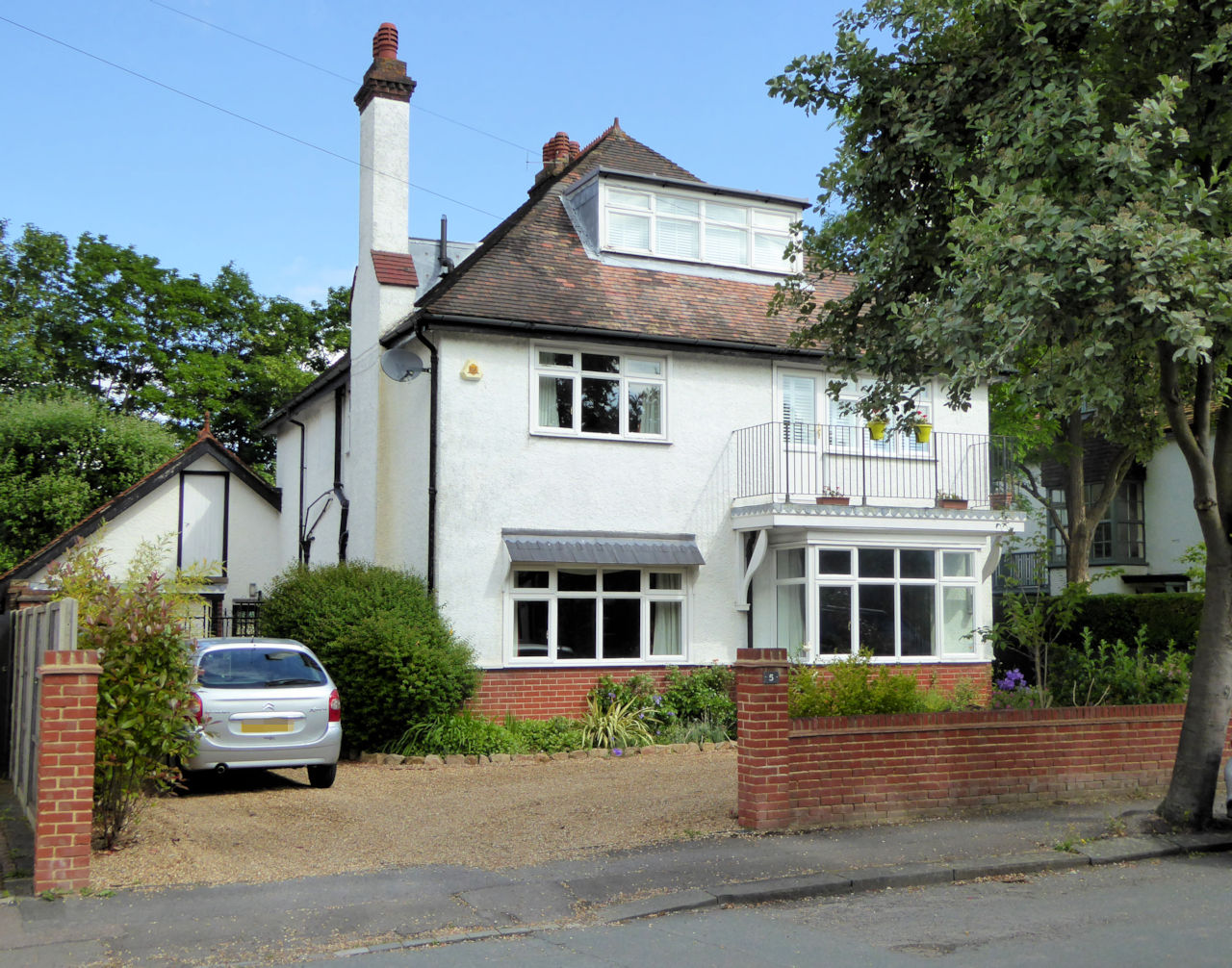 5 Ashdown Road (2016)
Mrs Helen Emma Hill, at Number 5, was the widow of barrister Lionel Furneaux Knipe Hill, who died in 1906, and she had moved from Twickenham back to her home town of Epsom with her three children, Gordon, Gladys and Gwendolen. She was the daughter of local businessman John Barnard and we already have the story of the extended Barnard family, including the Hills, on this website. Helen Hill remained at Ashdown up to her death in 1922, after which Gordon lived there with Gladys until he died in 1945.
 9 Ashdown Road (2023)
Number 9 was the first Epsom home of the Tilden family, who, by not later than the 1921 Census, had moved to No 6. From the 1940s until about 1960, No 9 was the home of Lewis Savin and his family.
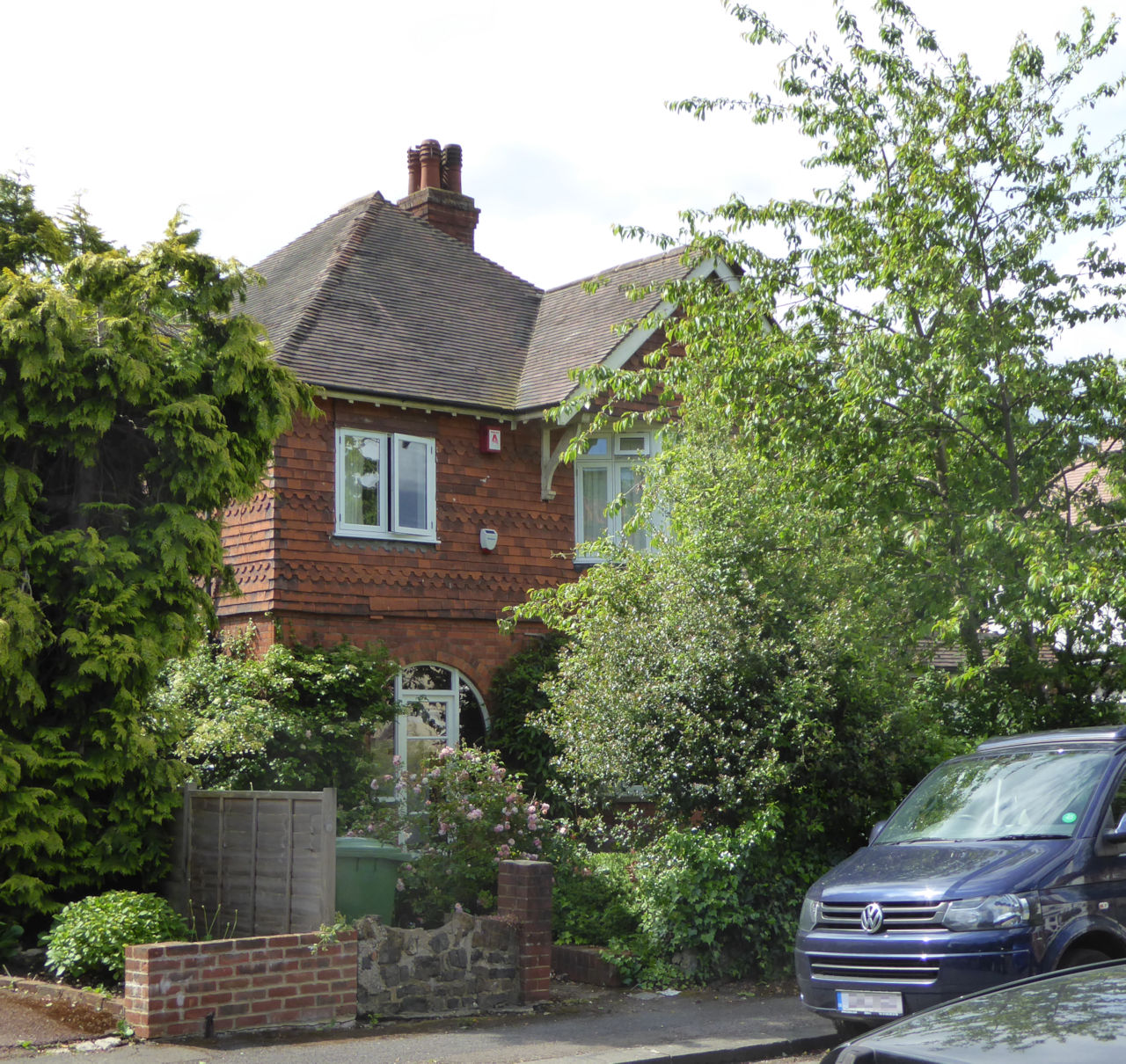 4 Ashdown Road (2016)
Arthur Parnell Jones, at Number 4, was in chocolate – that is, a director of a chocolate and confectionery company. He and his family did not stay in Epsom for long and moved to Wallington, taking the Cairnbank name with them; in due course Cairnbank of Epsom became Rosebank.
By 1911 a house called New Selma had materialised as Number 6, inhabited by Frederic and Gertrude Wood-Jones, a fascinating couple whose story can be found here.
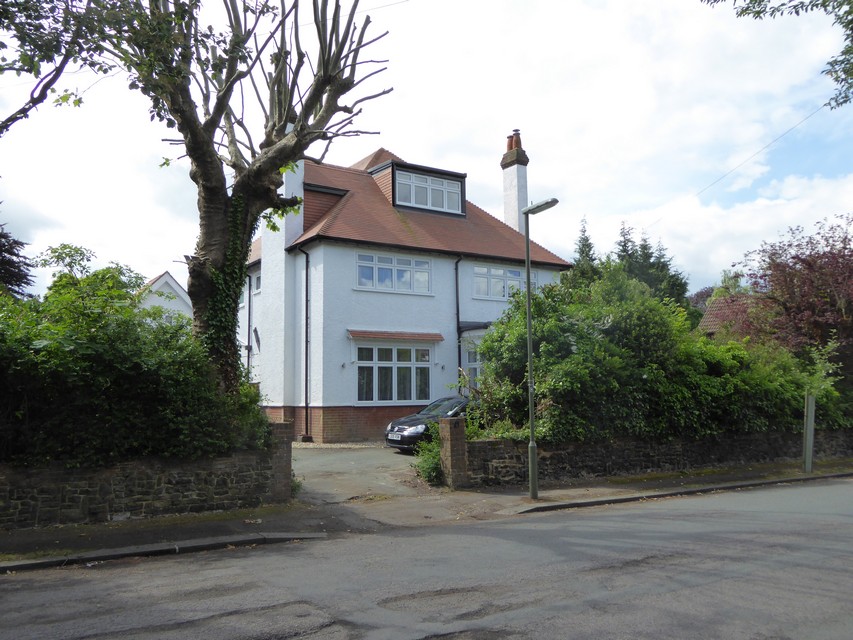 6 Ashdown Road (2016)
In about 1913/14 a house with no name appeared, which was actually Number 8 and was eventually called Caldra. Charles Bastow Casebourne was a civil engineer from Hartlepool, whose grandfather, Thomas Casebourne, had supervised the construction of the Ulster Canal, which wasn’t one of the more successful waterways of the era. Charles’ father, Charles Townsend Casebourne, was active in engineering and suchlike up Hartlepool way.
Charles was toting the Caldra name around Surrey, as in 1911 he had been at Caldra in The Parade and before that in Surbiton. Later on the family transported it to Esher/Long Ditton.
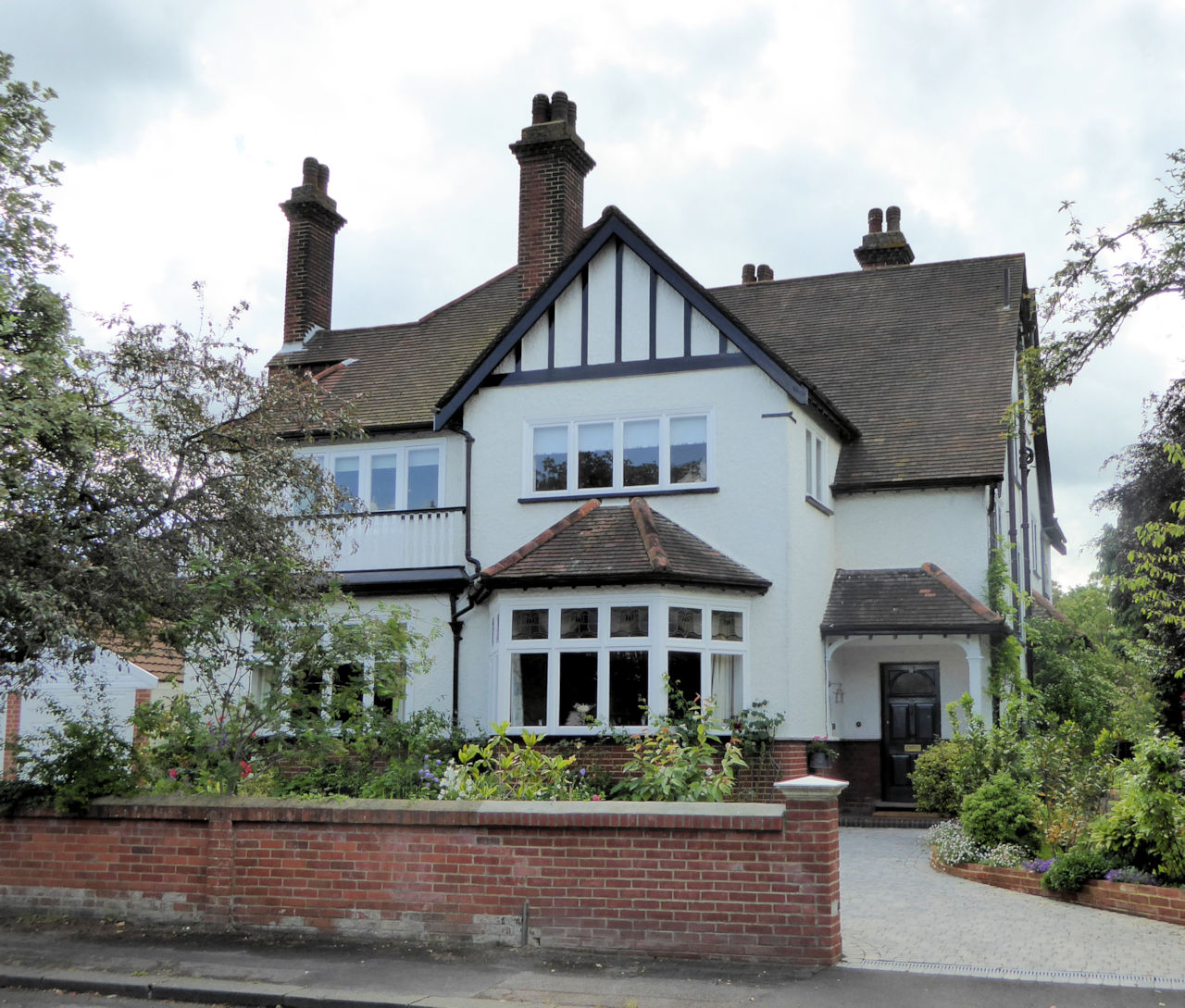 8 Ashdown Road (2016)
Nothing much had changed in 1915, except that a Congregational Minister had moved into Number 1 (the Spyers having moved to Banstead), and a solicitor called Richard Carrol Pearman was ensconced at New Selma (6), the Wood-Joneses being elsewhere, as they often were. The Minister, Rev. Llewellyn Howard Parsons, expired in 1916 and his wife did not stay in Epsom. Lidsdale became Meads and John James Leyland Newland, an electrical contracting engineer, moved in; he ended up in College Road.
By 1918 the Pearmans and the Tildens seem to have swapped houses, with the former being at Number 9 (Coniston) and the latter at Number 6 (New Selma). Two of the three newcomers in the road were William Ridley Whitley at Number 3 (Hillcroft), a manufacturer of linoleum and floor cloths etc, and Samuel Wesley Oakley, a broker in ship insurance, at Number 2 (Braeside). Mr Whitley eventually moved to Alexandra Road and Mr Oakley died in 1922.
Number 4 had changed its name from Cairnbank to Rosebank and the occupant was a John Allen, who stayed there until he died in 1936 at Metcalfe’s Hydro on Richmond Hill: this intrigued me and it turns out that the establishment was founded by a Richard Metcalfe, who propounded the therapeutic effects of water, steam etc. Not so therapeutic for Mr Allen.
We have now reached 1922, which saw some changes of personnel and house names, so we’ll have another chart.
| 1 – Meads – Mr Newland | 2 – Falaise – Mrs Fordham |
| 3 – Hillcroft – T Carr | 4 – Rosebank – Mr Allen |
| 5 – Ashdown – Mrs Hill | 6 – New Selma – Mr Tilden |
| 7 – Holly Lodge – Mrs Taylor | 8 – Caldra – Mr T N Walsh |
| 9 – Red Cottage – Mrs Poulter | |
| 11 – Wanganui – Spencer Pratt | |
| 13 – Clipston – Mr Smith | |
I don’t know who T Carr was, but he had gone by1927. Mrs Emily Frances Poulter at Number 9, formerly Coniston, and now renamed Red Cottage, was the widow of Frederick Estcourt Poulter, who had died in 1907. Presumably she had decided to return to Epsom to be near family, being a daughter of John Francis Maingay of the Maingays of Ewell and sister to Mrs Radclyffe Walters (see Part 3 of the Walters Family). Mr Pratt needs no introduction, as his misfit son Dennis was the personality latterly known as Quentin Crisp.
Braeside (Number 2) had become Falaise; Mrs Charlotte Fordham (née Hallam) was the widow of Thomas, who had died in 1921. Mr Fordham had probably retired to Epsom, but in his working life he was in fancy stationery and had a shop, firstly in Denmark Hill and then in Richmond.
Theodore Newton Walsh, the new incumbent of Number 8, had hardly moved in when he died. He also had business premises in Calcutta (he was in engineering) and died in that city early in 1922. Apparently he had racehorses in training with William Nightingall at South Hatch stables (Burgh Heath Road) and left them to his wife Edith. Mrs Walsh was still at Caldra in 1939 and ultimately moved into a flat at Woodcote Hall. Mr and Mrs Walsh’s son, Theodore Edwin, who was born in Calcutta, became a doctor. After a stint in Sarawak, he took up a post in Chicago, eventually becoming a Professor in Otolaryngology (ear, nose and throat) at Washington University School of Medicine. He died in St Louis in 1971.
1939 Register
Much had changed by 1939, so here’s yet another chart.
| 1 – Meads – No entry | 2 – Falaise – Mr T S Fordham |
| 3 – Hillcroft – No entry | 4 – Rosebank – No entry |
| 5 – Ashdown – Gordon and Gladys Hill | 6 – New Selma – Harry and Ada Tilden |
| 7 – Holly Lodge – George Muehlig | 8 – Caldra – Mrs Walsh and Mr Edward P Grimsdick |
| 9 – Red Cottage – No entry | |
| 11 – Wanganui – No entry | |
| 13 – Clipston – Mr and Mrs Reginald Stanleigh and Mr and Mrs Frederick Holmes |
It seems hard to believe that so many of the properties were empty, but maybe some of the erstwhile occupants had their main residence elsewhere. As I mentioned earlier, we have no photo of Number 13, which has disappeared, although I suspect that considerable expansion at Number 15 and beyond had something to do with that. Reginald Stanley Stanleigh was, I quote, a Legal and Commercial photographer (Executive only), which presumably means he didn’t take the snaps himself. He was elusive in records but was originally Reginald Stanley Schreier, son of a German-born engraver. Mr Schreier Senior had become a naturalised British subject in 1901 and the surname was probably changed because of the First World War. So, who were Mr and Mrs Frederick Holmes, who allegedly also lived at Number 13? Frederick George and Elizabeth Annie is the answer and he was an accountant. However, when he died in 1949 the probate record gave the address as Clipston (Number 13, tick), but the number shown was 15, so it does seem that there was some kind of ‘amalgamation’ between the two properties. There was an occasion in an electoral register when both 13 and 15 appeared. We shan’t dwell on it all, but here’s a photo of Number 15 (and if anyone knows what happened to Number 13, please let us know).
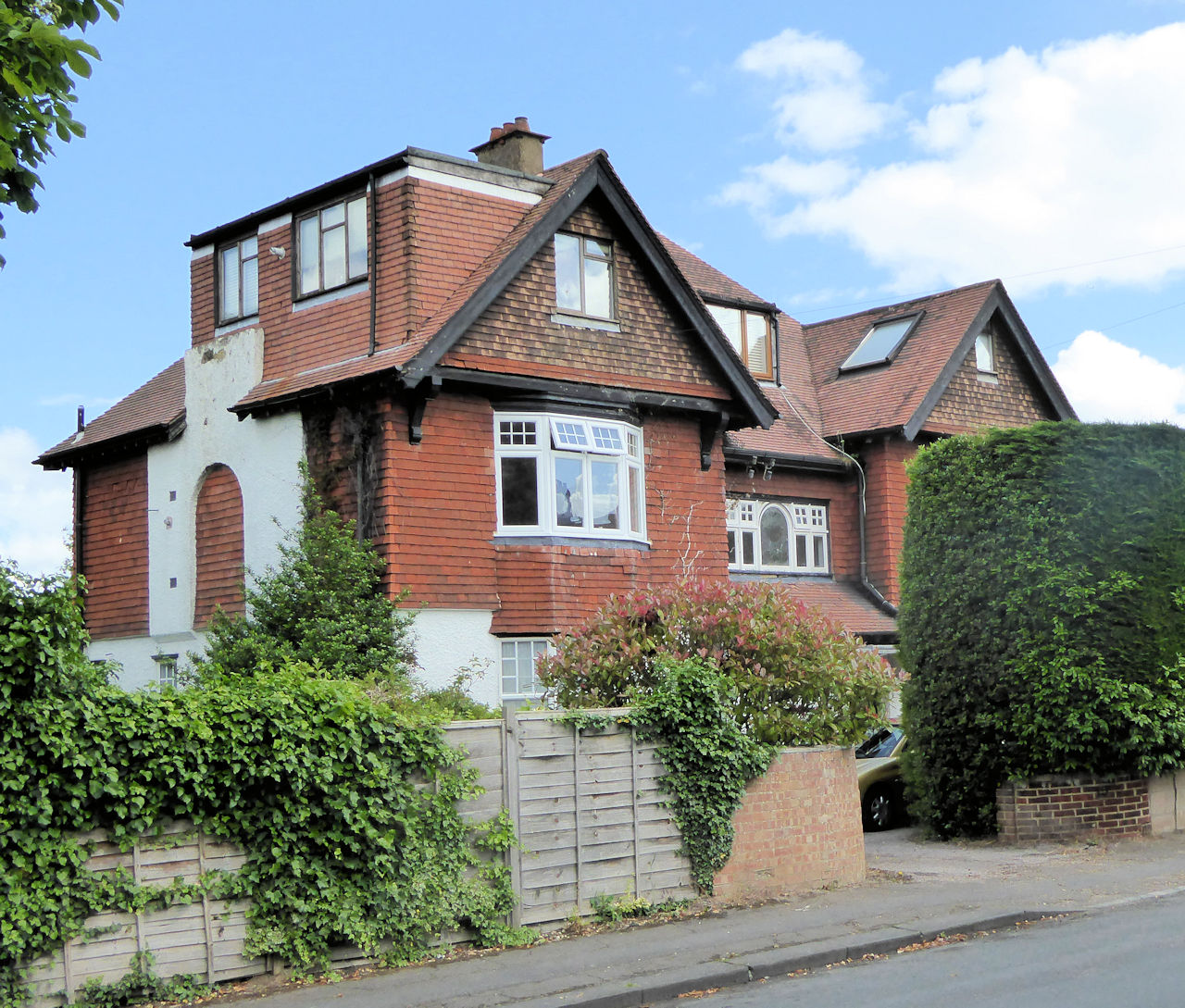 15 Ashdown Road (2016)
I did wonder what Edward Peter Grimsdick was doing in Mrs Walsh’s abode, and I’m still not much wiser, but he may have used it as a UK base, since he was an engineer who travelled back and forth between the UK and places like India and Sri Lanka, so could well have been connected with the late Mr Walsh’s business (Mr Grimsdick was based in Calcutta for many years). He was electrical, not that this fact helps us at all.
That leaves us with Mr Muehlig at Number 7. George was from Germany and lived with his widowed mother (I think), Amalie (or Malie). He had a relative, Sebastiane (also known as Jana, possibly an aunt on his late father’s side), who died at 4 Ashdown Road (not 7) in August 1939. I cannot find the whole story on this family, but they were most likely from Frankfurt originally and perhaps refugees from the Nazis. George later became known by the surname of Milton and dealt in antiques. As for the connection with Number 4, this was the home of Mr and Mrs Allen. Mr Allen died in 1936 and his wife, Anna Marie (formerly Manon, née Geyser) followed him in 1938. Mrs Allen had an elderly widowed housemate called Regina Van Cleeff, who was from Bornheim, Germany (please don’t ask me why Sebastiane died at Number 4!). Regina had been in Ashtead in 1911, described as ‘sister-in-law’. The actual householder was not at home, but, thanks to the enumerator, the name Allen has been crossed out on the schedule, so she would seem to be Anna Marie’s sister. By 1939, the Allens having died, Regina had moved in with the Muehligs, so there has to be some connection between these people, even if it was only Germany, although I suspect it was more than that. (As an aside, Mrs Muehlig had a lodger just after the war, who was one Ludorg Weiszhaus, a young refugee lad.) The Allens are buried in Epsom Cemetery (separately in graves F335A and F336A if the records are correct); Regina (died 1943) and Amalie (died 1963) are allegedly with Mrs Allen in F335A.
Now
I will dispose of the goings-on with Numbers 13 and 15 immediately. There is no longer a 13, but Number 15, which did not seem to exist in any of the older records I have seen, has been enlarged and is now divided into flats. It may even be the former Number 13, with knobs on and a relocated garden to accommodate 15A, a newer build behind it. 15A is in a private cul-de-sac along with Numbers 17 and 19 (also newer builds). A number 21 sits on the junction with Links Road.
Still on that side of the road, we have Craig Eran, which is unnumbered and immediately before Number 1.
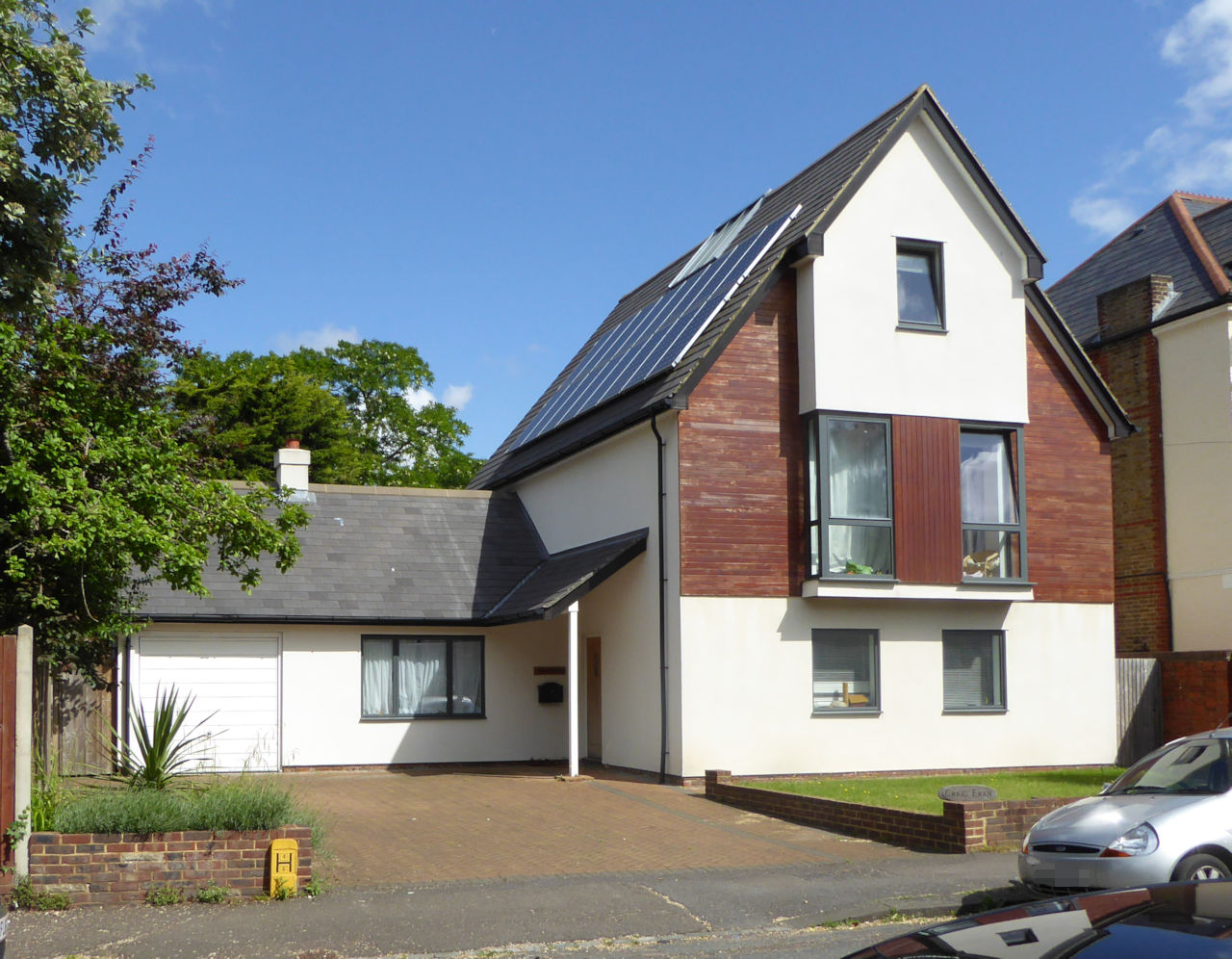 Craig Eran (2016)
There have been additions on the other side of the road, too, being 2A, 4A, and 6A.
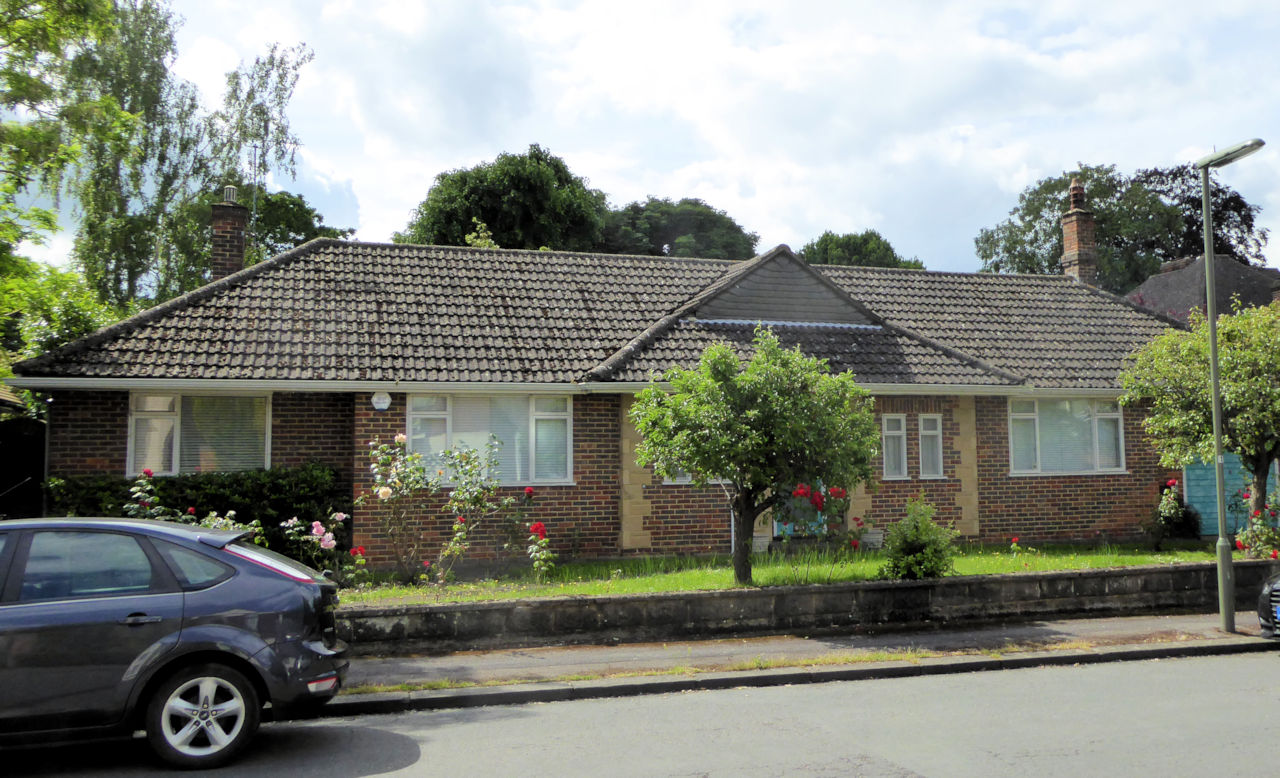 2A Ashdown Road (2016)
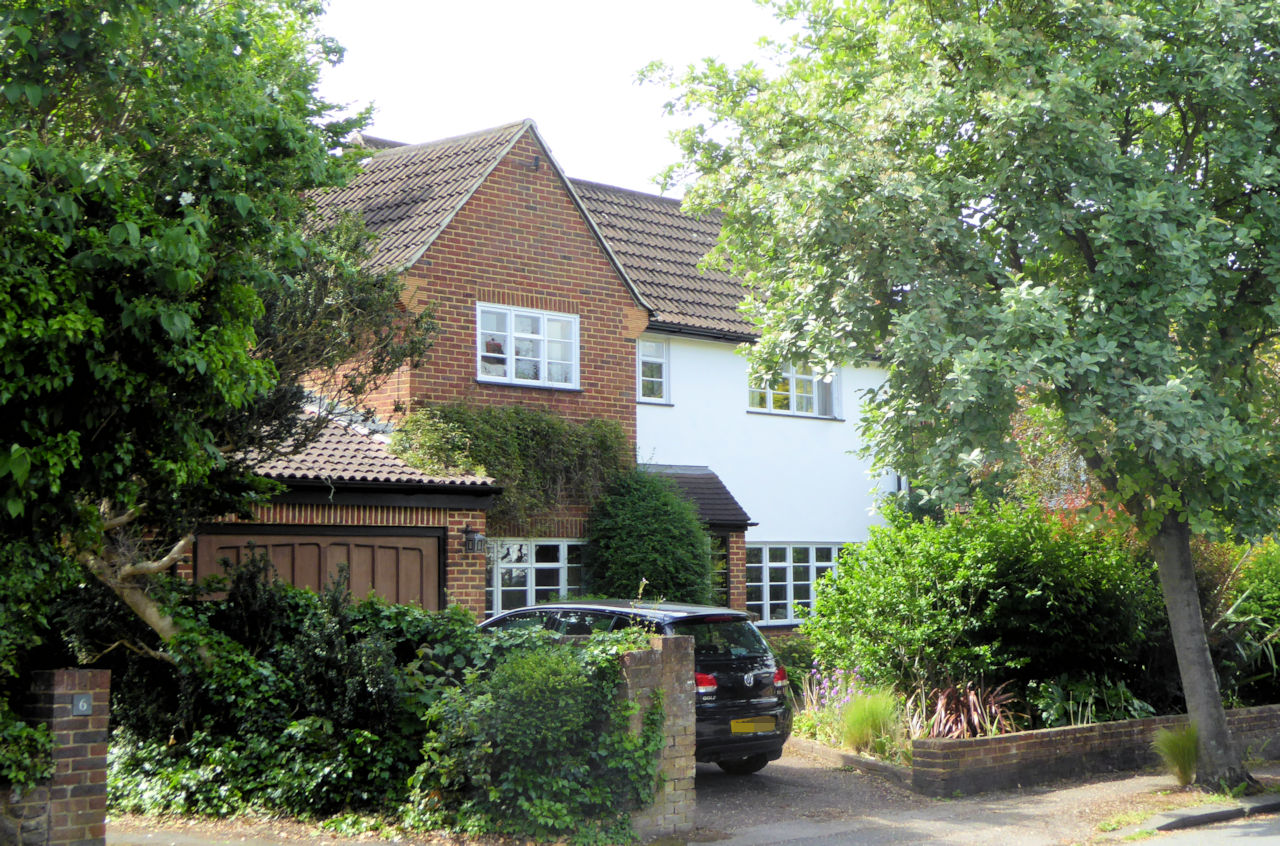 4A Ashdown Road (2016)
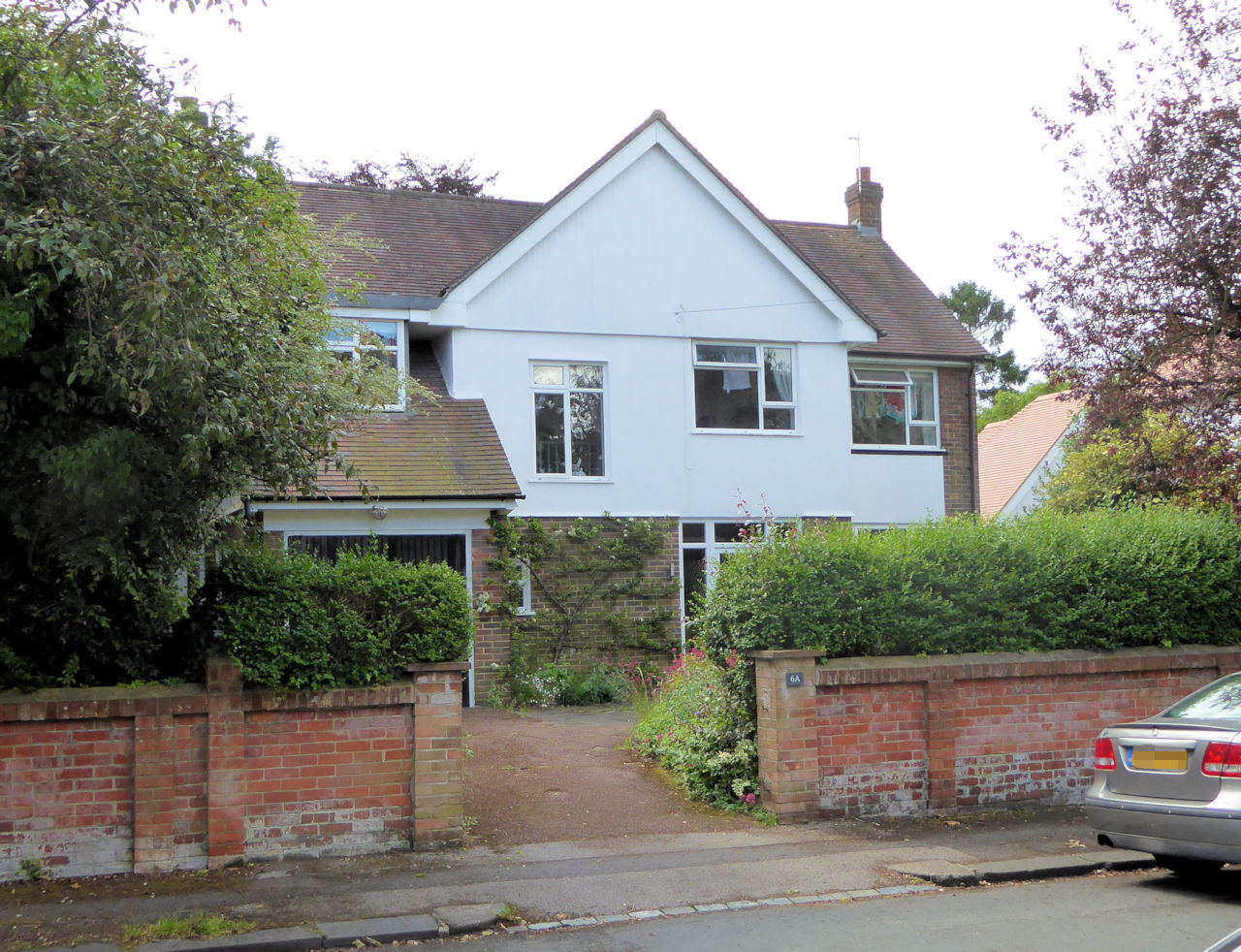 6A Ashdown Road (2016)
All Ashdown Road images by Peter Reed © 2020,
except that of No 9 which is by Roger Morgan © 2023.
Linda Jackson 2020
With thanks to Peter Reed for photography and map matters
Addendum
Since this article appeared, we have received further information from Rosie Connell and her mother, Sonya: Sonya is the daughter of Reginald Stanleigh. They have not only explained the impenetrable mystery concerning 13/15 Ashdown Road but have provided some interesting snippets.
To dispose of the 13/15 conundrum immediately, there was never a Number 15 in the first place. ‘Clipston’ was always Number 13 but superstition about this being an unlucky number caused the Stanleigh household to re-number it as 15.
Reginald seems to have been an enterprising and resourceful man. He had premises in Chancery Lane, London and is believed to have run his business single-handedly, with just some secretarial support. He reproduced legal documents before the era of photocopiers and apparently had one of the first photocopying machines in the UK; he was also a very keen photographer throughout his life. He had married Doris Irene Connor in 1928 and their daughter, Sonya, was born in 1936.
In the 1921 census Doris’s father, James Connor, had already been widowed, and the youngster was effectively raised by Mr and Mrs Holmes, which is how the Stanleighs and the Holmes families all ended up together in ‘Clipston’. Mrs Holmes, known as ‘Gaga’, was also like a grandmother to Sonya.
[I was curious about the exact relationship between Mr and/or Mrs Holmes and the Connors and there emerged a sad tale really of people in the 19th century East End of London (Bethnal Green in particular), trying to make a living from mainly manual work and having a constant stream of children, all of which was often exacerbated by the premature death of at least one parent. I still haven’t worked everything out exactly, but James Connor’s wife was Mary Ann Boswall and I believe her father, Henry John Boswall, quite possibly died in 1882 at the age of 31, leaving his wife, also Mary Ann, with a lot of young children. There is something odd going on with forenames here, not helped one bit by woeful errors from census enumerators which were then compounded by incompetent transcribers.
Going back to the Connor/Boswall marriage certificate of 1902, one of the witnesses was Florence Elizabeth Murcott, who didn’t seem to exist. However, given that Mrs Holmes initially gave her forename as Florence for the 1939 Register and it was then changed to read Elizabeth A, I think we can assume that she was ‘Florence’ and married Frederick George Holmes in 1906 in the same church as the Connor/Boswall marriage. The mystery doesn’t end there though – Elizabeth Annie Murcutt gave her father’s name as Josiah Warrener Murcutt deceased and he didn’t seem to exist either. Nevertheless I am satisfied that she was ‘Gaga’ and that she and Frederick lived in ‘Clipston’ with the Stanleighs.]
Returning to the Stanleighs for a moment, at one stage the family acquired a goat, which they hoped would keep the grass under control. However, the goat instead ate all the flowers and developed an obsession with Reginald. After he got home from the office he’d have to walk the goat round the streets of Epsom.
Linda Jackson 2023