
Buzz Bomb Attack on West Ewell
 A V-1 flying bomb (also knowm as a Buzz Bomb and a Doodlebug)
Image by Tlford2035 (CC BY-SA 4.0)
Back in 2001 the people living at 10 Green Lanes, West Ewell, received a letter that resulted in two newspaper articles and an exchange of correspondence between Jim Hayton and people who particularly remembered the incident and the war period in general. Twenty years later, in May 2021, Jim came across this website and decided to get in touch and asked if we would like to add his account and make it widely available to future generations. Naturally, we jumped at the idea.
—
LONGUEVILLE. N.S.W.
AUSTRALIA.
10th April 2001
To the present occupiers at No 10 Green Lanes West Ewell,
I suppose you are wondering who the hell is writing to you from Australia? Let me explain!
Recently a friend took and sent me a photograph of No 10 Green Lanes. The reason being that it was the house where I spent my formative years. This was from about 1934 to 1945. (I am not too sure about the exact dates as I was very young at the time). The house doesn’t seem to have changed at all in over 50 years, it is exactly as I remembered it.
Seeing the photo brought back a flood of memories about the history of that house, especially of the war years, and I decided to put down on paper those memories whilst they were still fresh (or revitalized) in my mind. The thought occurred to me that the present owners would probably have little or no idea of the early history of their home and would perhaps be interested to know. Hence my writing to you.
The early years of course are unremembered by me, as I was only about two when we moved in (I think the house was new) and I was only 7 years old when World War Two was declared. The war years however are still vivid in my mind, although for a couple of years during “The Blitz” I lived with my Uncle and Auntie in Yorkshire.
When things quietened down, I returned home to live with my parents. My two elder brothers were in the army. My oldest brother Philip Hayton was one of the first men to volunteer for the Airborne (Parachute Regiment). He was captured on the bridge in the famous battle at Arnhem. My other brother Warwick was in the East Surrey Regiment and fought in Europe until the end of the war.
You may be interested to know that the small bedroom (on the left as you enter the front door) was a first aid room during the war. My mother, being a registered sister, arranged the room was to be used if people were injured during the bombing; it contained a cot, a couple of stretchers splints and bandages etc., and sadly it was brought into use on the first night of the “Flying Bomb” assault on London.
We had what was called a “Morrison Shelter” in the house, that was kept in the living room partly under the stairs. It was about the size of a large bed, had a steel roof, sturdy steel angle legs and wire mesh on three sides. It was designed to protect you from being crushed by rubble should the house be hit by a bomb. You were supposed to sleep in there during air raids, and we duly did for a while, but things were pretty quiet in Ewell and I guess we got a bit blasé about it.
On the first night of the flying bomb assault on London we were watching the searchlights, and anti-aircraft fire, when dad said, “look there’s a plane on fire”. We could see quite clearly in the searchlight the shape of a plane, with fire trailing behind it. What we didn’t know was that it was a V1 Flying Bomb. We saw it turn on its back and head straight for the house, (we were in the back bedroom looking over the garden). We hit the floor thinking our time had come, but the bomb just cleared the roof and landed in the corner of Riverholme Drive and Green Lanes ♦, on the other side of the green. It killed several people and injured many others.
♦ [In January 2023, we were approached by David Fox and are pleased to repeat here the details he has of the event. He wrote: “Having moved into a re-built property – 2 Sunnymede Avenue – in 1946, I am able to pin-point the exact point of impact. It was not on the corner of Greenlanes and Riverholme Drive as stated but on the garden boundary between 2 Sunnymede and the Riverholme Drive property, about 10 meters from the rear of the Sunnymede house. Nos. 2, 4, 6 & 8 were completely levelled as were most properties that backed onto the garden of 2 Sunnymede – hence the different design of houses on the north side of Riverholme Drive between Greenlanes and Sunnymede. I do know that Mr. Mowberry (Mo) at home in No. 4 at the time of impact was dug out of the rubble almost unharmed having been trapped under the remains of an upturned piano!“]
I clearly remember Mum starting to get hysterical, and Dad shaking her hard, saying “get a hold of yourself, they will soon be bringing injured in”. This was sadly true, soon the first aid room and the hall had injured, and bleeding people being tended to while waiting for the ambulances to take them to hospital.
Next morning, we found a lot of tiles were missing from the roof, and most of the windows were blown out, so the old house was not looking too flash. I got some glass in my right knee but didn’t tell Mum until next morning as she was busy looking after people who were really injured. I still have the scar on my knee and call it my war wound. So, you see, your house has seen dramas that you are probably unaware of.
Another interesting story that did happen to us during that time, was when Dad set off for work one morning. He was a carpenter building the bombers at Vickers Armstrong factory at Weybridge. During the morning, a policeman arrived at the house to inform Mum that Mr Hayton was all right, but he wouldn’t be home for a few weeks. He would say no more than that he would bring Dad’s money round each week, and take letters from home, but we wouldn’t be hearing from him.
After a few weeks, (I don’t remember how many), we heard on the news that the RAF had destroyed the Ruhr Dams in Germany in a daring raid, using a new bouncing bomb. I presume that you have heard of the “Dam Busters”? Dad had been converting the bomb bays of the bombers, in order to facilitate the bouncing bombs, in absolute secrecy, and he was not allowed home until after the raid. A few hours after the news was broadcasted, Dad turned up for a few well-earned days off. It is amazing when you think about it, how people were handled in those days. You just accepted it as your duty. I wonder if the Government would get away with that sort of thing today?
The other vivid memory I have, is of a Saturday night in the winter. We used to stay in the kitchen to keep warm, as coal was rationed. We heard the sound of boots coming down the drive and Mum said, as only a woman can, “That’s our Phil!” (as I mentioned Phil was taken prisoner at Arnhem). Dad said, “don’t be silly, he’s a prisoner in Germany”.
It was Phil, he had escaped from prison camp with six others, stolen an ambulance and driven towards the front, going straight through to the allied lines You can imagine the celebrations that night. You may be surprised to know that for the last few weeks of the war, your house was always full of German and Italian prisoners of war. Having been a POW himself, Phil was full of sympathy for them. They were by then allowed out of camp, as the war was almost over and there was no danger of them trying to escape. They were easily identified as they wore a bright patch on their backs. Phil used to round them up and bring them home for a bit of home comfort. He used to let them wear his clothes and take them to the pub for a drink. When Phil returned to his unit some of these chaps still came to visit, they were mostly fine ordinary chaps who just wanted to go home. One of our favourites was a fellow called Gunther, he was on the submarine that sank the Royal Oak in Scapa Flow and had spent the entire war as a POW. He was a fine fellow, who unfortunately went back to communist East Germany, and we never heard from him again.
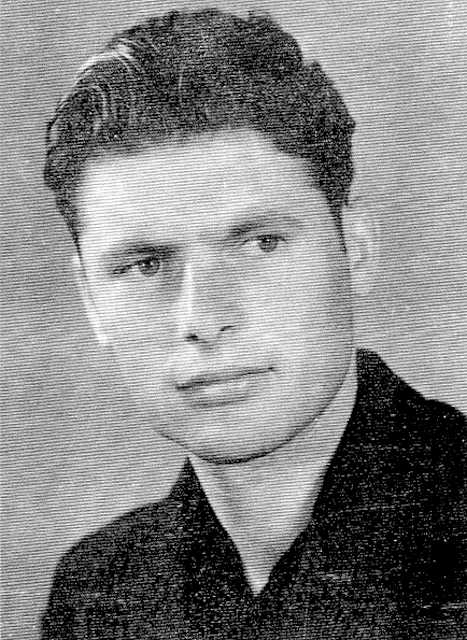


(Bottom Row) Gerhard and a German Sailor
Images courtesy of James Hayton
Regards, Jim and Norma Hayton
In researching this buzz bomb incident, we find that it occurred on the night on 15/16 June 1944 and believe that it killed 4 people. For a brief account of their lives, please click on a name:
JOBSON, John
JOBSON, Violetta
KITTS, James
PAGE, Walter
Many more were injured by the blast but survived.
 A Morrison Shelter
 We don’t have any photos of the V1 attack described above, but this image shows bomb damage to
nearby 45 Northcroft Road, West Ewell, a few years earlier (c.13/10/1940)
Image courtesy of Carole Davies © 2020
Click for our WW2 Bomb Maps
 WW2 bomb damage – what was left of 36 Waterloo Road, Epsom on 7 November 1940.
(This was the home of Alice and Henry Farnfeld who were killed in the incident.)
Image courtesy of Bourne Hall Museum
Anecdotes
Mary Knowles lived close by above the chemist shop at 210 Chessington Road and wrote:
 210 Chessington Road is shown to the left of the lamppost.
Image courtesy of Bourne Hall Museum
“… That night of the first V1 I remember well. There had been little trouble with bombing for a long time and we were back sleeping in our beds. That night the sirens sounded and almost at once that dreadful sound came and we all awoke. The engine cut out and there was as you say an almighty bang … there was a terrific sound of breaking glass as many of the shop windows came out. Many had only just been replaced.
My father was an ARP warden and though not on duty that night, went running out. I remember he came back very quickly and said “We think a plane has crashed but we cannot find the pilot…”
 This ARP warden standing in Chesssington Road is probably James Knowles
as the image was donated to Bourne Hall Museum by Mary Knowles.
<<<< oOo >>>>
Jim Hayton wrote to another correspondent on 23 July 2001:
 British prisoners at Arnhem Bridge.
They are unshaven after four days of fighting – water was scarce during the battle.
Image Source: Bundesarchiv, Bild 183-S73820 / CC-BY-SA 3.0, CC BY-SA 3.0 DE
“… Now, as for telling you very much about Phil, I will do my best but that won’t be easy. I will treat it as though you know nothing, because as you know Phil found it painful to talk about Arnhem, although he may have found it easier to talk to you than his family.
Phil joined up early in the war, joining the Ox and Bucks (he may have gone there via The East Surrey, but I’m not sure). He was one of the first volunteers for the Airborne, where he saw action in Africa. He was actually in a raid behind enemy lines when they attacked an aerodrome and was picked up by Popski (do you remember Popski’s Private Army ?) and taken back to safe ground. He was involved in D-Day, but the plane was damaged and had to turn back without dropping its load. I don’t think he was sent to Europe later, but as you probably know he went to Arnhem with the 6th Airborne.
At Arnhem he was actually on the bridge, where he was captured when they ran out of ammunition. After he came home, on a couple of occasions he burst into tears and said, “If only we had the ammunition, we would have done it”. After capture they were taken into Germany to a prison camp. I remember him telling us that they arrived at night and the next morning they were ordered out of the hut, to be faced with soldiers with machine guns.
They had heard before going to Arnhem that Hitler had said that parachutists were to be shot. and thought that this was their lot. However, a car arrived, and a very impressive looking officer got out and looked them over. He snapped to attention and told them in good English that they were very brave men, saluted, got back into the car, and drove off. Phil generally was treated very well as a POW. The guards were mostly older men, who understood what war was all about. However, at the latter stage, these men were sent to the front and their place was taken by Hitler Youth. These lads in Phil’s language were “right little arrogant bastards”. However, when the Allied guns could be heard, they started running around in a panic, rounding everyone up to be taken further into Germany. They noticed that they were not doing head counts so Phil and six others got under the floor hoards and stayed there till everyone had gone. They came out after dark and were lucky to find a German ambulance crew having a smoke, waiting to be called up to the front. They overpowered them, took off towards the sound of the guns, ringing the bell, and just kept going till they saw Allied troops.
Phil arrived home late one night, much to our surprise. As you know he found POW’s and brought them home for a bit of home comfort and the occasional trip to the local. ..”
<<<< oOo >>>>
With special thanks to Jim Hayton