
Hospital Cluster – Long Grove
This page is part of a series of articles on the 5 hospitals that made up the Epsom Hospital Cluster it should be read in conjunction with the main introduction page. We only cover the general development of the hospital but if you are looking for more specific information or want hospital records please see the following research guide Long Grove.

Long Grove Hospital, date not known
Image courtesy of Bourne Hall Museum
In 1896 the London County Council (LCC) bought a rundown estate in Epsom called Horton Manor from Sir Thomas Buxton. The Estate was 15 miles from the centre of London, covered 1060 acres of land and had a Mansion House, offices, gardens and grounds, woods, four farms together with land set aside for arable and pasture. The original plan was to build six large hospitals, each to hold two thousand patients but in the end only five hospitals were built.
Long Grove Asylum (Epsom Cluster No.4) was started in 1903 to the same basic design as Hine’s Horton Asylum. However, it had slightly fewer wards as about 500 patients were housed in villas within the grounds. The hospital was named after a woodland area on the estate. Eleven thousand men were reportedly employed in building Long Grove. Nine hundred of the builders travelled daily on a ‘workmen’s special’ from Waterloo to West Ewell, then walked the two and a half miles to the building site – their weekly fare was just 4s (20 pence). In an attempt to keep them out of the local pubs these ‘workmen’s special’ builders were only paid on their return to West Ewell station.
 Composite 1930s OS Map showing Long Grove Hospital
Click on the map to see it full size
Charles Wall Ltd laid the hospital foundations but the contract for the above-ground work was awarded to Foster & Dicksee Ltd during October 1904, with the understanding that the work was to be completed by the end of June 1907. Aware of the numerous transport problems the previous contractor had experienced moving building materials on the narrow local roads, the new builders applied for and were given a licence to lay a light railway. The route chosen for the single track meant crossing a bridle way and Hook Road, so complicated negotiations took place between London County, Epsom Rural District, Epsom Urban District and Ewell Parish Councils. The first locomotive was a 0-6-0 K Class saddle tank engine called Hollymoor built by Manning Wardle with the official date of completion given as 8 June 1905. It carted a load of bricks and cement from the sidings of the London South Western Railway at West Ewell to the building site where the material was off-loaded. A network of tramlines was then used to ferry the building supplies around the site. It was not long before Hollymoor was supplemented by an unamed 0-4-0 M4 saddle tank built by Peckett & Sons. Link to Railways Serving The Epsom Hospital Cluster.
 Composite 1930s OS Map showing the five Hospitals,
Central Station and the Horton Light Railway
Click image to enlarge
Locals apparently referred to one of the locomotives as ‘Puffing Billy’ – this was assumed in the past to be ‘Hollymoor’, but it is possible it could have referred to the unnamed Peckett Tank as the existence of this second locomotive has only recently been ascertained. A runner was employed as a look out and sat in the front wagon when the train was being propelled from the back. This system went wrong when Mary Tobin was knocked down and killed by a trainload of 12 wagons being propelled by the engine. Against regulations the crossing gates had been left open and, being at the back, the engine driver could not see the front of the train. Neither could the ‘runner’, who was on the fifth wagon, due to the first four being covered over. The driver sounded the whistle but Mary was aged 64 and a bit deaf. The inquest found the builders guilty of ‘sheer neglect’.
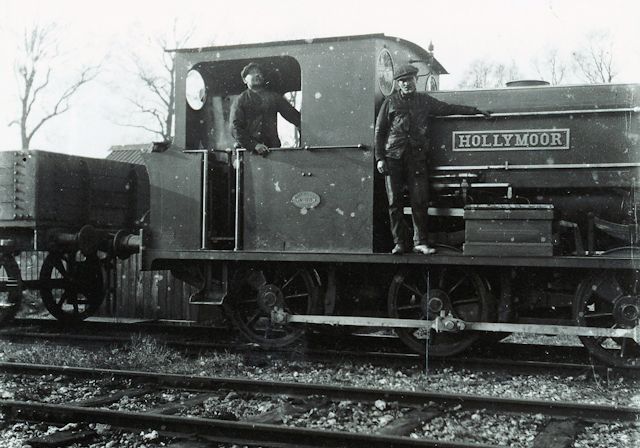 ‘Hollymoor’ at the Exchange Sidings, c1905
Image courtesy of Bourne Hall Museum
Despite this and another accident, caused by high winds blowing over a crane, which damaged one of the new buildings, the builders completed the building two months ahead of schedule. Hollymoor and the Peckett Tank were sold off and the LCC bought the railway line, subsequently purchasing another 0-4-0 Saddle Tank called ‘Crossness’. The line was extended to take building supplies to a new building site – to be called the West Park Asylum (Epsom Cluster No.5) – and to ferry about fifteen thousand tons of coal to the Central Station each year. In 1935 ‘Crossness’ was replaced by on 0-6-0 Saddle Tank called ‘Hendon’. In March 1947 a 0-4-0 Saddle tank engine from Robert Stephenson & Hawthorns Ltd, called Sherwood, replaced Hendon but was not a great success. Trains ran on the line till January 1950 when it was closed, dismantled and sold off to Nigeria.
The 1906 Commisioners Report into Long Grove gave dietary information for feeding the 2156 patients & 431 staff.
Breakfast, consisted of 1 pint of cocoa, tea or coffee, 6oz. Bread (5oz. for females), ½oz. margarine per patient.
Tea, consisted 1 pint of tea, 5oz. bread (4oz. females), ½oz. margarine OR jam. 3oz. cake (cost of which should not exceed 1¾d per lb.) and up to 3oz. extra bread if requested. However, if they has 4oz. of stewed fruit or rhubarb (grown on the hospital farm) sweetened with 1oz sugar, they were NOT allowed and margarine, jam or cake.
Dinner 4 times a week 5oz. cooked meat OR 12oz fish (including the bones) OR 1 pint Irish Stew. All with 17oz assorted vegetables. The remaining 3 days a week pies (meat or potato), fish OR Irish Stew, broth OR pea soup.
When followed by a pudding the pies allowance was reduced by half and while pea soup could be followed by a pudding but Irish Stew need not be followed by a pudding. Detailed formulas were given for puddings which would include rice pudding, bread pudding etc
In 1922, a nurse’s shift was 12 hours long and they were not allowed to be married. One nurse recounted that when she started at Long Grove her first six months were spent constantly cleaning and polishing, “until the floor reflected as does a mirror. If one did not fulfil this role with flying colours, one was not invited to complete the training!”
After this six month period, nurses were sent to the “Receiving Station” where horse-drawn ambulances brought clients from the streets of London; many of these patients had to be treated for lice. The Receiving Station also had two baths which were used in the treatment of manic depression whereby patients were immersed for a long time in hot and cold running water, with a nurse taking half hourly pulse rates. If there was a problem, a foot pedal emptied the bath and help was summoned.
‘I remember patients, about thirty or forty, being escorted by three nurses, one walking in front, one walking behind and one supervising, as far as Pound Lane. Horton, Long Grove and West Park used to do it on different days, so they didn’t clash. When they arrived at Pound Lane, one nurse used to stand at one end, and another nurse at the other, with one nurse walking in and out the shops because the patients were doing their little bit of shopping. I lived at the end of Long Grove Road at the time, and usually at weekends, a patient would abscond from one of the hospitals, find themselves at the crossroads, and didn’t know which way to turn once they got down there. Usually a few minutes later a nurse would come down and escort them back’.
1930s
At the start of WW2 a large number of patients from Horton hospital were transferred to Long Grove to release Horton to be used as a War Hospital.
During WW2 About 300 Polish patients (mainly service personnel) were admitted to Long Grove because of mentally illness. When a Polish hospital in Shropshire closed in December 1948 the numbers increased. The hospital provided a full time Polish interpreter and held Polish concerts and occasionally a Polish priest held a Mass for patients who were also visited by members of the Anglo-Polish Society. In 1951 there were still 300 Polish patients in Long Grove.
‘One old lady, who was deemed to be senile, was born in Poland, came to England during the War, and for some reason did not speak a word of English. Rumour had it that she was traumatised during the War, and that brought on her illness. It so happened that Polish was one of my childhood languages, so I was able to surprise her with a few simple sentences in that language. The transformation of that sad face in a flash was something to be seen to be believed. I made one lonely lady very happy for one half hour a week. I tried to teach her simple everyday words in English. It baffled me how no-one tried to find a translator all these years in order to try and reach out to this unhappy person’.
Long Grove 1980s.
In 1949 a male staff nurse earned £345 rising to £445 per year. Female nurses were paid £10 a year less. Both sexes were charged £120 per annum for board, lodging and laundry, if they lived in staff quarters.
‘In Long Grove, on the first and second floors, there were the doctors’ quarters. You had a doctors’ mess there too. You had a sitting-room and a bedroom above it, which was all looked after, and made really very comfortable. We were looked after extremely well. Everything was done for you. You had a nice open coal fire in the winters. The food was good. When I began some of it was still the fresh farm produce. There was a maid employed. She kept the fires going’.
Long Grove 1950s
‘Twelve patients assisted the two bakers on a full time basis; one spent 45 of his 68 years at Long Grove, many of them in the Bakehouse. One assistant was in charge of the Bread Room, slicing and wrapping and sealing the loaves in wax paper. Another was responsible for weighing off the dough and filling the ovens. A thousand pounds of cake was made each week with a sequential choice of Viennese, Caraway Seed, Fruit, Cherry and Madeira. There were happy times during the Harvest Festivals when bakers were responsible for making wheatsheaves and harvest loaves decorated with five loaves and two fishes’.
Long Grove 1950s
The Monro Unit
Dr Alan Bentley Monro was appointed Physician Superintendent at Long Grove Hospital in 1951. These were early days for Industrial Therapy but Dr Monro was quick to see the benefits and bring it to Long Grove. Following a devastating fire in March 1973 which completely destroyed the facility, a new purpose built industrial therapy unit was opened in September 1979. It was named the Monro Unit in honour of Dr Ben Monro, who had recently died. It comprised a factory unit of 16,000 sq. ft., and was equipped with the latest in packaging equipment, light engineering tools, fork lift trucks, etc. There were also facilities for electronics, wood and metal work as well as office training.
About 100 patients could work in the Monro Centre and were paid to do so. Retraining, and perhaps learning new skills, were intended to help restore confidence and improve morale.
A Famous Escapee
I was at Long Grove when Ronnie Kray escaped. He changed clothes with his brother Reggie who was visiting him. Ronnie asked the nurse if he could get his brother a cup of tea. The nurse, thinking that it was Reggie, agreed.
Ronnie then went out of the building, climbed over a fence near the church where there was a large American car waiting in Horton Lane to whisk him away. When the charge nurse found out what had happened he promptly put Reggie in a padded cell, although he had to be released upon instructions of the Home Office.
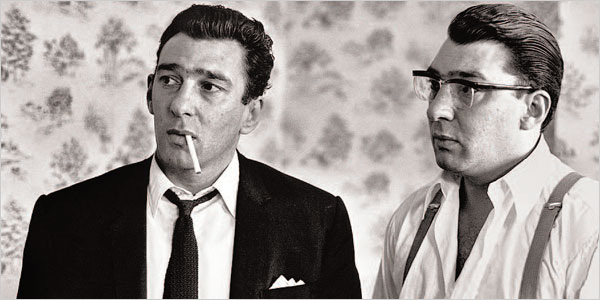 Reginald (left) and Ronald Kray. Ronnie was committed to Long Grove in Feb 1958
Long Grove closed in 1992 and was replaced by a smaller unit at Tolworth Hospital managed by the Kingston and District Community NHS Trust.
 Demolition of Napier and Nelson Wards, Long Grove Hospital. 1998
Image courtesy of Epsom and Ewell Local and Family History Centre ©2014
By 1971 a Regional Adolescent Unit had been established and contained 36 beds.
Typhoid Controversy
Long Grove was the only hospital in the Epsom Cluster that accepted typhoid carriers. Typhoid is a bacterial infection spread through contaminated food and water. It is caused by poor sanitation and by not washing hands after going to the toilet. Before modern antibiotics typhoid could kill up to 2 in every 10 cases. While most survivors eliminated the dangerous bacteria from their bodies after a few days, in a small number of cases the patient’s body was unable to do so and they continued to excrete the bacteria for a long period – possibly for the rest of their lives. These cases became known as carriers as they could easily pass on the infection to many other people. In America, Typhoid Mary (real name Mary Mallon) is thought to have infected 51 people of whom 3 died.
Carriers were often put into isolation to stop them infecting others. Between 1907 and 1992 at least 43 female carriers were held at Long Grove in a secure isolation villa as they were deemed a public health risk but the legal basis for detaining them has been questioned. Hospital staff used barrier nursing methods and the unit toilets were flushed using boiling water. It is reported that some of the women were detained long after antibiotic treatments became available in the 1940s & 1950s because their mental health had deteriorated while living in the isolation unit.
Patient Numbers
(Warning these figures are approximate, incomplete and unverified) :
1911: 2127 patients (1121 males, 1006 females)
1948: 2163 patients
1951: 2238
1960: 2151
1971: 1625 beds (Only 1373 patients).
1979: 1183 beds
1985: 750 beds
Management:
1899-1948 : London County Council Asylum Committee
1948-1974 : Kingston and Long Grove Hospital Management Committee under the South West Metropolitan Regional Hospital Board
1974-1982: Kingston and Richmond Health Authority under the South West Thames Regional Hospital Authority
1982- Kingston and Esher Health Authority under the South West Thames Regional Hospital Authority
Related Images
 Ward Plan Date not known
(click image to enlarge)
Image courtesy of Bourne Hall Museum

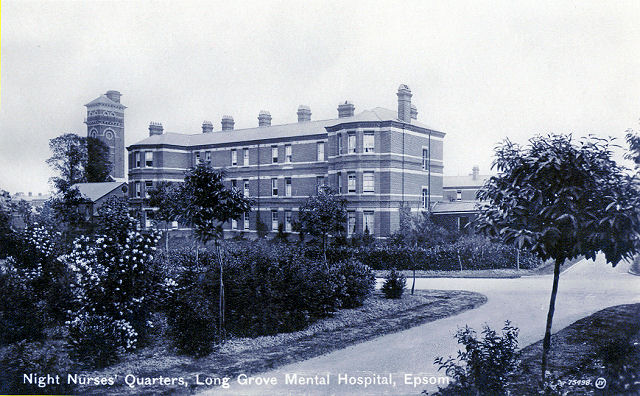 Long Grove Hospital
Images courtesy of Bourne Hall Museum
 A ward in Long Grove Hospital 19 June 1991
Image courtesy of John R Rifkin www.jrrifkinphoto.co.uk © 2014
Please contact John if you wish would like a copy or want to use this image.
 A dining room in Long Grove 19 June 1991
Image courtesy of John R Rifkin www.jrrifkinphoto.co.uk © 2014
Please contact John if you wish would like a copy or want to use this image.
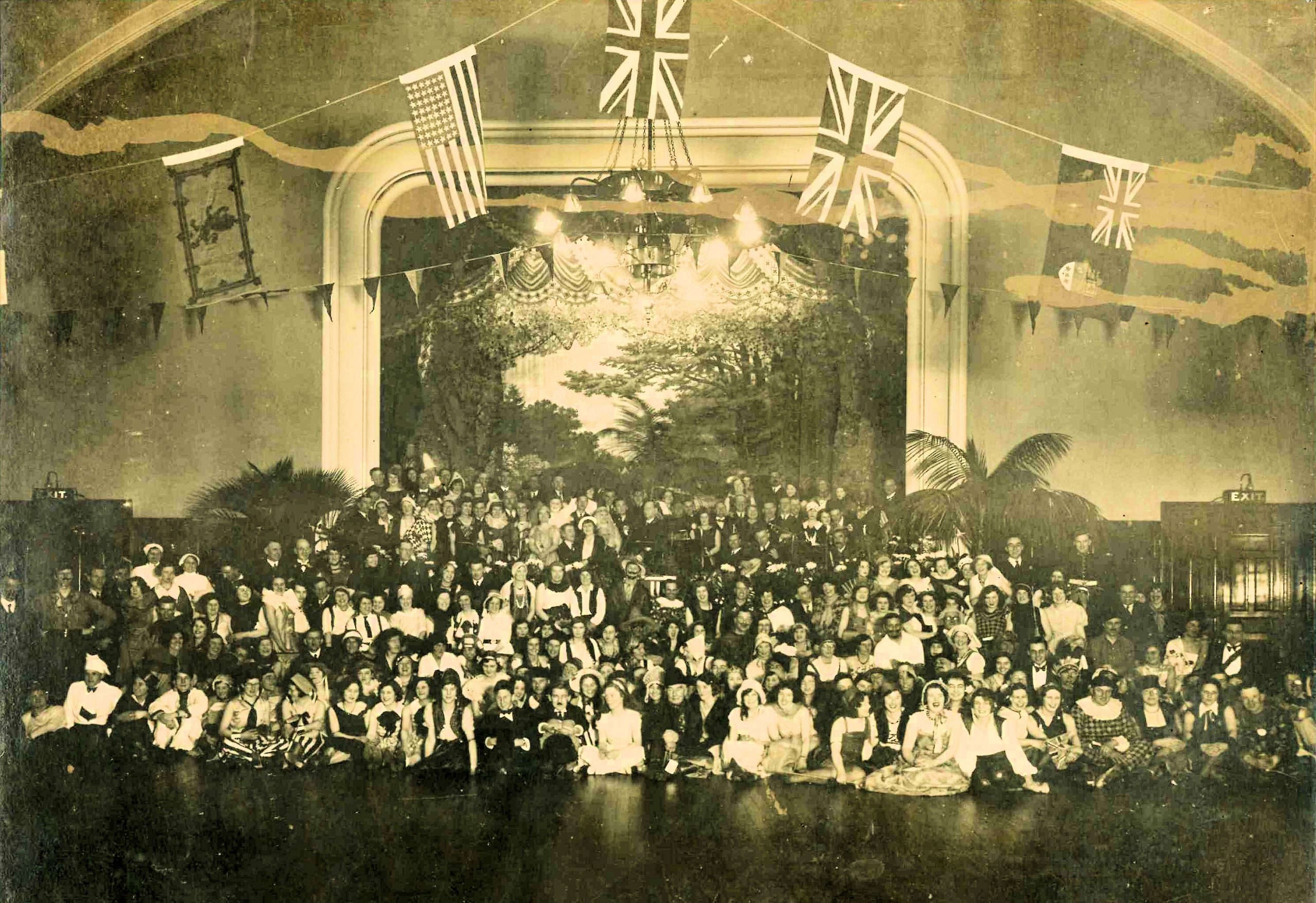 Concert c.1923
Image courtesy of Bourne Hall Museum
 Male patients being washed by hospital orderlies, Long Grove Asylum circa 1930?.
On first arrival at the hospitals the patients would be bathed to reduce
the risk of cross contaminations and to check for infestations.
Image source: Wellcome Images (WI no. L0015468) 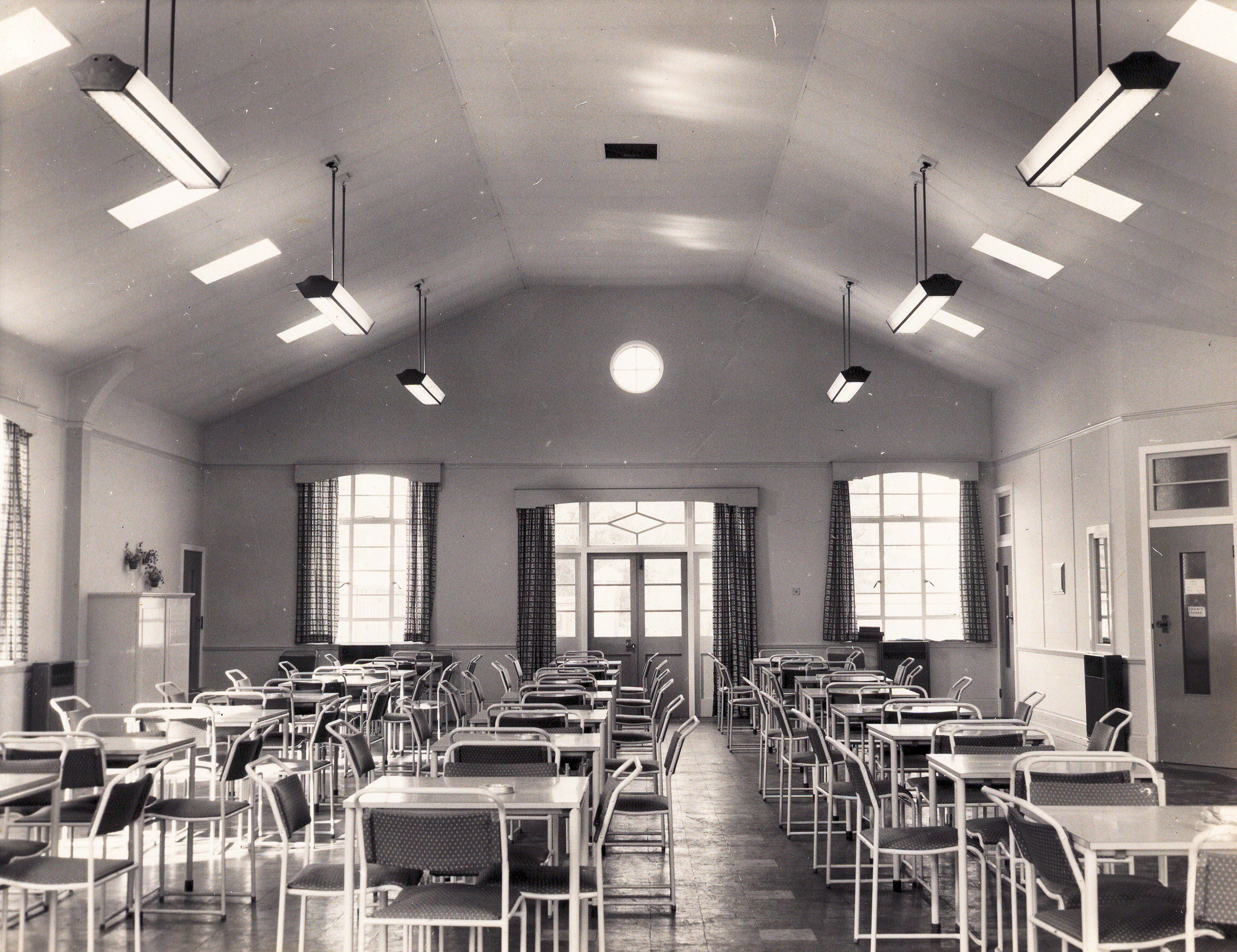 A photo of Long Grove Social Centre
Image courtesy of Bourne Hall Museum
 Long Grove kitchen c.1950s
Image courtesy of Bourne Hall Museum
 Sewing centre c.1950s
Image courtesy of Bourne Hall Museum
Embed from Getty Images
The Laundry Room, Long Grove Hospital, Surrey, 1910
 Laundry c.1990s
Image courtesy of Bourne Hall Museum
Links to related pages on this website:
Horton Cluster – Introduction
Horton Cluster – Manor Hospital
Horton Cluster – Horton Hospital
Horton Cluster – St Ebba’s Hospital
Horton Cluster – Long Grove Hospital
Horton Cluster – West Park Hospital
Horton Cemetery (History)
The burial records are split into 26 parts: A B C D E F G H I J K L M N O P Q R S T U V W X Y Z
Railways Serving The Epsom Hospital Cluster
Other pages that you may be interested in:
Electrotherapy at Horton (County of London) War Hospital, Epsom, in WWI.
The Long Grove Psychiatrists Of 1911
Malaria Laboratory (1925-1975) – The Mott Clinic
Ogilvy, Dr David / Smith, Pollie Eaton