
Hospital Cluster – St Ebba’s
This page is part of a series of articles on the 5 hospitals that made up the Epsom Hospital Cluster it should be read in conjunction with the main introduction page. We only cover the general development of the hospital but if you are looking for more specific information or want hospital records please see the following research guide St Ebba’s.
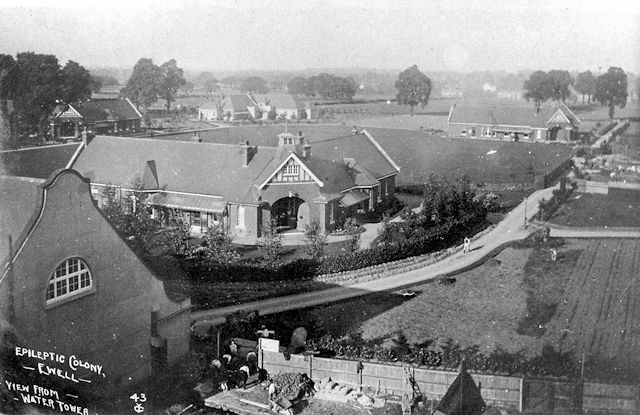 A postcard view St Ebba’s Hospital, date not known.
As the caption indicates, this is a view from the water tower. In the foreground is one of the Colony’s villas.
Image courtesy of Bourne Hall Museum.
In 1896 the London County Council (LCC) bought a rundown estate in Epsom called Horton Manor from Sir Thomas Buxton. The Estate was 15 miles from the centre of London, covered 1060 acres of land and had a Mansion House, offices, gardens and grounds, woods, four farms together with land set aside for arable and pasture. The original plan was to build six large hospitals, each to hold two thousand patients but in the end only five hospitals were built.
In 1903 the Ewell Epileptic Colony was opened, it was the third hospital that eventually would form the Epsom Cluster. It was designed by architect William C Clifford Smith and was to a very different design to nearby Horton Hospital. It consisted of a number of villas suitable for sane people with epilepsy partly so they could avoid the stigma of living in a mental asylum. The initial plan was for just to house male patients who would contribute to the cost of their care by providing patient labour within the Colony and the other local LCC hospitals (e.g. on the hospital farms) but it was soon realised that female patients could be used for domestic duties so female patients were also admitted.
Before we go much further we should explain the background and current understanding of epilepsy:
Epilepsy is a common medical and social disorder or group of disorders with unique characteristics. Epilepsy is usually defined as a tendency to recurrent seizures. The word “epilepsy” is derived from Latin and Greek words for “seizure” or “to seize upon”. This implies that epilepsy is an ancient disorder; indeed, in all civilizations it can be traced as far back as medical records exist. In fact, epilepsy is a disorder that can occur in all mammalian species, probably more frequently as brains have become more complex. Epilepsy is also remarkably uniformly distributed around the world. There are no racial, geographical or social class boundaries. It occurs in both sexes, at all ages, especially in childhood, adolescence and increasingly in ageing populations.
The periodic clinical features of seizures are often dramatic and alarming, and frequently elicit fear and misunderstanding. This in turn has led to profound social consequences for sufferers, which has greatly added to the burden of this disease. In ancient times, epileptic attacks were thought to be the result of invasion and possession of the body by supernatural forces, usually malign or evil influences, requiring exorcism, incantations or other religious or social approaches. Today, seizures are viewed as electromagnetic discharges in the brain in predisposed individuals, attributable in part to putative (reputed to be) genetic factors, underlying neurological disorders, and largely unknown neurochemical mechanisms. A wide range of different seizure types and epilepsy syndromes have been identified. ….
Epilepsy: the disorder
World Health Organisation
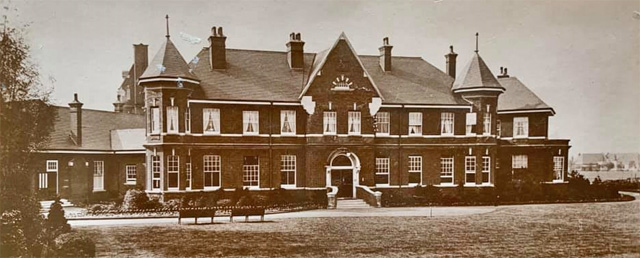
The hospital’s principal entrance in about 1930.
Just over the left of the main building is the water tower from which the view at the head of this article was taken. At the far right is one of the Colony’s villas.
Image (from a postcard) courtesy of Jim Sapsed.
The opening of the Colony was reported in the British Medical Journal 04 July 1903:
EPILEPTIC COLONY, EWELL, SURREY.
On Wednesday, July 1st, the first rate-supported epileptic colony in this country, founded by the London County Council for the epileptic insane of the metropolis, was opened by H.R.H. the Duchess of Fife and the Duke of Fife, K.T., Lord Lieutenant of the County of London.
Situated on the north-eastern corner of the Horton Estate (facing the Epsom Downs), purchased in 1896 for asylum purposes, and on which the Manor Asylum (for 700 female lunatics) and the Horton Asylum (for 2,000 lunatics) have already been erected, it has a demesne of I 12 acres, to be devoted to colony purposes, separated from the rest of the estate by a public road. The buildings, consisting of an administrative block and eight villas have been erected upon the most elevated part of the ground, some 200 feet above the sea level. A corridor leads from the administrative centre where in are offices for the medical superintendent, assistant medical officer, matron, clerk, etc., apartments for some of these officers, and quarters for the resident subordinate staff – to a group of buildings consisting of stores, main kitchen, and a hall for recreation and dining purposes. The boiler house, workshops, and water tower are situated between the stores and the female admission ward, the latter being a portion of the central block. On the other side of the corridor, immediately opposite the boiler house, a laundry will shortly be erected. The dining and recreation hall has eating, accommodation for 326 persons, the number of colonists to be received. Here it is intended that all whose condition permits their being present shall assemble for dinner, the other meals being taken in the several wards. It is so arranged as also to serve as the chapel. At one end of the hall a platform has been provided for entertainments. The hall will be well lighted, and its heating (which is by means of steam-heated radiators) and ventilation are very completely arranged for.
Within the 20 acres of land on the east side of the administrative block are dotted the eight villas (named after trees-Holly, Lime, Pine, Elm, Chestnut, Hawthorn, Walnut, Beech) in which all the colonists, with the exception of the 32 females to be accommodated in the admission ward at the administrative centre, will be housed. A photograph of one, of the villas is reproduced here. Each villa is similarly arranged, and has a south-eastern aspect, and the road’s giving access to them enclose a space to be laid out by the colonists, and used as a cricket and recreation ground. Each villa is arranged to accommodate 38 patients, and will be under the charge of a resident married couple. The interiors are designed to enable the individual patients to have the maximum amount of freedom under supervision. The verandahs and spreading porches to the villas are important features, enabling the colonists to be in the open in all weathers. The method of warming is by double fireplace stoves arranged in the centres of the rooms.
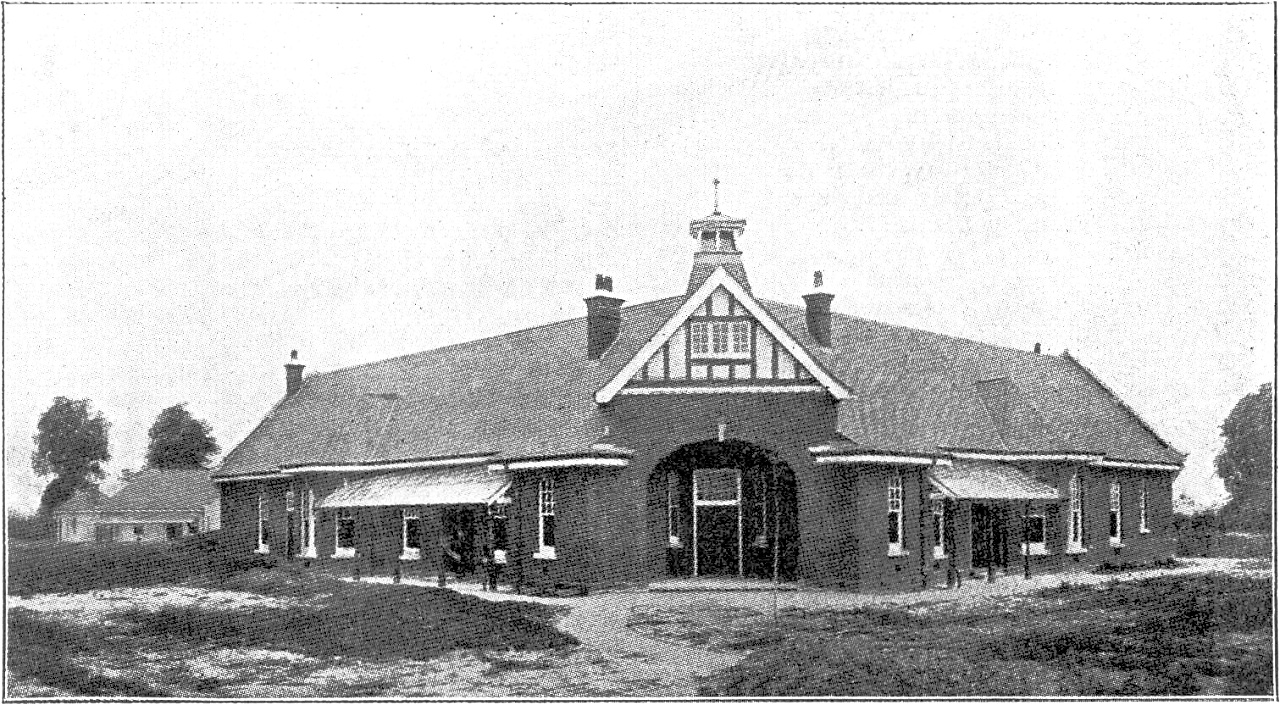 A Colony Villa.
The ventilation is by means of fresh air inlets at floor level and outlets through the ceilings into the roof space, the necessary upcast movement being obtained by the heat from the hot water storage tank which is placed at the base of a shaft leading into the open air. Four of the villas are built in red brick with artificial stone dressings. as are also the administrative buildings. The stores and the remaining villas are faced with rough case. All the roofs are tiled. The lighting is by electricity throughout. Telephones connect all the buildings, and an electrical fire alarm places the villas and the centre in communication.
The estimated cost of the buildings, including fixtures, fittings, and equipment, is £98,000, which with its provision for 326 patients (60 females and 266 males) gives a total cost per bed (exclusive of the cost of land) of £300. The plans of the buildings were designed by the Asylums Committee’s Engineer, Mr. William Charles Clifford Smith, M.I.C.E. Dr. Charles Hubert Bond (D.Sc., M.D., Ch.M.Edin.), Senior Assistant Medical Officer at the Heath Asylum, Bexley, formerly Assistant Medical Officer at Banstead Asylum, and Clinical Assistant at the National Hospital for Epilepsy, and at the Wakefield and Morningside Asylums, has been appointed Medical Superintendent. For this officer a detached residence has been appointed conveniently near the administrative buildings.
In the hospital’s first year 315 patients were admitted, and treatments including doses of bromide and a specially regulated diet. Potassium bromide was first effective treatment for epilepsy and was first introduced in the mid 19th century. It does not cure epilepsy but does reduce the number and frequency of seizures and their side effects in about 2 out of 3 patients but it is very toxic so dosage has to be carefully controlled. By the end of the year 17 of the 315 patients had died from various causes.
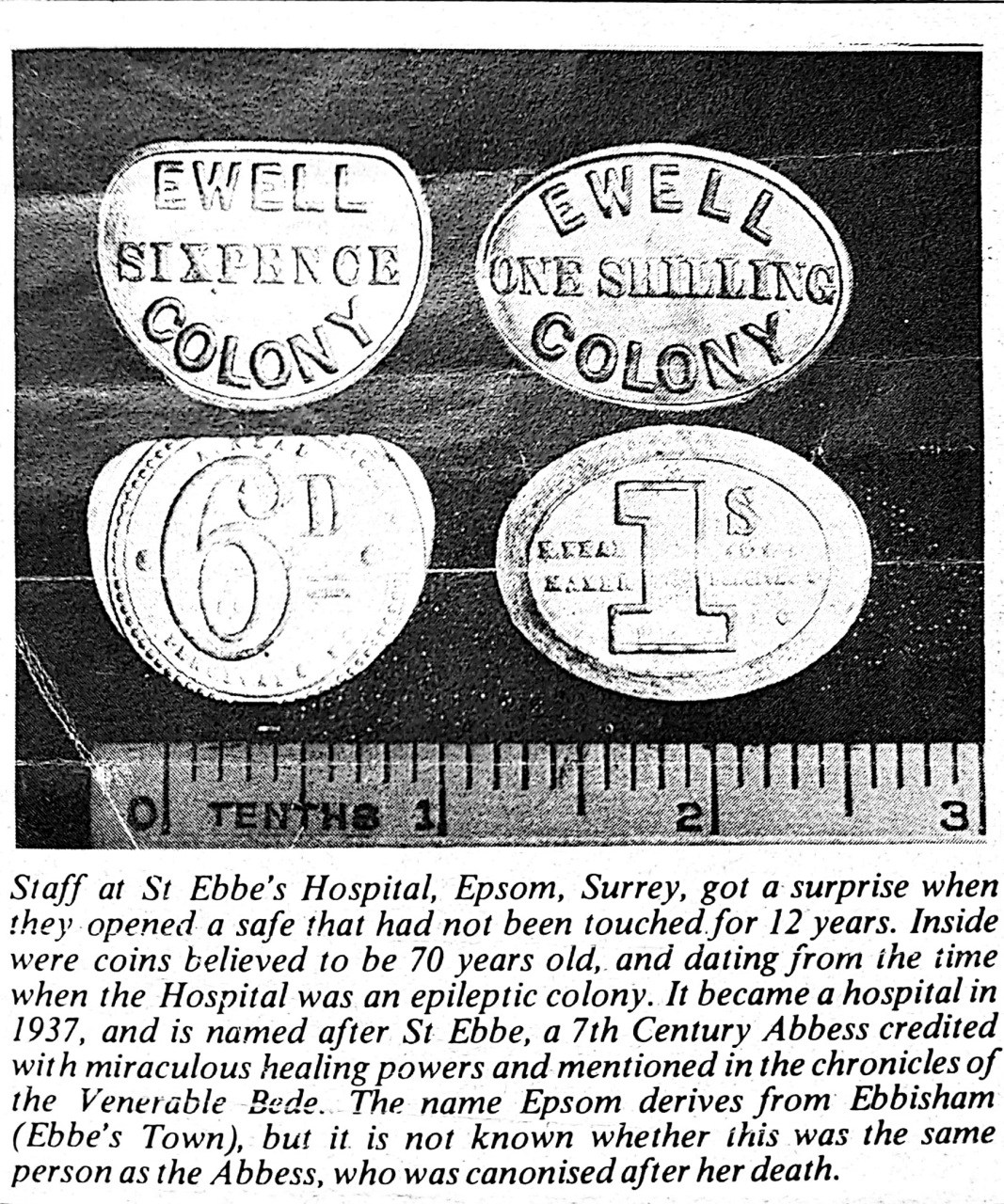 Newspaper cutting about tokens used by the Colony Patients
In 1909 two more villas were built and the number of patients was increased to 429.
In 1918 the hospital was taken over by the Ministry of Pensions and renamed the Ewell War Hospital and used for treating ex-servicemen mainly suffering from shell shock and neurasthenia (neurasthenia is a condition rather like chronic fatigue syndrome with symptoms including physical and mental exhaustion accompanied by two or more of the following: dizziness, dyspepsia, muscular aches or pains, tension headaches, inability to relax, irritability, and sleep disturbance).
In February 1927 it was returned to the LCC, renamed the Ewell Mental Hospital and used as a mental hospital. Two further villas and additional outbuildings were added. Under the Mental Treatment Act 1930 it was one of the first voluntary admission public mental hospitals.
The Hospital was enlarged by a further extensions one in 1936 and again in 1938 to provide a total of 933 beds. During 1938 it was renamed St. Ebba’s Hospital. In 1949 a unit for the treatment of adolescents (ages 12–17 years) was established and in the same year an occupational therapy department opened.
‘You used to arrive at the main gate, and you would have to book in at the Lodge, and collect your keys. And you knew that all the boundary fences were complete so that no patient could get out, and you were clocked in. And every ward was locked, and I was given a bunch of keys, a male key and a female key, because the two sections were quite separate and apart. I was given a key straightaway, with no probationary period, and I worked in an annexe of the informary ward, which I rather think wasn’t locked. As far as I was concerned my working conditions were very good. And I think the patients were looked after’.
St. Ebbas, 1950s
On 27 February 1962 the Hospital changed from being a psychiatric hospital to a hospital for mentally subnormal patients. The majority of the psychiatric patients were sent to other hospitals usually nearer their homes. After renovation the hospital had 470 beds (183 for the mentally ill and 287 for the mentally retarded) . Later the Adolescent Unit moved to nearby Long Grove Hospital and in 1969 an Industrial Training Unit opened in one of the villas providing training for about 200 patients. In 1971 patients began to produce concrete paving slabs in various shape, sizes and colours.
Once a year, we would take the patients to Eastbourne or Hastings, taking either the hospital coach or a hire coach. Once there, the patients were allowed to wander off on their own, giving them a sense of independence.
Joan Fitzgerald
By 1979 St. Ebba’s had 629 beds but patients were beginning to be rehoused in community homes and by 1995 the hospital had just 484 beds. The move to community care accelerated so by 2004 the decision was made to reduce patient numbers to just 55 long-stay handicapped patients. In 2008 a purpose-built Therapy Suite with a new hydrotherapy pool was opened.
Demolition began at the site in 2008 and by 2010 was largely complete. Conversion of the former Administration and Chestnut buildings has provided 6 houses and 6 flats which, together with the new build housing, gives a total of 322 new homes.
. Composite 1930s OS Map showing St Ebba’s Hospital
Click on the map to see it full size
Patient Numbers
(Warning these figures are approximate, incomplete and unverified) :
1904: 315
1908: 429
1938: 933
1949-51: Report of the Physician Superintendent : 1949-51 (Links to an external site)
1962: 470
1979: 629
1995: 484
2004: 55
Management:
1899-1948 : London County Council Asylum Committee
1948-1974 : Fountain and Carshalton Group under the South West Metropolitan Regional Hospital Board
1974-1982: St Ebba’s and Belmont Hospital Management Committee reporting to Sutton and West Merton Health Authority
1982-1988: Merton and Sutton Authority under the South West Thames Regional Hospital Authority
1988- Surrey Oaklands NHS Trust under the South West Thames Regional Hospital Authority
1990: Mid Surrey Health Authority
1995: Surrey Heartlands NHS Trust.
Related Images

Aerial View of St Ebba’s 1952
Image courtesy of Bourne Hall Museum
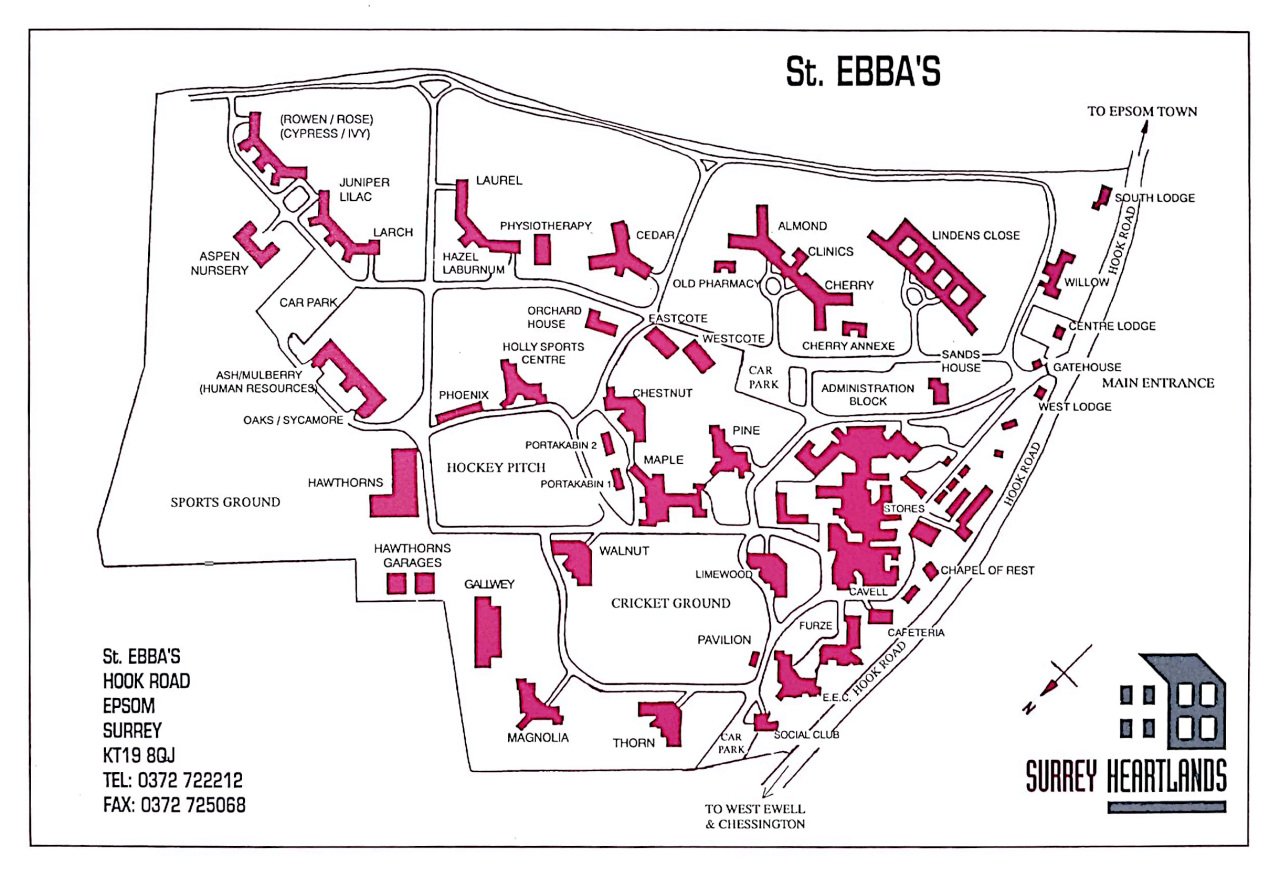
Layout of St Ebba’s c.1995
Click image to enlarge
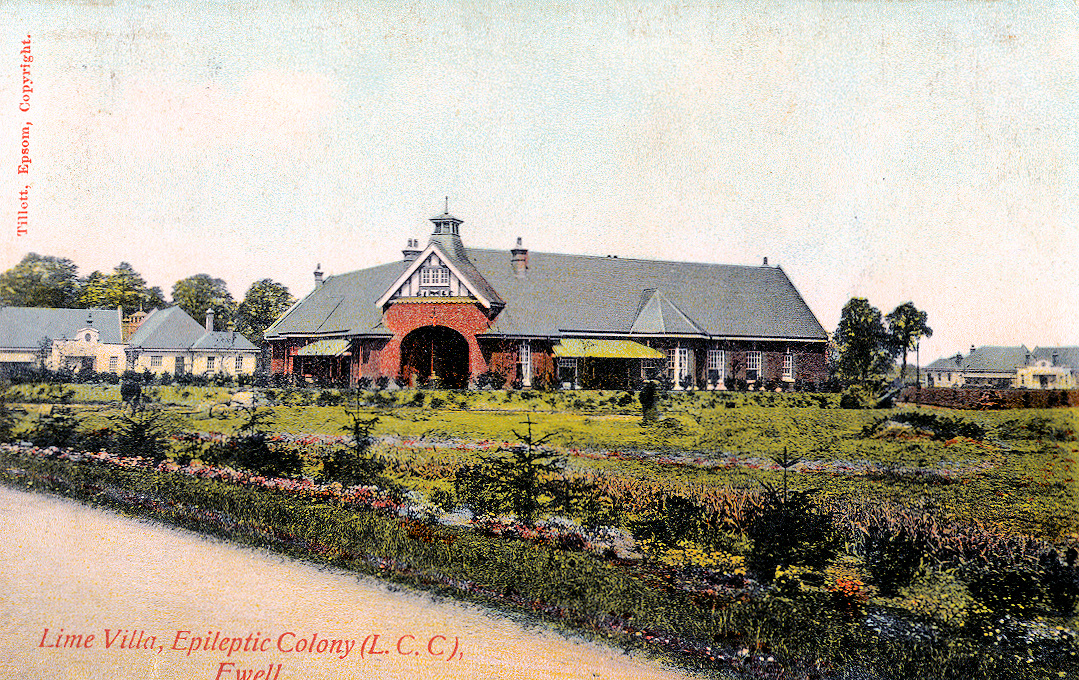 Lime Villa, Epileptic Colony (L.C.C.), Ewell
Image courtesy of Bourne Hall Museum
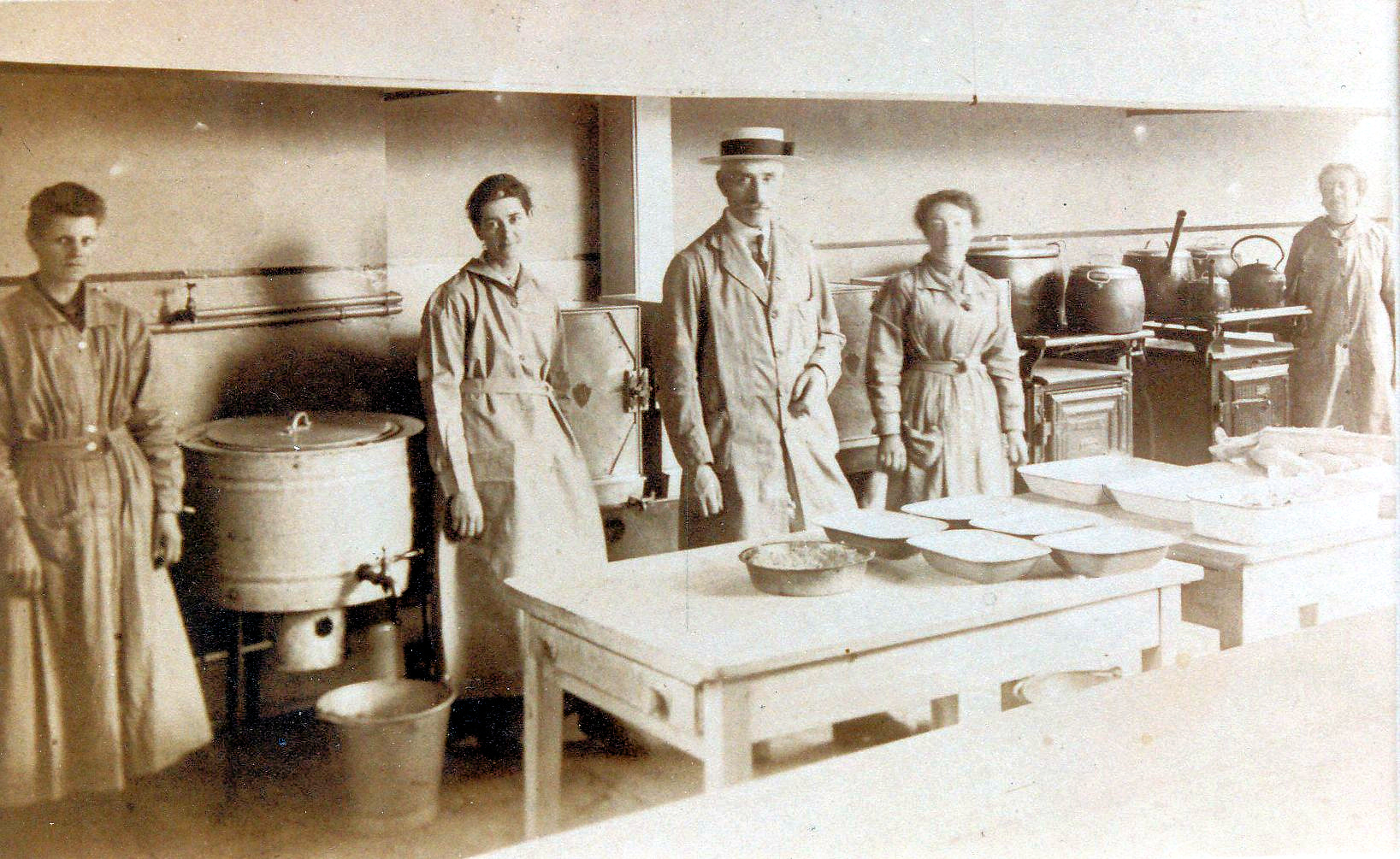
Kitchen Staff. Date not known
Image courtesy of Bourne Hall Museum
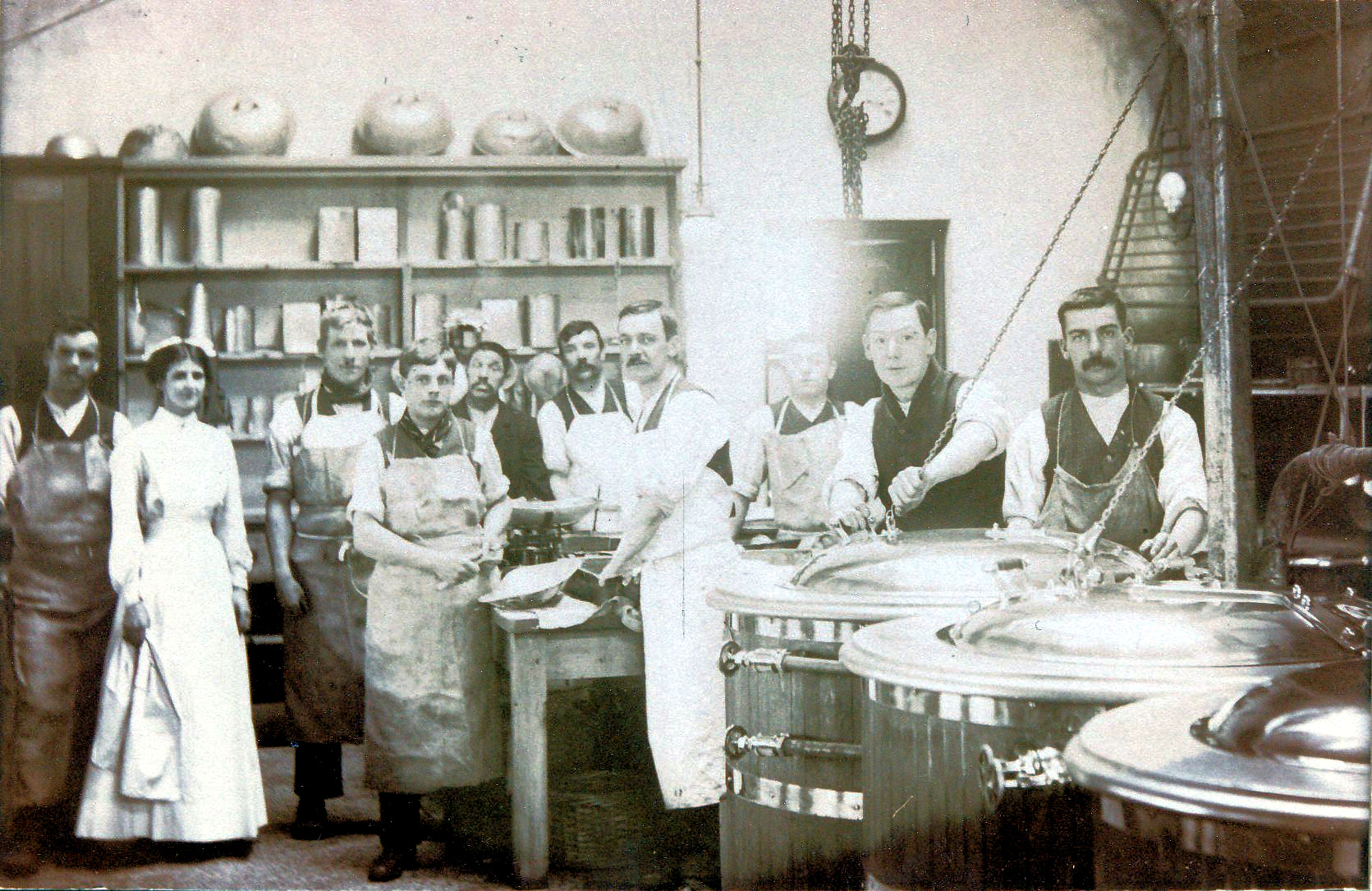 More Kitchen Staff. Date not known
Image courtesy of Bourne Hall Museum
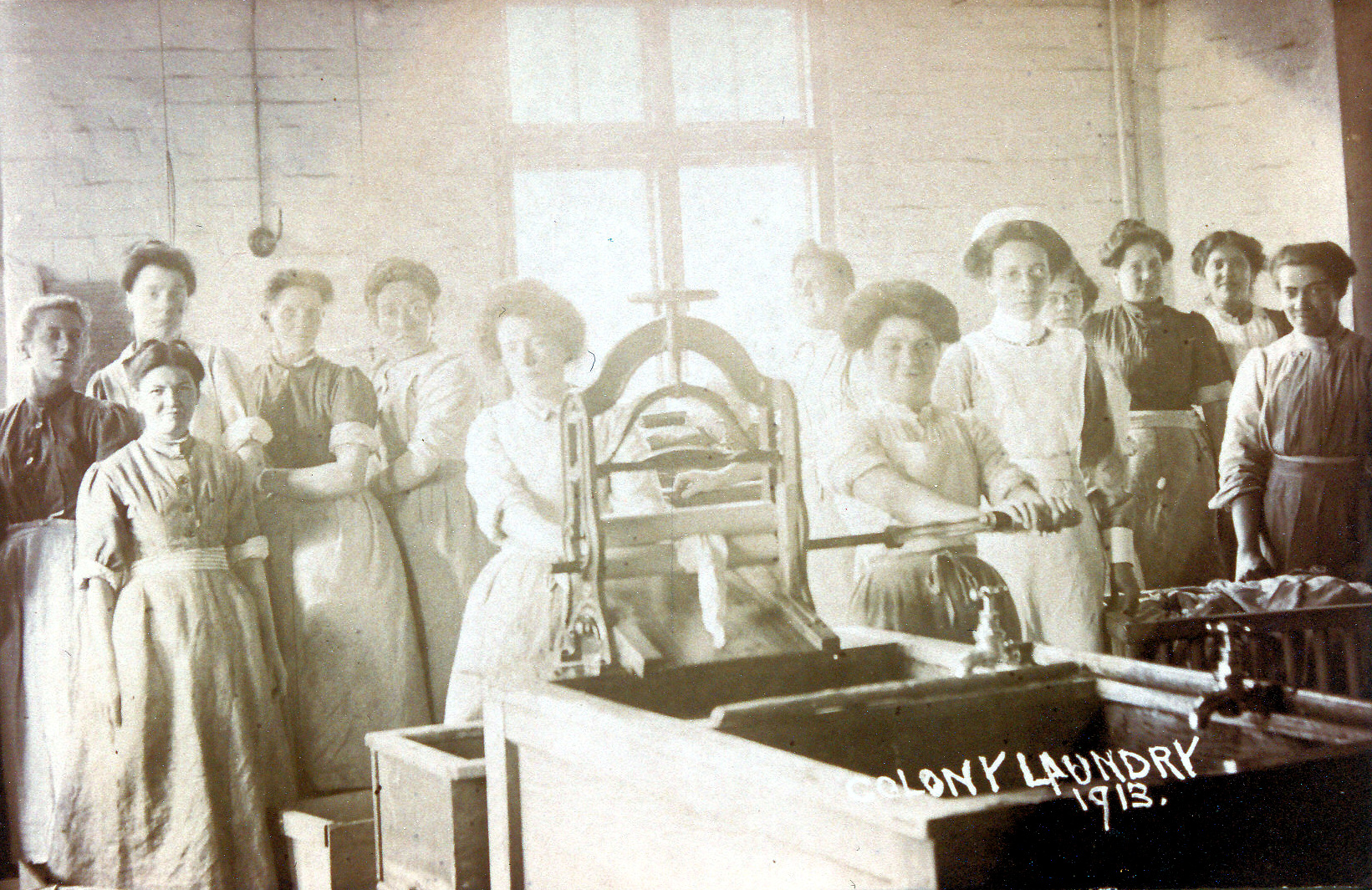 Ewell Epileptic Colony Laundry. 1913
Image courtesy of Bourne Hall Museum
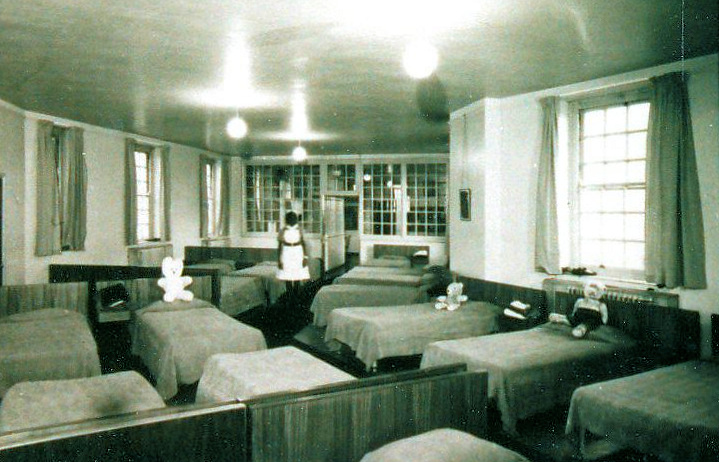
St Ebba’s Dormitory . c 1960s
Image courtesy of Bourne Hall Museum

St Ebba’s Cookery Class . c 1960s
Image courtesy of Bourne Hall Museum
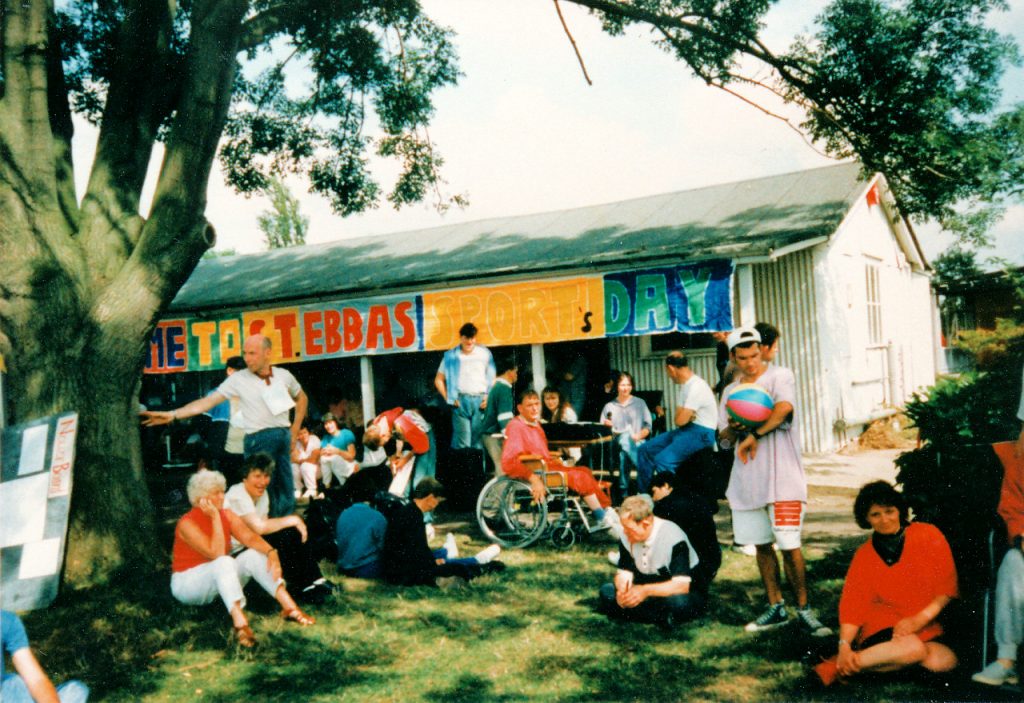
St Ebba’s Sports Day. Date not known
Image courtesy of Bourne Hall Museum
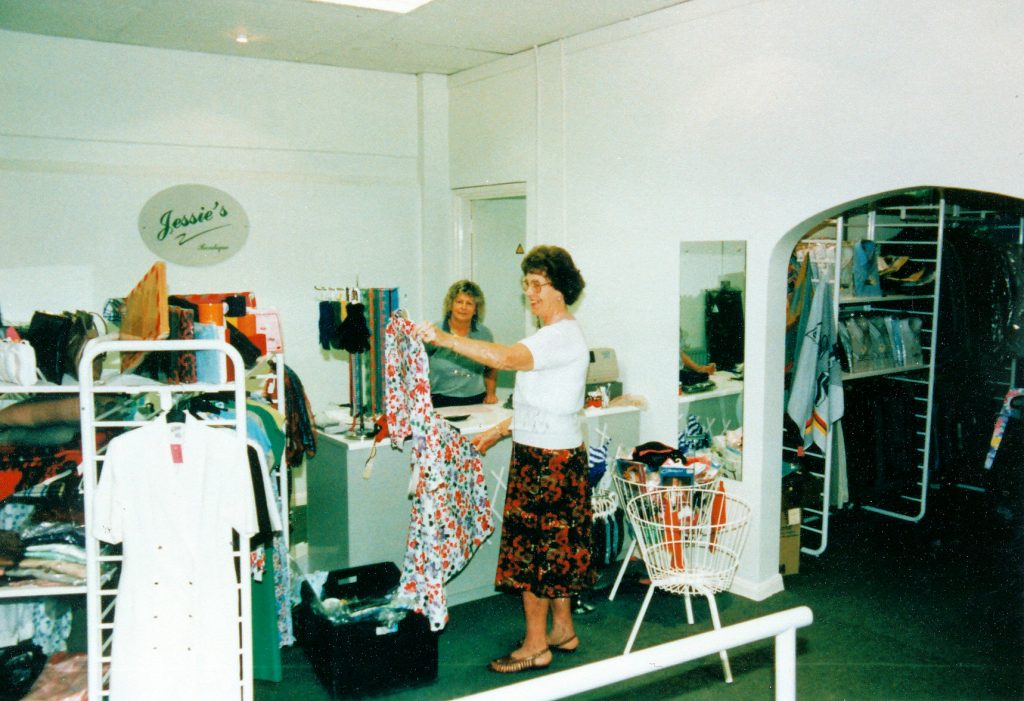
St Ebba’s Patients Shop. Date not known
Image courtesy of Bourne Hall Museum
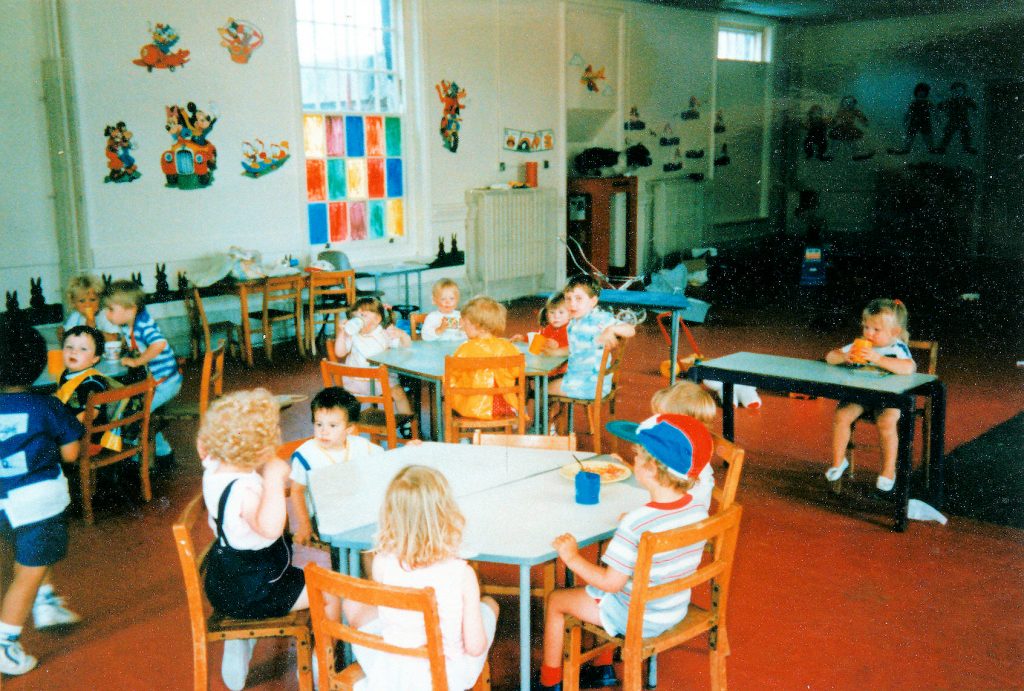
St Ebba’s photograph of children eating. Date not known.
Image courtesy of Bourne Hall Museum
Links to related pages on this website:
Horton Cluster – Introduction
Horton Cluster – Manor Hospital
Horton Cluster – Horton Hospital
Horton Cluster – St Ebba’s Hospital
Horton Cluster – Long Grove Hospital
Horton Cluster – West Park Hospital
Horton Cemetery (History)
The burial records are split into 26 parts: A B C D E F G H I J K L M N O P Q R S T U V W X Y Z
Railways Serving The Epsom Hospital Cluster
Other pages that you may be interested in:
Electrotherapy at Horton (County of London) War Hospital, Epsom, in WWI.
The Long Grove Psychiatrists Of 1911
Malaria Laboratory (1925-1975) – The Mott Clinic
Ogilvy, Dr David / Smith, Pollie Eaton