
All Changed and Survived on Epsom Common:
33 Woodlands Road
 Original cottage. 33 Woodlands.
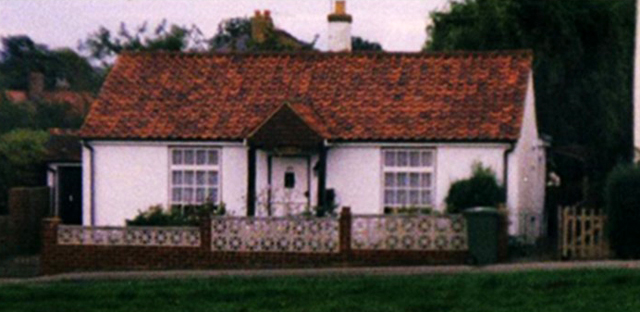 Modernised cottage. 33 Woodlands.
The original cottage at 33 Woodlands Road was one of the first to be erected on this side of Epsom Common. It is typical of many small cottages built on the Common in the 1850s, usually very basic in construction with a fireplace and flue for each room. The roof timbers were often larch poles and the floor dry earth or stone slabs, the walls rendered masonry allowing any type of stone or brick construction. The land was usually claimed by squatter’s rights and then often sold on to a third party, thereby making the issue vague and hidden. Eventually a deed would be produced, usually in the late Victorian period when the property was sold (often with a cottage or building) and the purchaser required a more legal document: usually this included an indemnity clause and a general description under “All that land and cottage”. Sometimes the indenture would say that the rights had been claimed legally, via a Commissioner of Oaths.
33 Woodlands Road had the benefit of a well which may have decided its position and value. The cottage was erected on a plot of land occupied or taken from the large rectangular area originally removed from the common waste to provide extra farmland for the Wells Farm. With the decline of Wells Farm the whole area was vulnerable to occupation, and was soon occupied by small plots.
The cottage was probably built by Thomas Macdonald, a wheeler-dealer of his time, who sold it in the 1850s to Frederick Stone. It is not clear when the Stone family sold the cottage but sell it they did, to William Robert Mellish, baker and shop owner of Ashtead. The sale seems to have been sometime after 1881, maybe to help finance the house building that the Stones were engaged in on this side of the Common, as appears from the will of Emma wife of William Robert Mellish.
In about 1881 the Sullivan family took up the tenancy and would remain in occupation for the next hundred years. Michael Sullivan died in 1898 at Epsom; he was the father of John Sullivan, who married Mary (died 22 April 1915 at Epsom) and their son was another John (Jack) Sullivan. They had at least two daughters, Kate and Agnes: Agnes C. Sullivan appears on the census return of 1881, and died, a spinster in 1934. She is buried with Leslie Sullivan and her father John at Epsom Cemetery, grave H130. Jack Sullivan had a son Herbert who gave much information about the family.
In 1933 the Sullivans became the owners and by 1981 they had sold the cottage to the builder Graham Taylor, who modernised it into what we have today. As Bert Sullivan told me, ‘So much modernisation and change has taken place, that any emotional connection has gone’.
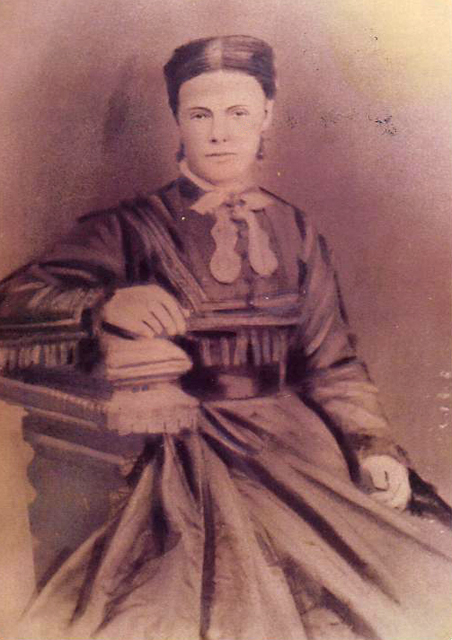 Mary Sullivan, probably taken between 1881 – 1891.
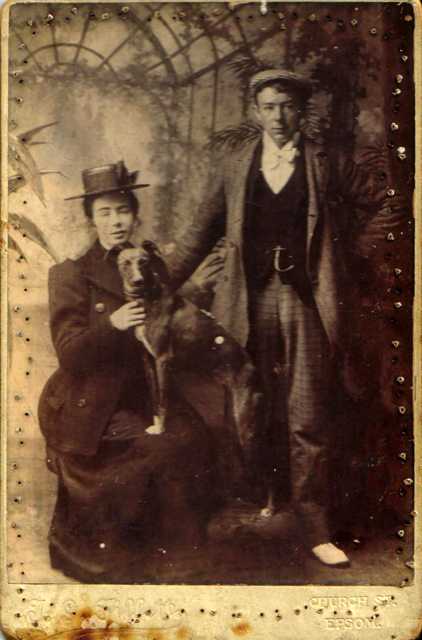 John (Jack) Sullivan, said to be with his sister Kate,
but more probably with his older sister Agnes.
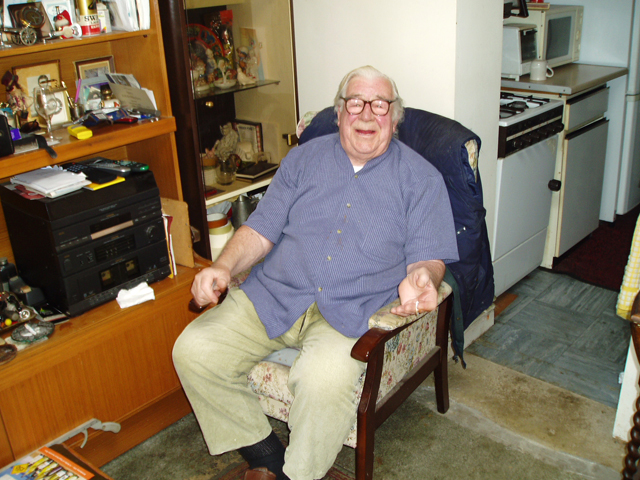 Herbert Sullivan.
Two Visits to Herbert Sullivan
13th September 2006
Have just return from a visit to Herbert Sullivan, son of John Sullivan formerly of 33 Woodlands Road. He is 85 years old and a very friendly man.
His grandfather and great grandfather came to England because of the Irish famine with two of his brothers, one went to the north one went to the south and one stayed at Epsom. He is a very independent man and has wonderful memories of living on the Common, but he said that the overriding memory from childhood was always feeling hungry.
His close friend was Nelson Marney along with Ron Drake. His accent was intriguing – he had spent much of his working life in and around London so had a broad London accent with many of the words not completed, plenty of ‘mate’ sprinkled with an abundance of swear words but every now and when wishing to emphasise a point he would produce the middle-class Surrey accent in a short bust.
He considered himself a Poundlaner, he went to school at Pound Lane whilst many of the other boys went to the National School in Hook Road. There was a lot of rivalry between the boys on Woodlands Road and the boys on the Stamford Green side of the common, this often resulted in fights so that every day that Bert went to and from school he ran the risk of passing through opposition territory. At the age of twelve Bert was sent to the Catholic school so lost contact with many of his friends, all the ceremonies like christenings were carried out in Roman Catholic establishments. He remembered that at Christmas time all the people who lived on the top road facing Wells Rd were given hampers by the Jamison family who had moved into the Lord of the Manor’s house (Wells House) and that the rest of the people on Woodlands Road felt neglected and left out of the event. He also remembered at Pound Lane School a teacher by the name of Joby Harris (the very same teacher that was my Science teacher at Lintons Lane School) who was keen on cricket: he held sessions where he batted and whatever boy could bowl him out was given sixpence, it so happened that Bert was good at bowling having spent hours bowling a stone at the base of a lamp post, so having bowled Joby out, Bert and his mates went immediately to the cake shop opposite the school and stuffed themselves with cakes and for once did not feel hungry. Next door to Bert at 32 Woodlands Road were the Burdett family, the father was a signalman for the railways so had a well-paid job. They also owned the other house making up the pair which they called Railway Cottages, it seems that the building material used in the walls of these cottage was burnt ballast which may have been an early form of breeze block which was in itself a by-product of the gas and coke industry, a waste product used largely by the building industries in the 1930s .
Further up the road Elizabeth Cliff, formerly Hasman née Ede, owned what is now 19/20 Woodlands Road, formerly Cunningham Dairy. She sold it on to the Watts family who continued to run the shop. It was Watts that extended the path through his property to the occupation road, (The Occupation Road was an access Road, today it is cul-de-sac that starts at the top of Woodlands Road and runs parallel with Woodlands Road but behind the houses on Woodlands Road), maybe to encourage the laundry girls from Simmons’ laundry to use the shortcut and pass by his shop. The shop passed to the Rowland family who ran a butcher shop (he slaughtered all the pigs on the Common) and then to Yappy Fisher.
Bert’s father was also a pig keeper, in fact when the Marneys built pig pens at Westlands (56 Woodlands Road) it was John Sullivan who was seen as the fountain of knowledge on the subject. The piece of land behind 38 Woodlands Road was used for this purpose along with growing vegetables and potatoes. Bert related how his father had rationed the consumption of the potatoes by his mother to make them last the winter and have seed potatoes for the following year.
Just down the occupation road before 56 Woodlands Road there is a large area of land owned by Robert Smith. The story goes that before WW2 the Smith family purchased a small parcel of land of the edge of this area. The plot was just big enough for the erection of a corrugated steel shed in which they lived. It seems that the Smith family were related to Travellers who ran the fairgrounds, they were totally illiterate and had never registered a marriage or the birth of any of their children. Consequently, when the second world war started and because they were not officially known, none of them was ever called up for military service or ever received any form of benefit like ration books – although they managed to obtain these things by other means. On returning from the war Bert noticed that the Smiths now owned all this land of area.
This area had a large house known as Firs (Wells) View which was once used as a laundry but failed and then was rented out as rooms: the owner at this time was George Kingswood. Another laundry had been opened almost opposite, this was Simmons’ laundry. The house was eventually demolished and the Smiths built themselves a bungalow. The land was often used for the out of season parking of fairground vehicles and more recently for the storing of new cars. How the Smiths acquired the land during the War is not known but knowing that the previous owner were the Kingswood family I am sure money changed hands. It’s very likely that there are not any deeds associated with this property, and to this day it is registered as a possessory title.
16th September 2006
Phone call from Bert, he has found more items of interest including the estate accounts of John Sullivan deceased and sales particulars from 1980 (one contained a view of the un-modernised cottage a real beaut) and information about Sullivans of the past which Bert had received from a relative. One of the best items was concerning some cottages that I had been chasing for years, Chapman’s Cottages. Bert was able to describe them to me in detail and who he remembered living in them and that they were finally demolished by George Kingswood for his laundry business.
During WW2 John (Jack) Sullivan had a German prisoner of war, Hans, as a lodger who worked for the Convent in Dorking Road as a general labourer with the pigs and chickens. He returned years after the war and stayed two doors up and invited the Sullivans back to Germany for a visit.
His rent on the cottage was 10 shillings a week. One of the things that seems to have upset Bert the most was the way that Graham Taylor had rebuilt the cottage and completely changed its appearance, at one time only the two side outside walls was left standing which destroyed any emotional feeling he had for the old cottage. An 1850 cottage is now a 1982 cottage.
Pictures from the Friday Collection
© Terry Friday 2025