
Robbery with violence by a soldier
in Epsom during the 18th century
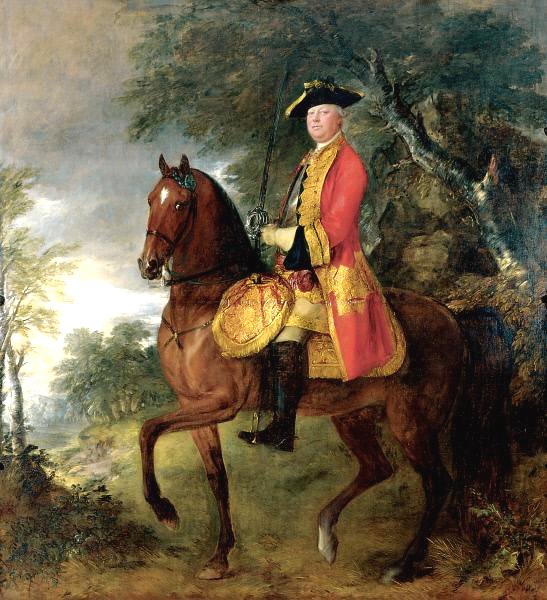 Lieutenant General Philip Honeywood
by Thomas Gainsborough
Source: Ringling Museum
The regiment founded in 1715 as Colonel Philip Honeywood’s Regiment of Dragoons was known by the name of its Colonel until 1751 when it became the 11th Regiment of Dragoons. A further name change, to the 11th Regiment of Light Dragoons, occurred in 1783, and after that year it came to be quartered in Epsom, presumably with common soldiers encamped on the Downs. Such deployments were made in anticipation of further threats from France following that country’s thwarted attempt to execute an invasion of Great Britain, allied with Spain, in the late summer of 1779.
As ‘light cavalry’ they wore red coats with skirts tied back and facings, waistcoat, and breeches all in buff. Their odd style of headwear was a tough leather cap with upturned red peak decorated with a crown and cypher. The carbine [short musket called a ‘dragon’] was fixed to a brown leather strap slung over the left shoulder.
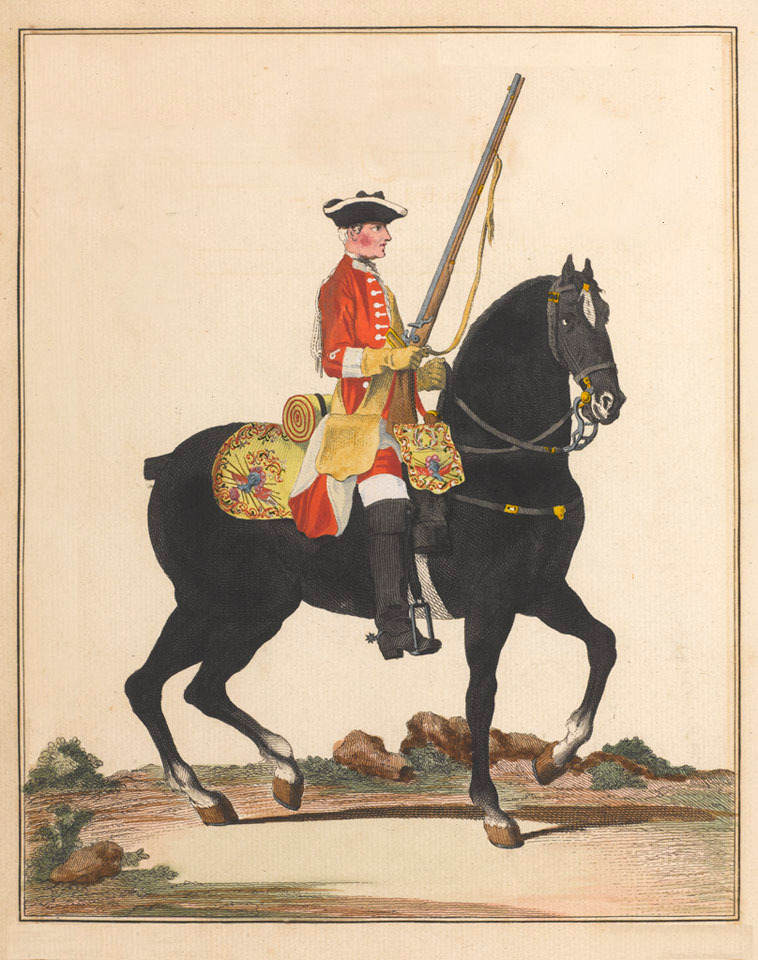 Uniform of the 11th Regiment Of Dragoons
Source: National Army Museum
Richard Preston, a private in this Regiment, was charged with stealing 1 guinea from, and assaulting, Henry Skynner a carpenter from Epsom on 26 December 1786. He was sent for trial at Surrey Lent Assizes which began at Kingston upon Thames on Monday 2 April 1787.
Evidence was presented by Rev. M[artin] Madan, magistrate [on the local bench from March 1780, presumably of commital], Elizabeth North, public-house keeper, Thomas Butcher, Skynner’s employer as a journeyman and foreman carpenter, William Pearson, Clerk to Rev. Madan, William Potter, soldier, & B. Hall, keeper of the New Gaol, Surrey.
 Rev. Martin Madan by Thomas Kitchin
Image Source Wikipedia
Clemency was sought on the grounds that the accused had an aged mother to support, and the guinea had been given to him by Skynner in a field where he was asked to do a ‘very bad thing’. In the event Preston was found guilty and sentenced to 14 years transportation.
However it would appear Madan felt the decision harsh because, over two days 9 and 10 April 1787, he sought depositions from :-
Elijah Denyer, journeyman carpenter,
William Childs,Thomas Butcher,
Lintoff, George Verling,
John Keeling &
William Tasker also
Edward Sargeant,
Benjamin Sargeant,
William Philips &
John Marsh
concerning certain unnatural attempts made on Elijah Denyer by Skynner, which led to a petition from him coupled with another from James Ives, gaoler from Southwark.
On 8 May 1790 further grounds for clemency were considered including good character while in gaol and his help in uncovering plots to escape by other convicts (much detail having been given on these matters). Preston had served 3 years in prison and the prisoner was in ill health. Robbery was denied and instead Preston claimed he was given the guinea as security if he would let Skinner perform unnatural acts upon him, but he had knocked this accuser down and kept the money to teach him a lesson.
The depositions were found to have invalidated allegations against the prisoner’s conduct. An initial sentence of death having been reprieved to transportation, Preston was recommended for a free pardon. [Report of Judge Alexander Thomson, National Archives reference HO 47/11/29 ] Evidently granted because Robert Preston’s name did not appear in the registers of transported convicts from 1787 onwards.
This explains what was implied by Skynner’s stated request for performance of a ‘very bad thing’. Since at that time, ‘unnatural offences’ related to homosexuality, particularly sodomy, were subject to capital punishment on conviction, Preston may have avoided being specific fearful of placing himself in even greater jeopardy.
Rev. Madan’s activities as a magistrate have been discussed by Jeremy Harte in Epsom and Ewell Local & Family History Centre Newsletter, September 2012. In his article about ‘Games People Play’ it was remarked:-
“Thomas Butcher was a ‘carpenter’ in the eighteenth-century sense of small builder and owned five properties in and around the High Street, so it is not clear which of these was being used for illicit games. But the presence of an important local figure like this shows how far Madan’s net had swept in its search for the guilty. Butcher seems to have been born about 1740; at least, he married in 1765 and died 33 years later leaving a son, young Thomas, to carry on the building trade. He was a regular member of the parish vestry, appointed in 1771 as churchwarden; whenever the Workhouse or other parish buildings needed repair, it was Butcher who sent in his estimate.”
Elizabeth North, formerly the widowed Mrs Wisdom, had been admitted to a copyhold, The Fox [later Fox Revived, then Ladas] public house, in succession to her late husband on 23 June 1783. She married, secondly, Robert North of Epsom. They did not sell ‘the Sign of the Fox’ until 2 September 1791.
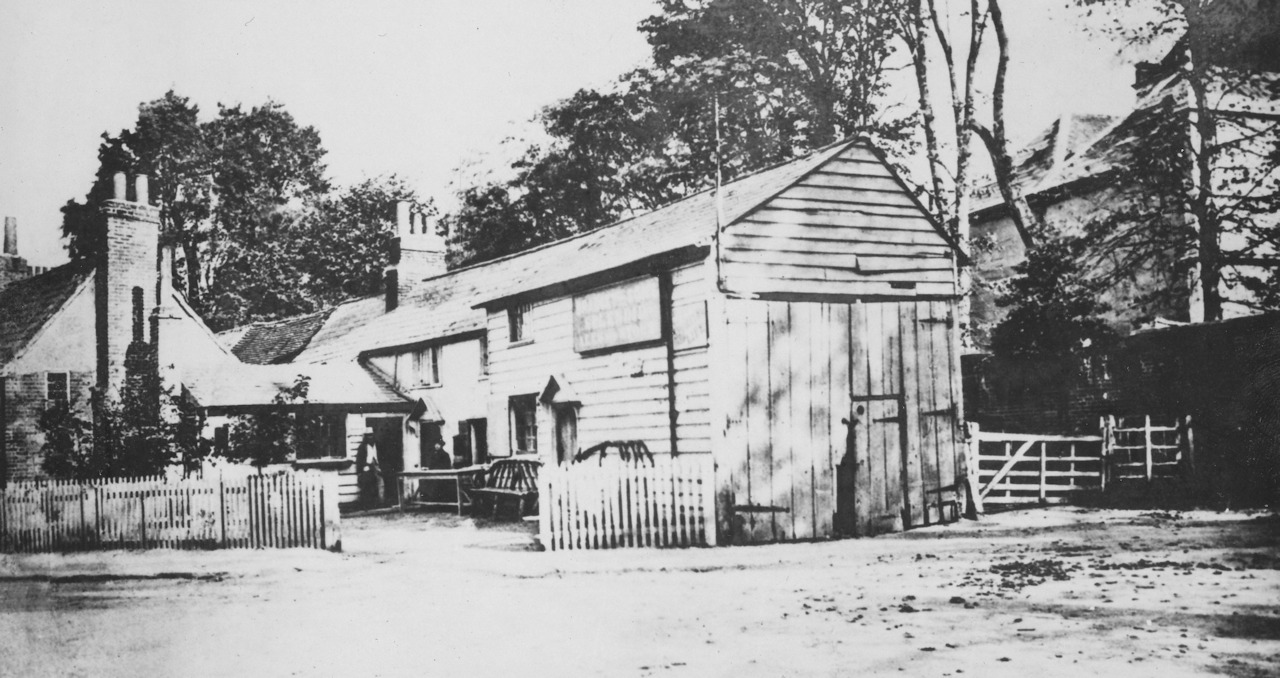 The Fox, later The Ladas subsequently rebuilt
Image source : Bourne Hall Museum
It may be inferred that it was there that the encounter between Preston [who would have stood out from the crowd, on the day after Christmas in his flamboyant uniform) and Skynner occurred with fateful consequences. The consumption of alcohol probably influenced whatever happened subsequently ‘in a field’.
 We don’t know the exact location of the incident but this extract from the
1866 OS Map shows the location of the Fox / Ladas public house.
Madan died at his Epsom property, Woodcote End, on 2 May 1790.
Eventually Preston’s Regiment became the 11th (Prince Albert’s Own) Hussars, nicknamed The Cherry Pickers, The Cherrybums, or Cherubims.
Brian Bouchard 2022