
OWEN CUNNINGHAM (1912-74)
London’s “Oyster King”
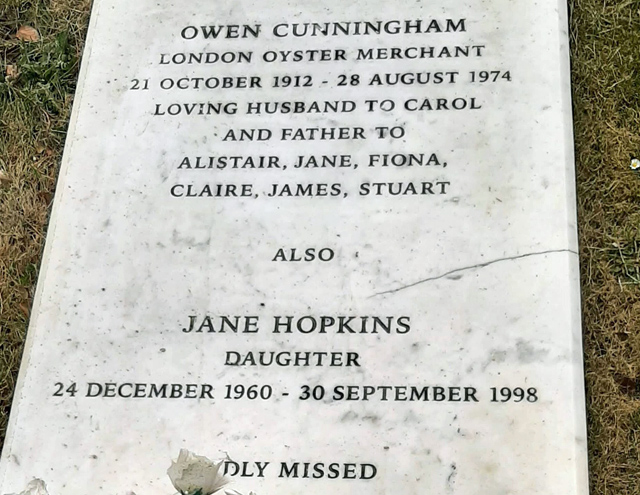 Owen Cunningham’s grave marker in Epsom Cemetery.
Photograph by Paul Stokes © 2022
Family background
Owen was born on 21 October 1912, the second child of James Cunningham and Sarah Louisa Clara (née Johnson).
While the parents’ Q2 1911 marriage (registered in the Southwark District) was Sarah’s first, it was James’s second: in Q3 1890 and registered in London’s Pancras District, he had married Emma Davies when both were aged 23. The 1891 Census finds the couple living at 15 James Street, near St Martin in the Fields, with James’s occupation listed as “Laundry Business”. It is not currently thought that the couple had any children. Irritatingly, James and Emma have not yet been found in the 1901 Census. (In particular, they are not at any address in James Street.) In any event, Emma died in Q2 1910, registered in the Strand District.
The 1911 Census records the now 44 year old and widowed James as the sole occupant of 18 Orange Street – which is what James Street (as in the 1891 Census entry) had become in the early 1900s. (Indeed, renumbering probably means that “18 Orange Street” was the same building as 1891’s “15 James Street”.) As in 1891, James was still engaged in the Laundry business, describing himself as a “Laundry Examiner”. Although recorded as the sole occupant of Number 18, he stated his “Relationship to Head of Family” on the Census return as “Assistant”, and the cover sheet of the return shows the “Head of the family or separate occupier” as “J Duff & Sons / (Cunningham)”.
(As an aside, the “J Duff” here is likely to be James Duff who the 1881 Census records as a 42 year old Irish-born “Laundry Keeper” living with his wife and family – which included three sons – at 20 Oxendon Street, a turning off Orange Street. By the time of the 1891 Census, the Duff family had moved to 7 High Street, Croydon with James and one of his sons both listed as “Laundry Proprietor”.)
To return to the main narrative, in Q2 1911 and registered in the Southwark District, the widowed James Cunningham married 26 year old Sarah Louisa Clara Johnson. They went on to have six children:
- James, born Q3 1911;
- Owen (the main subject of this article), born on 21 October 1912 and baptized at St Peter’s, Great Windmill Street on 6 November 1912;
- Patrick, born on 6 March 1914;
- John, born Q4 1915;
- David, born on 14 October 1917; and
- Eileen, born on 9 June 1921.
We have a photograph, as below, of the parents and their children (other than the yet to be born Eileen).
 The Cunningham family in about 1919.
The children, from left to right (and with approximate ages), are: Owen (7); John (4); David (2); Patrick (5); and James (8).
The 19 June 1921 Census records the family – including the just born Eileen (but not brothers James Jr and Patrick, who have not yet been found elsewhere) – still at 18 Orange Street. The 8 year old Owen is a schoolboy. Father James is listed as “Laundry Porter” employed – as in 1911 – at the premises by “J Duff & Sons, Laundrymen”
Working life
As we shall see, Owen was something of an extrovert, and it is no surprise to learn that he had aspired to go on the stage. That was quashed by his father who instead directed him into the food trade. Perhaps because of an early job as “oyster boy” at London’s famous Connaught Rooms, he then took a particular interest in seafood. By the time of the September 1939 Register, the nearly 27 year old Owen had progressed to be listed as a “Cold Storage Fish Agent” (with the entry later annotated to record his service as a Special Constable).
That 1939 Register recorded him living at 59 Rupert Street, Soho with his recently-widowed mother and three siblings, whose details in the Register were:
- Sarah, now aged 55 and consistent with her late husband’s career, listed as a “Hand Laundress”;
- 25 year old Patrick was also in the food trade, being listed as “Sausage Maker & Salesman / Ex Police Officer”, with the entry later annotated to record his volunteering for the Auxiliary Fire Service;
- David, just short of his 22nd birthday, is listed as a “Chauffeur Mechanic”, with the entry later annotated to record his service as an ARP Stretcher Bearer; and
- Eileen, now aged 18, is listed as a “Shorthand Typist”.
The food industry was one of several “Reserved Occupations” during WW2, exempting those employed in them from conscription. Nevertheless, Owen joined the Army. It is not clear whether his enlistment was before or after his Q2 1940 marriage to Marie Bettany – about which (and subsequent marriages) there is more in the concluding section of this article about Owen’s personal life.
Anyway, Owen rose to the rank of Captain – a title he liked to use for the rest of his life. According to a post-war press report, he had conducted experiments in Army food for the War Office, and it may be that he was actively recruited for that role.
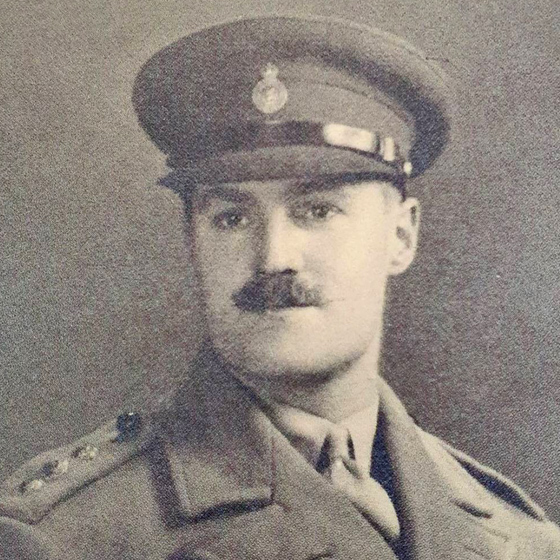
Owen, aged about 30, as a Captain during WW2.
On leaving the Army in 1945, Owen invested his reported £500 gratuity in an oyster bar and seafood restaurant at the now-lost 51 Curzon Street in London’s Mayfair – as pictured in 1951 below, together with an about contemporaneous magazine advertisement.
 Cunningham’s Oyster Bar at 51 Curzon Street.
(The “AD 1746” date on the first floor bay could be genuine: the building is understood to have been scheduled as ancient.)
Cutting from an unknown 1951 magazine.
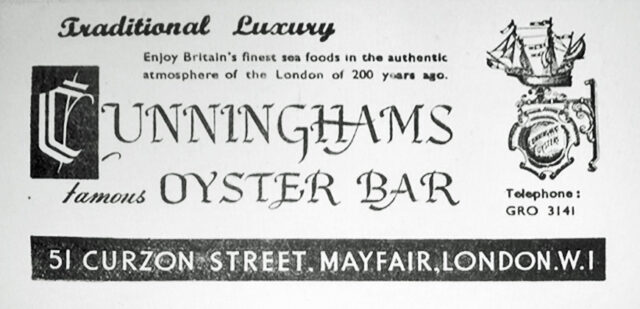
A circa 1950 magazine advertisement for Owen’s “famous oyster bar”.
Owen claimed that, within a year of opening, his Oyster Bar became a business worth £30,000. (At 2021 prices, that sum would be about 30 times larger.)
The late 1940s in the UK saw austerity and rationing at least as tight (and, in some cases, tighter) than during the 1939-45 WW2. However, there were those with the appetite – and, more importantly, the resources – to enjoy life’s luxuries. An October 1949 press cutting notes that Owen was part of a 22-strong party from the British Wine and Food Society on a wine-tasting visit to France. He was on the champagne sub-team as the one who would advise on which pressings would go best with shellfish and seafood generally. The cutting concludes by noting that “London’s consumption of champagne during the past three months has broken all records since World War I days“.
Owen seems to have had a knack for generating publicity. For example, a diary item in The People for Sunday 6 August 1950 noted that “the Oyster Baron of Mayfair” was making “a second offer [presumably, again abortive] to take over the catering at the House of Commons and turn the £19,248 loss into a profit“. The local Westminster and Pimlico News for 14 October 1955 reported that Owen (a member of the Zoological Society) was, every week, sending the shells of 100 lobsters to the London Zoo to be crushed into the food of the flamingos to help restore their pink colouring. (Flamingo feathers are naturally white, but take on a pink hue from the prawns that are their diet in the wild.)
A diary item in the Daily Mirror for 16 December 1958 noted that the “jovial boss of the famous Cunningham’s Oyster bar in Curzon Street is sending his staff on their holiday with a lunch on Christmas Eve. Said Cunningham: ‘I’ll have to serve up turkey and roast pork. They can’t stand oysters!’ ” Owen’s thirst for publicity sometimes backfired. On 1 September 1970, the first day of that year’s oyster season, he invited BBCtv into the Curzon Street restaurant to record a newsreel item over lunchtime. As reported in the following day’s Evening Standard, the kerfuffle of cameramen and all their equipment was not a good experience for those who had come for lunch.
Not all the publicity was good. In 1949, Owen and the Duke of Marlborough were reported to have engaged in a fist fight at London’s Twenty One Club. The Daily Telegraph of 4 September 1954 noted that Owen had been summonsed for assault against journalist Michael Eland at Mayfair’s Colony Club. It was subsequently reported that, as Owen (who had hit Mr Eland twice on the jaw, as a result of an argument) had now apologised, the summons was withdrawn. Owen’s 1959 claim that, as a 17 year old in 1929, he had made an “antique” pewter tankard displayed in the V&A Museum was ridiculed by experts: apart from scientific evidence of its age, the piece had been illustrated in a magazine in 1927 – two years before Owen’s claimed date of manufacture. 1959 also saw, as reported in a half-page piece the Daily Mirror of 27 October, a judge’s somewhat scathing rejection of Owen’s claim for £100 damages against Mayfair’s Les Ambassadeurs Club for returning from the cloakroom a “ragged and dilapidated” coat in place of the “expensive one” he had lodged on arrival – a substitution he had not noticed until the following day. (The press report notes that Owen had been accompanied to the Club by a friend, “Miss Kay Carlill” – about whom there is more in the concluding section of this article.)
And some of the reporting was of Owen being the victim of various robberies. A front page article in the Daily Telegraph of 29 January 1951 reported that, late at night, he had been attacked in his flat above 51 Curzon Street and left trussed up by two burglars – one of who was later jailed for eight years. In August 1954, he arrived home late one night to find that thieves had broken in and stolen jewellery and furs belonging to his wife. There were other robberies at his restaurant: the Evening Standard of Monday 29 January 1962 reported that, on the Oyster Bar’s secretary (a Miss Mackie) opening up that morning, she had been attacked by three young men who, after tying up and gagging her, had robbed the restaurant of its weekend takings.
An incident which attracted the most press coverage was the January 1953 robbery at Wapping’s historic Prospect of Whitby pub. Owen and six friends were just leaving from their meal in the first-floor Samuel Pepys restaurant, when armed robbers raided the pub. Customers (including Owen’s party) were forced to the floor and robbed of valuables. The Guardian of 12 January 1953, reported Owen as saying “It was very grim while it lasted … Most of us got a heavy blow or jab in the back.” The thieves (who had also stolen the pub’s takings) were later apprehended and imprisoned.
In the meantime, Owen’s empire expanded with the opening of further Oyster Bars in London’s St James’s Street and in Brighton.
There is no doubting the status that Owen had as a seafood expert. The March 1956 up-market Britannia & Eve magazine carried a full-page feature which invited readers to give their families a treat with “Captain Cunningham’s favourite recipe for grilled cod steaks and parsley butter“. (As a sign of continuing straitened times, the base of the parsley butter – or “beurre maître d’hôtel” – was specified as margarine.) Accompanying that recipe was the photograph below, captioned “Internationally famous restaurateur Captain Owen Cunningham has specialised in sea food for over twenty five years”.
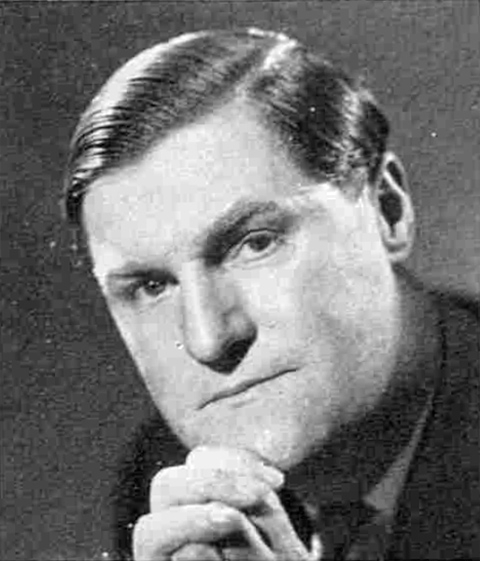
Owen Cunningham in 1956.
At some point, 51 Curzon Street was redeveloped, before which Owen moved his flagship restaurant to No 17b. It continued to attract high profile clientele – which, reportedly, included Princess Margaret – and its food continued to be well regarded. A restaurant reviewer in The People published on 10 May 1964 said that while “Prunier’s and Scott’s are excellent for fish … my favourite is Cunningham’s [run by] the ebullient Captain Owen Cunningham … Try the ‘Lobster Cunningham’, cooked at the table. Twenty five bob [£1.25 – NB in 1964] but superb.”
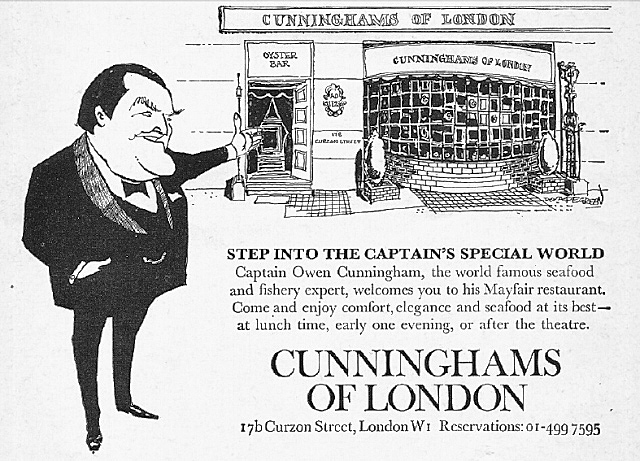
A magazine advertisement for Owen’s Oyster Bar after its move from 51 to 17b Curzon Street.
Owen’s restaurant received a less than favourable review in the Evening Standard of 7 July 1971. The acerbic Quentin Crewe bemoaned the Captain’s pursuit of foreign visitors with publicity trumpeting, among other things, the restaurant’s bow window as “world famous”. He felt the decor was tired, and despaired at the availability of caviar being advertised with a neon sign. While he regarded the food as adequate, Quentin Crewe saw the bill of £24 [NB in 1971] for his party of three as excessive.
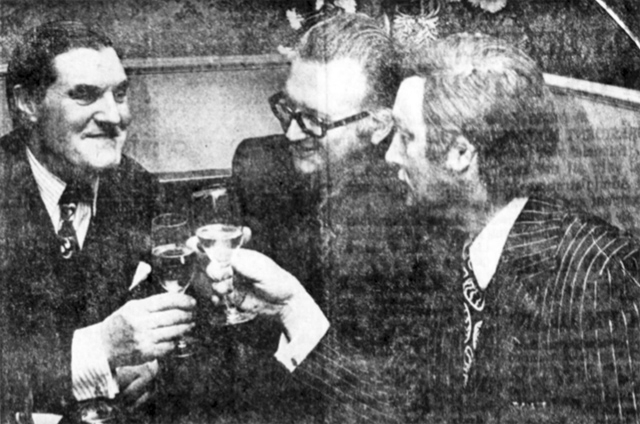 Owen and Icelandic guests at his oyster bar in February 1974.
Owen continued to “wheel and deal” – and seek publicity. The picture above is a cutting from The Daily Telegraph of 5 February 1974, the caption to which noted that Owen (left) had, the previous day, played host at his Mayfair oyster bar to the Icelandic Ambassador (centre) and the regional manager of Icelandair (right) in celebration of his negotiations for daily delivery by the airline of two tons of fresh Icelandic fish to Billingsgate, mainly for sale to hotels and restaurants.
On 28 August 1974, just six months after that photograph was taken, Owen died suddenly just short of his 62nd birthday. According to the Associated Press report of his death, Owen was apparently planning a chain of “Georgian-style” fish restaurants in the United States. (More details of his death and burial are at the end of the next section.)
In due course, 17b Curzon Street was (like the oyster bar’s original home at No 51) redeveloped.
Personal life
As set out above, Owen’s working life was rather colourful. That was also the case for his parallel personal life, in which he was married four times.
As previously noted, Owen’s first marriage was to Marie Bettany in 1940. The September 1939 Register records her living with her widowed mother (also a Marie Bettany) at 104 Princes Avenue, Kingston Upon Thames. Her occupation is listed as “Provision Clerk”, so it could well be that she and Owen had first met in a business setting. At their Q2 1940 marriage in St Martin in the Fields, Marie was 25 and Owen was 27. Their marriage, in which there were no children, ended in a quiet divorce. In a confessional article in The People on 8 June 1969, Owen recollected staging a “compromising situation” in an Edinburgh hotel to provide the necessary grounds, and noted that he and Marie had proved to be less compatible than they had hoped – compounded by her difficulty in adjusting to the “smart West End scene” that had become his milieu.
On 16 August 1948 and registered in the Westminster District, the now 36 year old Owen married 27 year old Jessie Fraser Buckley. Her background has so far proved elusive in the readily available records, but Owen’s 1969 confessional mentioned above noted that, after the unsuccessful first marriage, he felt he could prove himself by marrying this “elegant, socially-conscious lady“. Their wedding reception at The Ritz was reported to be a lavish affair, attended by some of the best-known names in London’s high society.
Sadly, Owen had misread Jessie’s character and, within weeks of the marriage, things were going wrong. The eventual collapse of the (again childless) three year marriage was literally front page news. Under the headline “Oyster-bar husband gets decree“, the London Evening Standard of 10 July 1951 reported that, at a hearing that day, Owen’s allegations of Jessie’s “cruelty and misconduct” – that had begun within weeks of the 1948 marriage – had been upheld. The Judge’s summary described Jessie as being unscrupulous in many financial and other matters and said her actions were those of “a woman of the utmost possible depravity in both actions and words“. Jessie had tried to subvert the hearing with telephoned threats to Owen and a couple of witnesses, and the judge sentenced her to a fortnight in prison for this contempt of court. Continuing her lavish lifestyle, she was driven to Holloway Prison in a Rolls Royce. On release, however, she filed for bankruptcy – and the headline of a front page article in the Daily Mirror of 26 May 1952 noted that she was offering creditors “1s. 6d. [7½p] in the £“.
Hope springs eternal and, in the autumn of 1953 the now 41 year old Owen married the 27 year old US-born fashion writer, Lesley Ragan at Caxton Hall, Westminster.
 A press clipping of Owen and Lesley immediately after their 1953 wedding.
Yet again, hopes were dashed and, under the headline “‘Oyster King’ gets divorce“, the Daily Mirror of 18 November 1960 reported that Owen had divorced Lesley on grounds of her multiple infidelities. (Yet again, there had been no children from the marriage.) The judge, who exercised his discretion in respect of Owen’s own infidelity, agreed that the decree absolute could be expedited given Owen’s wish to marry the woman named in his discretion statement.
The woman so named must have been the 22 year old Valerie Carlill to whom the now 48 year old Owen got married at Epsom Registry Office on 12 December 1960, less than a month after the divorce. (It is assumed that she was the “Kay Carlill” mentioned as Owen’s female companion in the press report of his 1959 visit to Les Ambassadeurs when, as mentioned above, he lost his expensive coat.)
Their marriage certificate records them both as residing at 5 Queensfield Court, London Road, Cheam – with Owen listed as a “Restaurateur“. (No occupation is listed for the bride. Contrary to some reports of her having been a waitress in Owen’s restaurant, it is understood that they had first met when she came in as a customer.) She signed the register entry as “V. Carlill” – and is the “Carlill, Valerie” whose birth was registered in Hull Q1 1938. However, and at least by the time of the 1962 Electoral Roll, she took to being called Carol – and is so named on Owen’s grave marker.
Anyway, after three false starts, Owen at last got the happy marriage he craved. The couple had a total of six children, as listed (in age order) on Owen’s gravestone: Alistair; twins Jane & Fiona; Claire; and another pair of twins, James & Stuart.
All these births were registered in the Marylebone District, consistent with Owen’s long-standing London base. However, Electoral Rolls for 1962 and 1966 record Owen and Carol living just outside the Borough, at 97 Tattenham Crescent – a substantial detached property. They later moved to 24 Burgh Heath Road, Epsom – the grand Down Hall.
On 28 August 1974 and out of the blue, Owen died a couple of months short of his 62nd birthday. The Probate record of his leaving an estate of £27,686 gross (£2,278 net) states that he died at Down Hall, but it is understood that he died while at work in one of his London restaurants.
According to the death notice in the 2 September 1974 Daily Telegraph, Owen’s funeral was held at Epsom’s St Joseph’s Roman Catholic Church (then in Heathcote Road) on 4 September. He was then buried in Epsom Cemetery, where the plot now has the grave marker shown at the head of this article – which notes that he was later joined by now-married daughter Jane, who died in 1998.
Roger Morgan © 2022
with special thanks to Paul Stokes for his research from which, with kind permission, this article has been developed.