
The Parkinson Family
Slave estate proprietors, and Jamaica merchants:
how a young ‘black boy’ came to be interred in Epsom
churchyard, during the18th century
 A Lady of the Fanshawe Family
Thought be Mary Fanshawe’s mother, Sarah, nee Williams,
wife of John Parkinson of Prescott, Lancs., and Jamaica,
painted about the time of her marriage
Image courtesy of Valence House
Christopher Parkinson
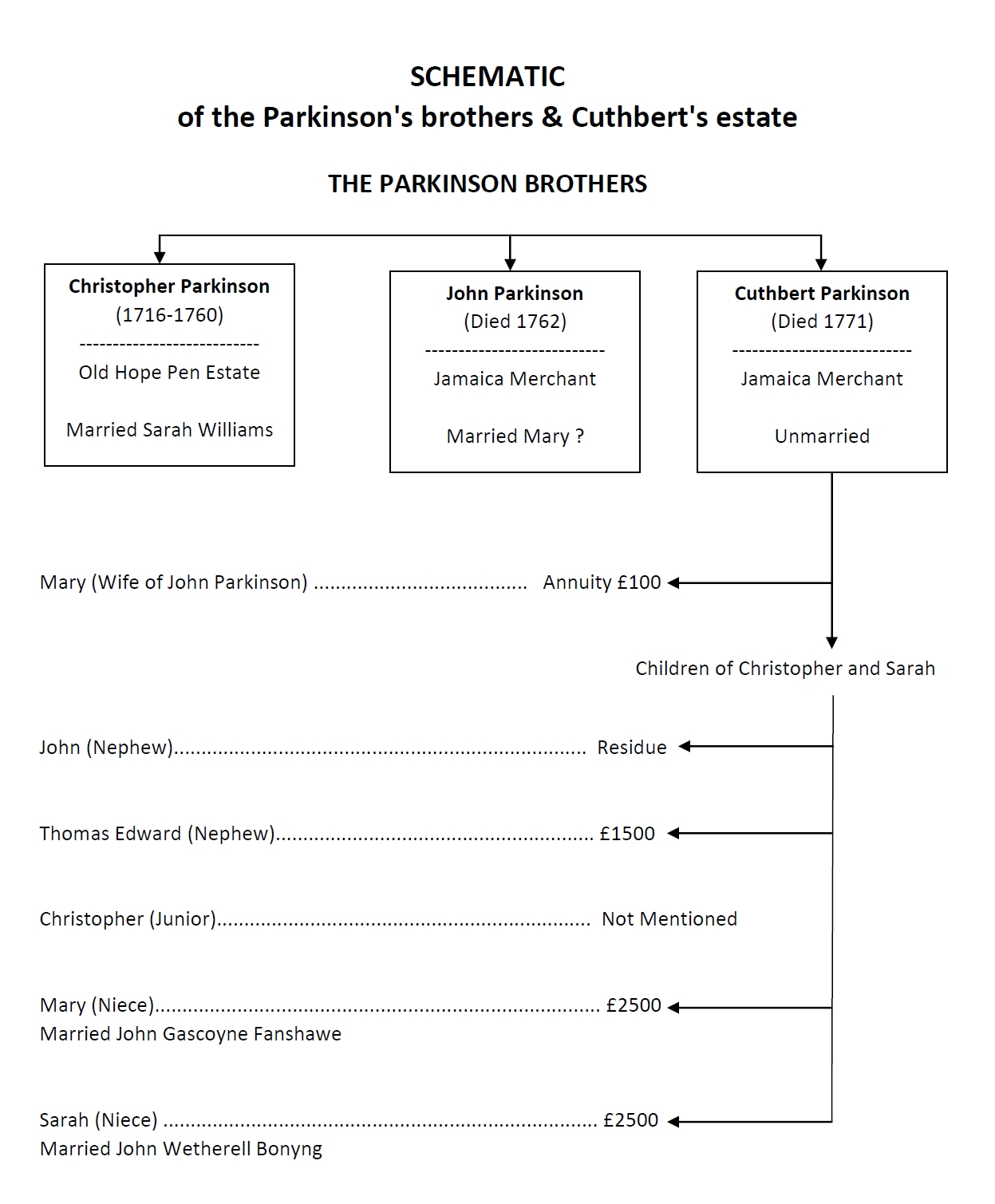
Christopher Parkinson (1716 – 1760) is reported to have been the proprietor of Old Hope Pen, a cattle-farming estate, in Westmoreland Jamaica from about the middle of the 18th century. He had two brothers, John and Cuthbert, who established themselves as merchants on Watling Street in the City of London, trading with Jamaica.
Christopher Parkinson who was from Kingston married Sarah daughter of Thomas Williams on 31 May 1746 in Westmoreland the westernmost parish in Jamaica on the south side of the island, to the south of Hanover.
That union produced five children, daughters Mary (born 2 May 1747 in Jamaica) & Sarah and sons, John, Thomas Edward, & Christopher, junior.
On 22 April 1757, Christopher Parkinson drew up his third and final Will having returned to Prescott (Prescot, Lancashire) to become an absentee landlord. Subsequently he resided with his brothers on Watling Street, in the parish of St Augustine, near St Paul’s churchyard, London, and finally in Hampstead. This testament was proved on 7 March 1761 by Executors , John & Cuthbert, his brothers, and the relict Sarah Parkinson.[National Archives PROB-11-860-27] There was a legacy to his wife, Sarah, of ‘a negro woman named Marethe’ and the residuary estate was to be divided in five parts between her and their four children. A daughter Sarah was not specifically named in the Will but it provided that any further children born before the testator’ decease should share equally with their siblings so one sixth shares resulted from her arrival.
 Click Image to Enlarge
John Parkinson, senior
John Parkinson, Merchant in Watling Street was mentioned in The General Evening Post of on 18 December 1759 supporting an advertisement for an ‘Antiarthritic Wine, as a Remedy for the Gout’. Presumably John was in failing health because his Will is found to have been proved on 6 November 1762. One of the Executors was his brother Cuthbert.
Mary Parkinson/Mrs Fanshawe
On 19 May 1772, Mary Parkinson , the daughter of Christopher Parkinson of Prescott, Lancashire, and of Jamaica, by Sarah Williams his wife, married John Gascoyne Fanshawe (1746 – 1803) at Thames Ditton, Surrey.
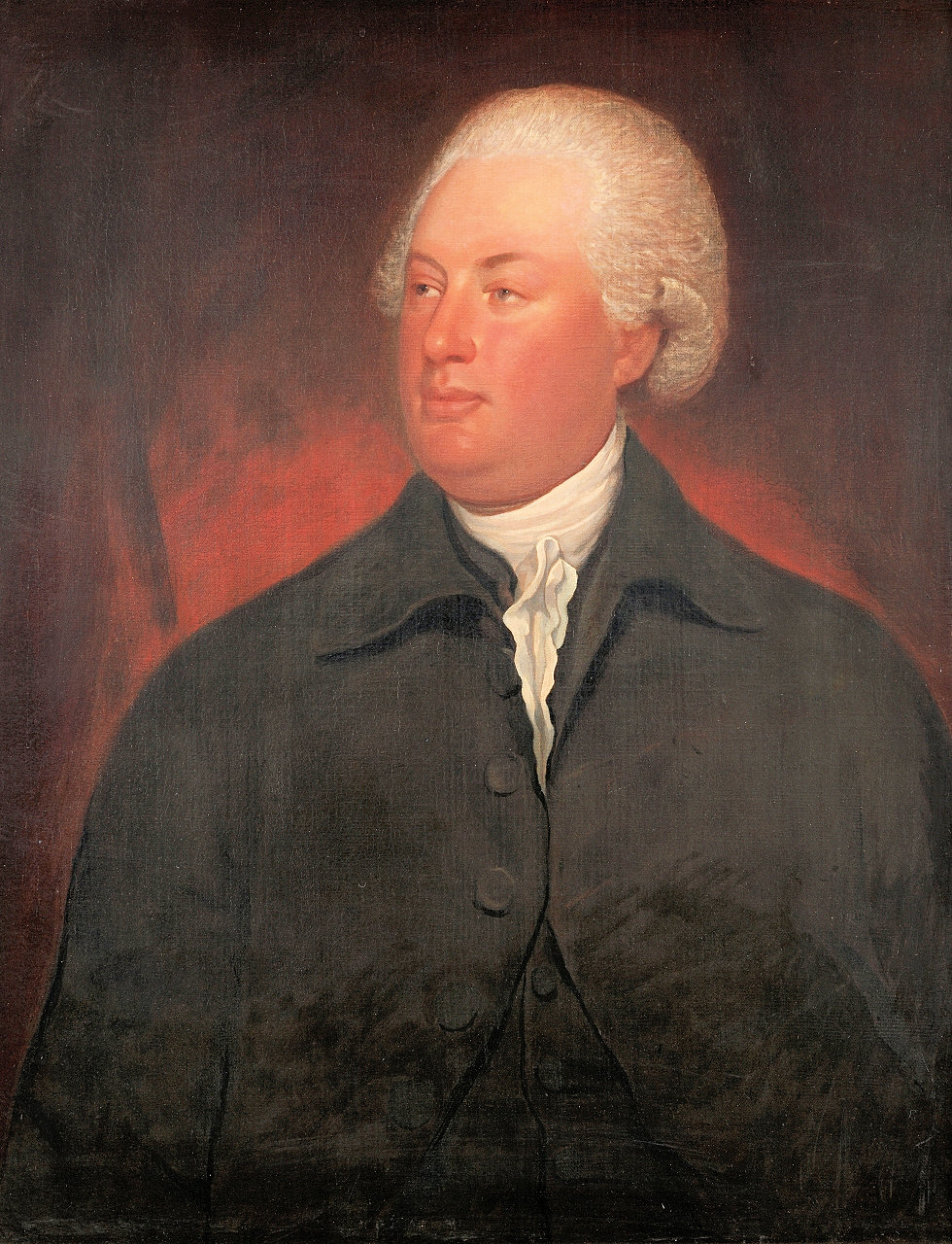
John Gascoyne Fanshawe (1746-1803)
Image courtesy of Valence House
Their first child, John Fanshawe, was born at 8 p.m. on 7 April, baptised at St. Andrew’s, Holborn, London, 5 May 1773. His ‘Sponsors’ (Godparents) were Thomas Fanshawe of Parsloes (Grandfather), John Parkinson (Uncle) and Sarah Parkinson of Epsom, Surrey ( Grandmother).
A young life lost in alien territory
On 17 November 1773, Thomas Parkinson, ‘a black boy’, was buried in the churchyard of St Martin of Tours, Epsom.
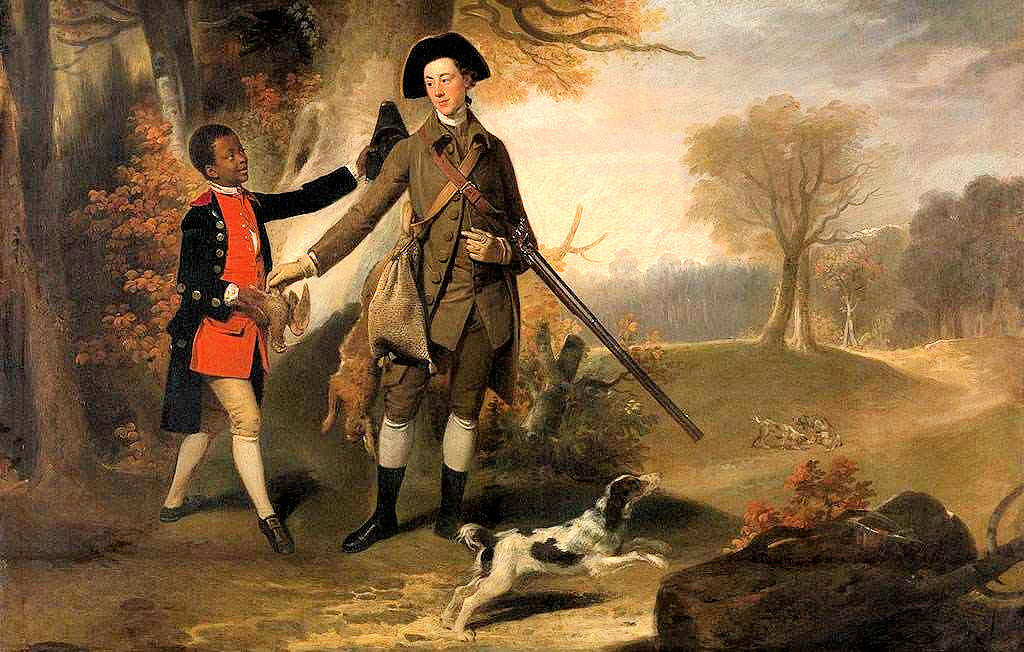
An Unknown Man out Shooting with his Servant
Image Source Yale Center for British Art
It was fashionable in this mid-Hanoverian period for the gentry to employ coloured servants from the slave plantations or brought back by trade ships from other parts of the world. Since it was common practice for slaves to be given their owner’s surname it may be inferred that his owner had been Sarah Parkinson, Christopher’s widow. Other slaves from Old Hope Pen are recorded as having been converted to Christianity and baptised with the surname ‘Parkinson’.
Cuthbert Parkinson
In Epsom some of the New Well properties that had belonged to John Livingston were acquired from his grandson by Cuthbert Parkinson on 30 May 1768.
The Will of Cuthbert Parkinson, merchant of Watling Street, London, was proved on 4 April 1771, placing residual property in trust to pay an annuity of £100 p.a. to the widow of his brother John Parkinson and £2500 each to his nieces Mary & Sarah Parkinson and £1500 to his nephew Thomas Parkinson. The will identified Christopher Parkinson as his brother and his residuary heir was his nephew John Parkinson. [National Archives PROB 11/966/40]
The annuity to John Parkinson’s widow, Mary, was charged on some of this real estate in Epsom and there were other complicated transactions recorded in Residential Copyholds of Epsom [vide Lehmann 1C7]
Old Hope Pen (and sugar plantation) passed into the possession of the heirs of Cuthbert Parkinson. Cuthbert had died as last of the three brothers and administration of all their family affairs seems to have devolved upon the young John, son of Christopher, who succeeded his uncles in trade from Watling Street but lacked business acumen and fell into debt.
Parkinson v Ingram
By 1778 this had led to the suit of Parkinson v Ingram [National Archives C 108/174] detailed in in Tracing your ancestors through the equity Courts, by Susan T Moore, 2017
The case arose from transactions in lands, plantations, slaves, cattle etc. by John Parkinson [junior] of Watling Street in the City of London. The lands included Seven Rivers Estate in the Parish of St James and Bickerstaff Penn whilst a total of 434 slaves were involved. From 1782, Old Hope and Seven Rivers estates were regarded as having been held in trust for John Parkinson by mortagees in possession.
London Gazette
Liverpool, September 8, 1793- A Dividend will be made on the Trust Estate of Mr John Parkinson, of London, Jamaica Merchant, by his surviving Trustees, William Boates and Francis Ingram, Esqrs. to whom Seven Rivers and Old Hope Pen had been assigned. Dividends were still being announced in 1831.
Demise of John Parkinson, junior
Epsom Court Rolls recorded the death of John Parkinson on 30 January 1809. He was still holding all the properties to which he had been admitted by a re-grant of 24 July 1775, and as no claimant had appeared by the third proclamation for his heirs, the properties were finally seized for the lord of the manor
Sarah Parkinson , John’s sister, Mrs Bonynge
Around 1778, when John Parkinson was embroiled in his financial difficulties, Sarah married John Wetherell Bonynge, who had been born on 27 July 1756 in St Catherine, Jamaica. He died in May 1782 to be buried in Old Harbour Cemetery and commemorated in St Dorothy’s Anglican Church, Pen, Jamaica.
During 1794 Sarah Bonynge, nee Parkinson, sued her brother John for one sixth of their father’s estate and the £2,500 left to her by uncle Cuthbert Parkinson
The widowed daughter-in-law of George Bonynge (proprietor of Busy Park Estate, St Dorothy, Jamaica) died at Dagenham Essex in 1832. Her will ‘of Parsloes Essex’ was proved 7 Februasry1832: legacies included£1500, £1500 and £5000 to the sons of her sister Mary Fanshawe.
Mary Fanshawe, nee Parkinson
In 1793 John Gascoyne Fanshawe took up residence at Parsloes, Essex, probably on account of his father being incapacitated by illness. His son Henry laid for him the foundation stone of the new church at Dagenham on 13 April, 1801. He died on 23 December, 1803, and was the first of the family to be buried in the vault in the chancel of that church. His wife, who had been born at Kingston, Jamaica, on 21 April, 1747, survived him for 8 years, and was also buried in the vault, on 30 March, 1811, eight days after her death. A memorial stone of them and Sarah Bonynge, who all rest in the family vault, stands on the north side of the chancel adjoining the chancel screen.
Brian Bouchard 2022