
THE POTT FAMILY
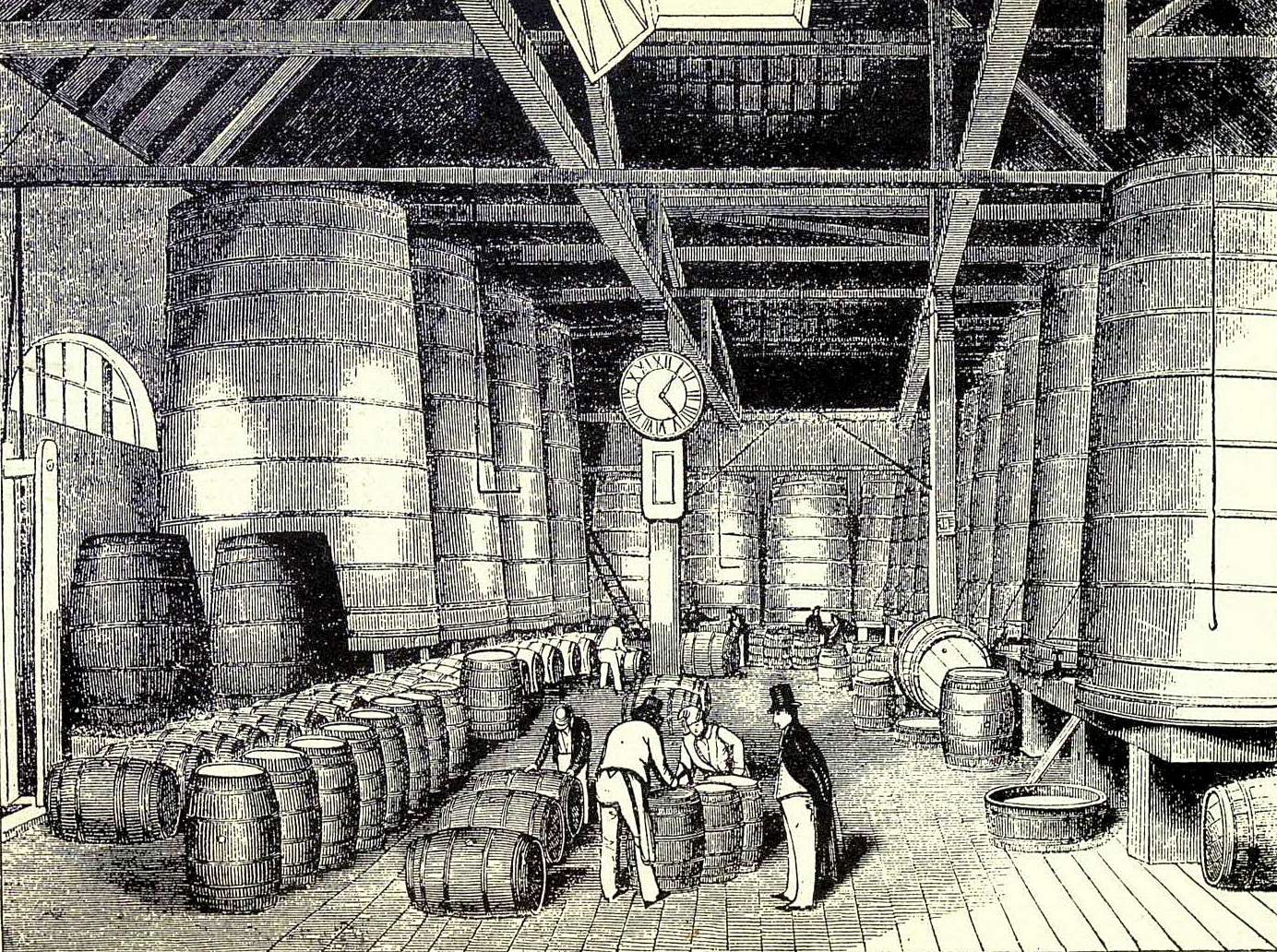
Beaufoy’s Vinegar Works, 1812
Image source: ‘Vinegar: Its Manufacture and Examination’ via archive.org
Introduction
The Potts were all about vinegar: they were not Beaufoy’s, as shown in the image above, but the two firms co – existed for many years as competitors. In due course, Beaufoy’s took them over and everything ended up as Sarson’s, which is currently owned by Mizkan of Japan, a company which started out in 1804 by making rice vinegar from the by-products of sake – they also own Branston pickle.
John Pott & Son were manufacturing vinegar in Mansell Street, Whitechapel by 1766 and in 1790 they took over the Rush vinegar yard. William Rush of Colchester had begun making vinegar in Castle Street, Southwark in 1641.
You’re probably wondering, firstly, why vinegar was such a big deal back then and, secondly, what on earth it has to do with Epsom/Ewell.
Although, today, there are many kinds of vinegars – the standard stuff you put on fish and chips, balsamic, sherry, cider, rice etc – its primary functions now are largely as a condiment, a component of cookery or for pickling. Pickling is the clue here. In olden times there were no freezers in which to keep food and no aeroplanes to whiz food from one continent to another, so it would be pickled in vinegar, particularly for export. The substance had and has other uses, of course, and I refer you to a succinct and interesting history of the London vinegar trade on the website of the Greater London Industrial Archaeology Society (GLIAS).
As for the Potts, two of the vinegar men ended up in Epsom and Ewell. The Epsom man was William Hamilton Pott and the Ewell chap was his uncle, Norbury. We may now begin.
William Hamilton Pott (1854-1942)-Vinegar producer, volunteer soldier, officer and Master of the Worshipful Company of Grocers
William’s parents were Robert (1825-94) and Anna (née Maclean, 1825-1908). There were so many Potts that I’ve decided not to bother with most of them and will follow the direct route to Norbury and William Hamilton. Here is a simplified family tree.
| JOHN POTT (1712-1801) |
| | |
| ROBERT ARTHUR POTT (1757-1824) |
| | |
| WILLIAM POTT (1795-1878) |
| | |
| ROBERT POTT (1825-94) <—————> NORBURY POTT (1838-1924) |
| | |
| WILLIAM HAMILTON POTT (1854-1942) |
William Hamilton Pott married Mabel Strode Cobham at St Mary, Beddington on 3 August 1887. Mabel was born in Morden in 1865 and had been orphaned by 1880. The newly-weds initially settled in South Nutfield, where their daughter, Rhoda Muriel Hamilton, was born in 1888. Another daughter, Florence Hamilton, was born in 1891. The family was in Epsom, living at ‘Bentham’, 7 The Parade, by 1911. ‘Bentham’ was named after the Pott family home at Bentham Hill, Tunbridge Wells.
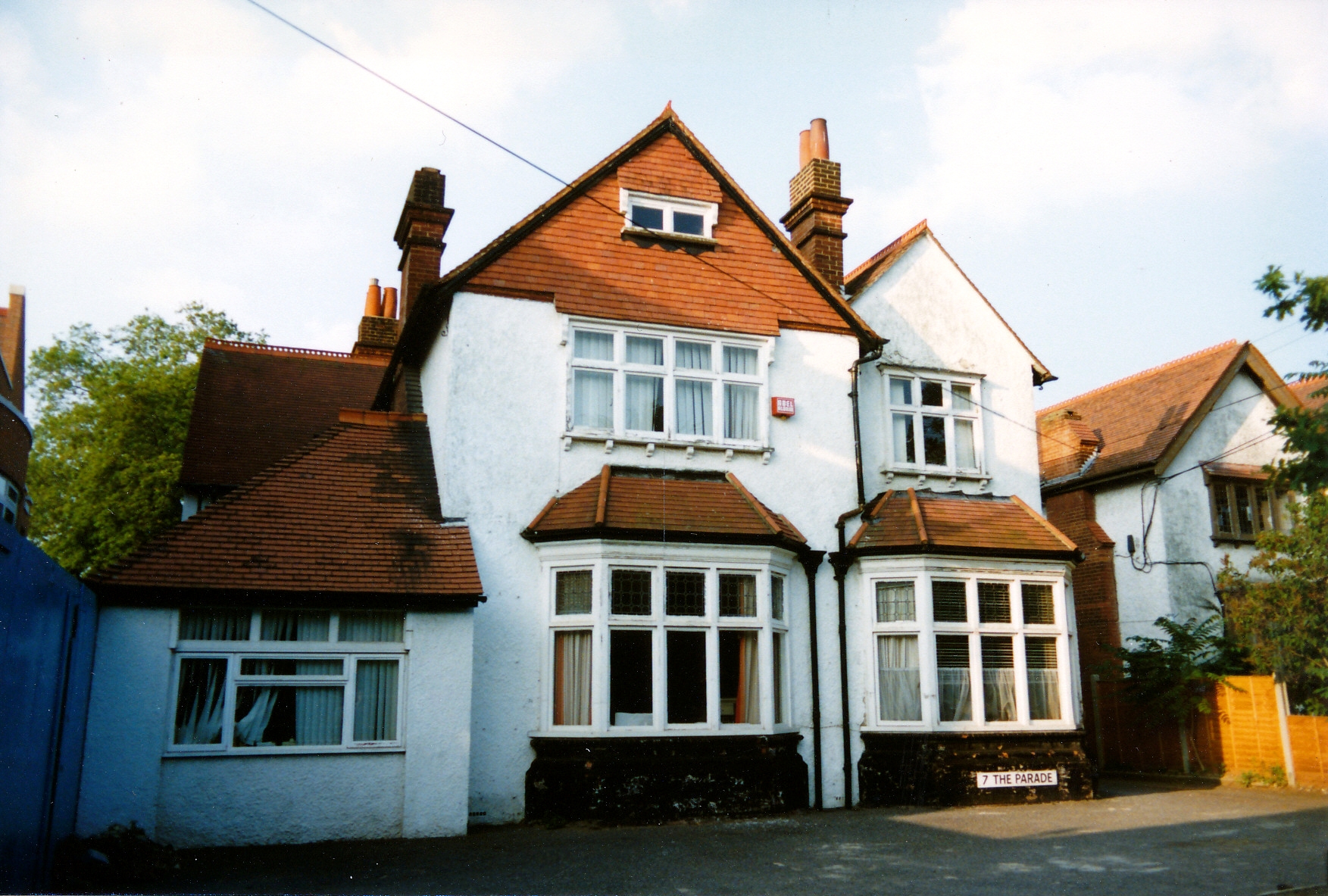
7, The Parade
Image courtesy of Bourne Hall Museum
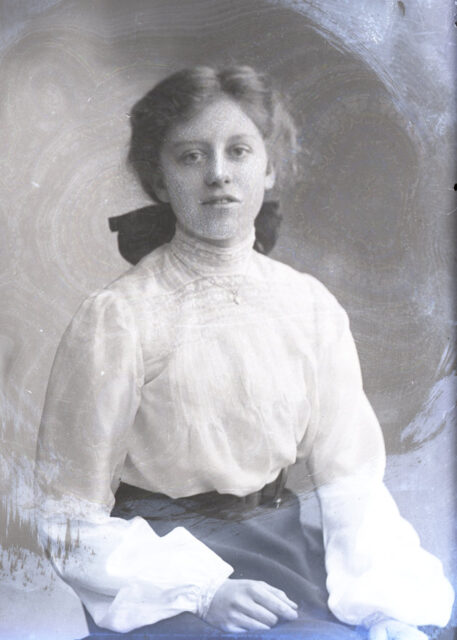
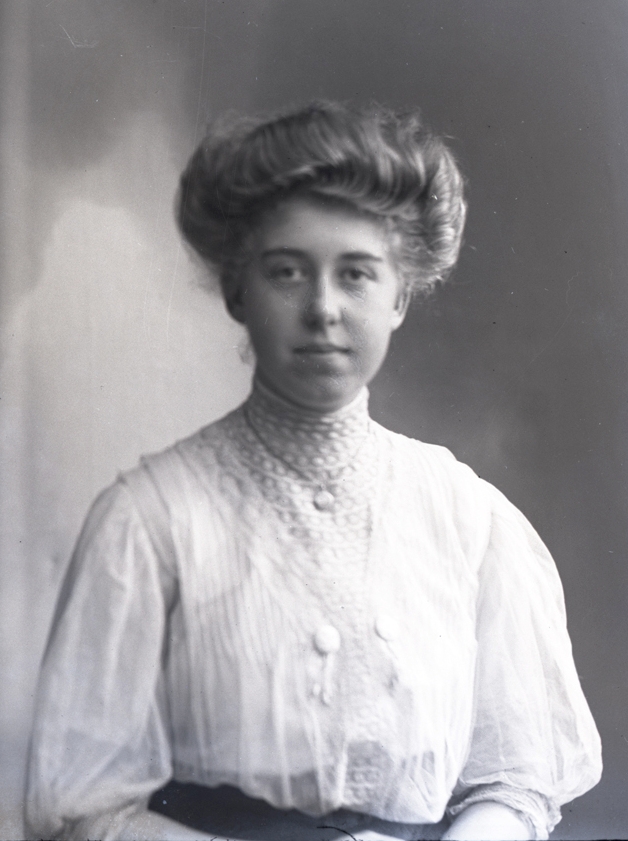
Thanks to Sutton Archives and their ‘Past on Glass’ project, we have pictures of the Misses Hamilton Pott, but we are not absolutely sure which is which, and that matters for what is coming next.
I am reasonably confident that the lady in the first pictures is Florence, since she looks the younger of the two, but if you know differently, please get in touch.
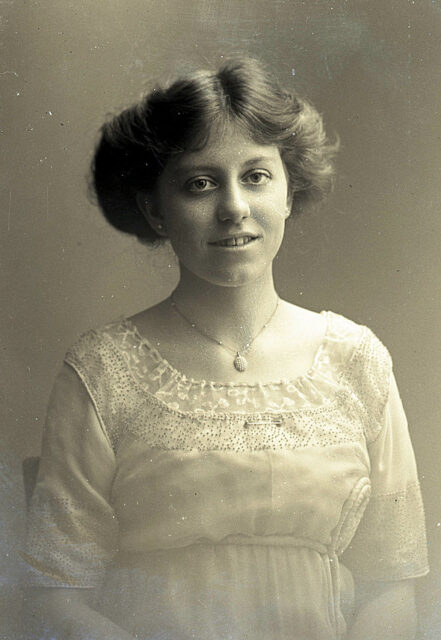
Florence Hamilton Pott (15 December 1906, left; 9 April 1908, right)

 Some rights reserved by David Knights-Whittome Photographic Archive
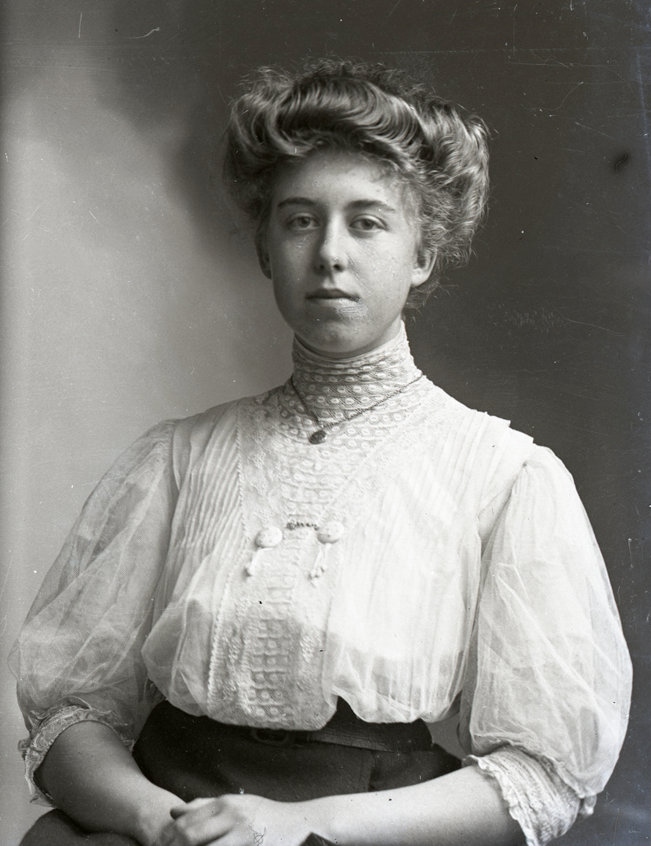
Rhoda Hamilton Pott (8 December 1907, left; 4 December 1907, right)
Some rights reserved by David Knights-Whittome Photographic Archive
There has been some discussion over time as to which of the ladies was Epsom’s second postwoman (from 1915 to 1919) after Nora Willis, and the latter shared the job with Miss Hamilton Pott. It seems as if the postwoman was ‘Miss F Hamilton Pott’ and, although the forename has been recorded as Frances, there is general agreement that it most probably was Florence.
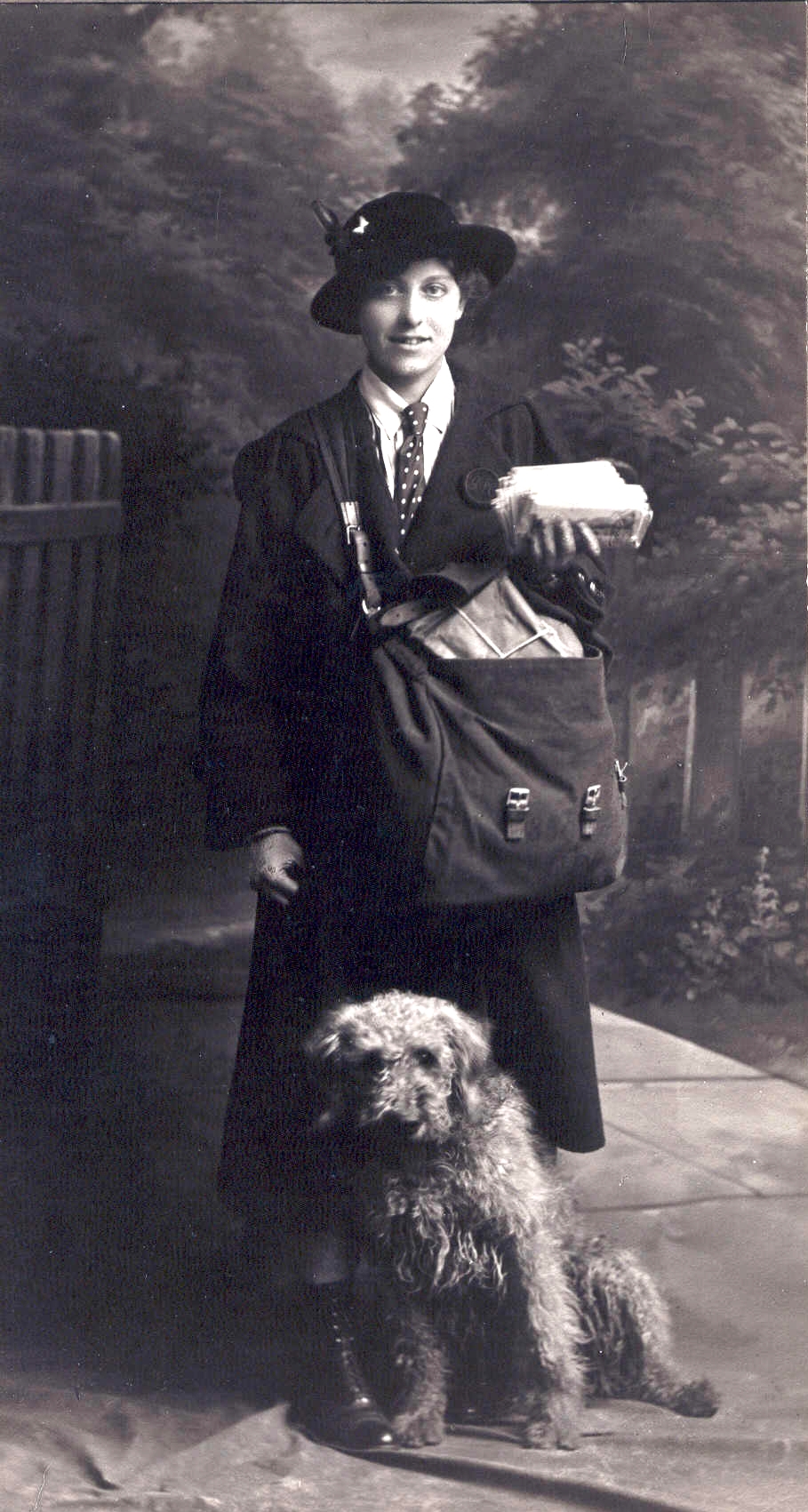
Florence Hamilton Pott in her postwoman’s uniform (dog’s name unknown)
Image courtesy of Bourne Hall Museum
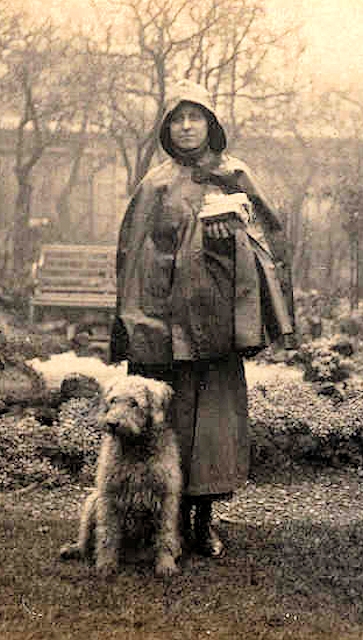
Florence in the back garden of ‘Bentham’, wearing her winter postal garb
Image courtesy of Bourne Hall Museum
William Hamilton Pott was heavily involved in volunteer soldiery as an officer and he and his wife moved widely in social circles. Mabel and the girls also seemed to participate in amateur dramatics, song recitals, tableaux etc. Some or all of the family were constantly listed as attendees at weddings, funerals, hunt balls and so on, (not just in Surrey but in the Tunbridge Wells area) and there are pages of newspaper cuttings specifying what wedding presents the Potts gave – grape scissors don’t seem like an absolute necessity to me, but I’m sure the relevant happy couple were thrilled.
Apart from William’s vinegar activities (which are not mentioned in the cuttings – he is just a ‘respected businessman’ and suchlike) and his soldiering, he was sometime Master of the Worshipful Company of Grocers. This organisation was not, as we might think, founded by and for grocers as we understand them today (i.e. general provision merchants), but ‘grossers’ and was formerly the Guild of Pepperers. It was all to do with the purity, quality and integrity of spices. The coat of arms is worth a look.
You will notice that there is a camel at the top of the picture, carrying bags of pepper, which presumably represents the original transportation method of spices from their origins in Eastern climes. Pepper was also used as a trading currency and is the origin of the term ‘peppercorn rent’, one peppercorn on its own not being valuable. However, pepper in quantity was once quite valuable. The nine items on the shield are allegedly cloves, although there seems to be some dispute about this.
The Worshipful Company of Grocers is one of the ‘Great Twelve’ livery companies of the City of London and ranks second in the hierarchy. Legend claims that it was originally first, but, when Queen Elizabeth I had to endure a procession in close proximity to the Company’s particularly pungent camel, it was demoted. Yes, I did mean Elizabeth I – many of the livery companies have been in existence since the 14th century and beyond.
The livery companies have a practical function in today’s world and do much charitable work. The Grocers, for example, founded Oundle School in Northamptonshire and are still involved with it more than 450 years later.
Moving on, William died on 25 January 1942 and Mabel on 11 September 1952: they are buried together in Epsom Cemetery (Grave U16). Rhoda and Florence moved to Bognor Regis, where Florence died on 4 December 1981, followed by Rhoda on 12 April 1987.
Norbury Pott (1838-1924)
Norbury was a younger brother of Robert Pott and, therefore, the uncle of William Hamilton Pott: he was also in vinegar and an officer in the Surrey Volunteer movement (see our article on The 8th Surrey Rifles at War for details of the unprofessional shenanigans that went on before Norbury took command). In 1908, by now on the Retired List, he was gazetted as an Honorary Colonel of the 5th Battalion, East Surrey Regiment, in recognition of his service to the 2nd Volunteer Battalion. It seems that he did a better job with Surrey’s volunteer forces than some of those who were named in the aforementioned article.
In 1885, at Beddington, Norbury married Anna Harriet Totton of Wallington: they were fairly mature at the time, being aged 47 and 41 respectively. Anna had been born in Bangor, North Wales, where her father, the Rev William Church Totton, was headmaster of the Friars School from 1838 until his death in 1867. Whilst taking a quick trip round the Totton census records, I discovered a rather odd-sounding occupation for one of Anna’s brothers – Clerk to Queen Anne’s Bounty Office. As Queen Anne had been dead since 1714, I wondered what this was all about. The answer is that she had established a fund to supplement the incomes of impoverished clergymen and this scheme was still going until 1947, when it was subsumed into the newly formed Church Commissioners.
By 1891 Norbury and Anna, along with their only child, Winifred Alice (born 1886), were living at Staneway, Cheam Road, Ewell. This house eventually became Ewell Library, before the move to Bourne Hall.
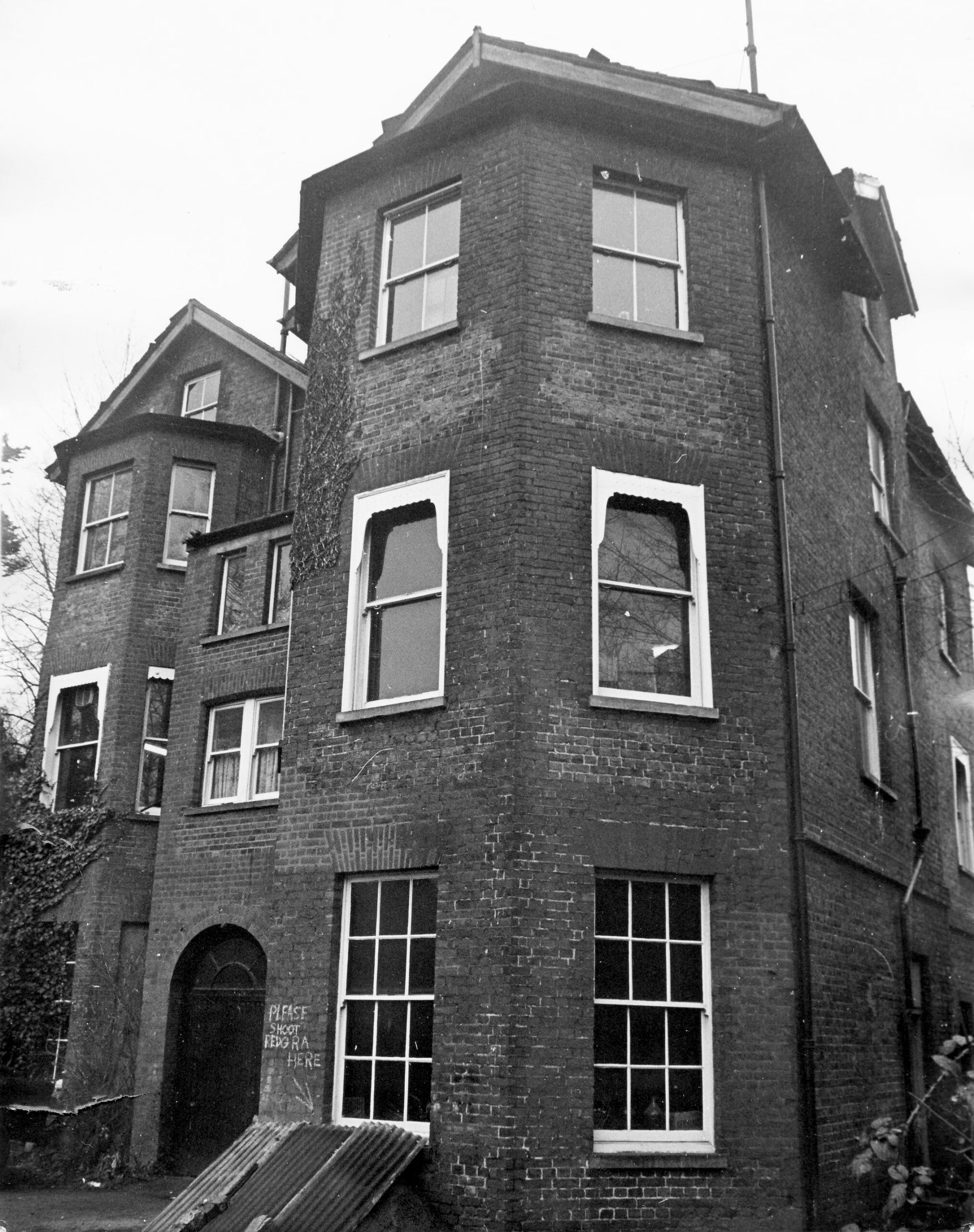
Staneway House (48 Cheam Road)
Image courtesy of Epsom & Ewell Local & Family History Centre
Sadly, Anna died over the Christmas/New Year period of 1891/2 and by the 1901 census Norbury and Winifred were rattling around in Staneway House with several servants. However, Anna’s unmarried sister, Mary Alice Totton, had moved in to help out, but the latter had gone by 1911 (she was then a boarder in Folkestone) and died in 1921.
So, father, daughter and the servants soldiered on in Ewell and then, in what must have caused unimaginable grief for Norbury, Winifred died on 31 January 1922, aged only 35. It looks as if Norbury left her modest estate unadministered and further Letters of Administration were issued to William Hamilton Pott in 1925, by which time he was also having to deal with the estate of Norbury himself, who had died on 26 December 1924.
Linda Jackson 2021