
ROYAL JUBILEES
1887-2022
There have been seven Royal Jubilees since 1887 and six of them have been for Queen Victoria and the Queen Elizabeth II. The other was the Silver Jubilee of George V. Each of these is briefly describes below, together with Epsom and Ewell’s response. (And an overview of Epsom & Ewell’s celebrations up to the mid 20th Century can also be found in ‘Jubilees and Junkets‘ by Jeremy Harte, Curator of Bourne Hall Museum.)
Contents:
George V – Silver
Elizabeth II – Silver / Golden / Diamond / Platinum
Victoria
(There were no Silver Jubilee celebrations in 1862. At the time, “Jubilee” still had its Biblical meaning of a 50 year event. In any case, the Queen had withdrawn from public life while in deep mourning for the death of her beloved Prince Albert on 14 December 1861. The first ever royal “Silver Jubilee” was that of Kaiser Wilhelm I in 1886.)
Golden Jubilee
The British Monarchy website, which is a wealth of royal information, tells us that the Golden Jubilee was celebrated on 20 and 21 June 1887. The Queen began with breakfast under the trees of the royal burial ground at Frogmore, where Prince Albert was buried. There was an enormous royal banquet at Buckingham Palace that evening and next day there was a procession to Westminster Abbey, followed by a balcony appearance at the Palace.
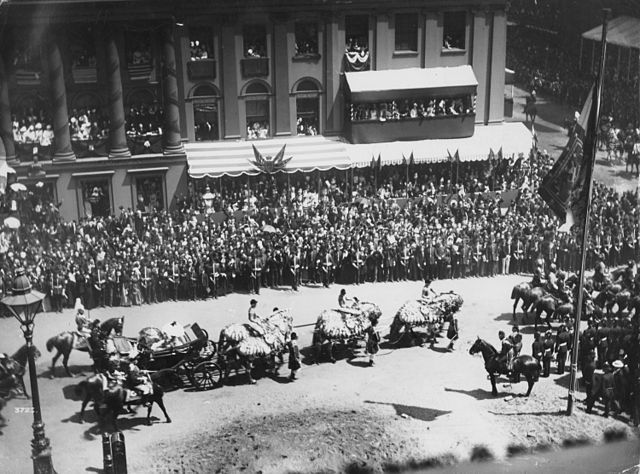 Victoria’s carriage in the procession of 1887.
Image source: Wikimedia Commons.
As is now usual for any big royal occasion, souvenirs were produced and the next picture shows one version of a Golden Jubilee brooch
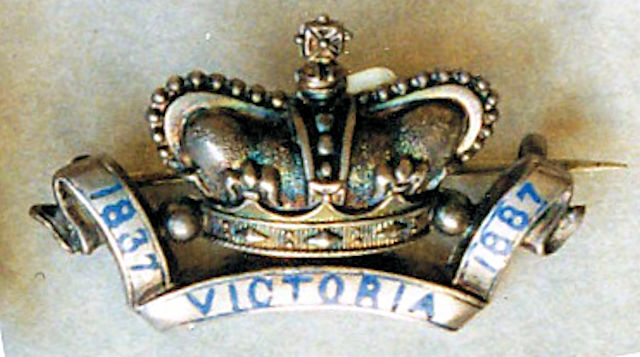 A Golden Jubilee Brooch.
Image source: Bourne Hall Museum.
James Andrews was the organiser of the local celebrations and he set the ball rolling by distributing a poster.
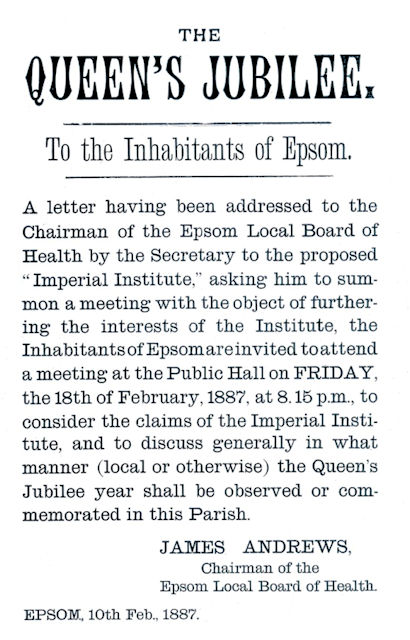 The Andrews Poster.
Image source: Bourne Hall Museum.
Jeremy Harte tells us that the 1887 celebration was a damp squib and Mr Andrews’ notice above was not likely to ignite interest, since it majored on the Imperial Institute (later the Commonwealth Institute), a body set up to promote research that would benefit the British Empire – hardly a subject to persuade you to beat a path to the door of the Public Hall on a Friday night. Similarly, I doubt that many people attended the next meeting, as advertised below, since you could just wait for the programme to be issued in poster/leaflet form.
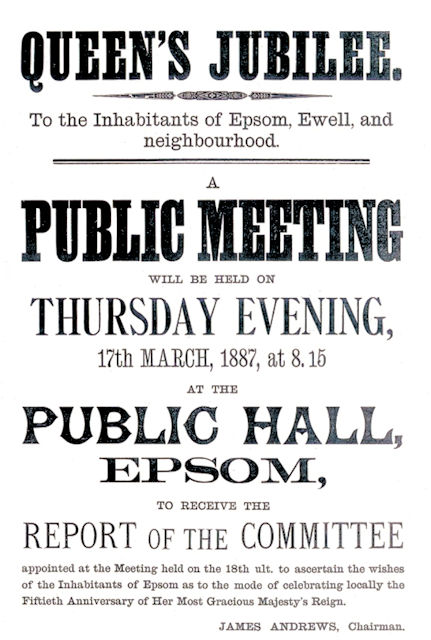 Notice of the second meeting.
Image source: Bourne Hall Museum.
We seem to have only one photo of local events for the 1887 Jubilee, which is unsurprising given the local lack of enthusiasm, and this shows the huge bonfire that was built.
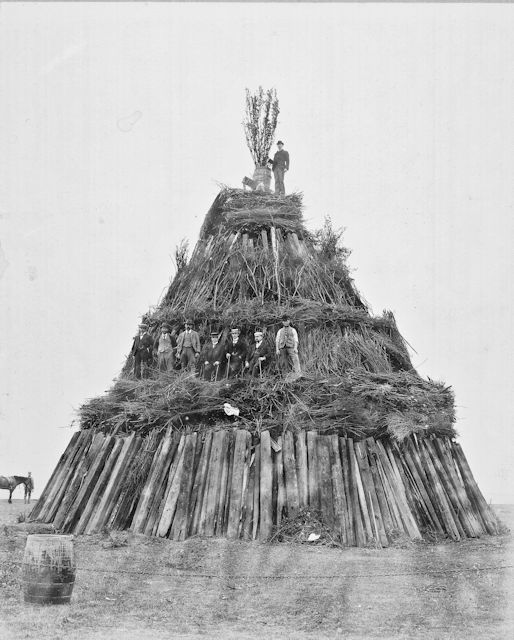 The 1887 Golden Jubilee Bonfire.
Image source: Bourne Hall Museum.
Diamond Jubilee
The Diamond Jubilee in 1897 was a much bigger and better affair altogether. By this time (Victoria was at that point the longest-reigning British monarch, having beaten George III’s record of just over 59 years in 1896) the Queen was 78 years old and had trouble getting around, but she turned out for a grand procession to St Paul’s Cathedral on 22 June 1897. An open-air service was held, with the Queen sitting in her carriage, as she could not manage the steps into the Cathedral.
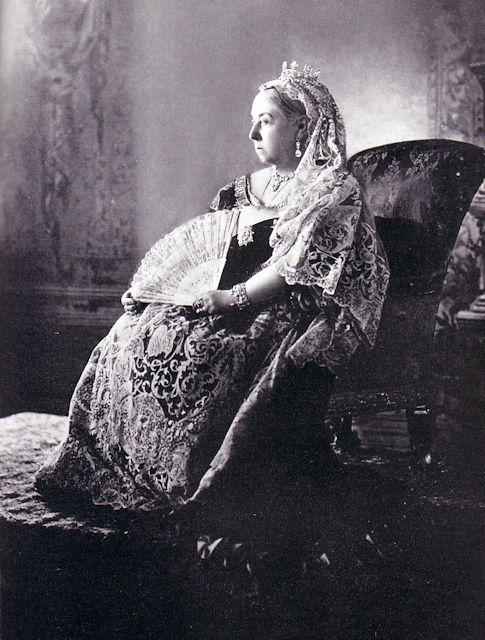 The official Diamond Jubilee photograph by W and D Downey.
Image source: Wikimedia Commons.
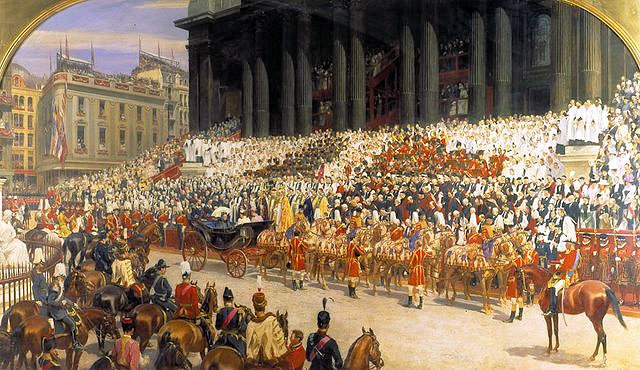 Queen Victoria at St Paul’s Cathedral on Diamond Jubilee Day by Andrew Carrick-Gow.
Image source: Wikimedia Commons.
We have a lot more local information about this Jubilee than the 1887 event and arrangements began in March 1897 with a public meeting, where people could put forward their ideas. The notice, shown below, sounds more appealing than the previous effort, perhaps because there was no mention of the Imperial Institute.
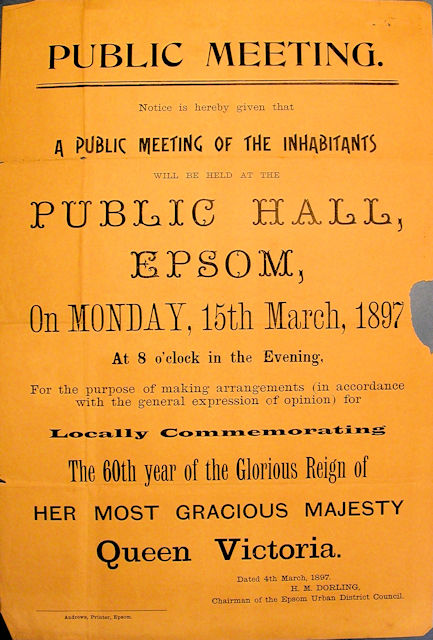 A Notice for the 1897 Public Meeting.
Image source: Bourne Hall Museum.
A further poster was issued, detailing the events to be held on 22 June. The cost of the festivities came to £527.
 A further notice for the 1897 Public Meeting.
Click image to enlarge
Image source: Bourne Hall Museum.
 An invitation to dine.
Image source: Bourne Hall Museum.
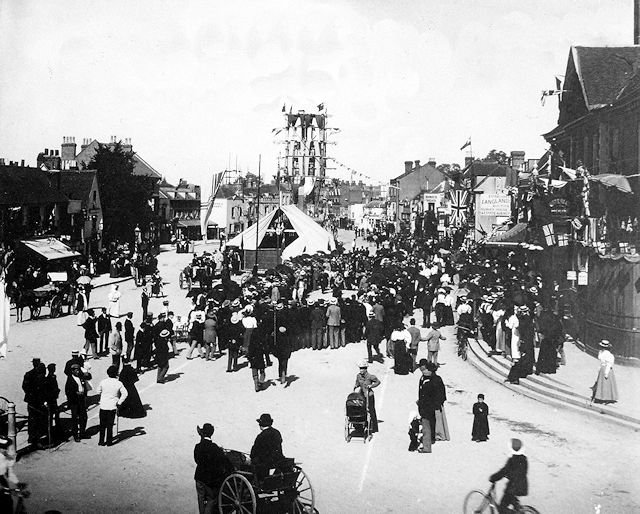
Public Dining.
Image source: Bourne Hall Museum.
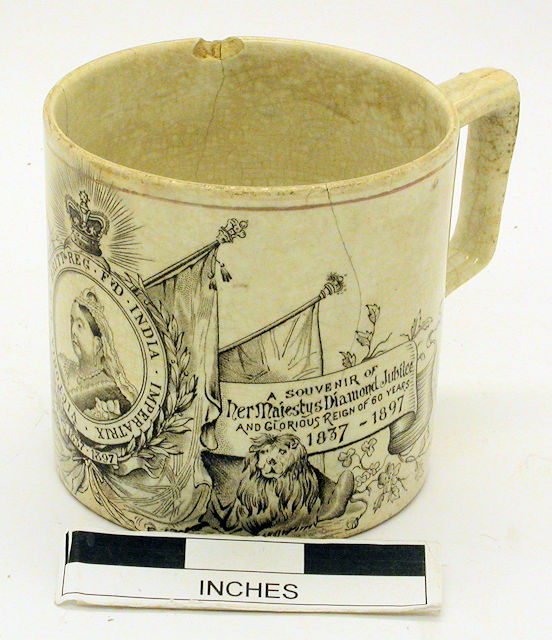
A Jubilee Mug.
Image source: Bourne Hall Museum.
George V
The populace had to wait 38 years for another Jubilee, to mark the 25th anniversary of George V’s accession. The celebrations were held in May 1935, less than a year before the King’s death.

1935 Silver Jubilee Souvenir programme.
Image source: Bourne Hall Museum.
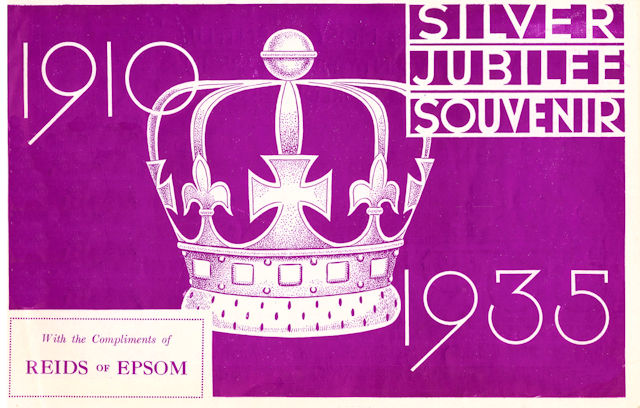
1935 Silver Jubilee souvenir printed by Reids of Epsom
Image source: Bourne Hall Museum.
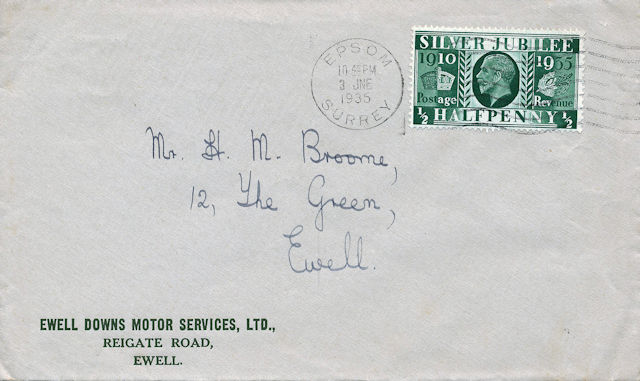
An envelope postmarked June 1935, with a Silver Jubilee stamp..
Image source: Bourne Hall Museum.

Tottles Pharmacy decorated for the 1935 Jubilee.
Image source: Bourne Hall Museum.
Elizabeth II
Silver Jubilee
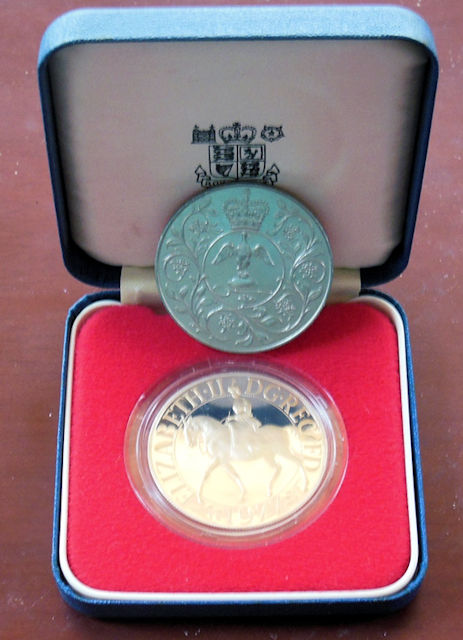
Silver Jubilee Crown(s)* in original commemorative box, February 1977.
Image courtesy of Linda Jackson © 2015
*Worth five shillings (25 pence) at the time and now selling for under £1, but ‘one’ bought them as a souvenir rather than an investment, and they are still very nice objects.
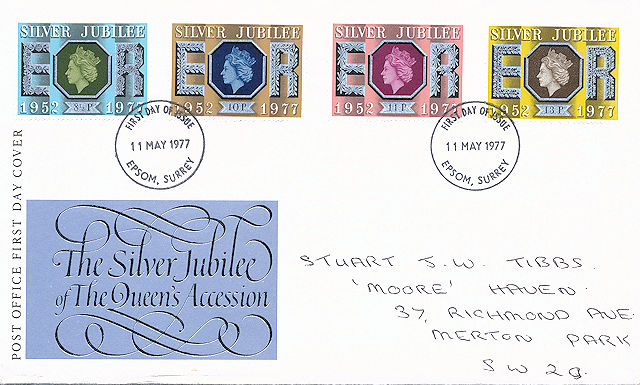
First Day cover for the Silver Jubilee of the Queen’s Accession, 1952 – 1977.
Image source: Bourne Hall Museum.
The Silver Jubilee took place in June 1977, preceded by a tour of Britain, including a visit to Epsom on 1 June.
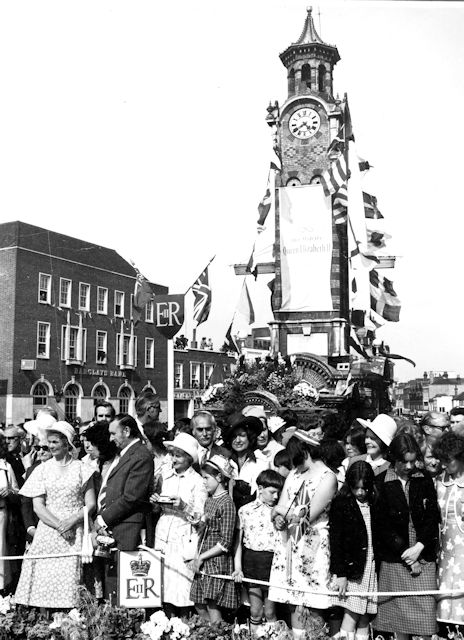
The Clock tower decorated for the Queen Elizabeth’s visit.
Image courtesy of the Epsom and Ewell Advertiser
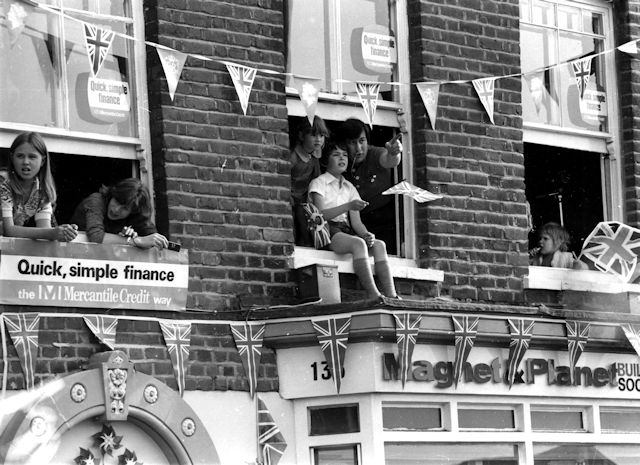
Children watching the Queen Elizabeth’s visit from Magnet & Planet Building Society.
Image courtesy of the Epsom and Ewell Advertiser.
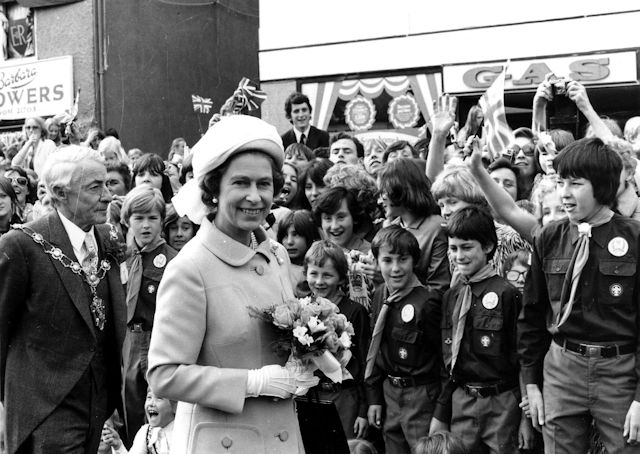
Queen Elizabeth’s walkabout visit June 1977.
Image courtesy of Surrey & South London Newspapers.
Street parties were held all over the country. The one in the High Street where I lived at the time was a hideous example, as it was not stewarded and there were far too many people pushing and shoving in the access roads. My mother and I feared for our lives at several points and bolted home as soon as we could get through. However, proceedings in Epsom and Ewell looked very civilised.
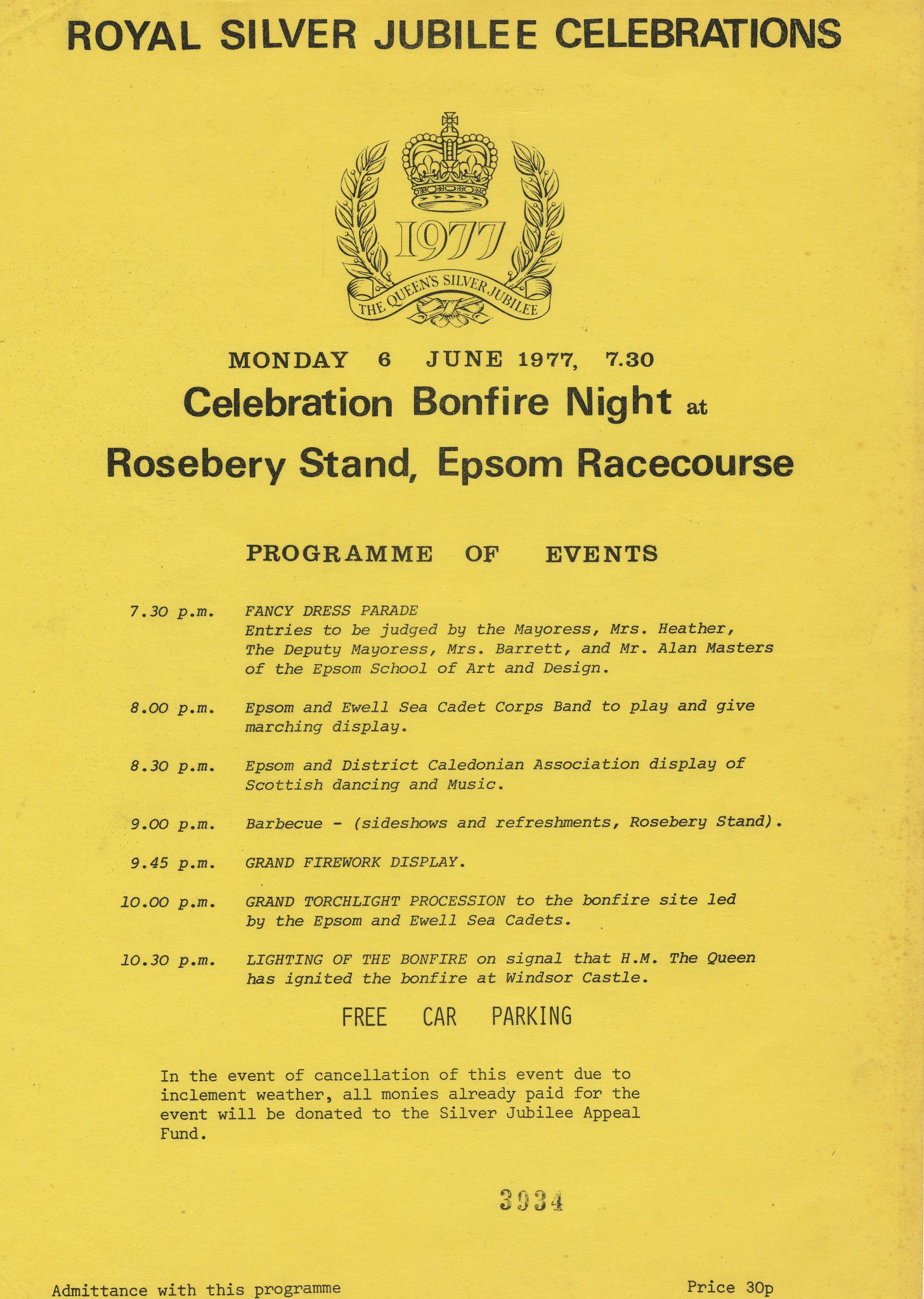
1977 Silver Jubilee programme.
Image source: Bourne Hall Museum.
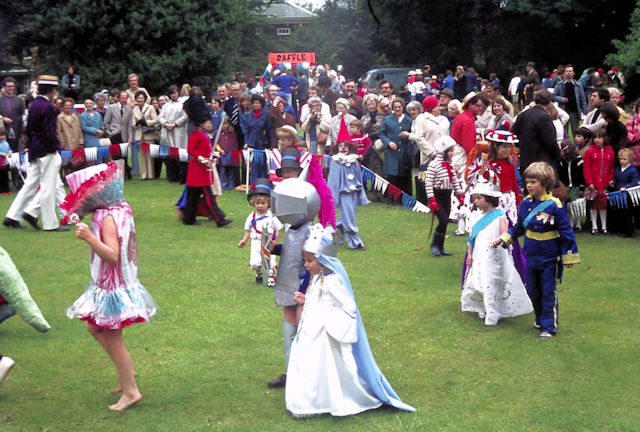
St Mary’s Church Silver Jubilee Fete, Fancy Dress Parade.
Image source: Epsom and Ewell Local and Family History Centre.
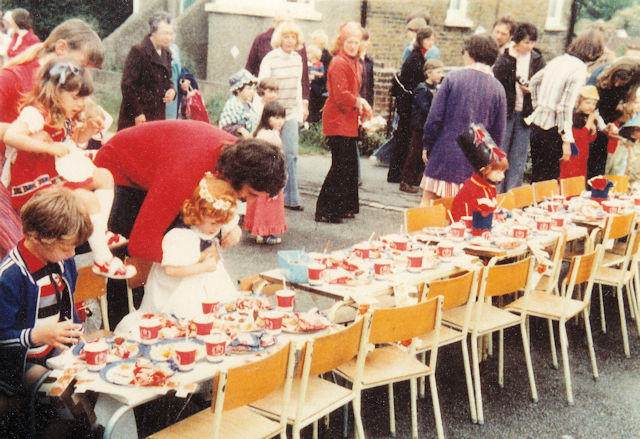
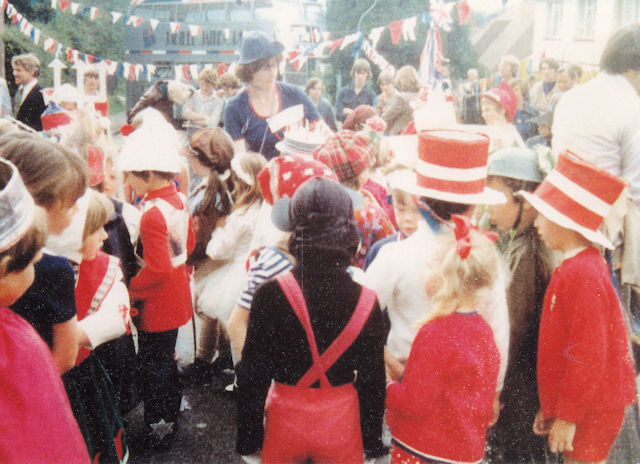
1977 Silver Jubilee photo.
Image source: Bourne Hall Museum.
1977 Silver Jubilee photo.
Image source: Bourne Hall Museum.
Golden Jubilee
2002 brought us the Golden Jubilee; the year got off to a sad start with the deaths of Princess Margaret on 9 February and the Queen Mother on 30 March, but the celebrations went ahead. The event highlights were The Party at the Palace, kicked off by Brian May of Queen playing a guitar version of God Save the Queen from the Palace roof, followed by the lighting of a chain of beacons round the world and, next day, a carriage procession and service at St Paul’s.
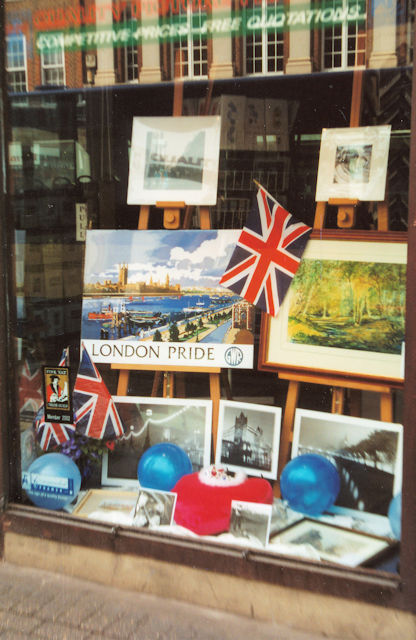
2002 Golden Jubilee photo.
Image source: Bourne Hall Museum.
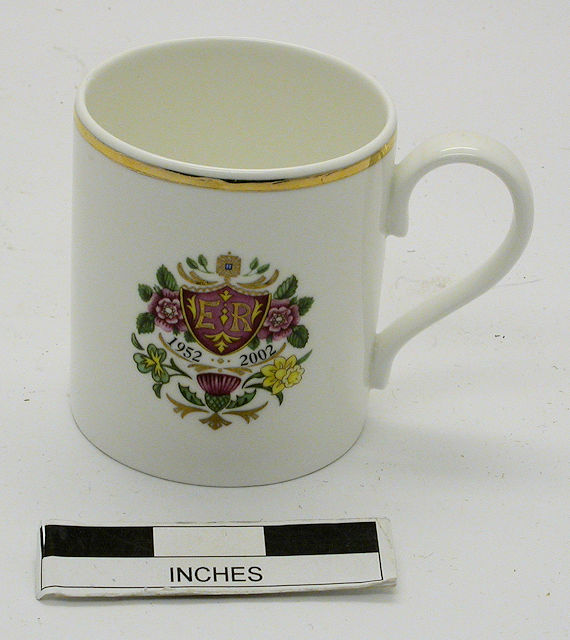
A Sparrow Farm Community Junior School mug issued for the Queen’s Jubilee in 2002.
Image source: Bourne Hall Museum.
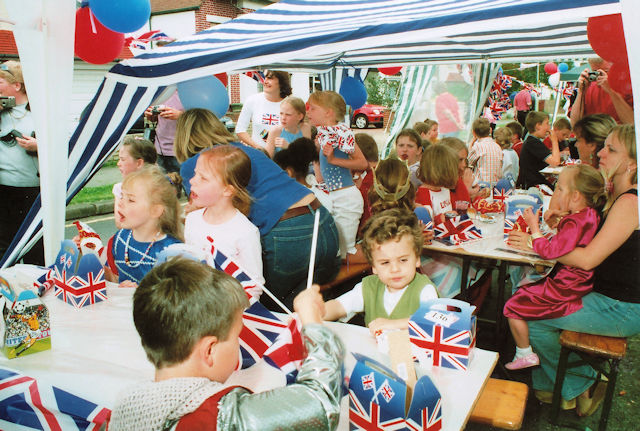
There were outdoor activities in Rosebery Park and at Bourne Hall, street events and children making crowns and suchlike.
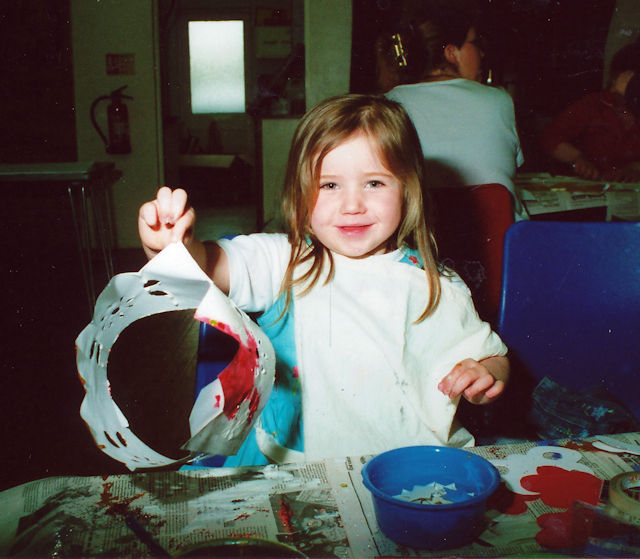
2002 Golden Jubilee photo.
Image source: Bourne Hall Museum.
2002 Golden Jubilee photo.
Image source: Bourne Hall Museum.
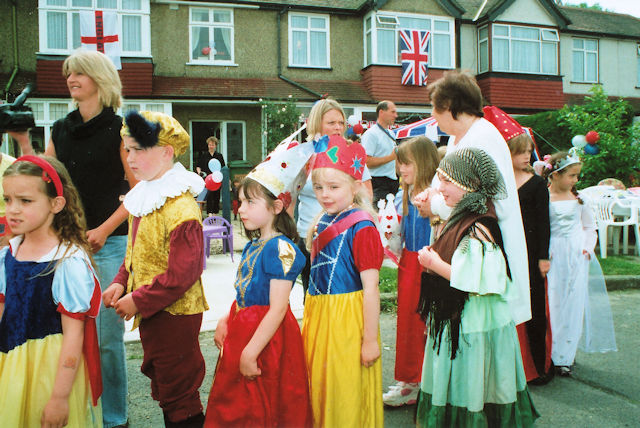
2002 Golden Jubilee photo.
Image source: Bourne Hall Museum.
Diamond Jubilee
And then we came to what then felt like the big one in 2012, which all of you will remember. Celebrations were held over the long weekend of 1-4 June and got off to a very local start when, as ever, the Queen and Prince Philip attended the Derby. The organisers put on a special display to mark her 60 years on the throne, the Coronation Cup was re-titled as the Diamond Jubilee Coronation Cup and Princess Eugenie sported Union Flag finger nails. The Daily Mail published a special article with some excellent photos. On 3 June we had the Thames Diamond Jubilee Pageant; the weather was wet and dreary, but everyone carried on regardless and 1000 boats took part, including the new Royal Barge, Gloriana, which was funded by donations from various wealthy benefactors.
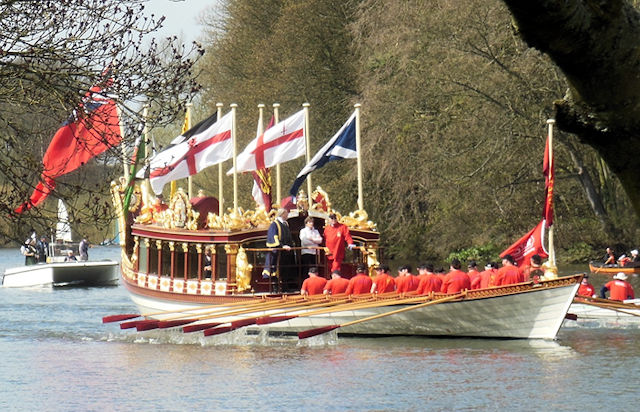
Gloriana approaching Richmond as part of a water pageant in April 2013.
Image courtesy of Linda Jackson © 2015
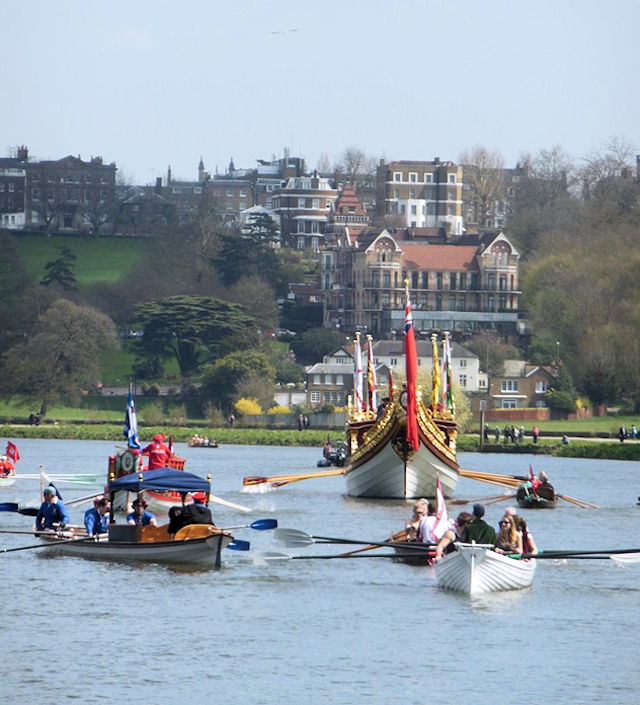
Gloriana with Richmond in the background, April 2013.
Image courtesy of Linda Jackson © 2015
Unfortunately, Prince Philip was not well enough to attend the service at St Paul’s on 12 June, but he was able to watch it on television from his hospital bed. The Queen carried on, surrounded by the rest of her family.
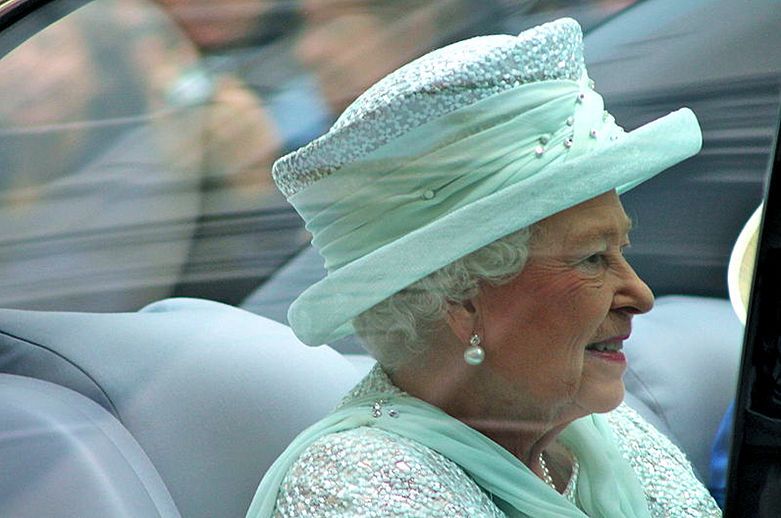
The Queen on her way to St Paul’s on 12 June 2012.
Photo by Carfax 2 via Wikimedia Commons.
The Queen became the longest-serving British monarch on 9 September 2015 and, although then aged 89, she continued with a busy round of duties – although increasingly assisted by other members of the Royal Family.
By early 2020, the novel Covid-19 virus (which had originated in China) reached Europe and continued to have devastating effects. Accordingly, on 23 March 2020, the Government introduced an unprecedented national lockdown. Things eased somewhat over the summer, but a second wave and then a third wave of infections from variants of the virus led to a succession of lockdowns and other restrictions.
On 9 April 2021, the Duke of Edinburgh died, just three months short of his 100th birthday. (He had been in poor health for some years – and had withdrawn from all public duties on his 90th birthday in 2011.) His funeral was held on 17 April and, observing the strict rules about the maximum size of gatherings and social distancing, was attended by only the immediate family. Television and press coverage had poignant pictures of the widowed Queen sitting alone during the service.
Those restrictions were eased and then another variant of the virus caused a third wave of Covid infections from July 2021. However, thanks to the mass vaccination campaign, the country was spared further lockdowns and, at the end of February 2022, all formal restrictions were lifted.
Platinum Jubilee
 The official Platinum Jubilee logo.
Image from Wikimedia.
The Queen’s 70th anniversary on the throne fell on Accession Day, 6 February 2022. As national life began to get back to something like pre-Covid normal, plans were firmed up for the national celebration of the record-breaking Platinum Jubilee in early June. The various events held across the UK (with the principal London-based ones as described below) were widely welcomed as a means of also marking the end of the difficult pandemic journey all had experienced.
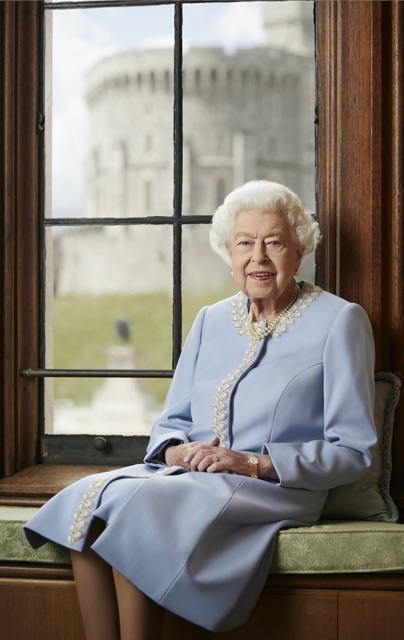 The official Platinum Jubilee portrait.
Taken by Ranald Mackechnie at Windsor Castle.
Photograph via royal.uk and credited there to Jacob King/PA Wire/PA Images
The Wikipedia article contains a useful summary of the many centrally-organised activities and events that were held across the UK to build up to the main celebrations in London from Thursday 2 to Sunday 4 June 2022. (The late May Bank Holiday was moved to Thursday 2 June and Friday 3 June was also made a Bank Holiday to make a four-day weekend.)
The main event on Thursday 2 June was “Trooping the Colour” (formally the Queen’s Birthday Parade), brought forward from its usual second Saturday in June. The Queen (who, for some time had been suffering from “intermittent mobility issues”) did not attend the parade itself but came out on the balcony at Buckingham Palace to take the salute from the returning troops and, together with crowds in the Mall, to watch a flypast of 70 aircraft – including 15 Typhoon aircraft flying in tight formation to make the number “70”.
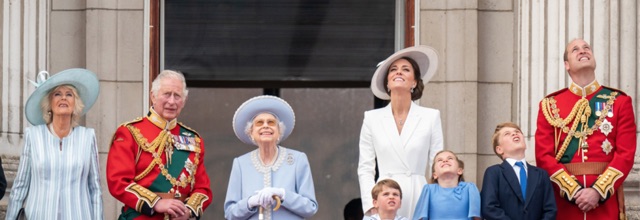 The Queen (and line of succession) watching the 2 June flypast.
Photograph via royal.uk
The Queen returned to Windsor Castle where, that evening, she triggered the lighting of beacons across the Commonwealth.
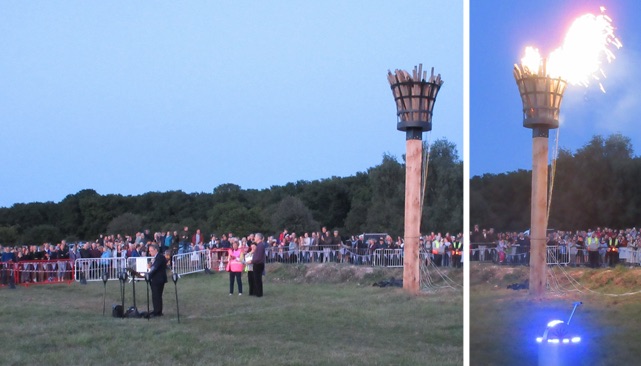 The Borough’s beacon on Epsom Downs: The Mayor (Cllr Clive Woodbridge) speaking to to the crowd; and the beacon lit.
Photographs with thanks to Bourne Hall Museum.
There were various decorations around the Borough, and particularly in shops, mainly using the official logo shown at the start of this section. The students at Epsom’s UCA brought a light touch to things with affectionate designs of stamps and other posters displayed in the Ashley Centre. While almost all those decorations were ephemeral, the students’ designs found a longer-term home under the railway bridge in Epsom’s East Street.
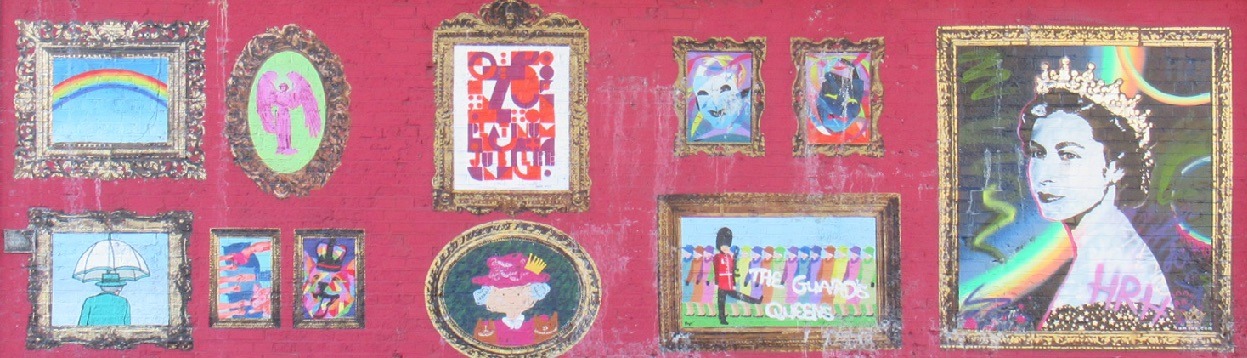 The “East Street Gallery” in February 2024
(Click image for more detail)
Photograph by Roger Morgan © 2024
On Friday 3 June, a service of thanksgiving for the Queen’s reign was held at St Paul’s Cathedral, after which the Lord Mayor of London hosted a reception in the Guildhall. The Queen did not attend these events, having experienced “discomfort” during the previous day’s activities, and was represented by members of the royal family. (It can be seen in the balcony photographs above and below that she is using a stick.)
The original plans for Saturday 4 June had been for the Queen to attend the Derby at Epsom Racecourse. However, she continued to be indisposed and was represented by the Princess Royal.
That Saturday evening saw the Platinum Party at the Palace – which began with the complete surprise of a short film of the Queen taking tea with a clumsy Paddington Bear. This finished (as in the screenshot below) with tapping out the “Stamp, Stamp, Clap” beat of Queen’s “We will rock you” with teaspoons on their cups, which was then taken up by the band itself (the first of many acts in the show) in front of the large audience in the Mall and on television at home and abroad. (Another Wikipedia article describes the party in some detail.)
 The Queen having tea with Paddington Bear.
Screenshot from the video on YouTube
For Sunday 5 June, there had long been encouragement for people to hold celebratory “Big Lunches” and street parties. Thousands were held across the UK – and with quite a few in Epsom & Ewell. As shown below, local “yarn bombers” were active in anticipating these.
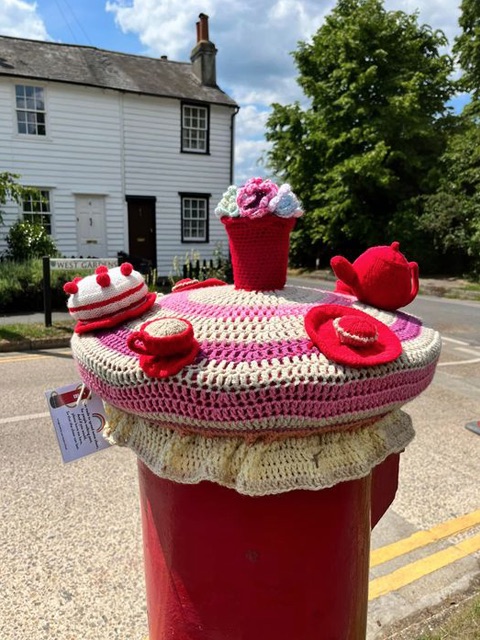 A postbox topper in West Street, Ewell.
Photograph with thanks to Bourne Hall Museum.
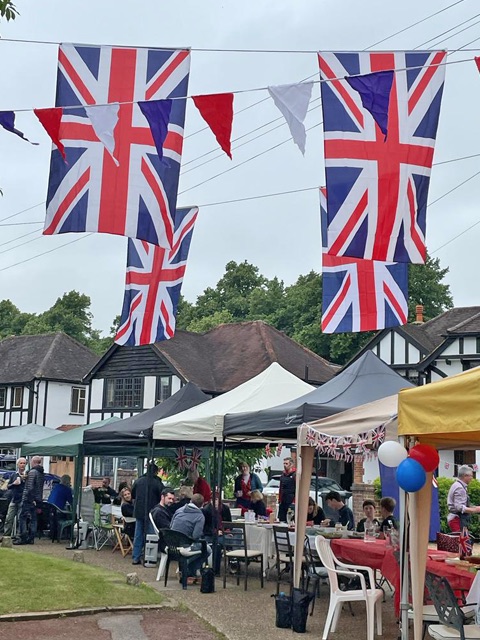 Platinum Jubilee street party in Woodcote Close, Epsom.
Photograph by Clare Cordery © 2022
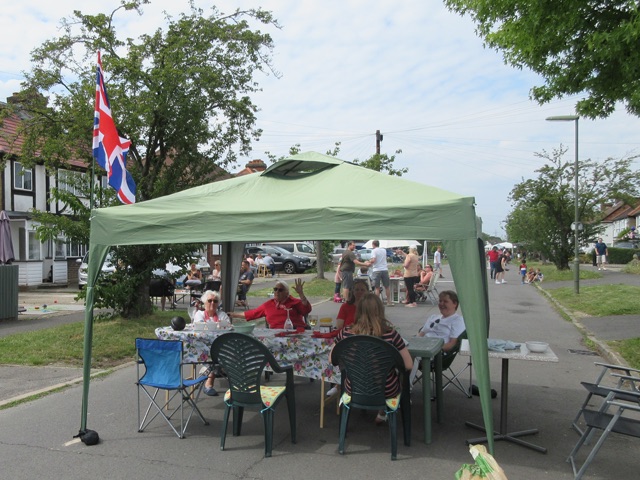 Platinum Jubilee street party in Pam’s Way, Ewell.
Photograph with thanks to Bourne Hall Museum.
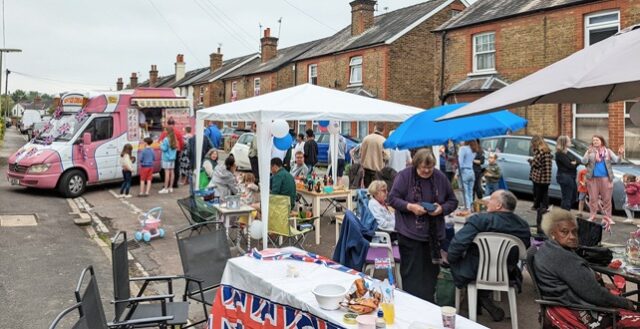 Platinum Jubilee street party in Miles Road, Epsom.
Photograph with thanks to Bourne Hall Museum.
That Sunday afternoon saw the final main Jubilee event, being a spectacular pageant past cheering crowds over a three mile circular route past Buckingham Palace. It was led by a military parade and followed by three themed sections – “The time of our lives”, “Happy & Glorious” and “Let’s Celebrate” – all involving some some 5,000 people drawn from across the Commonwealth. (Yet another Wikipedia article provides much detail about the eclectic event, together with and a good selection of photographs.)
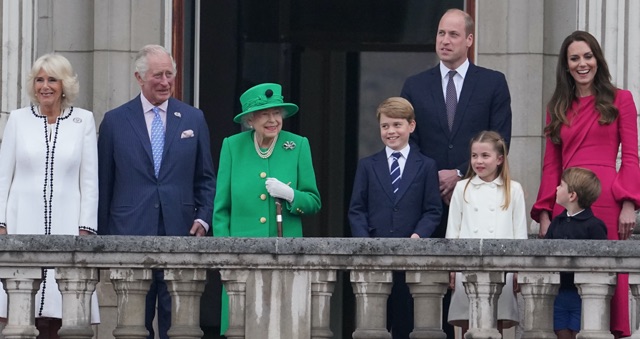 The Queen (and line of succession) acknowledging the 5,000 strong pageant from the Buckingham Palace balcony.
Photograph with thanks to ITV
Increasingly frail, the Queen went to Balmoral Castle for her usual summer holiday. To the best of her physical ability, the 96 year old continued her duties, including the in-person transfer of the UK premiership from Boris Johnson to Liz Truss on 6 September. She died just two days later, on the afternoon of Thursday 8 September 2022, having reigned for 70 years and 7 months – a term beaten only by the 72 year reign of Louis XIV (1643-1715). After his also record-breaking apprenticeship, her son then ascended the throne as Charles III.
Linda Jackson © 2015 & 2021
Platinum Jubilee update by Roger Morgan © 2023
PS: In this 21st Century, we have become used to a Jubilee every 10 years. However, it will be a while before we see another – and Charles III will need to match his father’s longevity to reach his Silver Jubilee in 2047.
You may also be interested to read our article on Coronation celebrations.