
Financing WW1
(click here to see out article about Financing WW2)
 A 1918 Business Men’s Week War Bonds Poster
Wars cost money – a LOT of money. During WW1 the government used various methods to raise the necessary funds. The main ones were War Savings Schemes and War bonds. These schemes were promoted by appeals to the public that investing in them was the patriotic thing to do.
By 1918 the government was promoted war savings and bonds in various ways including “Business Men’s Weeks” where local business would organize events to sell bonds and promote savings in their town.
On 8th March 1918 during the local “Business Men’s Week” hexagonal discs urging local residents to invest their money in War Bonds or War Savings Certificates were dropped from an aeroplane. It was later reported that Epsom raised £53,267.15s and Ewell £10,073.10s.6d (In 2021 purchasing terms that’s about £2.8m and £522,000 respectively)
 A leaflet dropped from an aeroplane on 8th March 1918 in the Epsom area.
Image courtesy of Bourne Hall Museum
Apart from leaflet drops from aeroplanes from late 1917 the National War Savings Committee had six tanks tour principal towns and cities. These became great attractions and because they sold war bonds and other war savings products they became know as “Tank Banks”.
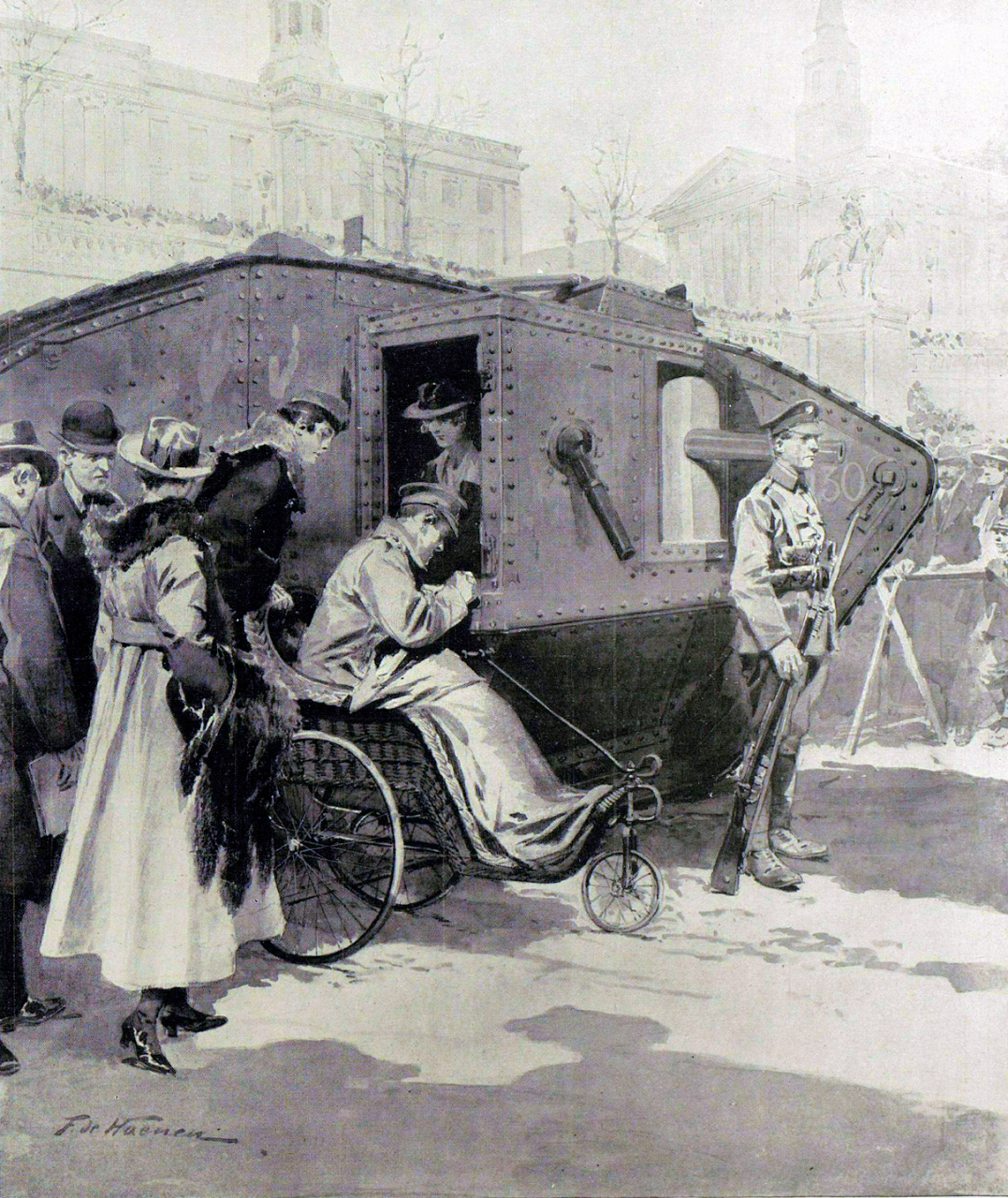 The Tank Bank in Trafalgar Square selling War Bonds and
War Savings Certificates. The wounded officer is it’s first customer.
Image source: Illustrated London News 01 Dec 1917
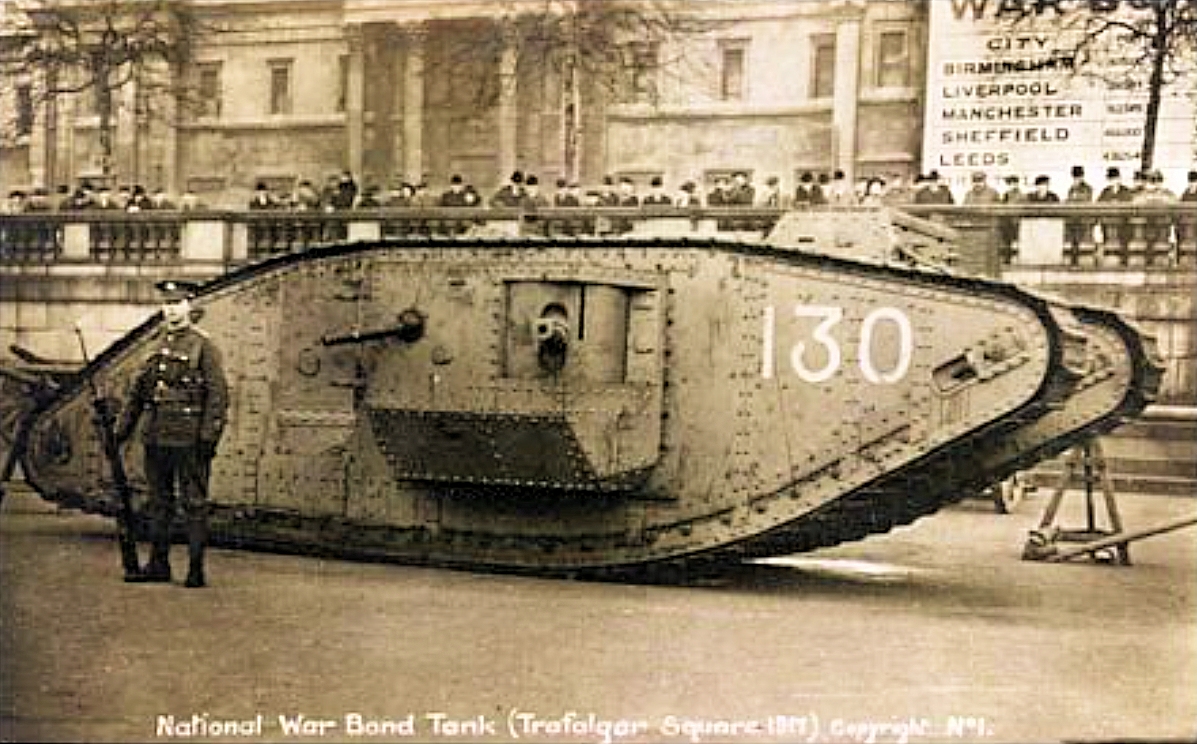 A Postcard View of one of the War Bond Tanks seen in Trafalgar Square, London
Soon souvenirs were being made and here is one badged Epsom even though there is no record of a Tank Bank visiting our district.
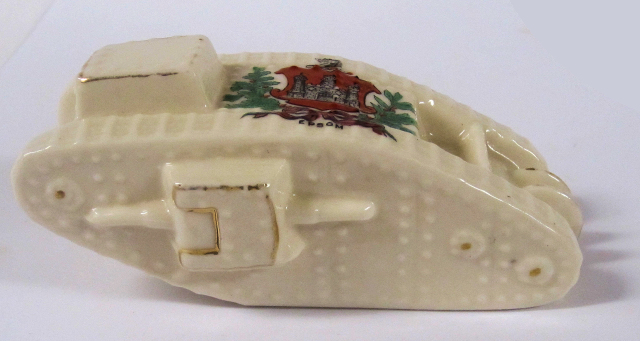 A pottery Tank Bank Souvenir
Image courtesy of Bourne Hall Museum
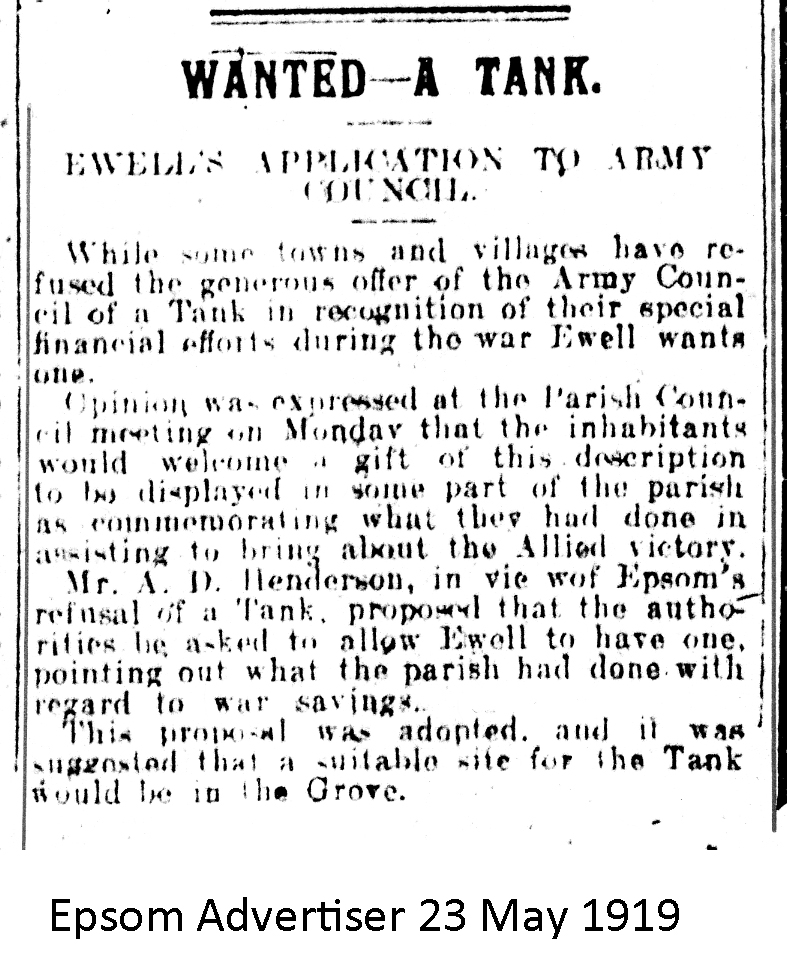
Interestingly after the war the National War Savings Committee offered tanks to the cities and large towns that had raised large amounts and Epsom was one of them.
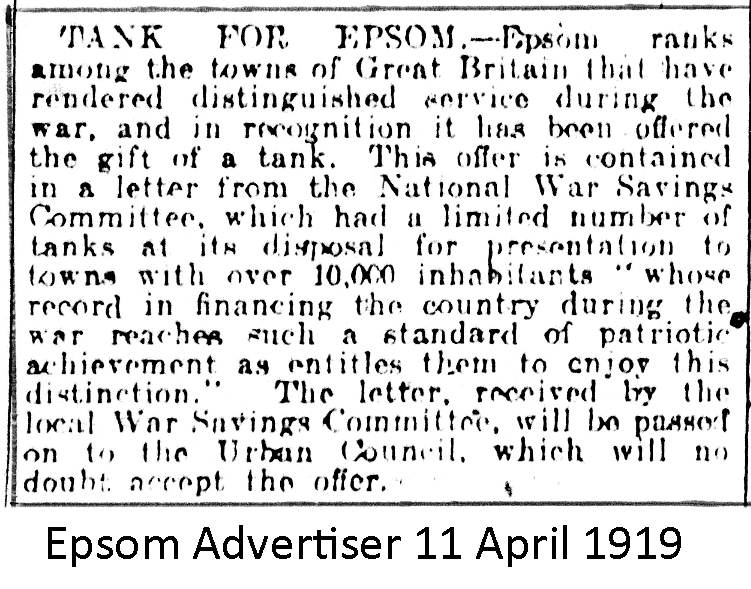
Researched by Peter Reed 2022
With thanks to Clive Gilbert
War Savings Stamps
To modern eyes the use of the swastika symbol is shocking but for millennia it was used by numerous societies and religious groups until it was appropriated by the German Nazi party in the 1930s. So we should not be too surprised to see one being used by the UK Government in the early 1900s.
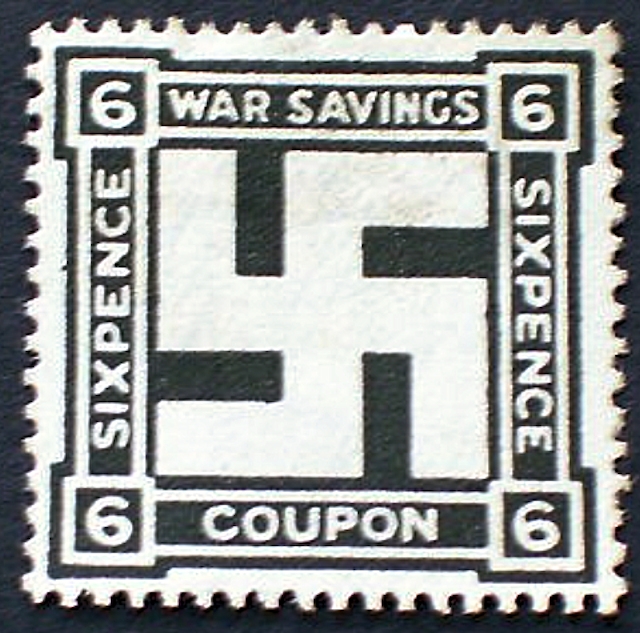 A WW1 British War Savings Coupon.
Here the swastika symbol was used symbolize good luck.
The war bonds cost 15s 6d (78p) but at maturity, five years later, they repaid £1. Realizing that many poorer households would not afford 15s 6d the committee sold 6d (2½p) stamps. These stamps were known as coupons and stuck onto savings card so after 31 stamps had been added the card could be exchanged for a war bond or war savings certificates.
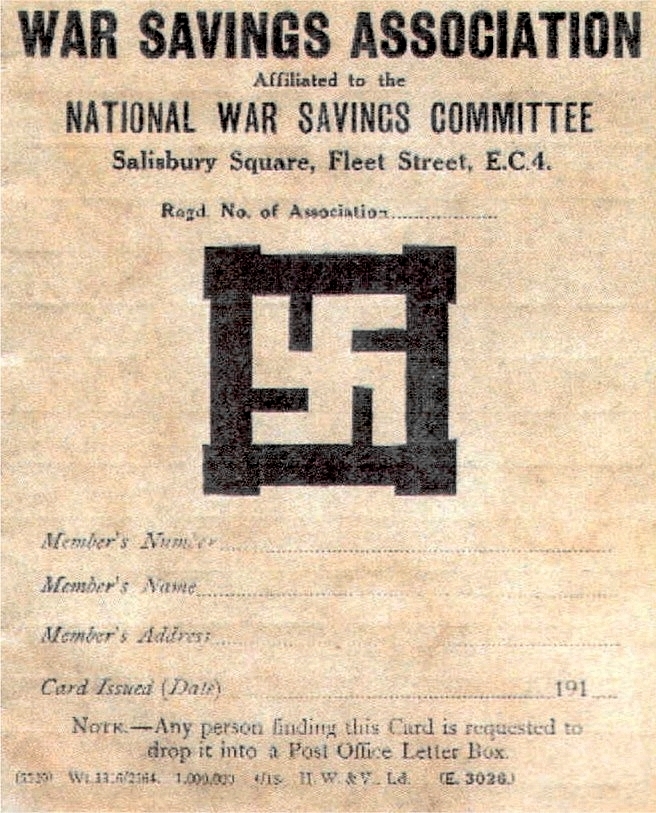
A War Savings Stamp Card
Here the swastika symbol was used symbolize good luck.
Small square enamel badges were given to the stamp sellers and a round ones to local committee members.


Enamel badges issued by the National War Savings Committee
Here the swastika symbol was used symbolize good luck.
Researched by Peter Reed 2022
With thanks to Clive Gilbert
(click here to see out article about Financing WW2)