
Moody & Sankey
An item in Charman’s Reminiscences Of Epsom intrigued your webmaster. Under the entry for Station Road Epsom appears:-
Station Road [now Upper High Street]
From Dorling’s there were no more buildings up to Epsom Station.
On the other side, the Railway Hotel (Rutley was the landlord; he had cabs and livery stables)
Opposite this in Station Road was waste ground with a rail fence until the Lecture Hall was built in 1882, and then the Town or Public Hall. Moody & Sankey’s Mission Tent stood on this ground.
Afterwards the Town Hall was built, and I think residents would like to see some of the plays that the touring companies used to produce ‒ true, we have plays now, but not like those.
 Dwight Lyman Moody; Ira David Sankey (Seated)
by Walker albumen cabinet card, circa 1875
Given by Terence Pepper, 2014
National Portrait Gallery NPG x197388 (CC BY-NC-ND 3.0)
Between June 1873 and August 1875, Dwight Lyman Moody (February 5, 1837 – December 26, 1899), a powerful American evangelist and publisher, together with Ira David Sankey (August 28, 1840 – August 13, 1908), an American gospel singer and composer, visited the UK and preached to several million people.
Moody the Congregationalist preacher with Sankey his Methodist singing partner held their revivalists meetings in large public halls. The Daily Telegraph reported that they had converted Islington’s Agricultural Hall, ‘into an open church’. (This hall could seat 14,000, and had standing room for 6,000!) During their time in the UK they held 285 meetings in London alone which were attended by 2,500,000 people
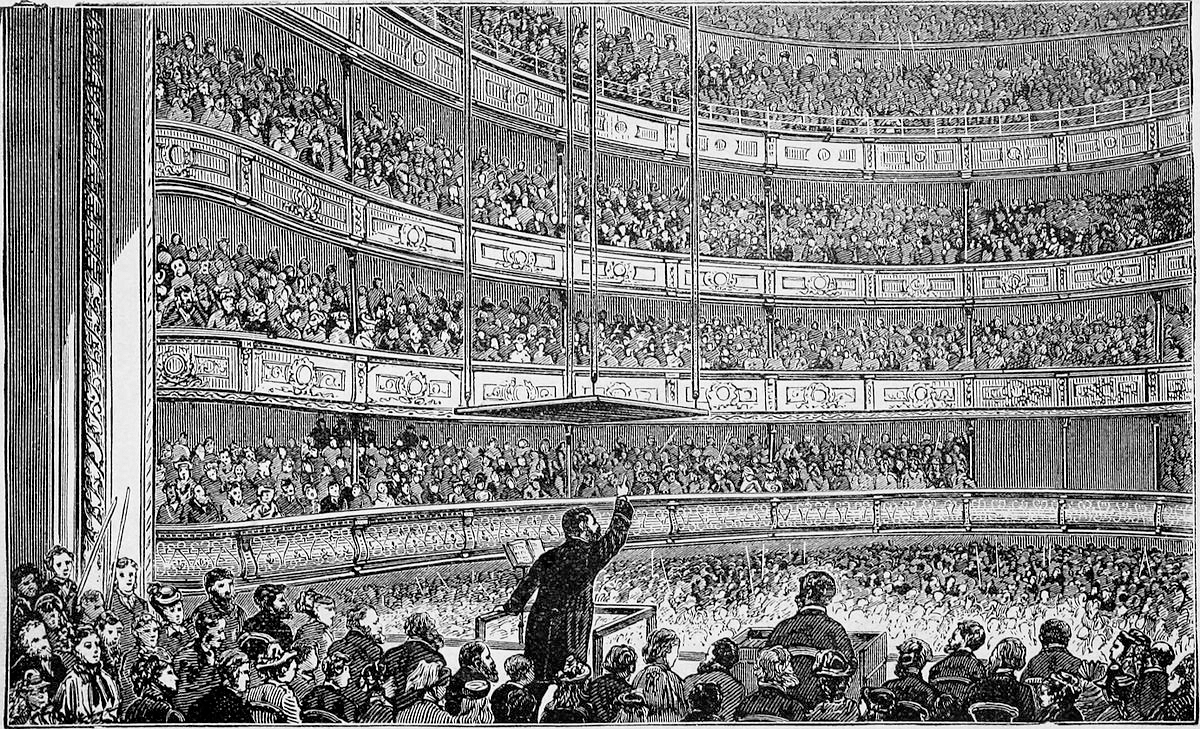 Moody Preaching At The Opera House, Haymarket, London
In places where large halls were not available their meetings were held in marquees or large tents. Where ever they went their meetings attracted huge audiences and it has been said that the pair became the greatest mass communicators of their generation. Naturally their fame generated some vocal critics. but Sankey’s sixpenny hymn book was a huge success selling in excess of fifty million copies worldwide, netting the evangelists around £7,000 in British royalties alone. The hymns it contained were of the popular memorable type.
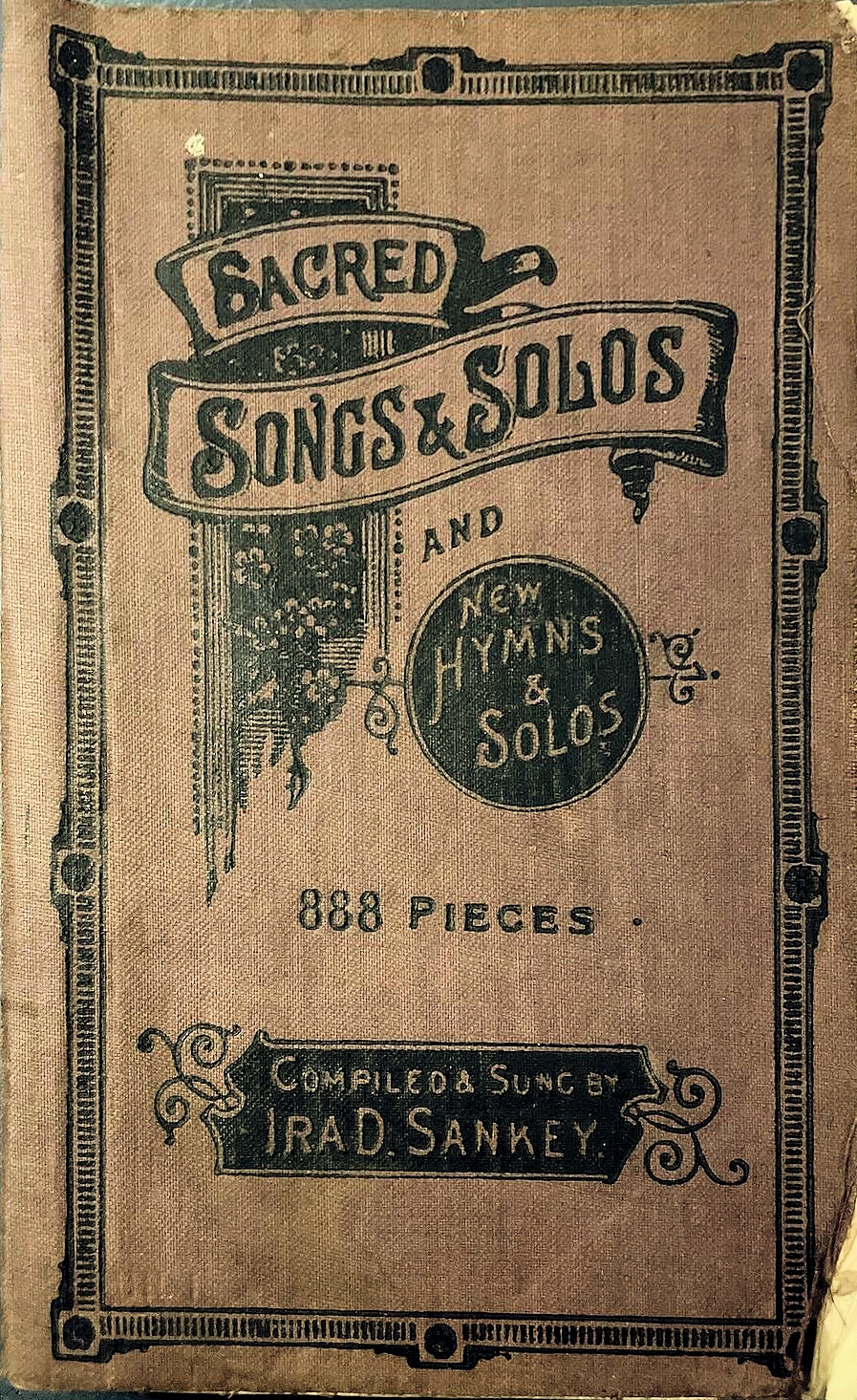 Cover from Sankey’s most popular hymnbook
 Sketches satirizing Moody and Sankey revival meetings in Boston
Click image to Enlarge
For a full account of this pair of preachers see
The lives and labors of Moody and Sankey by Robert Boyd 1876.
Peter Reed 2022