
“EAMON O’TIERNEY”
(Edward Douglas Turnley)
Republican activist and patient in Long Grove Hospital
British troops manning a barricade during the Easter Rising, 1916
We don’t know a great deal about individual patients at Long Grove Hospital, since the files on them, where they survive, are closed for 100 years. In this case, however, we don’t need a file, as we know that O’Tierney was sent there, and why, and that he was discharged, whereupon he resumed his republican activities … whilst being on the Electoral Registers as Edward Douglas Turnley, resident of Mitcham. It’s important to note that he was in Long Grove for treatment and was not being imprisoned for past activities, although he had been interned. The timing is also crucial, as most of those who were captured but escaped execution for their part in the Easter Rising of 1916 would have been released in the period that followed. However, O’Tierney had mental health problems, so he spent time in a Dublin hospital, at an asylum in Denbigh, North Wales and in Long Grove. There is evidence from a close associate, Jeremiah Joseph O’Leary, that he had always been highly-strung and the proposition is that his experiences in the Easter Rising induced something akin to post-traumatic stress disorder or shell-shock. Although we have covered the general topic of shell shock on this website, we usually think of soldiers who have fought for or with the British in various overseas conflicts, but in this instance it is someone who fought against the British Army and collaborated with Germany, in pursuit of an Irish Republic.
Both O’Leary and O’Tierney (Turnley) were English, but of Irish ancestry. Edward Douglas Turnley was born in 1890 in London, the son of Edward Echlin Turnley, a civil servant. Edward Senior had been born in Newcastle-upon-Tyne, but his father was Irish. There is no real indication anywhere of why or how Edward Junior became ‘radicalised’ (for want of a better expression); he worked as a shipping clerk and in the 1911 census, aged 20, was a lodger in Stockwell, London. However, he was already a member of the Gaelic League (Clapham branch), which he had joined in about 1910. The League was essentially a social and cultural organisation for Irish people, but many of those who became active in the republican movement first met there and so it became an unintended breeding ground for all that followed. Michael Collins, who became a leading republican figure and then an Irish Government minister, worked in London as a clerk and he was prominently involved in the League.
O’Leary said in a 1955 deposition that one of the first things he and Turnley did was to organise a committee among the Irish Associations in London to relieve distress in Dublin during the 1913 strikes. This concerned a dispute between thousands of unskilled workers and their employers, which lasted from August 1913 to January 1914 and was known as the Dublin Lock-out. Conditions for workers were dire in Dublin at the time and Wikipedia mentions Henrietta Street, where 835 people lived in 15 Georgian tenement houses. The workers could not join a trade union without being sacked from their jobs and were often blocklisted so that they couldn’t work at all. Then, along came James Larkin, who formed the Irish Transport and General Workers’ Union (ITGWU) and organised strikes. The momentum grew and, although the Dublin Lock-out was not successful from the workers’ perspective, it was a huge wake-up call for employers, some of whom had already gone bust as a result. Larkin was also one of the founders of the Irish Citizen Army (ICA), which was involved in both the Lock-out and the Easter Rising.
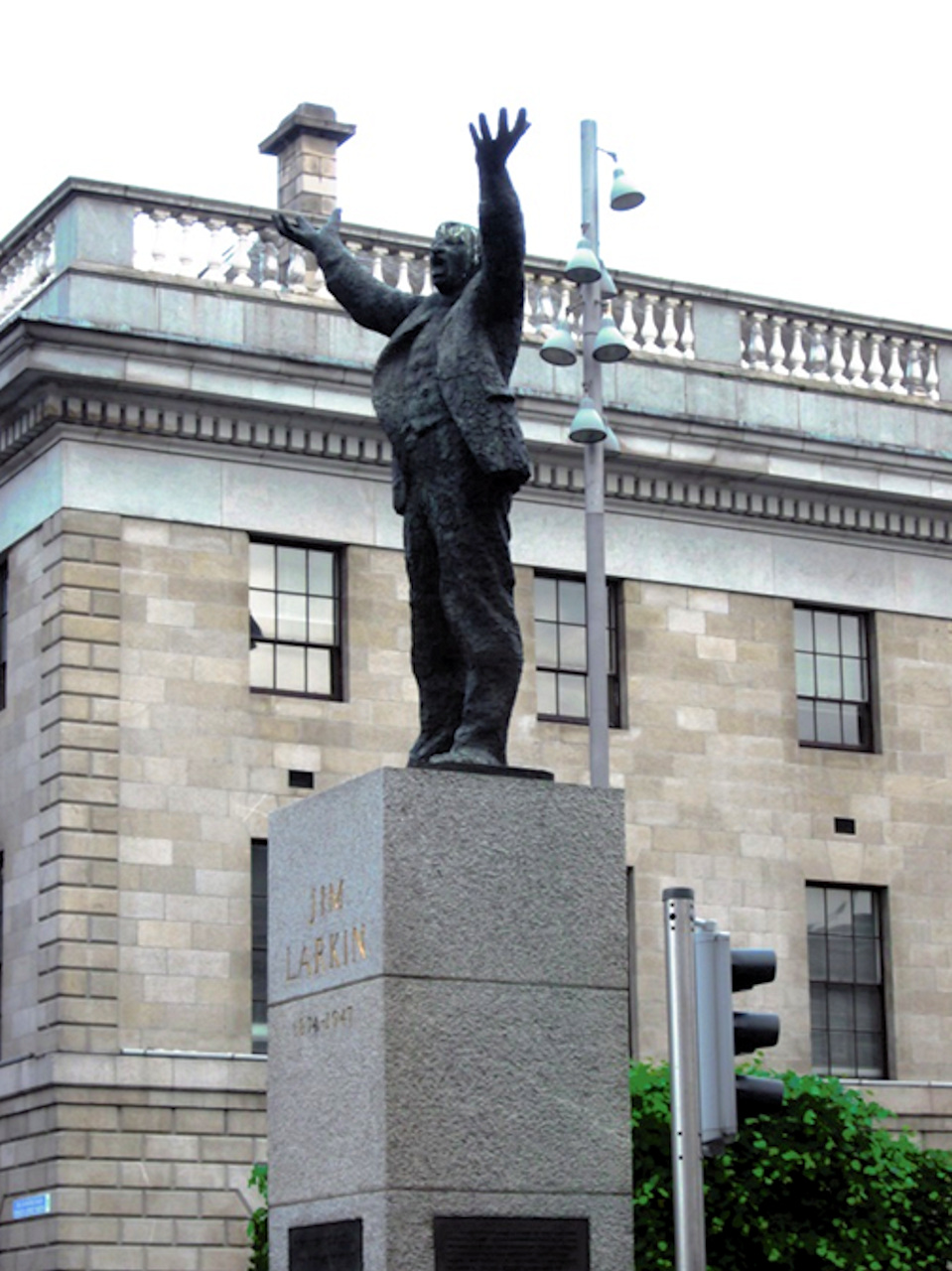
Statue of James Larkin in O’Connell Street, Dublin
Photograph by Linda Jackson ©2020
 Grave of James Larkin in Glasnevin Cemetery, Dublin
Photograph by Linda Jackson ©2020
The body that O’Leary and Turnley organised was the United Irish Associations in London and they were the joint Honorary Secretaries. One thing led to another, of course, and in 1914 a London Company of the Irish Volunteers was formed, Michael Collins, now a member of the Irish Republican Brotherhood (IRB), being heavily involved. O’Leary and others then formed a South London Company. He and Turnley both worked in shipping and, before long, were approached to see a man who was concerned in running guns from Germany to Ireland to arm the Volunteers. Prominent members of the gun-running group were the author Erskine Childers (executed by the Irish Free State in 1922) and Sir Roger Casement (stripped of his knighthood and hanged for high treason at Pentonville in 1916).
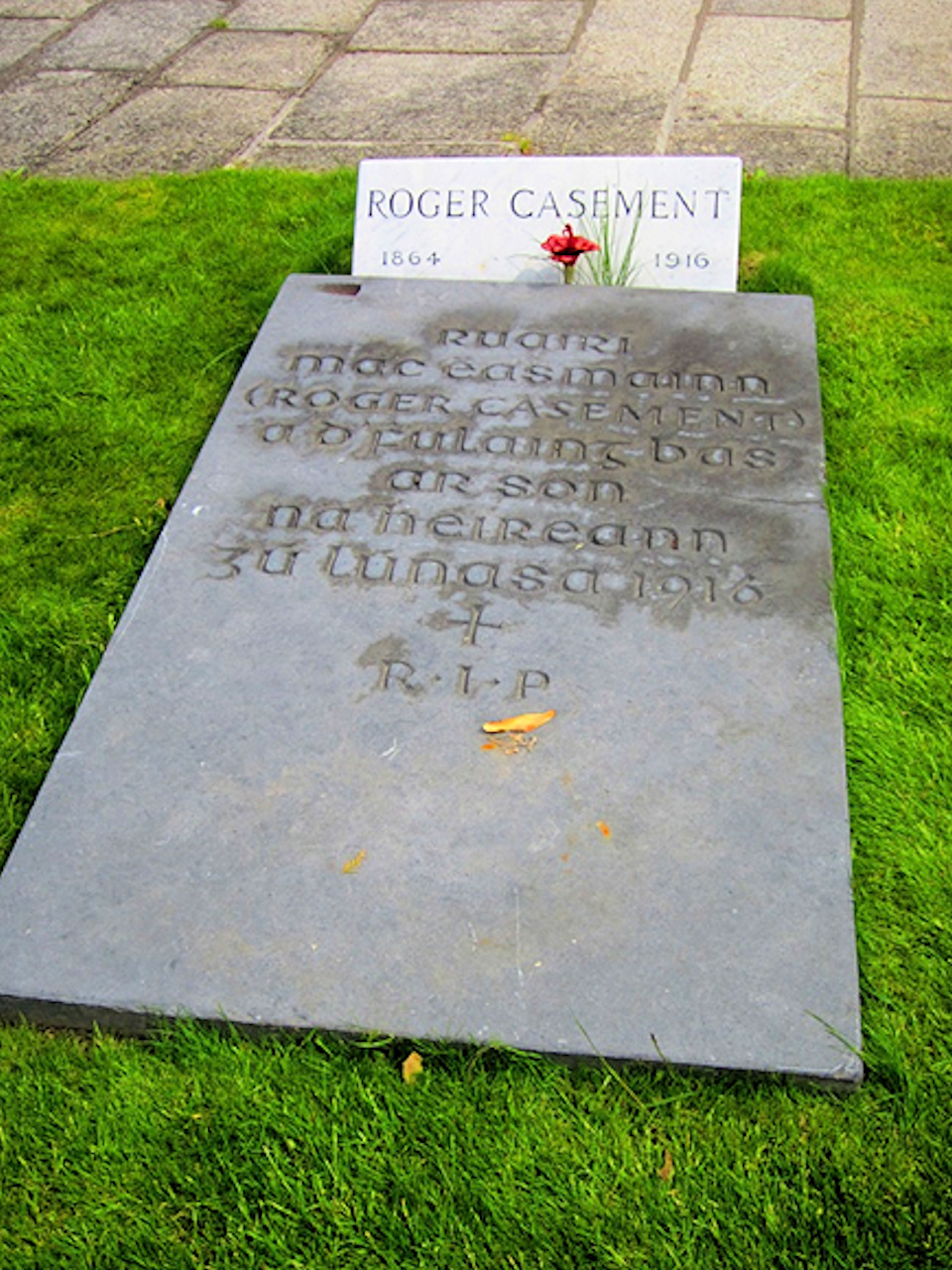 Grave of Roger Casement in Glasnevin Cemetery
Photograph by Linda Jackson ©2020
O’Leary and Turnley would send to Germany, via ships’ captains that they knew through their work, certain letters, addressed to particular prisoners of war, but actually coded so as to be intercepted by the German authorities. They also smuggled guns through London.
This is a quote from O’Leary’s 1955 deposition. O’Leary, incidentally, got himself exempted from conscription because of an old injury which had made him lame in one leg and that also precluded him from ‘active service’ with the Volunteers.
‘The lads went to Dublin in the beginning of 1916. We carried on as well as we could, getting stuff over to Dublin. On the Maundy Thursday of Easter Week a party of eight people, with twelve trunks containing arms and ammunition, left London and arrived in Dublin on Good Friday. They were Sean McGrath, Liam O’Kelly, a member of the Clapham Gaelic League, Eamon O’Tierney, my brother David, and myself, that is, five men and three women, i.e. two sisters of Dick Connolly (Sheelagh, who had just been widowed; and the other who is a nun now in the Charity Convent, Enniscorthy) and Grainne O’Sullivan. Grainne O’Sullivan was a teacher and the other two were nurses.’
For many of these men during the First World War, conscription into the British Army was an approaching problem and gradually they ended up in a place called Kimmage in the south of Dublin, where the Irish Volunteers had established a garrison.
On Easter Monday the Irish Volunteers mobilised and Turnley went along with a Company that was operating in the area of North King Street. The General Post Office is probably the best-known site, since it was the republican headquarters during the Rising and the place where Patrick Pearse read the declaration of an Irish Republic.
The ruined main sorting-room inside the General Post Office, 1916
 The General Post Office, O’Connell Street, pictured in 2012
Photograph by Linda Jackson ©2020
Proceedings in the North King Street area took a shocking turn when soldiers of the South Staffordshire Regiment, searching houses for rebels, shot/bayoneted and killed 15 (some sources say 16) civilians. This wasn’t self-defence or mistaking the victims for rebels, since the soldiers looted possessions and concealed bodies. The South Staffordshires were exonerated from blame at a subsequent inquiry.
According to the Treason Felony Blog, which is one of the main sources for this article, O’Tierney was called the ‘Hero of Reilly’s Fort’ for recovering an Irish Republican flag under fire. Here is a quote from the blog.
‘By the Friday, Reilly’s Fort had been under constant fire for sixteen hours and the decision was taken to evacuate it and retreat up Church Street to a barricade outside the Franciscan Church. The defenders were then joined by O’Tierney and others who had been defending the barricade in Mary’s Lane. When the Reilly’s Fort garrison was criticised for not bringing the Irish Republic flag and lance with them, O’Tierney went out, apparently under intense fire, and retrieved the flag and lance.’
Eventually O’Tierney retreated to The Four Courts, a legal complex on the banks of the Liffey, where a large contingent of rebels was making a last stand, and was captured. He was taken to Dublin Castle and hospitalised.
Irish republican prisoners in hospital at Dublin Castle, May 1916
O’Tierney and others were then marched under military escort to Kilmainham Gaol, to await transfer to Frongoch Camp in North Wales. It seems that Michael Collins had also managed to be sent there, apparently by sidling into a different queue from the one in which he had been placed. He was fortunate not to have been executed, having been a leader at the General Post Office conflict, as Patrick Pearse and others had been.
O’Tierney became unwell and delusional once more and in November 1916 was sent to the fairly grim 1840s-built asylum in Denbigh after the intervention of Collins and others in the camp. It is not too surprising, I suppose, under the circumstances, that the authorities at Frongoch had been somewhat indifferent to the fate of their internees.
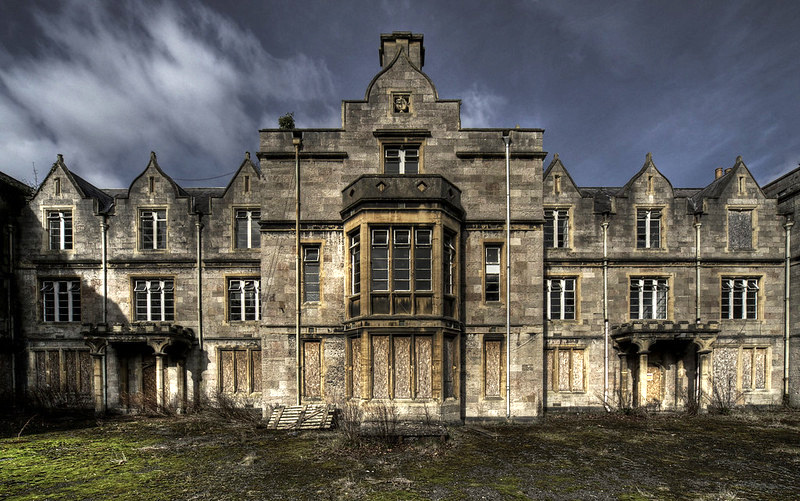
The abandoned Denbigh Asylum
Photo by Paul via Flickr (CC BY-NC-ND 2.0)
The chronology of O’Tierney’s subsequent movements is unclear, but he was sent to Long Grove on 11 April 1917. We know the date from a letter written by the Irish National Relief Fund to Michael Collins of the Irish National Aid and Volunteer Dependants’ Fund (INAAVD). A further letter, dated 24 October 1917, reads as follows.
‘You will be glad to hear that we have a most satisfactory report with regard to Eamonn (sic) O’Tierney. His condition has very greatly improved within the last few weeks both physically and mentally, and we quite anticipate that the Medical Superintendent will be sufficiently satisfied with him in a few weeks to approve of his release.
I would like all the Executive in Dublin to know that we have received the greatest possible help from Dr. Chambers in this matter. As his name has not occurred in former correspondence, I may explain that he is an Irishman from the North of Ireland and that we were given an introduction to him from another Irish doctor.
I should also mention that Dr Chapman is one of the best known mental specialists here and has a very extensive practice. From the very first Dr Chambers has shown the utmost kindness and sympathy for Eamonn, and although he has twice visited Epsom specially to see him, and has also been in correspondence with the Medical Superintendent at the Asylum, he refused to make any charge for his services, saying that although he and Eamonn O’Tierney are not of the same way of thinking politically, yet he (Eamonn O’Tierney) being a fellow Irishman and in distress over here, he was only too glad to do whatever he could for him. I hope we shall all keep Dr Chambers’ name in mind.’
As I said earlier, O’Tierney (as Turnley) was on the Electoral Registers in Mitcham during 1919 and 1920 and, although under surveillance, he gave political speeches in London. In May 1920 he helped to organise a protest outside Wormwood Scrubs Prison in support of republicans on hunger strike. He was employed in shipping at the time and the company required him to sign an undertaking that he would stop all political activities. He declined and in that same month moved to Cork, transferring to the Cork battalion of the IRA. How he met his end on 17 December 1920, aged just 30, is unclear. The official version was that he died of appendicitis, but there was a later newspaper report claiming that he had been killed in an accident involving IRA munitions.
Postscript
The Easter Rising and its aftermath were what might be called the end of the beginning. Michael Collins was Finance Minister of the nascent republic, whilst organising the IRA, smuggling arms and preparing to eject the British. There was a ceasefire in 1921 and Collins was one of the leaders who negotiated the treaty with the British Government. He was shot and killed in an ambush on 22 August 1922 by forces who were against the treaty.
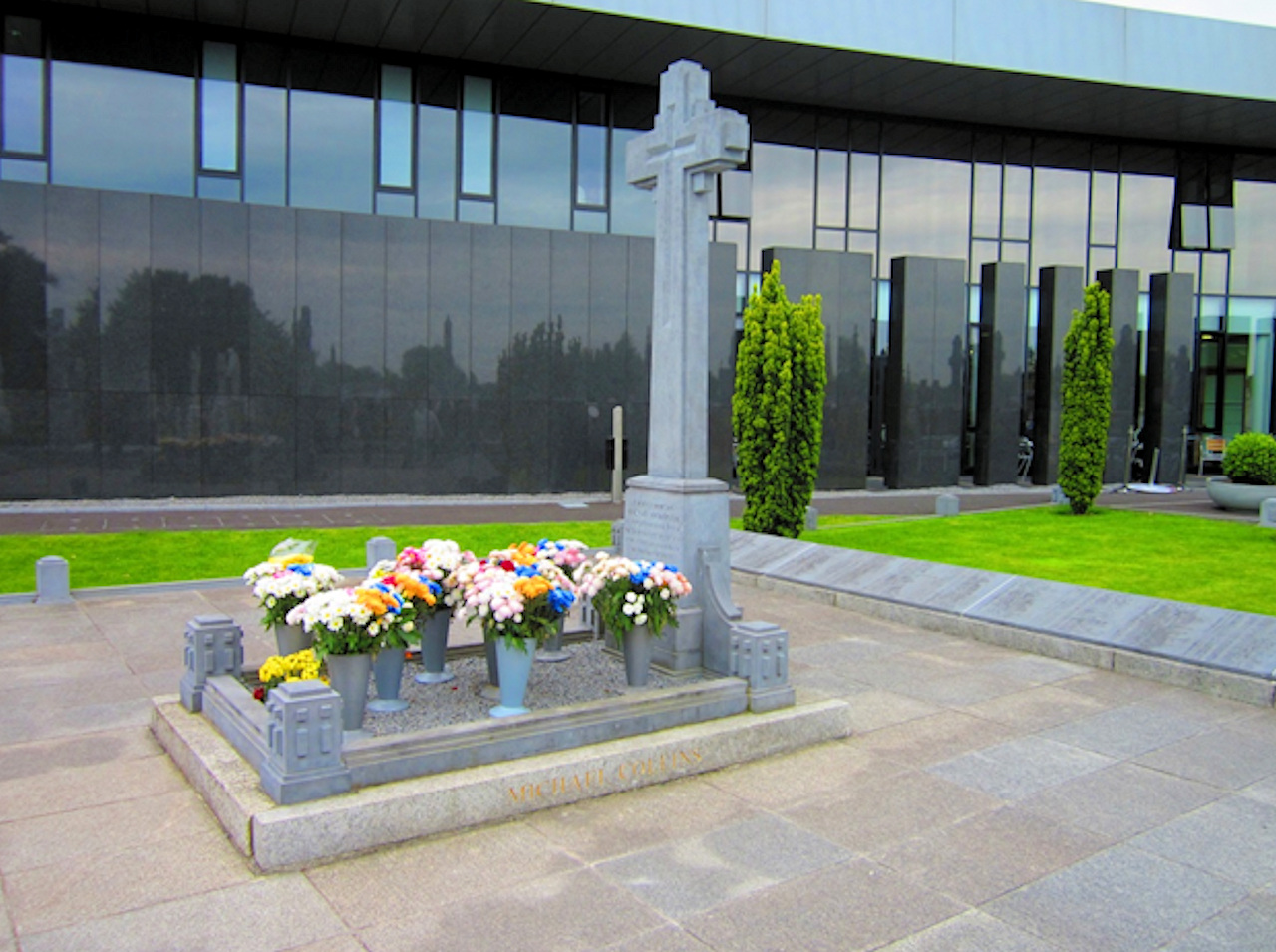 Grave of Michael Collins, Glasnevin Cemetery
Photograph by Linda Jackson ©2020
Main sources
- The Treason Felony bloghttps://treasonfelony.wordpress.com/
- National Library of Irelandhttp://www.nli.ie/ (the letters to Michael Collins about O’Tierney)
- Wikipedia