
GERTRUDE HORTON
Champion of women’s rights
I sometimes wonder if people know the history of their neighbours. For example, did the inhabitants of The Greenway, Epsom know that Mrs Horton, who lived at Number 315 from about 1952 until her death in 1978, was at the forefront of the suffrage movement, in at the beginning of the Townswomen’s Guilds and at the sharp end of the equal pay movement?
The Robertsons
Gertrude Isabella Morton Robertson was born on 26 August 1901 in Chelsea to Scottish artist Charles Kay Robertson (1859-1939) and his wife Jane Falconer (née Walters). Charles painted mainly portraits and Jane was a miniaturist. Charles had a studio in Buenos Aires and the couple spent considerable time there, with Jane setting up suffrage groups. As children, Gertrude and her two older sisters were sent to live with their grandparents in Edinburgh.

Portrait of Mrs Curwen 1908
An example of work by Charles Kay Robertson
Image courtesy Abbot Hall Gallery, Kendal via artuk.org (CC BY-NC-SA)
Everyone returned to England in due course and I will fast-forward to deal with the Second World War period, when the family, then living at 8 Fellows Road, Hampstead, was decimated. Charles Robertson died in 1939 and Jane continued to live at the address with various of her offspring until 17 April 1941 when she and three of her adult children were killed by enemy action.
Gertrude
Gertrude went back to London during the First World War and enrolled at the North London Collegiate School; the headmistress at the time was Dr Sophie Bryant. Dr Bryant was a remarkable woman: not only was she an ardent suffragist (as opposed to a suffragette) and passionate about higher education for women, but she was also the first woman in England to receive a Doctorate of Science.
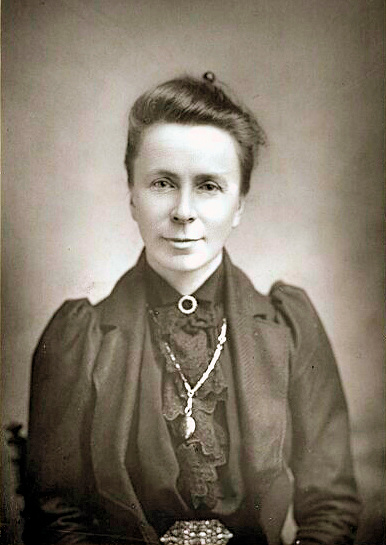 Dr Sophie Bryant 1894
by W. & D. Downey, published by Cassell & Company, Ltd
carbon print, published 1894
©NPG Ax27906 (CC BY-NC-ND 3.0)
Gertrude was very good at science and went on to study chemistry, maths and physics at University College, London, taking a Bachelor of Science degree and, subsequently, a BSc (Special). She was involved with the National Union of Students, which had only been founded in 1922, and met the man who was to become her husband: he was Harold Vivian Horton (born 1898), who became a research chemist and, later, a schoolmaster. Gertrude’s intention had also been to become a teacher, but, hard as it is to believe now, between the wars there was a ban on married women in public services.
Gertrude’s older sisters were involved in suffrage and were determined to be financially independent. The eldest, Helen (1883 – 1941) was described as a medical gymnast in the 1939 Register: this turns out to be a form of Swedish massage. Anne (1884 – 1941) was a secretary. Another sister, Nina, who was born in 1898, when the Robertsons lived in Carshalton, became an ophthalmologist – she was married to surgeon Lawrence Dulake.
Instead of teaching, Gertrude took a post at the National Union of Societies for Equal Citizenship (NUSEC), which had previously been the National Union of Women’s Suffrage Societies (NUWSS) and in 1927 she succeeded Eva Hubback as parliamentary and organising secretary. This may not sound like a particularly big deal, but Mrs Hubback was a formidable force in women’s rights and education. The women mentioned in this article were not like the suffragettes, but believed in empowering women through education and opportunities, enabling them to determine their own destinies.
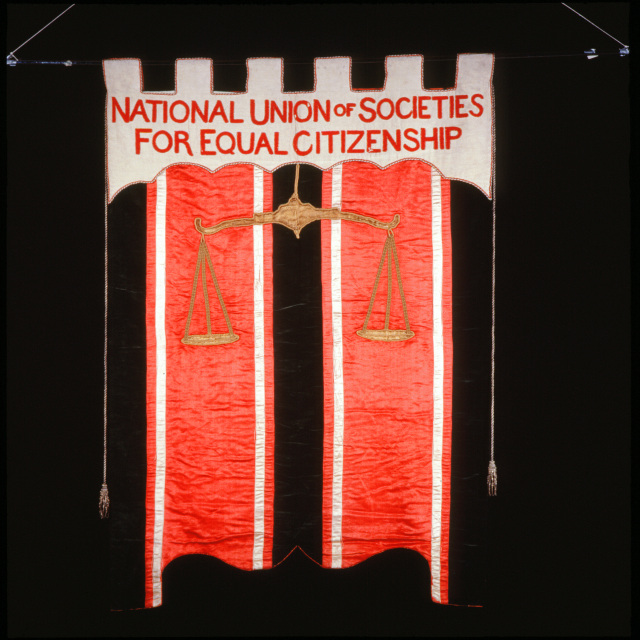
NUSEC banner
Image source: LSE Library via flickr
Whilst researching this piece, it struck me that Gertrude worked, or was associated, with many of the big names in feminism and equal rights and yet she seems to be curiously unsung by comparison with some of the others. This may be because much of what she did tended to be behind the scenes, rather than public-speaking and suchlike. Among her colleagues were such names as Eleanor Rathbone, Elizabeth Macadam, Mary Stocks and Margery Corbett Ashby. Rathbone and Ashby are among the names engraved on the plinth of Millicent Fawcett’s statue in Parliament Square. In the photo below you can see the statue and two sides of the plinth, showing some of the other suffrage pioneers.
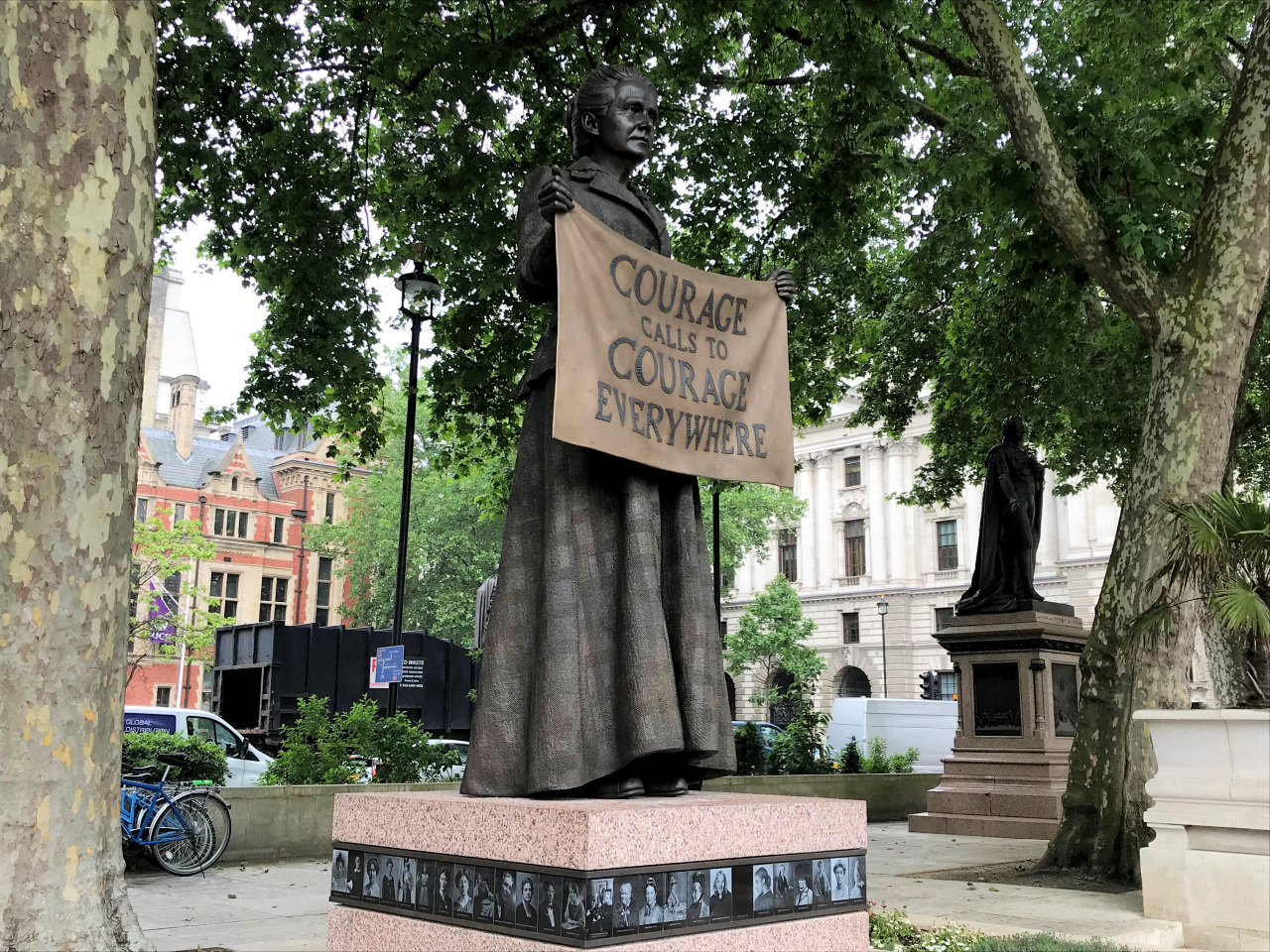
Millicent Fawcett statue
By Matt Brown via Flickr (CC BY 2.0)
So, what did Gertrude do? Apart from general administrative things, she lobbied Members of Parliament on NUSEC’s big issues, such as equal pay, payment of family allowances to mothers and the appointment of female police officers (yes, really – although there had been some dabbling with this idea, but female police officers were still a long way from being accepted as a norm, with equal status to male officers). If you want to know more about this, please see the article on The Open University website.
 Edith Smith,
the first female police officer with powers of arrest (c.1915-18)
Image source: wikipedia
It’s about time that I dropped another – and perhaps more widely known – name to emphasise Gertrude’s importance. The name is Nancy Astor.
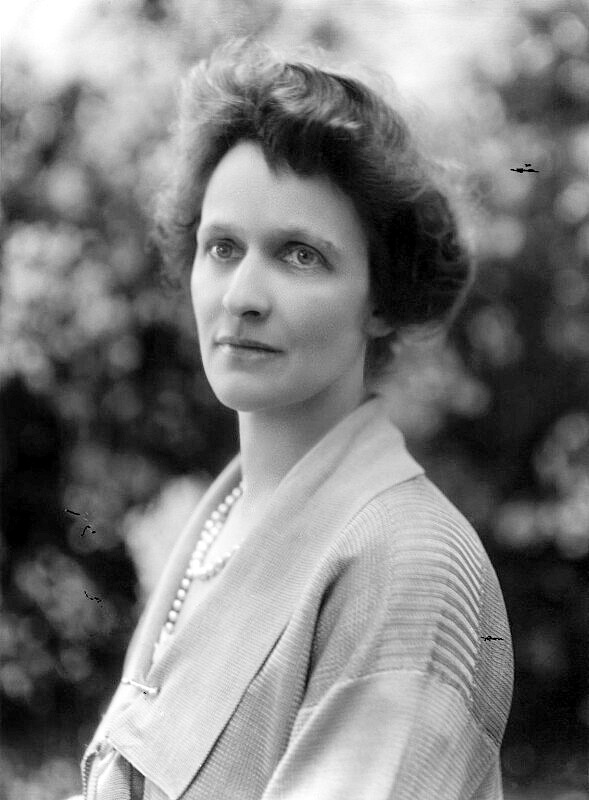
Nancy Astor MP,
by Bassano Ltd
whole-plate glass negative, 18 June 1923
©NPG x18820 (CC BY-NC-ND 3.0)
Nancy Astor, an American by birth, was our first female Member of Parliament to take her seat in the House of Commons, in 1919 (Constance Markievicz of Sinn Féin had been the first woman to be elected, but then, as now, the Republicans did not take their seats at Westminster). Before her marriage Markievicz had been Constance Gore-Booth and was the sister of Eva Gore-Booth, who is also on Millicent Fawcett’s plinth. I think it fair to say that the Gore-Booths were very much more committed to suffragist causes than was Astor, but the latter had the parliamentary seat/contacts; Gertrude Horton often lunched with her and attended her ‘networking parties’.
Townswomen’s Guilds
It was only in 1918 that women over the age of 30 got the vote, but in 1928 the 21 to 29 year-olds were included.
Suffragists campaigning outside the House of Commons for equal voting rights
This equalisation of voting rights led to the formation of Townswomen’s Guilds. The Women’s Institute (WI) had been in existence since the back end of the 19th century, but it was essentially an organisation for rural areas. Hubback and Ashby thought that it was all very well for women to have the voting rights, but what then? If the prize was to be worth the struggle, then women needed to learn about citizenship and how to use their votes.
 Margery Corbett Ashby
Image source: LSE Library via flickr
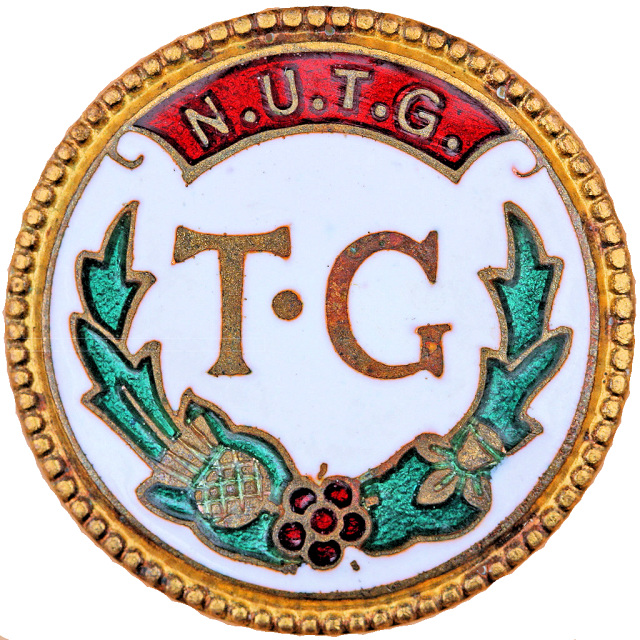
Gertrude was appointed as secretary of the National Union of Townswomen’s Guilds (NUTG) and remained active in the organisation for two decades. In 1933 Alice Franklin, who was Eva Hubback’s cousin, became joint honorary secretary with her and together they took the TGs forward. There was something of a problem within the TG movement, since it had evolved from feminist causes, which were political, but the idea was to establish an urban version of the WI. Somehow the two women managed to fashion a set-up that catered for everyone, but they were still of a campaigning mindset.
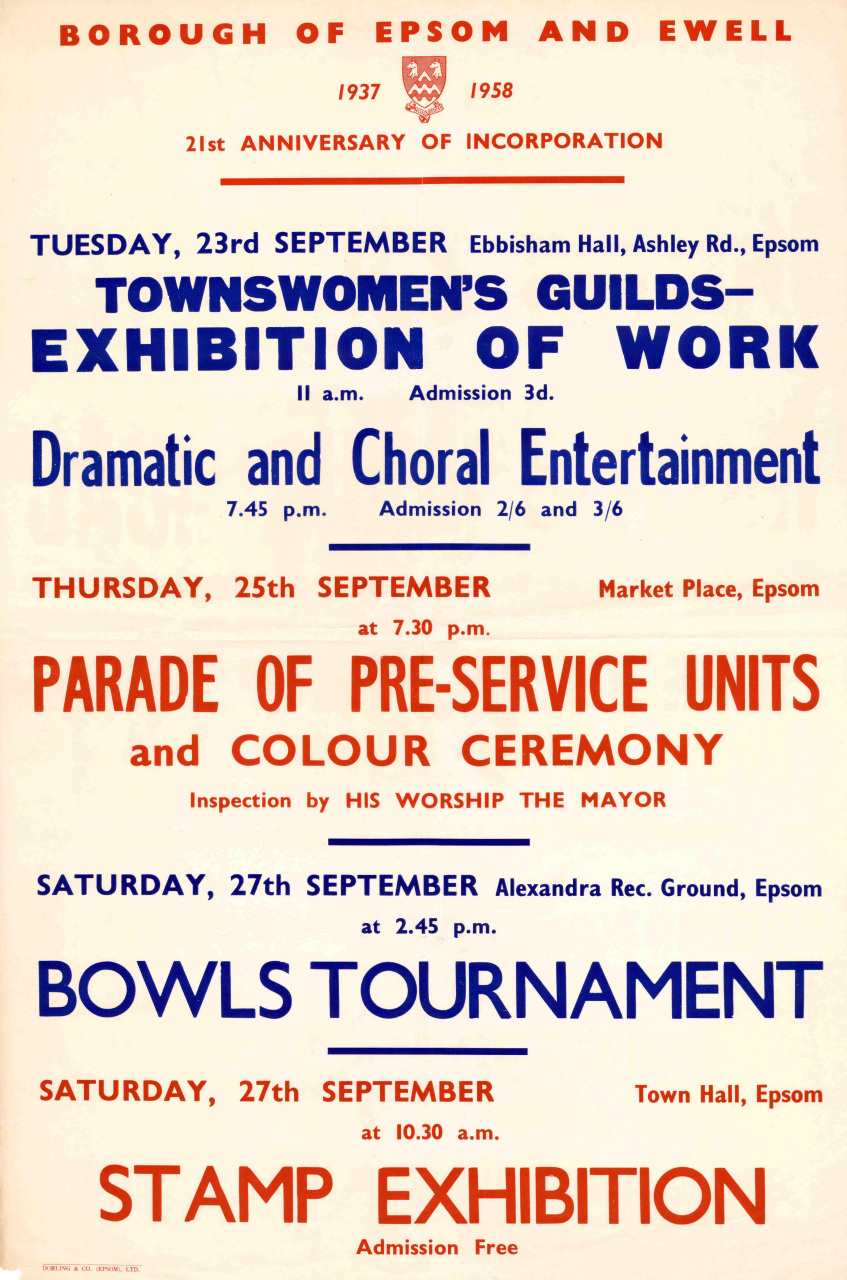 1958 poster of events for the 21st anniversary of the borough’s incorporation,
featuring the Townswomen’s Guild
Image courtesy of Bourne Hall Museum
Inevitably, there came a watershed and some TG members began to resent the degree of control exercised by Horton and Franklin from ‘head office’. In 1948 a new National Chairman was appointed and Franklin resigned. Gertrude’s position was tenuous, since she had been closely associated with Franklin for so long, but she refused to resign at the time. However, she was asked to leave the following year.
Gertrude had been involved with the London and National Society for Women’s Service (LSW), later renamed the Fawcett Society, and, after her departure from the NUTG, became its secretary, replacing Philippa Strachey.
Equal Pay for Women
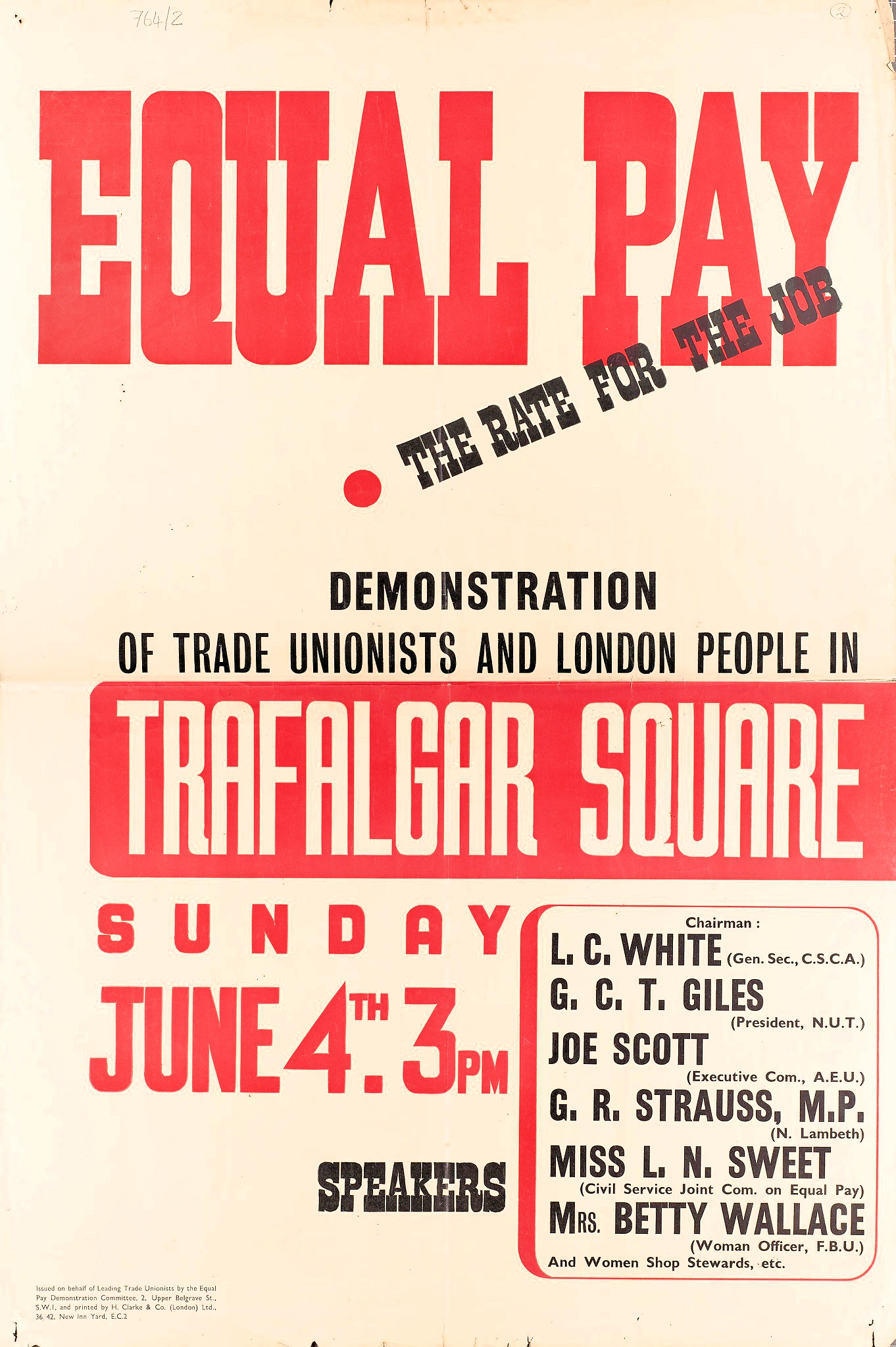 Poster advertising an Equal Pay demonstration, 1944
Image source: LSE library via flickr
Ever energetic, in 1951 Gertrude became honorary secretary of the Equal Pay Campaign Committee (EPCC), combining this with her LSW job. Yet again she networked and lobbied and apparently suggested campaign merchandise, such as pencils and badges, which became very commonplace but was something of a novelty in the early 1950s. The badges cost sixpence (2.5p). Today, though, they’d be selling the ‘Equal Pay for Equal Work’ t-shirt. Gertrude was also in charge of the parliamentary petition and worked extremely hard to get as many signatures as possible: this even included approaching people who were queuing outside a cinema to see a feminist film. You can read more about her efforts on this campaign, and see a photo of the petition’s front page, with her signature on it, on the ukvote100 website.
MPs Irene Ward, Barbara Castle and Edith Summerskill with the petition to Parliament, 8 March 1954
Having started the momentum with the campaign that ultimately led to the first Equal Pay Act, although the ball had a long way still to roll, the EPCC disbanded in 1955, but Gertrude continued to be secretary of the Fawcett Society for many years. Harold Horton died on 24 February 1962; Gertrude continued to live at Greenway until she succumbed to a stroke on 19 May 1978.
Linda Jackson 2020
Main sources
Oxford Dictionary of National Biography
Wikipedia
https://ukvote100.org/