
RECOLLECTIONS OF EPSOM AND THE DERBY. (1892)
By “VIGILANT” of the Sportsman.
With illustrations by F. G. KITTON and E. J. SULLIVAN.

“THE votaries of pleasure may have ceased to draw their magic circle around her mineral springs, but her salubrious air, and still enticing downs, have not ceased to retain as permanent inhabitants many families of the highest respectability.” Extracted from a guide-book of 1825 — one of the worst ever written, which says a great deal — is the above elegant sentence referring to Epsom, more famous by far on account of its race for the Derby, than for its mineral waters, its celebrated palaces of Durdans and Nonsuch, or anything else that has ever belonged to it. The town is pretty, and certain houses, mansions, woods, and fields in its neighbourhood are picturesque, and possess in a few instances other attractions. But its downs made the Derby, and the Derby made Epsom. Save for the spring and summer meetings on those Surrey heights, the world would know no more about the place than they do of other pleasant places that lie within twenty miles of London.
Common is it nowadays to read remarks on the decline of the Derby. No doubt the reputation it possessed thirty years ago has been diminished, mainly by the establishment of other stakes of great value for three-year-olds. Time was when all winter long the chances of the candidates, favourites and outsiders, were daily discussed by all classes of men interested in racehorses or horse-racing. The terms are not synonymous. Men talked about the Derby over mugs of beer, in village taverns. They discussed it in the squire’s dining-room, when conversation grew brisker as the host took his guests back by degrees from ’34 to ’20 port, and had a story to tell respecting every fresh bottle. The humble admirers of the sport usually relied on public form, and declared that the horse which stood foremost in the betting would win. The port-drinkers often upheld theories inimical to him, and possessed information as to mysterious colts destined to cause amazement to those who relied on Ruff and Bell’s Life. At that time such training reports as are published in our sporting papers of to-day were unknown, and the touts on the grounds where horses were prepared for their engagements inefficient. In one instance a winter outsider for the Derby was not in work at all, save such as a farmer gave him, who had become his owner for a few sovereigns. When some forty odd years ago the Two Thousand Guineas victor started at a short price for the Derby, and finished nowhere, he had not had a gallop since his victory at Newmarket ; but this did not become known to the general public. At the present day such an important matter could not be concealed. “Special Commissioners,” an institution of comparatively recent years, and a body on which owners and trainers of old would have looked with abhorrence, to the extent, indeed, of refusing them the opportunities they desired, have aided materially to prevent money being lost on little-known Derby candidates, that for sufficient reasons have been unable to fulfil two-year-old engagements. The experts just mentioned, during their visits to the training stables, detect the “reason why,” and by a discreetly worded hint prevent people from speculating, on account of a wild suggestion made by some one who never set eyes on the horse, and had he done so, would have been powerless to draw any correct deduction from what he saw of the thoroughbred.
What a delightful experience was the first visit to Epsom, when the great stake was at its zenith! Terrific was the crowding and crushing at the railway station ticket office, arrangements for sale of the needful pass being then primitive. The little town reached, in very slow time compared to that now required for the journey, a halt was usually called at one of its already thronged hostelries, the Spread Eagle at that time being a favourite resort of the professional racing men.
” In Epsom’s jockey-haunted town.
The old Spread Eagle swings ;
His double head looks grimly down
Between the outstretched wings.”
So wrote one of the prettiest of Turf bards, at a period when their number was larger than at present. He based his successful prediction that Thormanby would win the Derby on the answer to a question put to the bird of prey whose name gave title to the tavern. Thus began reference to its words of wisdom : —
” The Eagle slightly curled his beak,
And slightly winked his eye,
Scratched half the pigment from his cheek,
And thus he made reply.”
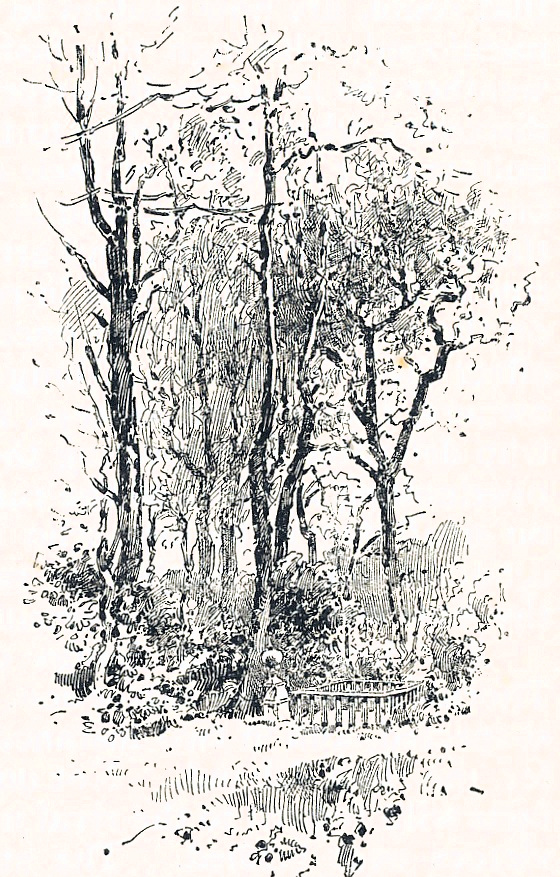
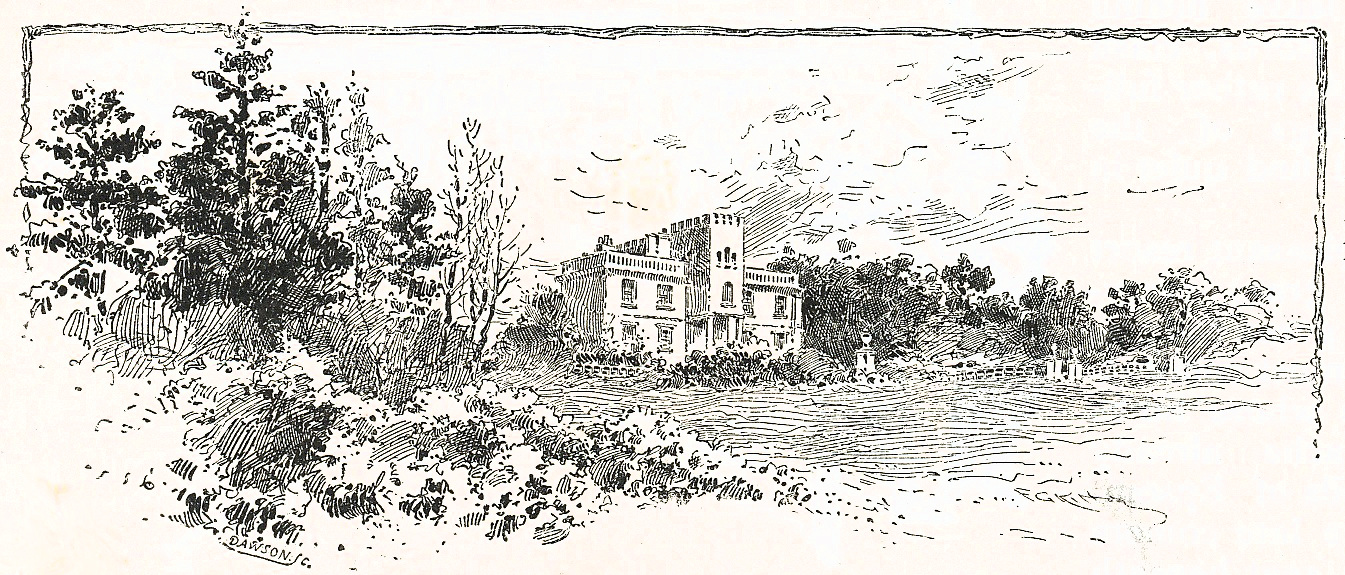
Folks who have once experienced the discomforts of a fly or waggonette drive from either of the below hill railway stations to the downs, if sound in wind and limb, frequently determine that granted fair weather, they will on the occasion of future visits walk to the course, disdainful of dust. They will have not a few companions whose experience is the same as their own. These have all passed through the torture involved by riding up a steep ascent behind tired horses, stoppage or breakdown on the part of one of the leading vehicles in the long procession involving a halt along the whole line, and a heavy fire of chaff and full-flavoured jesting and reproach on the part of the lower order of holiday makers, who on a Derby day muster in immense force. The roads by which pedestrians can make their way to Epsom Downs are several and delightful. Sweetest of all, if permission can be obtained from Lord Rosebery, is that past the Durdans, and through the charming woods attached to it. On a soft day in late May or early June those are to be envied who can take this route, avoiding the rattle and the rabble of the main roads. The wayfarer with a fancy for Turf lore will not fail to halt beside the stone which records that there was buried Amato, winner of the Derby in 1838, and the property of the then The Durdans owning Sir Gilbert Heathcote. This example of marking the burying place of famous racehorses might well be imitated. By whatever route the visitor reaches the downs he should not fail to seek the top of the main ascent from the town and gaze upon the lovely landscape beyond it. .After rain, when the day suddenly becomes bright and clear, nothing prettier will be seen by those who confine their ” tiny travels ” to within a few miles of London.
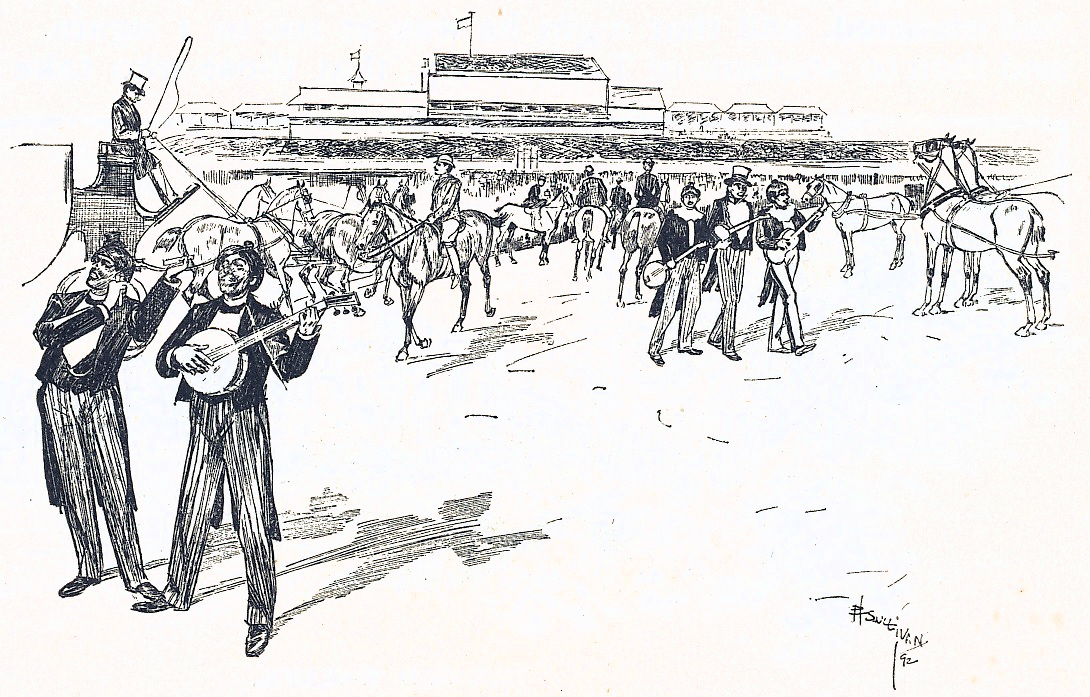
And now we will go to the Derby. In no particular year. Any one will do, from that of the imaginary race which Mr. Thackeray said was gained by Podasokus, the property of “a classical young nobleman, who named his stud out of the Iliad,” down to the afternoon when George Barrett, holding his rivals rather cheaply, won it on Common in 1891. People who visit a Newmarket race meeting for the first time, generally express disappointment. The Derby day at Epsom probably falls below the expectations of no one. In recent years the crowd has been as large, probably, as that which collected in the Great Exhibition year (1851), and saw Teddington beat his opponents easily, and few of the familiar surroundings of forty years ago are missing. “The Hill” never varies in aspect, and is ever a sure find for clever people and tooth-some luncheon, whilst gipsies, boxers, musicians, singers of songs more or less vulgar, conjurors, and specialists in the art of defrauding, appear on the course between the races, just as they did when our fathers went to the Derby.
Men who remember the Derby in the old days of heavy winter betting, gigantic fields, and saddling in The Warren (where Mr. B. Ellam now resides), are now very few. Indeed, those who recollect the ride to Epsom by the road in the great time of that route, are now seldom to be encountered. It may be whispered that the journey mentioned, although the fashion, was often far from pleasant. In dusty or rainy weather the disagreeables were many, not the least of them being the not infrequent discovery when the return to town had to be made that postilions and coachmen had imitated the example of their employers, and lunched freely on the famous Hill, which faces the Grand Stand, and is still the haunt on a Derby Day of hosts of celebrities in the world of literature and art. These are not disdainful of lobster salad, lamb, and ripe champagne, although in recent years picnicing on the Hill has not been conducted on the monster scale that once existed. To most of the young school of men who affect the Turf stories of long-past Derbies, the horses that won or were placed, their owners, trainers and jockeys, are highly distasteful. Before long the capital judges who delighted in inspecting the competitors, criticising their build and condition, and overlooking not one of the runners if they could avoid so doing, will be replaced to no small degree by men who ‘neither know nor care much about horses, are dismally ignorant on the subject of race-riding, and consider that the great end and aim of the business is the endeavour to back winners.

For them tales of doings on the downs by colts belonging to Lord Jersey and Mr. Thornhill have no attraction. They do not know the names of the “old ‘uns” suspected, and in two instances known by the admission of their owners, to have run for the Blue Riband. Not one person in a million probably has knowledge as to the facts with regard to the rival which finished second to one of the most renowned Derby victors ever bridled. The story is one of the richest in point of the subsequent impudent admission of the person chiefly concerned that even Turf history has ever known. Of course hundreds of men have clear recollections of the dead heat for the Derby between St. Gatien and Harvester. But how many are posted in the particulars of the contest for which Cadland and The Colonel could not in the first instance be separated? What was the relationship between Lapdog and Spaniel? How many times did Mr. Bowes, beginning with the desperately contested struggle in which Mündig beat Ascot, carry off the great Surrey stake? Until a few years ago, very old stagers still wrangled as to the respective merits of Priam and Plenipotentiary, and if John Day (of the “goggles”) had heard the dispute, he would have said that Bay Middleton could have beaten them both, had they been able to meet as three-year-olds. A Yorkshire baronet whose experience of horse-racing was remarkable, declared his conviction that The Flying Dutchman was the best Derby winner of his time. The belief is not shared by one of the most eminent and oldest of our trainers. The mysterious Hotspur got very close to the Dutchman, with Tadmor a good third, and their conqueror hardly flew so fast, maybe, as his enthusiastic admirers believed. Their name was legion. Mr. Bowes put together a very remarkable Derby record. In addition to Mündig, Cotherstone — how good the cheeses of that name used to be! — Daniel O’Rourke and West Australian, all hit the mark for the gentleman who, save during his early career was hardly known by sight to a vast majority of those who saw the victories of his good horses. His trainer, the renowned John Scott, has been stated by persons speaking with authority to have given in turn the palm of chief merit amongst the horses he prepared to West Australian, Velocipede, and Don John. He certainly never assigned it to little Daniel O’Rourke— not an inapt name for a son of Irish Birdcatcher. That colt was tried a week before the Derby of 1852, with Backbiter, Champion turned loose at six stone, and others. Champion won by a neck. Backbiter just beating Daniel. This was good enough, and one of the patrons of the stable telegraphed to his commissioner to put £200 on Daniel by “code.” By a mistake as to its letters, the agent was directed to back him for £50 only, and took £5,000 to £50 of Davis. Daniel did not begin his journey from Malton to Epsom under pleasant circumstances. Almost immediately after leaving the Yorkshire railway station, one of his comrades named Phantom threw himself down in the box, with the result that he was injured, and the train had to put back. Consequently the Great Northern train at York was missed, and John Scott’s horses had to proceed South by the Midland.
Rumour spread in London that Daniel O’Rourke was the horse to which the mishap had occurred, and that night he was at 100 to 1 again. It must have occurred now and then to students of Turf history, that those who take it in hand dwell rather too much on winners, and tell but little of the competitor that occupies the sometimes unenviable second place for the Derby. Should any one undertake the task of telling the stories of horses that “ought to have won,” it is to be feared that his readers will not be many. No doubt to a few people the record would be deeply interesting. The late Mr. Robert Grimston, famous for his hunters, his hard riding, and his hats used to relate a gloomy anecdote respecting Robert de Gorham, the property of his father. Lord Verulam, and second to Attila for the Derby of 1842. The colt was shifty and lacked heart, so by way of giving him courage as much old Gorhambury ale as he could be induced to drink was administered to him in the Warren, much to the regret of his rider, who protested loudly. The horse had tramped all the way from his training quarters to Epsom, and stood there, stable accommodation being scarce, in a bad stall provided for Mr. Grimston’s hack. The man who took the horse to the post in a leading rein was very slow in releasing him, and he lost considerable start, but passed all his opponents, one by one, with the exception of Attila. Some day, perhaps, an enthusiast who insists on filling up gaps in the records of the Turf will tell the world stories about Little Red Rover, Perion, Gorhambury, Sir Hatton Sykes the hapless Yellow Jack, and Black Tommy, all second for the Derby and with a story attaching to each.
And now, in the supposed company of a friend who has had no experience of Epsom and the Derby, let us view the sights exhibited during the afternoon on which the great contest is decided. Starting from that part of the Grand Stand where the carriages draw up, we walk as briskly as circumstances will permit in the direction of the Paddock. The rate of progress is not great. Should rain have fallen recently, the road is slippery with mud the colour of dirty milk, and to walk along the grass banks that border it is almost the feat of an acrobat. A chance exists, too, of a kick from a tethered horse, made bad-tempered by overwork, and ill treatment ; and it is necessary to keep a sharp look out for the heavy sticks that have missed the cocoa-nuts at which they were hurled. Frequent ruts and little gullies make walking fatiguing, and offensive in another way is the over-powering smell of fish being fried by the aid of some material as to the nature of which no customer could have the hardihood to enquire. Let us step across the chains, leave behind the bray of horns, clash of cymbals, the rather full-flavoured songs of the vocalists, and find quiet in the Paddock.
What a pleasant resort it is! Long grass everywhere; thick green hedges, and benches most comforting to those whose limbs begin to ache already under the toils of Epsom. Lucky are the late comers who secure a seat beneath the famous hawthorns in the centre of the enclosure. The Derby candidates begin to arrive, and every minute does the number of visitors grow larger. These spread about in all directions, and that one of the favourites has made its appearance is shown now and again by a frantic rush, which terminates in the horse being hidden by the crowd. The fine air of the Surrey hills has by this time inclined people for a sandwich, and business is brisk at the refreshment bar near the entrance gate. That temporary luncheon room is famous for its bottled Bass, than which, experts declare, no better can anywhere be found. Ladies are not afraid to take the dusty, or greasy, but always troublesome passage from the Grand Stand to the Paddock. The distance which separates the two places has long been subject of complaint, for after weighing jockeys lose time in reaching the spot where the horses await them, and consequently the races rarely end at the appointed hour. General visitors, too, are accustomed at nearly all meetings to pass in a few steps from the ring or balconies to the enclosure where the competitors are saddled. In that direction a change is urgently needed at Epsom. A fertile source of grumbling there is the absence of a number board in the Paddock. This causes very great inconvenience. The authorities defend themselves on the ground that were one to be erected it would cause betting men to assemble in a place where their presence is not required. How does it happen then that no such complaint arises in the Paddocks at Ascot, or at Kempton and Sandown Parks? Amongst the men who – inspect the Derby horses in the Epsom paddock, are of course, many hundreds thoroughly competent to offer an opinion as to their appearance and condition. The comments of some of the Cockney company are however, ludicrous, and they bore strangers greatly at by questions as to where this favourite or that outsider is to be found, or respecting the name of the chestnut with the white face. Is it a mistake to think that the Paddock crowd has diminished somewhat in recent years? What a host used to collect there about the period when Blue Gown, and Pretender, Kingcraft, and Favonius made their great hits. One of the largest musters must have been on that famous afternoon when snow fell, and people who had looked upon Hermit’s chance as hopeless received a blow from which some of them never recovered. How vividly is recalled the scene as the Derby horses dropped into file just prior to leaving the enclosure, the despised Hermit ridden by Johnny Daley, then a slim, grave-looking lad. No one who looked on could have dreamt that his victorious gallop a few minutes later would bring that jockey in £3,000. Nowadays not nearly so many persons remain in and about the Paddock until the Derby candidates leave it as were wont to linger there. Before signs are noticed of their departure being imminent they are left comparatively alone, most of those who inspected them hurrying off to take up their places in the Stand or on carriages to witness the parade, and the preliminary canter. Let us follow their example. Folks who mount to the roof of the chief edifice from which the race can be seen, ought to be tolerably stout in wind and limb. The climb is a steep one, yet those who make it are rewarded by a fine view of the great fight, and of the beautiful country surrounding the downs. The pressure of the crowd on the summit of the Stand is sometimes rather troublesome when the pinch of battle comes; but this lasts only a short time. Far different is the lot of people in Tattersall’s Ring, and that which adjoins it. The crush there is often very great, and as the ground slopes considerably, those who ply their calling throughout the afternoon generally complain dismally of aching legs. Strange is it how seldom those writers who take the Turf for their subject, have described the appearance of the chief assembling place of bookmakers and backers on a great day. Strange characters there are in plenty, on one side and the other, although the extreme oddities of the Ring have almost died out. So at least say veterans who remember Jem Bland, “Crutch” Robinson, and others of the tribe who flourished about the same period as those worthies. Since that distant time bookmakers have much improved in tone and education. Amongst them are men of reading and taste, and some show their judgment by flying from England and her fogs so soon as the flat-racing season ends. During the winter they can be encountered in Australia, America, India, China, Egypt, Algeria, Madeira, and they sensibly vary their trips. Those in big practice are not the noisy one who bawl so loudly on the Derby Day, and are of vehement deportment. The great guns have no occasion for loud tones. Their regular customers know exactly where to find them — a certain unwritten law assigns to each his regular place — and business is transacted with little talk and no fuss. That the bookmakers in Tattersall’s Ring obtain a good view of the Derby can hardly happen; but they are better off at Epsom than at other places where the accommodation for their needs is sadly inadequate. The numbers, not particularly conspicuous, on the board opposite the Stand have been exhibited for so long that it must be hard on the minute when the horses will make their appearance. Whilst awaiting their coming, let me, friend (after you have partaken of fern seed — Mr. Dorling would send you out in double quick time, otherwise), afford you a glimpse of those sacred apartments to which have right of entrance the stewards; those who control the destinies of Epsom races; the officials actively engaged in weighing the jockeys, who of course come in without let or hindrance; a certain portion of the press, and a few persons unknown, whose standing it is difficult to define. Hard by the temporary-abode of the jockeys we pass directly the all-knowing custodians at the outer door have opened it. But woe betide the outsider who, having accidentally obtained admission, strays within the weighing room. He will hear of something not at all to his advantage. It has been stated that a man, not belonging to the profession, who wanders into the apartment devoted to the press carries his life in his hands. That body is not the one which receives worst treatment at Epsom. They have good quarters in which to work, and an easily reached gallery overhead. There we shall find ourselves presently, when the horses get together at the starting post.
Of the jockeys who rode Derby winners, and were known to men still living, those who earliest made themselves very conspicuous by neatness or power of finish or both, were Sam Chiffney (whose name is generally misspelt), James Robinson, and William Scott. Then Sim Templeman had his fair share of successes. He always declared, however, that he had been on the back of a better horse than any of those which won under him the great stake at Epsom. He referred to Battledore, a sweet-tempered colt, that, as the old jockey used to say, could “gallop over the backs” of all the comrades of his own age, and beyond it in Sir Thomas Stanley’s stable. Job Marson did well at Epsom for a time, being entrusted with the famous rides on Voltigeur and Teddington in successive years. Wells, who was a great dandy, and as likely as not to have a bit of a peacock’s feather in his wide-awake, accomplished the same feat on Beadsman and Musjid.
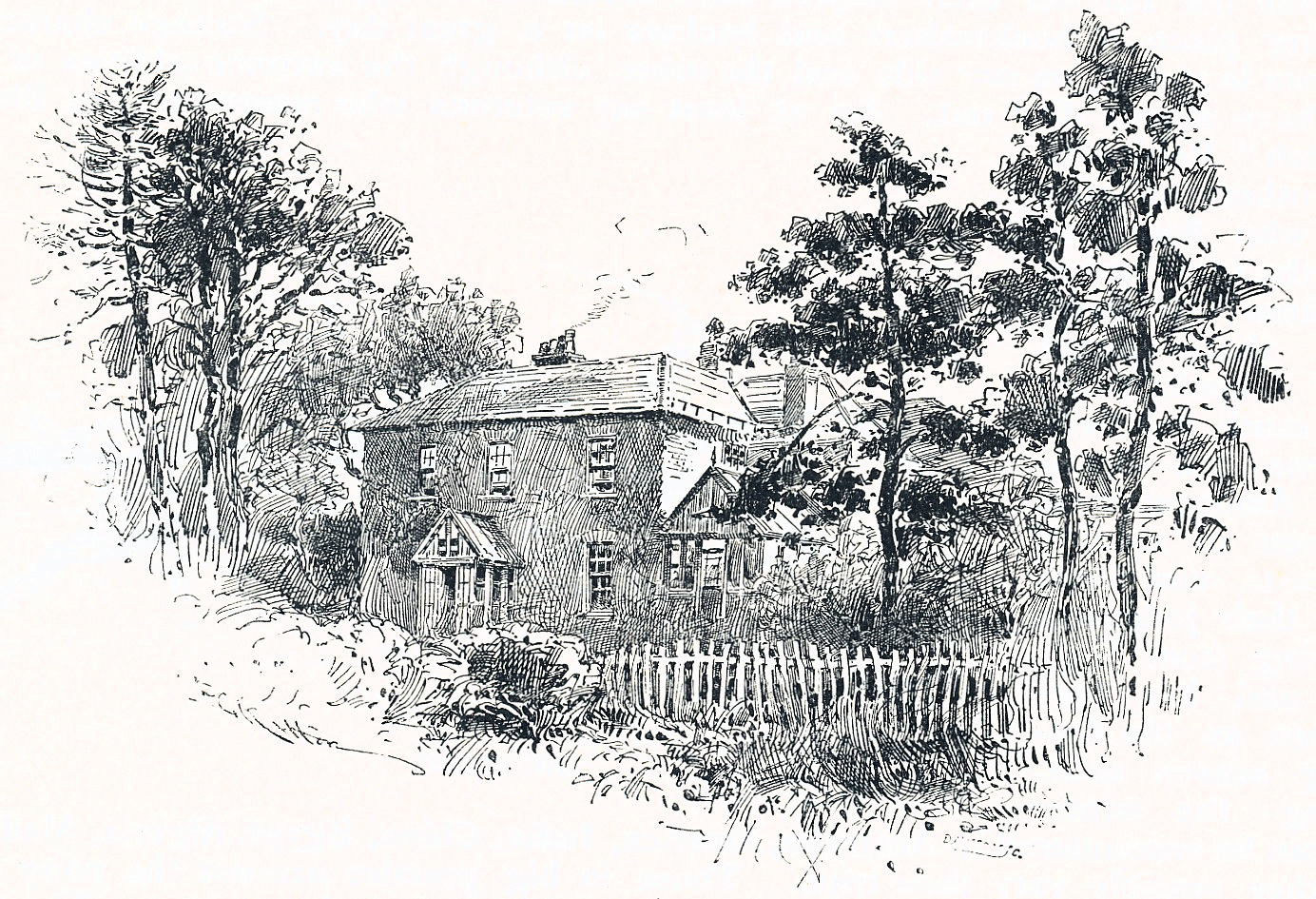
Aldcroft, one of the most brilliant finishers ever seen, who measured his distance with close accuracy, and then came with a tremendous rush that often snatched a race on the post, was on the back of the Derby victor but once. That happened in 1856, and all he could tell afterwards respecting Ellington’s running was that when he struck him with the whip “he sprung amazing !” Aldcroft was by no means an adept at furnishing particulars of the positions held during a race by the various competitors. Custance, whose Derby triumph on Thormanby occurred when he was quite young, was admirable at supplying such details, like John Osborne and Tom Cannon, the last named a brilliant horseman, reminding the old school much of Sam Chiffney and Frank Butler. Not until very late in his career did the “Blue Riband” fall to George Fordham by the aid of Sir Bevys. Fordham had flashes of what may fairly be called genius, which sometimes enabled him, on an emergency, to accomplish feats I never saw equalled by any other of the brotherhood. Fred Archer, whose tragic end shocked thousands of people caring very little for horse-racing, was of course a wonder; but not so consistently good as Fordham. One of poor Fred’s least artistic performances was on Ormonde for the Derby. Fordham was a taciturn man, with a somewhat melancholy expression of face, which grew positively dismal as he rode back to scale after winning a great race. Waxing more talkative than usual just after the victory on Sir Bevys, he told me the causes which had prevented him from carrying off the Derby on some of his previous mounts, and curious, indeed, were certain of the particulars. No Derby, perhaps, ever gave rise to so much talk and idle gossip as that mentioned above as having fallen to Hermit. The snow shower, the long odds at which the winner started, and other causes, combined to kindle popular excitement to a remarkable degree. John Daley had been engaged to ride Man of Ross, but the claim was given up and he bestrode Hermit. He was told to get the colt into the first eight if possible, as bets depended on it, and received a warning at the same time that the horse might break a blood-vessel, and must be ridden very tenderly. Hermit came so well down the descent to Tattenham Corner, that Custance, who rode The Rake, jokingly bawled to Daley, “I’ll change mounts with you! ” But Hermit’s jockey had other things than jest-making in view, as he began to feel that the great chance of his life was coming. Beautifully handled. Hermit gradually reached the horses in front of him after Tattenham Corner had been fairly rounded, and won by a neck. He probably would not have done so at all but for Van Amburgh being beaten at a critical moment, and so allowing Hermit to take his place. Marksman, who finished second, galloped far ahead of his quickly-stopped conqueror, almost as far as the paddock gate, and everybody standing there thought that “the boy in yellow” had won. And now, friend, let us mount the steps to the Press gallery (you must have another dose of fernseed first!) and then you will get full view of the Hill, with its multitude of occupants on coaches, carriages, carts, waggons, and on foot. The sight seems curious to you. Be sure they are thinking the same of the Grand Stand and its tenants, and will be more struck presently when the faces of those within its enclosures are all turned to Tattenham Corner, and then with a sudden flash of white directed to the space that immediately divides them from the Hill. The house nearly facing you on the opposite side of the course is “Sherwood’s Cottage,” a well-known landmark on this eventful day, and you will do well to take a good look at the “Corner” now that the course is clear. Directly the horses have passed it the crowd will break in, a great, black, surging mass, and hide the place. Now then! Here come the horses! At the same moment a deep murmur rolls over the Downs. Thousands of eyes have on the instant caught sight of the procession slowly advancing from the Paddock in single file. It is not pretended that the Derby now possesses the absorbing interest that belonged to it thirty-five years ago. Then tens of thousands of visitors to Epsom had heard and talked much during the winter about the race and the probable runners for it. Many of these were folks who had never set eyes on one of the runners, and had little notion as to their merits. They pictured them as wonderful creatures, most of which had appeared ” in the betting ” for months before the winter came; that had run in the Two Thousand Guineas, the Dee Stakes, and other races that attracted famous three -year- olds in those days, and were not posted daily then, as is now the case, as to the health, the markings, and to a great extent as to the chances of the competitors. All this has been changed, and people are so well acquainted nowadays with those matters that they regard the Derby parade with a different feeling to that acknowledged by their fathers. Still the man must be made of stern stuff who can watch without some emotion the solemn advance of the horses that when they turn below the Stand will pass it again in the preliminary canter, enter once more the Paddock, and reappear in a much broken body as they make their way to the starting-point. The strangest criticisms are heard on the competitors as they reach the Stand for the second time. Some which move sweetly are pronounced lumbering goers, and others which carry themselves heavily are designated as great fine horses. Every one, perhaps, speaks much as his inclination guides him. The clamour from the rings hushes when it is seen that the first attempt at starting is about to be made, and as the white flag is hoisted nearly everyone else ceases to speak. In the Press gallery a few men hold stop watches, all have their race glasses turned in one direction. By no means certain is it that the signal for beginning will be given on the first or second, or half dozenth attempt. In the memorable year when Macaroni proved successful, a tormentingly long delay occurred. In the first instance the competitors arrived at the starting-point a quarter of an hour late, and then no fewer the magpie tavern than thirty-two failures occurred before the starter sent them from under his control. Altogether, nearly an hour was cut to waste ere the race began, mainly owing to the bad temper of a horse called Tambour Major, the property of Prince Batthyany. We will have no such tiresome hitch with regard to our imaginary contest of to-day. Neither will we permit the soaking rain that effectually destroyed the usual fun, and pleasant feasting and agreeable rambling over the green hills on the day when Macaroni defeated Lord Clifden and a huge field besides. Possibly no hitch will occur, maybe only one involving delay of a couple of minutes. Some fiery youngster will jump away and run a hundred yards or so before he slowly returns to rejoin his rivals. The starter catches him just as he reaches the proper position, and the next instant goes up that almost appalling shout of “Off !” which tells that what still must be styled the greatest of our Turf contests has begun.
Then the curious, almost unearthly silence of the last few moments, bearing in mind the mighty host present, is broken with a vengeance. The Turf reporters in the Press gallery, whose business it is to “read ” races, record in clear, unbroken tones, the positions held by each runner, and every change that occurs in them. They never hesitate, falter, or fail to attend to their occupation for a moment, and the assistants at their elbows ceaselessly pencil down from their dictation notes that, hard to understand as they may seem at present, will, a few minutes later, be made into an accurate description of the struggle, to be telegraphed to all parts where men love horse-racing. As the ascent is made the pace seems but moderate to the uninitiated, even if it is very smart, and, until the horses stand out on the skyline, before they race to the furzes, no such uproar as might be expected is heard from the spectators. Then, however, colours begin to show up distinctly, the murmur as of a mild sea grows into that of a stormy one. The horses are coming along in earnest now (Diophantus seemed to make the descent like a flash in Kettledrum’s year), and already it is seen that one of the favourites cannot or will not go the pace. All the time the reporters move steadily on with their work, voices betraying no excitement, although it very likely exists. The Corner passed, the ragged lot — as racing men style them — drop away in distress, and then one or two of the more fancied horses show signs of trouble. The angry sea-sound has now given place to a continuous and ever-increasing rattling roar, of most singular and startling kind. The horses with any prospect of winning, dwindle from four to three — then to two — and next goes up the great, familiar, yelling roar of “The favourite wins !” and so he does, with a good deal to spare, too, his rider taking things very coolly, you think, O friend, considering the money at stake!


Up go the numbers, and before the competitors have had their head turned from the direction of the Paddock — one Derby winner ran far into it, and did himself no good thereby news of the result has been flashed in all directions. The old flight of pigeons bearing the intelligence is completely out of date. Not a particle of the turf from the Comer to the Paddock is now to be seen. The multitude promptly took possession, closing upon the winner as nearly as they dare, shouting and cheering as if each and all had won money by the success which is far from, being the case. The hero of the day reaches the Paddock, and a grinning lad holds him as the jockey slips hurriedly up the steps to the weighing room. Perhaps the owner strolls up to his horse and regards him with calm admiration. Now and then, yet very rarely, the rapture is anything but calm. On a certain occasion the possessor of the victor made as near an approach to hysterics as was conceivable, and had to be soothed by his friends. Next comes the “All right !” and a fresh outburst of cheering as the gallant steed is led away. People fall into groups discussing the fight, offering conjectures as to winnings, inquiring which horses were fourth and fifth, and the distance by which the race was run. They will not do wisely to put any queries to the reporters, who are up to their eyes in work, “forty writing like one !” The successful rider calmly gets ready for the next race, and the revelry on the hill begins to be a little fast and furious. A great deal more champagne is opened, men wander about amongst the sticks and shows flushed and good-tempered. Some of them will lose their watches. The mendicants who prowl about the carriages receive presents of unwonted – wines and food, which probably make them ill, and so the afternoon wears on. English people on all occasions like to have their money’s worth to the full. They have paid to come to the great race, and insist on seeing all the others, however uninteresting they may be, and all the questionable fun of the fair. Presently faces will grow redder. There will be quarrelling and a few fights. Fly-drivers will grow extortionate as the hour for the great rush homeward draws near, and then every one will seek to depart almost at the same moment.
Let us not wait for any more racing. We will stride down the steep descent to the town, past the sleeping gipsies and tramps, and under the flowering trees of Epsom gardens. A half empty train is waiting at the railway station, and London is reached ere the evening papers have published full details of the great race for the Derby.
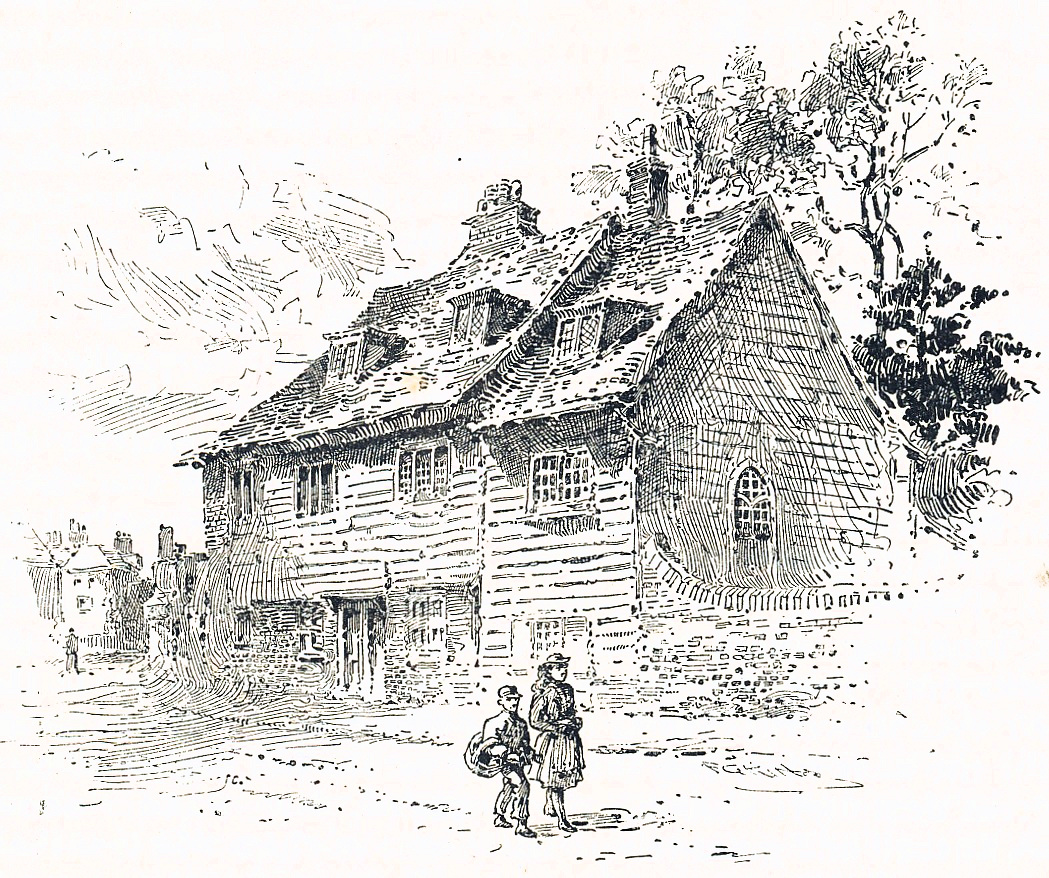
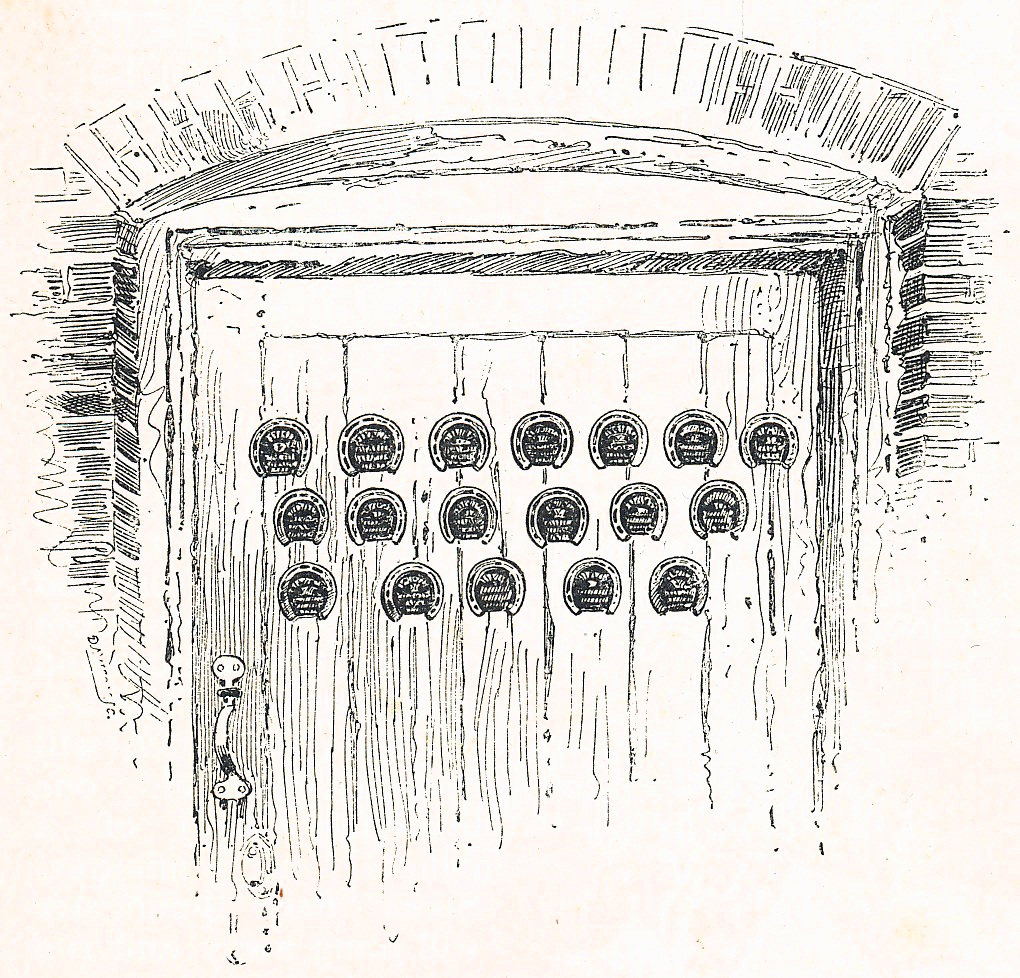
Published in the English Illustrated Magazine 1892
Unless otherwise indicated images courtesy of Bourne Hall Museum