
Bunny at the Derby
A silent film from 1912 directed by Laurence Trimble, with John Bunny and Bertina Smith.
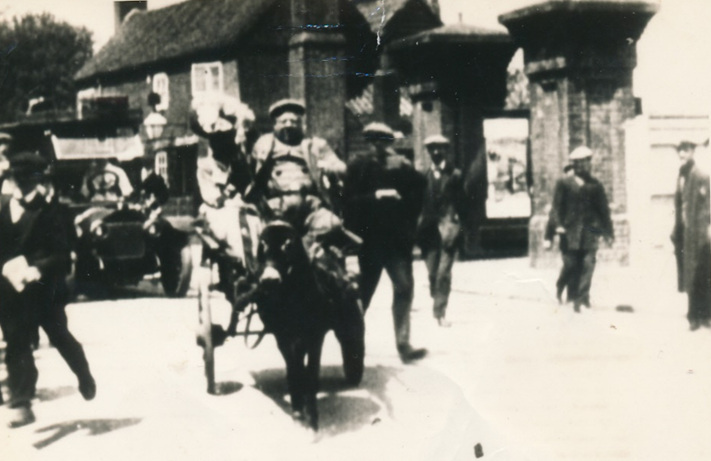
A still from the full length film. (We think this film still has been accidentally reversed)
Thought to be the Entrance to Childer Platt, East St Epsom
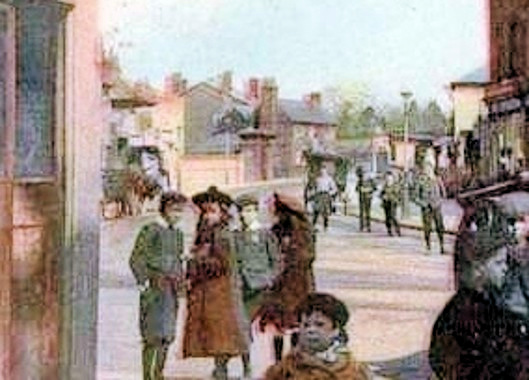
The pillars to the plot of land called Childer Platt can be seen in this postcard view extract.
(We think the film still has been accidentally reversed)
Plot Summary
In his little donkey cart, with his “Old Dutch,” John Bunny, the costermonger, starts to the Derby, an annual national event in England. He is the observed of all observers and the envy of his neighbors when they cop the style in which he is doing things. As he proceeds along the post road to Sutton, and stops at the “Cock” Hotel, he is IT. From Sutton to Howell, and thence to the Spread Eagle, he’s the whole cheese. As he makes the journey of the hill from Howell to the downs, it is a sight long to be remembered. There are finer equipages, but none more noticeable. At the Derby he is the center of attraction and spends his money like a drunken sailor in treating his “loidy” to ‘arf and ‘arf and other refreshments. Topping off the expedition by having their fortunes told by one of the gypsies. Incidentally, Bunny has some very funny experiences, but he is a good sport, gets out of them gracefully, and quite satisfied with his day’s outing. If you have ever attended the Derby, follow John Bunny in this picture and you will have the time of your life and see things that will surprise and amuse you.
Unfortunately a complete version has not survived probably because of the material (celluloid) that the film was made from, tends to disintegrated over time. However a short section has been found in the Huntley Film Archive and can be seen here:
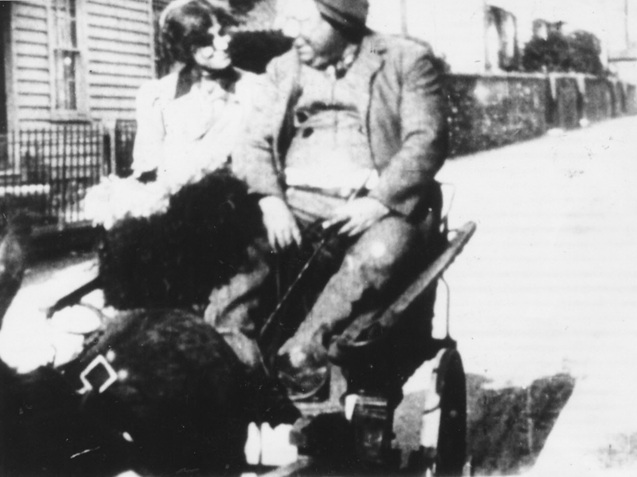 A still from the full length film.
Thought to be East St Epsom
John Bunny (21 Sept 1863-26 April 1915)
Film’s First King of Comedy
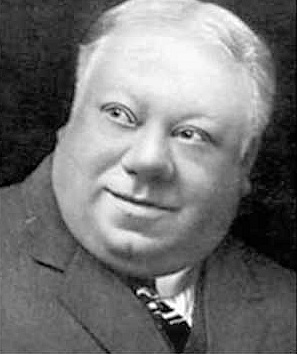
John Bunny
When John Bunny died the New York Times stated, “The name John Bunny will always be linked to the movies.” Little did movie fans of 1915 realize that he would be completely forgotten the next year and completely omitted from many books on silent movies 70-80 years later.
Bunny was the ninth in a line of English sea captains and would be the first not to follow in that profession. He attended St. James High School in Brooklyn and worked as a grocery clerk before running away in the late 1800s to discover the world of entertainment and appear in a small touring minstrel show. He became involved in theatre and appeared in musical comedies such as “Old Dutch” with Hattie Williams and Lew Fields. He also worked as a stage manager for various stock companies. Bunny’s rebellious nature took over again and he quit the theatre to become involved in the “flickers”. This was a very bold step. Not only was it a major step down for a “legitimate” stage actor to go into the movies at that time, but Bunny took a pay cut from $150 to $40 a week to work for Vitagraph in 1910. He made more than 250 shorts for Vitagraph over five years and become the best known face in the world.
Bunny always said that he did not aim to be a comedian, but with his short, gnome-like appearance and a weight approaching the 300-pound mark, he wound up taking advantage of these features to play comedy (he once asked rhetorically, “How could I play Romeo with a figure like mine?”). Bunny’s co-star for the majority of his films was Flora Finch, who contrasted with Bunny’s figure by being tall and thin. They usually appeared as Mr. & Mrs. Bunny. Their shorts were referred to as “Bunnygraphs” and “Bunnyfinches”. They stayed away from physical comedy and dealt with relationships, usually the man getting away with something that his wife disagrees with. Bunny, even travelled to England to make a version of Charles Dickens “Pickwick Papers”. He decided to go back on the road with “John Bunny in Funnyland”, but it was not a success. Not only did the show fail, but he was tired and ill. He talked to Vitagraph about restarting his film career, but it was too late. The man who led an adventurous life–he raced horses and flew airplanes–died at his home at 1416 Glenwood Road in Brooklyn of Bright’s Disease in 1915. His funeral was held at the Elks Club House on West 43rd St. After just five years in the business, Bunny was gone and forgotten. The news of his death was heard around the world. He was so popular in Russia they created a series with an impersonator using the name “Poxon”. Bunny has two children, George deceased 1958 and John deceased 1971, sadly only a handful of his films survive. The most available is the popular A Cure for Pokeritis (1912)
(The New York Times)
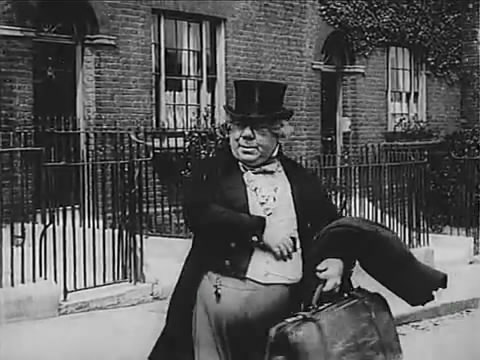
John Bunny in Pickwick 1913
This page was written by Terry Friday © 2020
Thanks to Neville Walker for the photographs and the idea.