
AURIOL BARKER (1849-1938)
and his Park

A panoramic view of Auriol Park
Photograph by Peter Reed © 2020
In the northern corner of the Borough is Auriol Park, which gives its name to the Ward in which it stands. It is named after Auriol Allan Henry Auriol-Barker, a larger than life character who deserves to be better known – hence this article.

Left: A caricature of Auriol in the mid 1920s
Right: Auriol Barker in the mid-1930s (Detail taken from the Getty Image below)
The affectionate caricature above is by Epsom-based caricaturist “The Tout” and comes from the 23 June 1926 edition of The Bystander weekly magazine (which, in 1940, merged with The Tatler). Its caption was:
MR AURIOL BARKER: A famous figure in the Polo World. Though he is the oldest player still in the active list, he plays as vigorous a game as many a “young ‘un”
Embed from Getty Images
Polo Match circa 1936: Lord and Lady Wodehouse attend a trial polo match at Worcester Park.
(Photo by Fox Photos/Getty Images)
It was as plain Auriol Allan Henry Barker that he was born in late 1849: the double-barrelling of his surname to “Auriol-Barker” came later. He was the son of the Revd Anthony Auriol Barker – the Vicar of St Anne’s Church, Baslow, Derbyshire – who baptised his son on 29 November 1849. (Anthony had become Vicar of Baslow in 1823, succeeding his father, the Revd John Barker, the incumbent there since the late 1790s.)
Auriol’s mother was Agnes (née Parker) who, aged 28, had married the 46 year old Anthony in Cheshire on 14 June 1846, and Auriol was their second child.
As an aside, it should be mentioned that Anthony had children from his first marriage – to Sophia (née Stanley) on 4 April 1825 when he was 25 and she was 23. In about 1840, Anthony took leave from Baslow to move to Italy to serve as the Minister of the English churches of Lucca and Pisa. Sadly, and after a protracted illness, the 43 year old Sophia died there on 22 June 1844. She is buried in the English Cemetery of Bagni de Lucca. (A photograph of her headstone there is at this link.)

Anthony had returned to Baslow as the Vicar, but the 1851 Census records the presumably holidaying 51 year old and 33 year old Agnes with four children (including 1 year old Auriol) plus five domestic staff (all from Derbyshire or Yorkshire) in Devon – at Coombe Royal, West Alvington, Kingsbridge.
Anthony died in post at Baslow in 1853. The widowed Sophia and family returned to her home patch of Gosforth in Cumberland. The following extract from Auriol’s obituary in The Times of 12 April 1938 makes clear that his equestrianism (an important part of our story) and general athleticism was evident at an early age.
“His early life was devoted to hunting and steeplechasing, and as a boy, when living at Bolton Hall in Cumberland, he kept a rough pack of foxhounds which, with his brothers, he hunted on foot”
The 1861 Census, however, records the 11 year old Auriol Barker as one of 13 scholars at the Revd Edward Robert’s “Vicarage and Boarding School” in Church Lane, Harborne near Birmingham. He subsequently attended Repton School and Trinity College, Cambridge, from which he graduated with a BA in 1873. He qualified as a solicitor and developed a thriving practice from 13 South Square, Gray’s Inn, London – and it was perhaps in connection with this that he double-barrelled his surname to Auriol-Barker (although many records still have him as “Barker” but with four initials – AAHA -rather than his original AAH.)
In Q3 1881 and registered in the Kensington District of London, the 30 year old Auriol married 26 year old Isabella Jane Cockerton. She was recorded in the 1881 Census as one of eight children living with their parents – Richard (a “Surgeon, Not Practising”) and Clementine – at 83, Cornwall Garden, Kensington where they were supported by seven domestic servants.
The couple’s wedding was quite an affair. The Bulletin of 22 October 1881 contained the following report:
“VANITY FAIR: At a recent wedding in London, of Mr. Auriol Barker and Miss Cockerton, the bride carried a bouquet more than two feet in diameter. The seven bridesmaids completed a colour-harmony in rich material, the first bridesmaid wearing the palest shade of old gold, and the tint deepening, until it became a bronze in the seventh lady.”
Auriol and Isabella set up home in Longfield, Cuddington. They were recorded there in the 1891 Census with three children – 8 year old Clementina Barclay; 6 year old Agnes Irene; and 4 year old Allan Digby – all of whose births were registered in the Epsom District. The family was supported by three domestic servants. Longfield was also the family address in the 1901 Census but, shortly after that, Auriol and Isabella moved moved to the northern tip of the Borough, to a house on Royal Avenue that was their home for the rest of their lives
Auriol called it “Barrow Hill”, apparently in memory of his grandmother’s family home in Derbyshire. (The house was subsequently demolished to make way for three newer properties, but the name lives on in Barrow Hill, which runs off Royal Avenue. Barrow Hill was previously called Hunters Hill, probably after John Hunter, the previous owner of the house which Auriol bought.)
The 1911 Census records Auriol and Isabella (now aged 62 and 53 respectively) at Barrow Hill, supported by five domestic servants. they were being visited by grandchildren Iris and Stephen Gaselee – children of daughter Clementina who, in Q2 1904 had married wealthy Tug Owner Herbert Stephen Gaselee. (The 1911 Census recorded Clementina and Stephen, supported by two domestic servants, living at Furzeview, Esher.)
As to second daughter, Agnes, the 1911 Census records her visiting her fiancé, William Stibbald Robertson – a “Medical Practitioner”, boarding with George Candler-Hope (also a “Medical Practitioner”) at The Low Hall, West Ayton in the North Riding of Yorkshire. Agnes and William married in Q3 1911, registered in the Kingston District.
The couple’s only son, Allan Digby, has proved rather elusive in the readily available records. He is recorded in the 1901 Census as a 14 year old boarder at Charterhouse School in Godalming. It is known that he attended Cambridge University, for which he played polo. But he has not yet been found in the 1911 Census. In October 1920, he emigrated to then Rhodesia and died the following year, aged 34.
To return to Auriol, while he did well in his profession as a solicitor, it is clear that he was a “work to live” person. The previously mentioned Times’ obituary of 12 April 1938 was headed “MR A AURIOL-BARKER / POLO & HUNTING”, and its key points are below.
A keen sportsman, and a good athlete, Auriol was unlucky to miss his Blue for running at Cambridge by reason of a dislocated foot. After his marriage and move to Cuddington, he became a familiar figure with the Surrey Staghounds and also hunted with the Whaddon Chase. He was a keen steeplechase rider – at Lingfield and neighbouring meetings – having numerous victories with his well-known horse Best Man.
In the early 1900s, he turned his attentions to polo, He was one of the founders of the original Worcester Park Polo Club, and its first honorary secretary. He continued to take an active part in polo into his eighties. At 82, he was still a most active follower of the Mid Surrey Draghounds, on one occasion having to be extricated from beneath his horse in a ditch. That accident did not deter him for long: later that year he was winning gymkhana events at Ranelagh. When he ceased taking part in competitive polo, he continued to play in practice games on his own ground, and was regularly to be seen at Tattersalls on the lookout for a likely pony. He was on the Council of the National Pony Society, a position from which he resigned only a month or so before his death.
“His own ground” in the above is taken to mean that of the Worcester Park Polo Club that he had helped found. This was actually in Motspur Park. What is now Auriol Park was his field on which the Club kept the polo ponies. At the time, the area was mainly farmland, being part of the former Nonsuch Estate that was sold off in 1731.
After WW1, demand for houses on commuter routes into London meant that this area of the Borough built up rapidly. In November 1934, Auriol sold the land to the Council, who acquired it as a recreation area for the growing local community.
While the park is named after Auriol, it is formally dedicated to King George V. After the King’s death in 1936, the Government decided that a suitable memorial to the monarch would be the King George’s Fields Foundation, formed with the aim of establishing playing fields across the UK in the King’s memory. (The Borough has a second King George’s Field in Ewell’s Poole Road Recreation Ground.)
Such Fields are identified by standard heraldic panels at their entrance. Those for Auriol Park are illustrated below.

The entrance to Auriol Park from Thorndon Gardens
Photograph by Peter Reed © 2019

Detail of the “King George’s Field” plaques on the gateposts above
Photographs by Peter Reed © 2019
During WW2 and for some years subsequently, the 14.5 acre site was used for allotments to help provide scarce food. Auriol Park was officially opened in 1958, and now consists of football pitches, a children’s playground, a multi-use games area, tennis courts and a bowling green – and has a cafe. Like other King George’s Fields, it is legally protected in perpetuity by Fields in Trust (formerly the National Playing Fields Association).
Auriol died at Barrow Hill on 11 April 1938, aged 89. Probate on his £23,982 estate (£1.6 million at 2018 prices) was granted to son in law Herbert Gaselee (husband of Clementina). The widowed Isabella died the following month, on 23 May 1938, aged 85. Probate on her £7,711 estate (£510,00 at 2018 prices) was awarded to her daughters, Clementina and Agnes – who had given Auriol and Isabella three grandchildren and three great-grandchildren.

From left to right: Auriol; son-in-law Herbert Gaselee; and grandson Auriol Stephen Gaselee.
Photograph, with thanks, from David Rymill’s “Worcester Park and Cuddington: A Walk Through the Centuries”
Roger Morgan (c) 2019 & 2025
with special thanks to Peter Reed for the photographs
and Diana (from Ancestrium) for information about Sophia Barker’s death
ADDENDUM – Can you help?
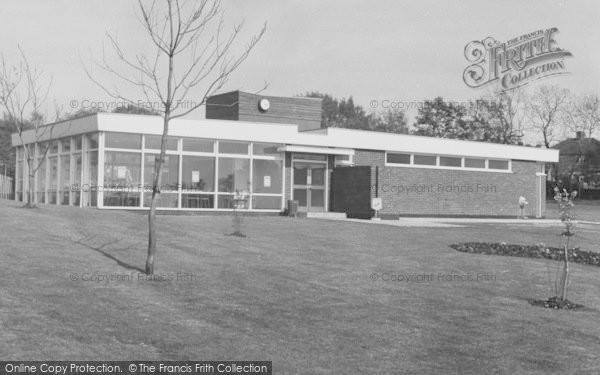 Photo of ‘Worcester Park, Auriol Park c.1965’ from Francis Frith:
In March 2023 Steve Donne Davis wrote:
There is currently a 1965 Francis Frith photo showing the pavilion at the park with a gentle slope in front of it. At some point between then and 1986, when I moved here, the park was levelled for football. Soil from beside the car park and pavilion was dug out and bulldozed to the west side of the park. Two steep banks were therefore formed and the gate in the north-west corner of the park was removed as the ground level there became much higher. The kerb outside has not been reinstated. There must be records of this work and photos which would be of interest.
Steve Donne Davis
The web team can’t find any old photos or information on the area near the pavilion or of the various changes to the park. Do you have any images or information that we can use on this page? If so please contact us.