
Stoneleigh West or the Stoneleigh Hill Estate
Plus
2 Westways, and Memories of Stoneleigh
 Front Cover of The Sales Brochure
Image Courtesy of Bourne Hall Museum
In 1860 John Jeffries Stone bought about 1,100 acres of fields and woods, together with four farms: Sparrow Farm, Cuddington Farm, Coldharbour Farm and Bowling Green Farm from Felix Ladbroke (of the Ladbroke Grove family) for £19,000 .
 The Stone Estate is shaded green and yellow
(Click on image to enlarge)
JJ Stone died in 1879 and in his will he urged his executors not to sell the land at farming values but as the more valuable building land. While a couple of roads were built in the early 1900s the real transformation from farmland to housing took place in the 1930s.
 The area showing farmland on the 1915 OS Map
(Click on image to enlarge)
Development east of the Waterloo / Epsom Railway really took off after the Stone Trustees contributed land, access roads and £3000 towards the £7500 building cost of a new station on the Waterloo / Epsom Railway. Stoneleigh Station opened on 17 July 1932 and was 12 miles from Waterloo.
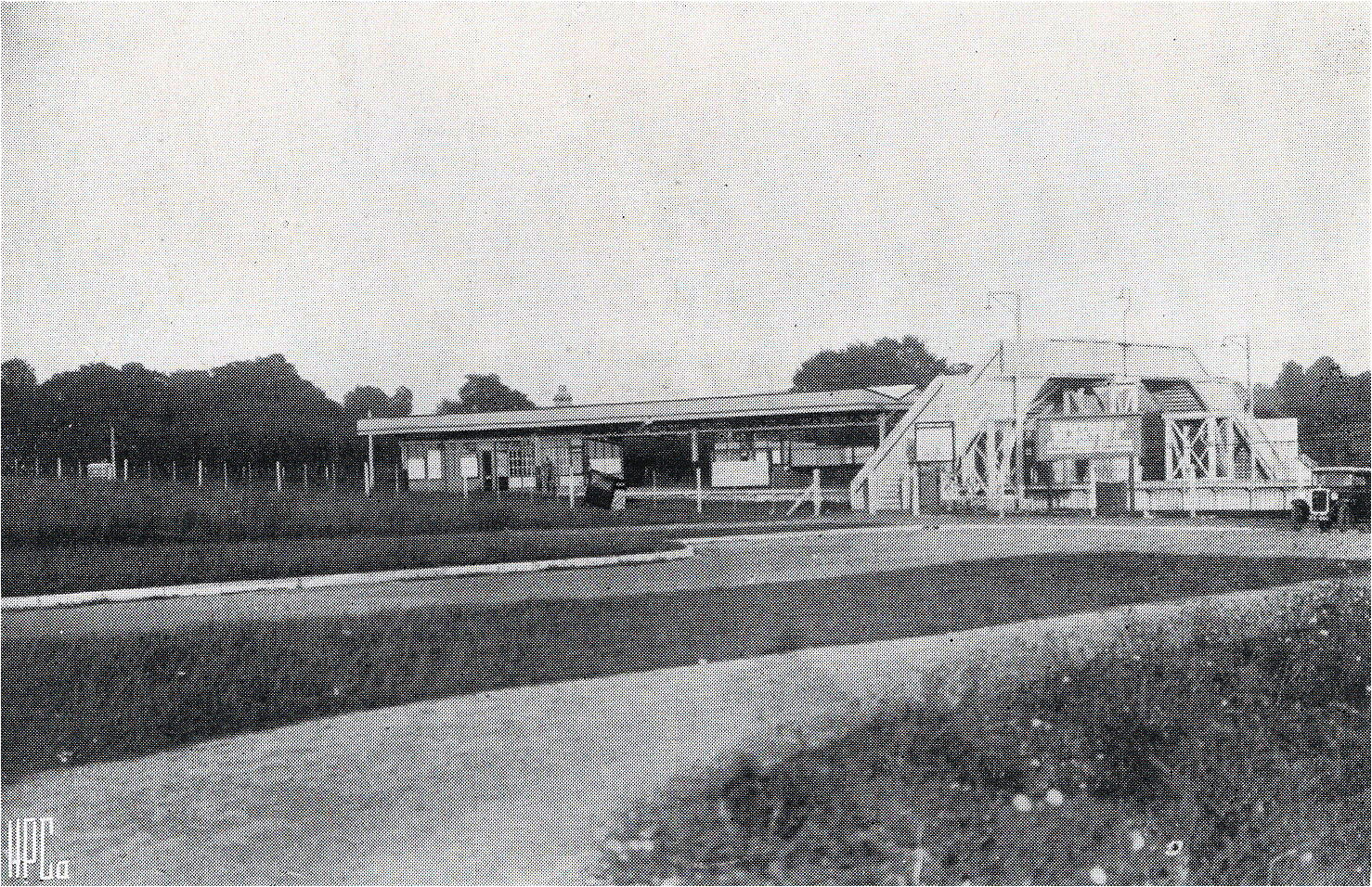 Stoneleigh Station
(Taken from the Stoneleigh Park Road c.1932)
Image source Stoneleigh Hill Estate Sales Brochure.
Ewell Court Estate which was South of the Kingston Road was the first to be developed. Stoneleigh Estate, east of the railway line was next and very rapidly developed as shown by the 1933 OS map.
 The area showing the land under development on the 1933 OS Map
(Click on image to enlarge)
The last phase was called the Stoneleigh Hill Estate and was west of the railway, mainly on the land of the former Cold Harbour Farm
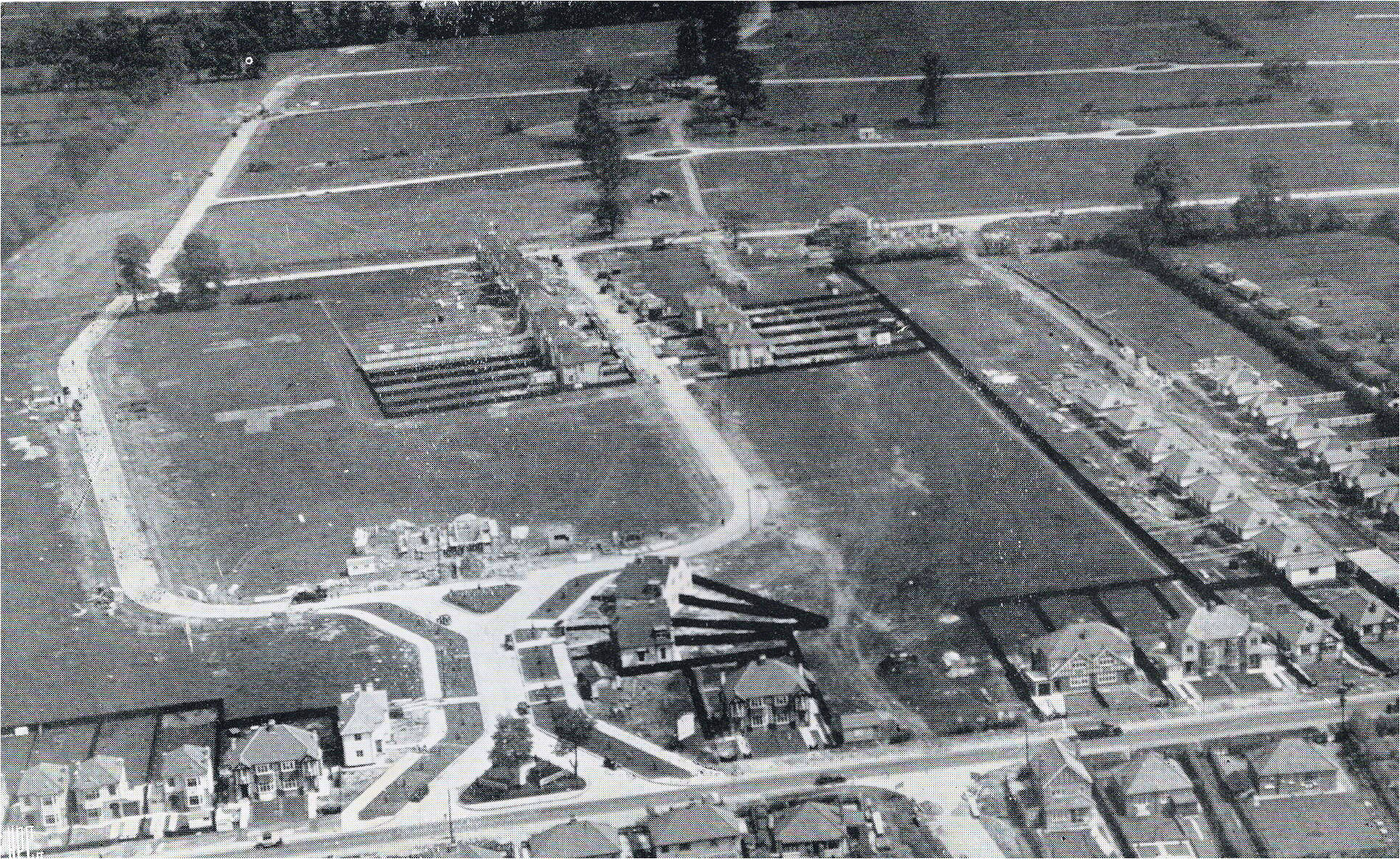 An Aerial View of part of the Estate showing the lay out of the new roads.
(Kingston Road is at the bottom from left to right,
with the split junction to Thorndon Gardens and
Ravensfield Gardens shown left of centre.)
Image source Stoneleigh Hill Estate Sales Brochure.
The Estate was divided into a number of plots and sold off to numerous builders which explains the variety of building styles.
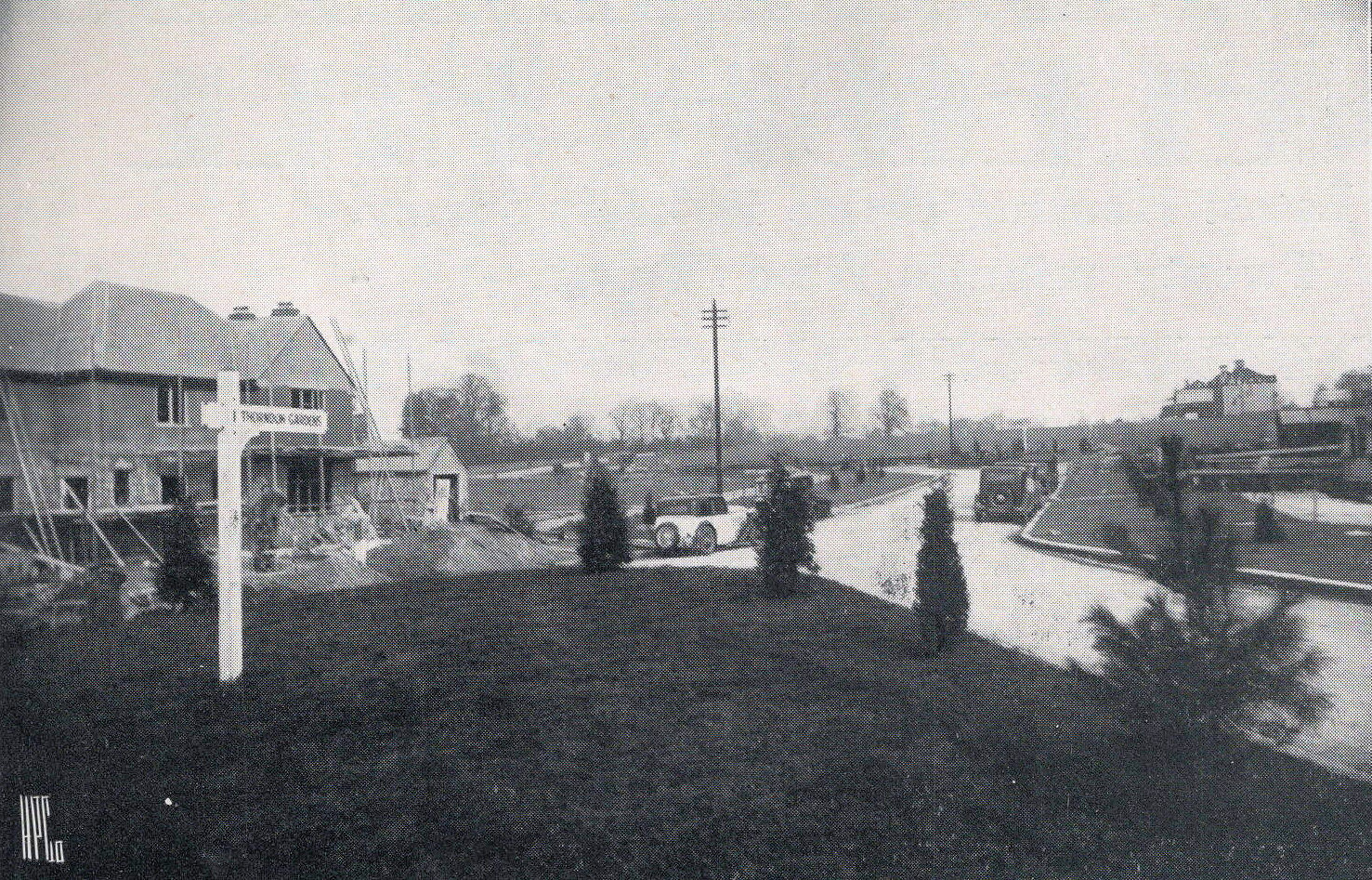 The Entrance to the Estate from Kingston Road
(Sign posted Thornton Gardens)
Image source Stoneleigh Hill Estate Sales Brochure.
—————
The Broadway Shopping Centre
(On the other side of the tracks)
 The first parade of shops on Stoneleigh Broadway
(Note the parade past Dell Lane is still under construction)
Image source Stoneleigh Hill Estate Sales Brochure.
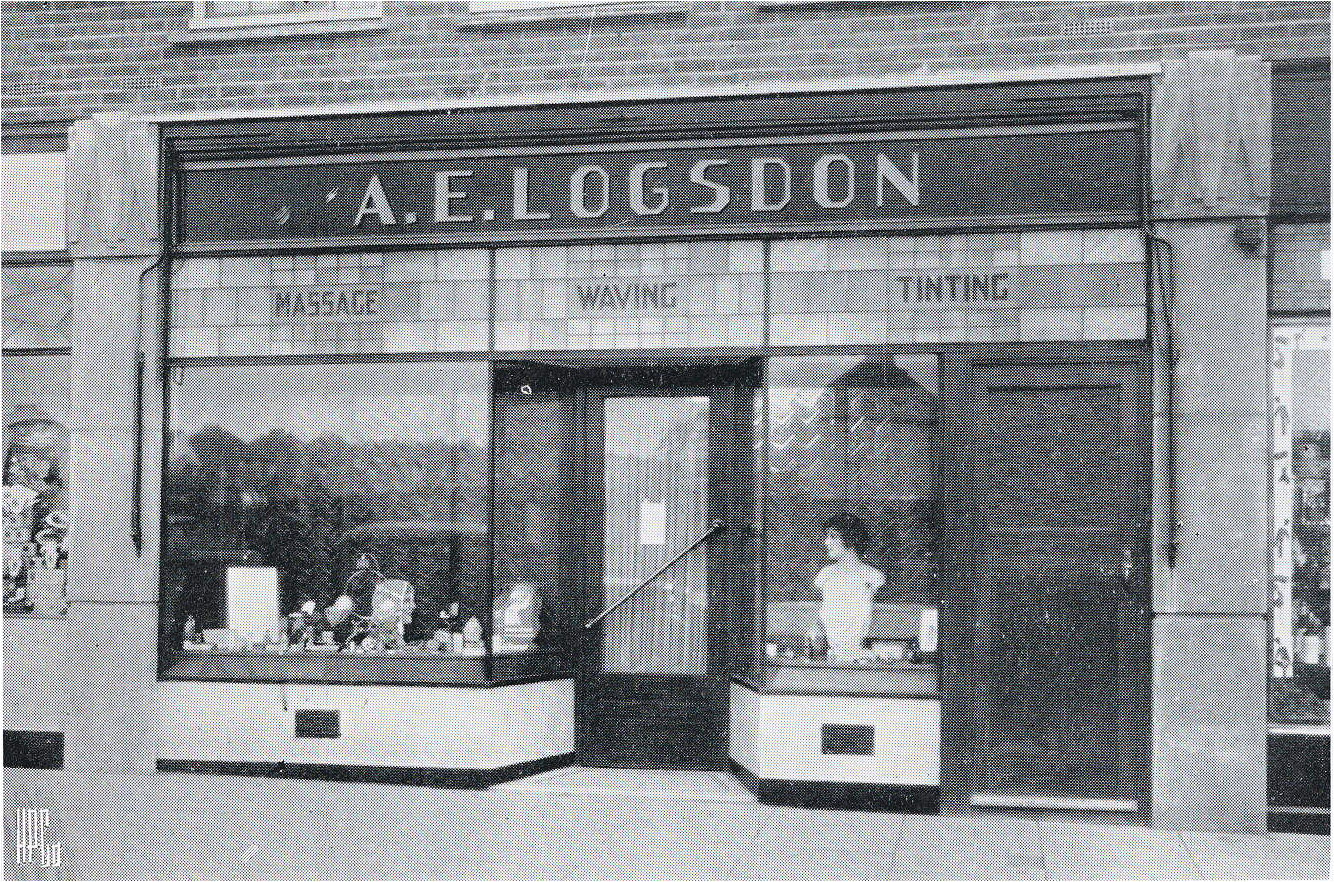 A E Logsdon – Hairdresser @ 16 The Broadway Stoneleigh Park Estate
(Note building renumbered at a late date)
Image source Stoneleigh Hill Estate Sales Brochure.
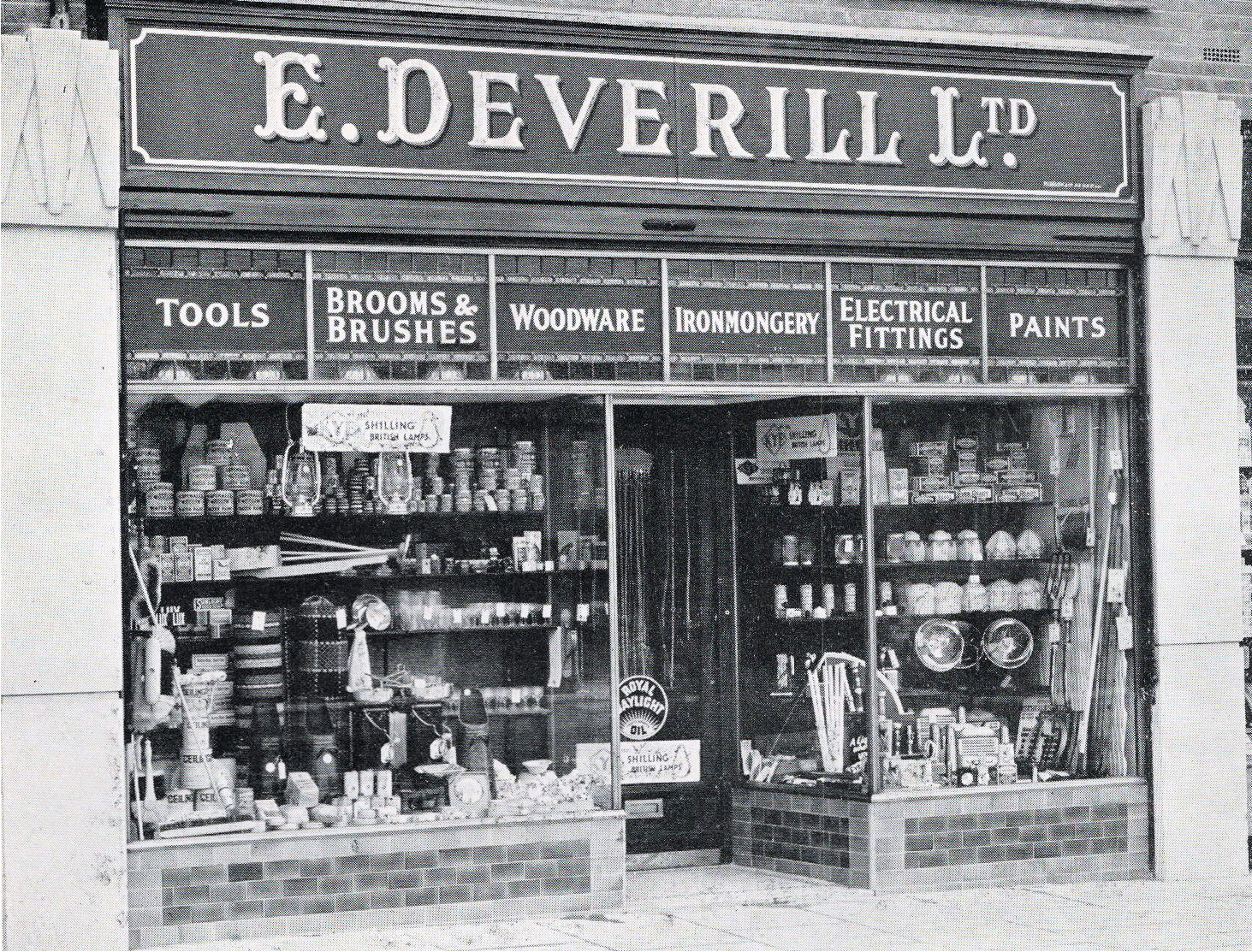 E Deverill Ltd – Hardware @ 28 The Broadway Stoneleigh Park Estate
(Note building renumbered at a late date)
Image source Stoneleigh Hill Estate Sales Brochure.
2 Westways, Stoneleigh
 2 and 4 Westways
Image courtesy of Peter Reed 2023
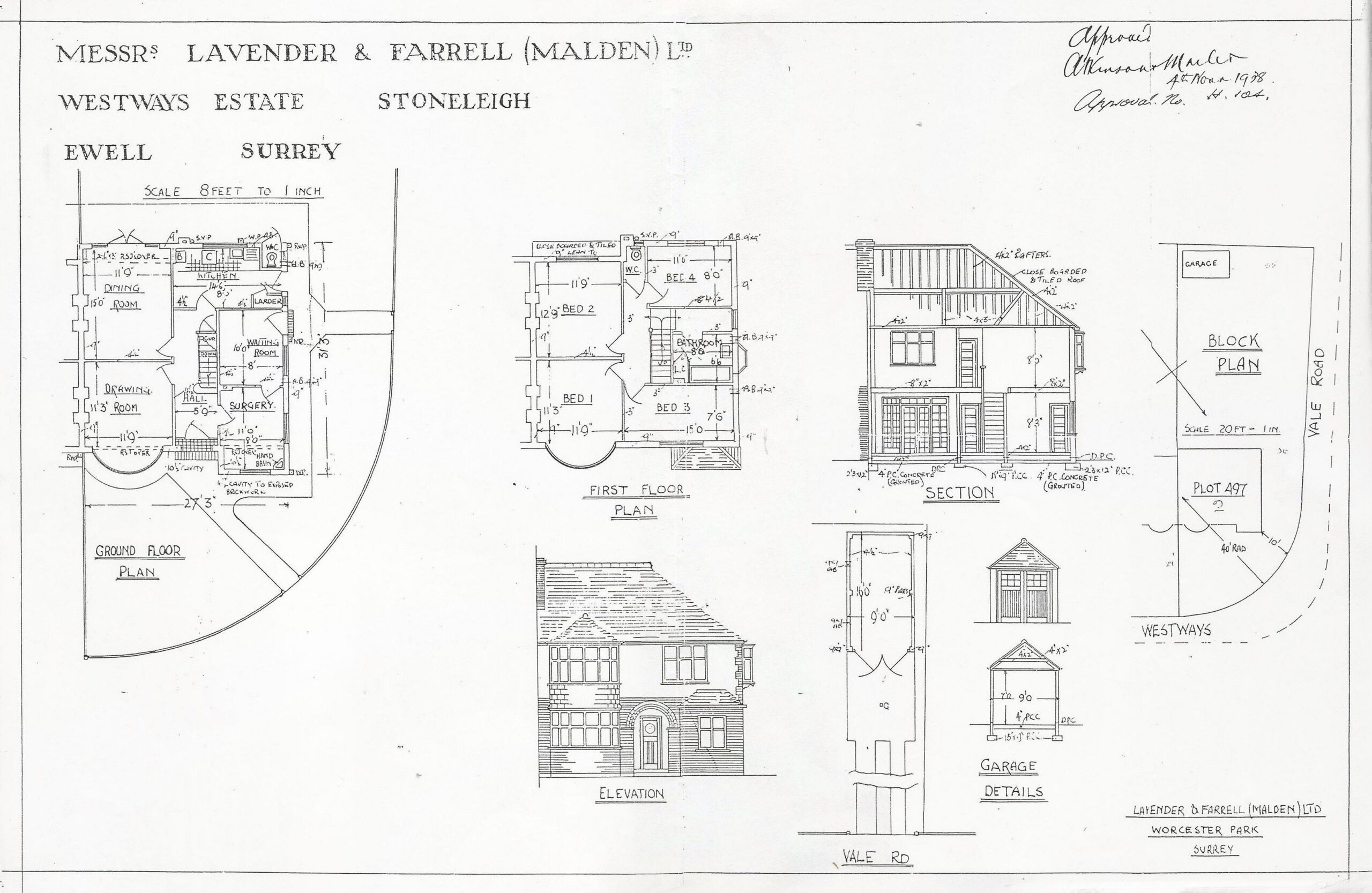
Plans for 2 Westways, Stoneleigh
Click image to enlarge
Image courtesy of Peter Klein © 2023
Near to the schools and shops in Vale Road is a road of semi’s called Westways. To a casual observer the outside of number 2 Westways looks much like many of the other homes in the road but it was specifically built to include a doctor’s surgery with a separate entry from Vale Road.
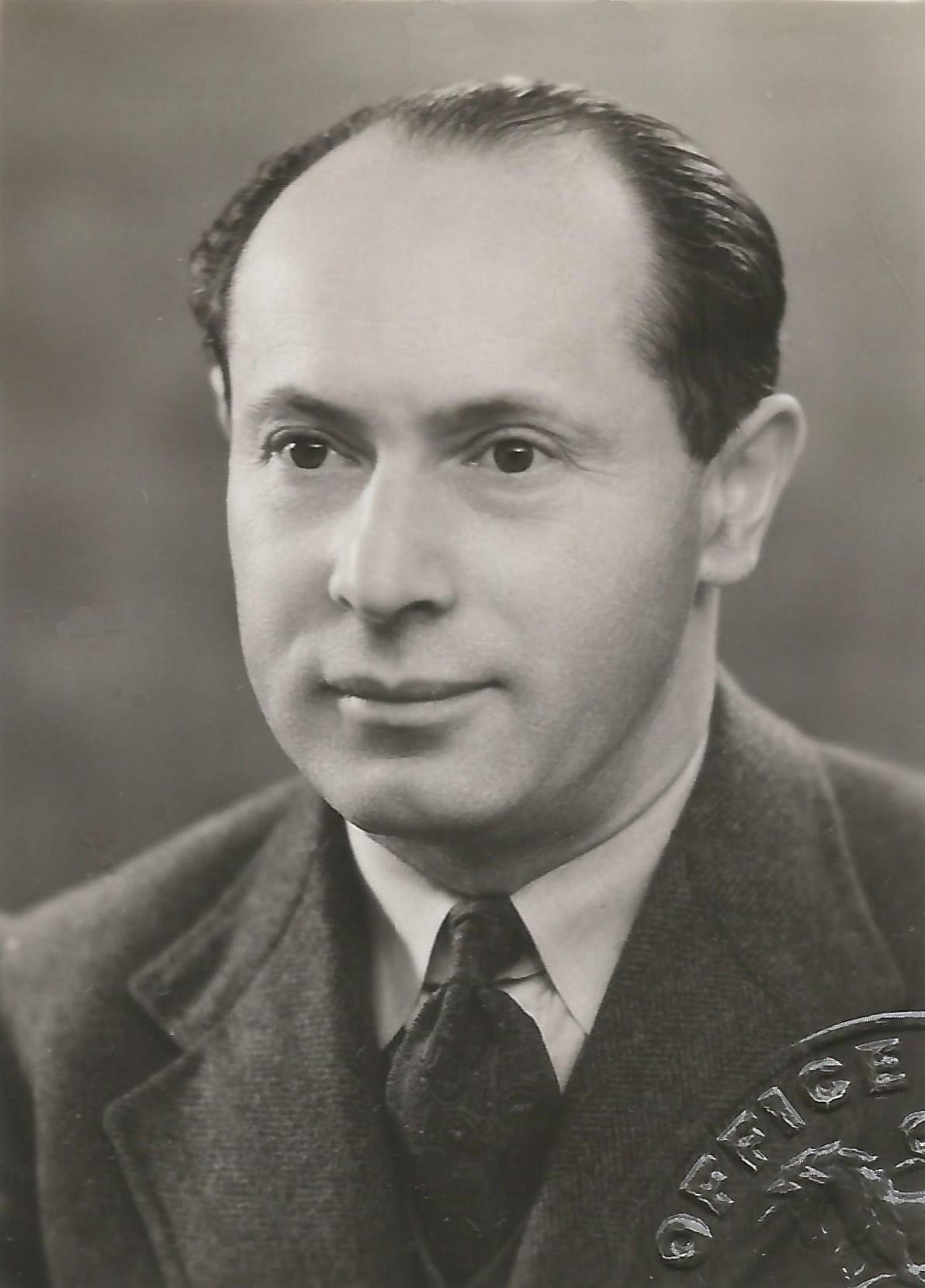 Dr Sigmund Klein in 1957
Image courtesy of Peter Klein © 2023
For many years the doctor living and practicing there was Dr Sigismund Klein F.R.C.S. Edin. Physician and Surgeon. Sigmund as he was usually known in the UK (and by his own family by the pet name of Zsiga) was born 22 Jan 1904 in Hungary and died Epsom 1973. In 1938 Sigmund married Frances Joyce Dundas Naunton (nee Hawks) who had been born in India on 1st January 1905. (Her first marriage had been in 1926 at Sompting in Sussex to a solicitor, Wingfield Naunton.)
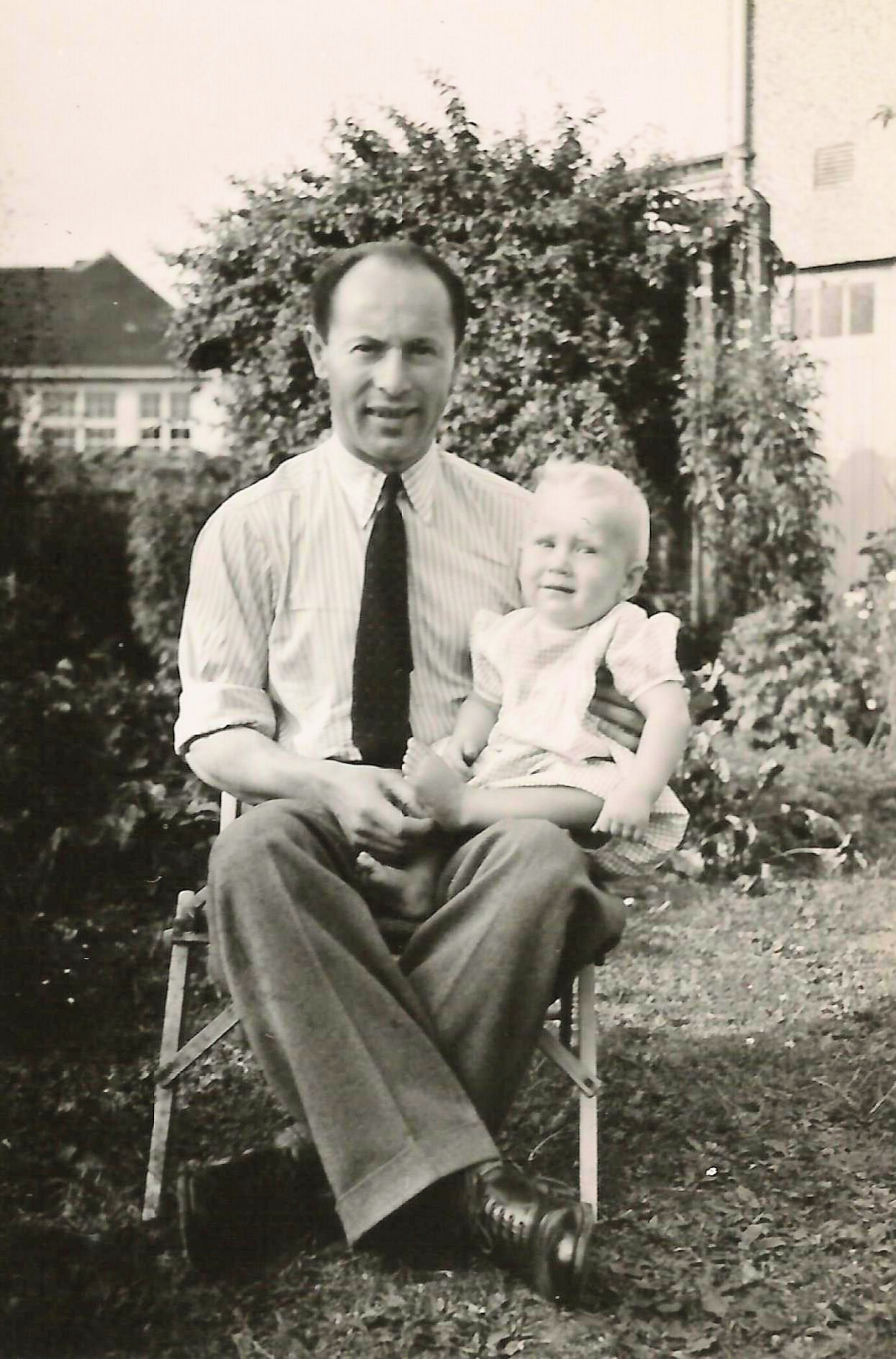 Dr Sigmund Klein and his son Peter taken in the back
garden of 2 Westways during 1943.
Stoneleigh West Senior School is shown in the background.
Image courtesy of Peter Klein © 2023
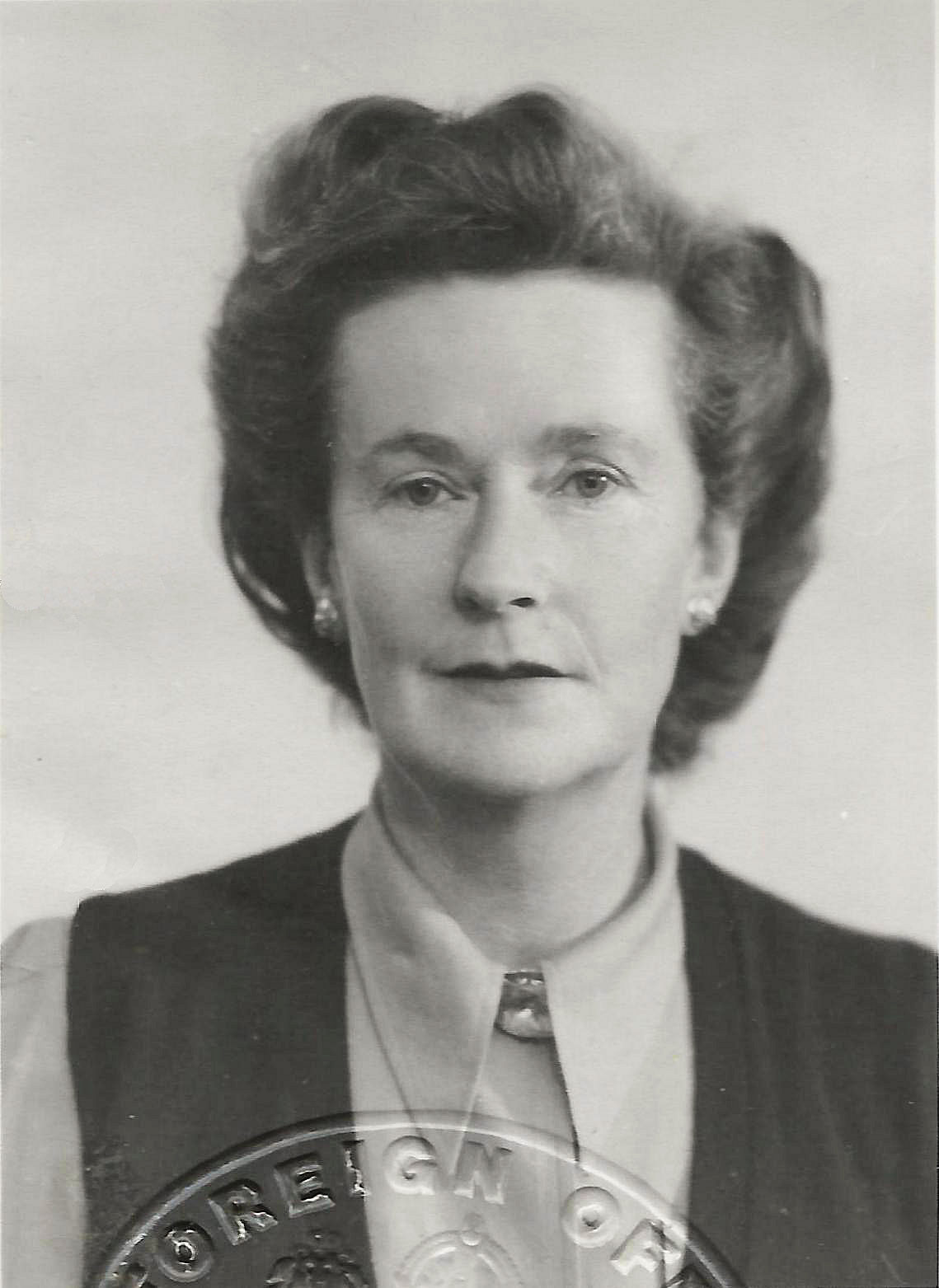 A 1949 Passport Photo 0f Joyce Klein
Image courtesy of Peter Klein © 2023
The Klein’s adopted son Peter Klein been in email contact with the webmaster who has brought together some of Peter’s recollections.
2 Westways, and Memories of Stoneleigh
A collection of memories of Stoneleigh in the 1940s to early 1960s
by
Peter Klein
 Author and Historian Peter Klein
Image courtesy of Peter Klein © 2023
I spent the first twenty years of my life in Ewell, or rather Cuddington parish, as my father was a GP in Stoneleigh, hence my interest and keeping my eye on Ewell and area. Harry Veall (1884-1967), author of Ewell and its Church, was one of his patients for a time, and gave him a copy in 1948. Then I was a member of NEAS (the Nonsuch and Ewell Antiquarian Society) for a while and spent happy hours gluing pottery in the attic of Pit House that dear John Dent loaned to us to process finds from the 1959 dig.
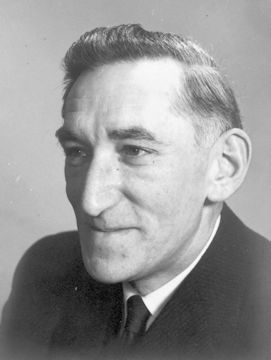 John Dent c.1972
Image courtesy of Epsom and Ewell
Local and Family History Centre
I last saw him in 1964/65 when I was working at the V&A, after the Borough had acquired a Nonsuch chest from somewhere, but that’s all a very long time ago now and, alas, he’s been dead fifty years. Is Martin Morris still about? We were at school together at Epsom, and it was at that time that I developed an interest in local history. Since then I’ve carried on as an historian and author in Shropshire and Herefordshire.
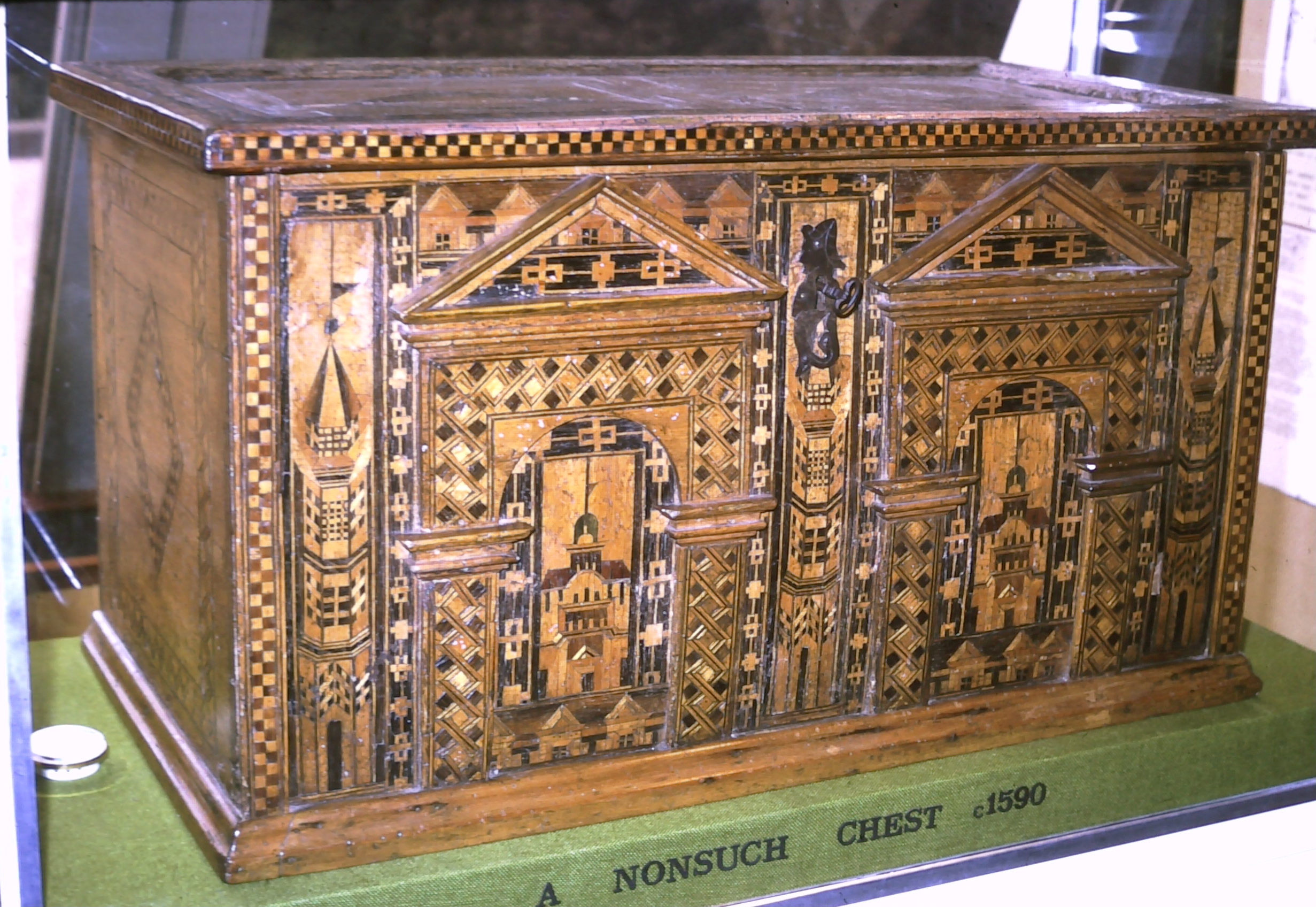 A Nonsuch Chest in Bourne Hall Museum
Image courtesy of Epsom and Ewell
Local and Family History Centre
I was their (Sigmund and Joyce’s) adopted child, born in Twickenham, and arrived at 2 Westways at around Christmas 1942. He was born in Hungary, and before WWI the family moved to Beius where his father was chief engineer at a power station. With the defeat of the Austro-Hungarian Empire in 1918, their bit of Hungary returned to being part of Romania, and there they had to stay. He decided to be a doctor, training as a surgeon at Vienna, later working in Germany until 1933 by which time it clearly became prudent to get out while he could. With his qualifications he could work anywhere, so he came to England intending to go on to Canada, stopping off in London to obtain an English medical qualification at St. Mary’s. There he met my mother, stayed, took his FRCS in Edinburgh, then went into general practice in 1938 in the newly developing estate at Stoneleigh. “The rest is history”!
 The backs of 2 & 4 Westways in 1939 with a Catalpa tree & Bruce as puppy.
Image courtesy of Peter Klein © 2023
No 2 Westways was specially built as a doctor’s house – it’s a little larger than the rest, with added accommodation for a surgery at the side and two bedrooms and bathroom above. During the war there was also a concrete bunker/shelter for family and patients – very damp, I remember. There were also school shelters bordering Vale Road behind the railings onto the playing field opposite, but they were all demolished soon after the war ended.
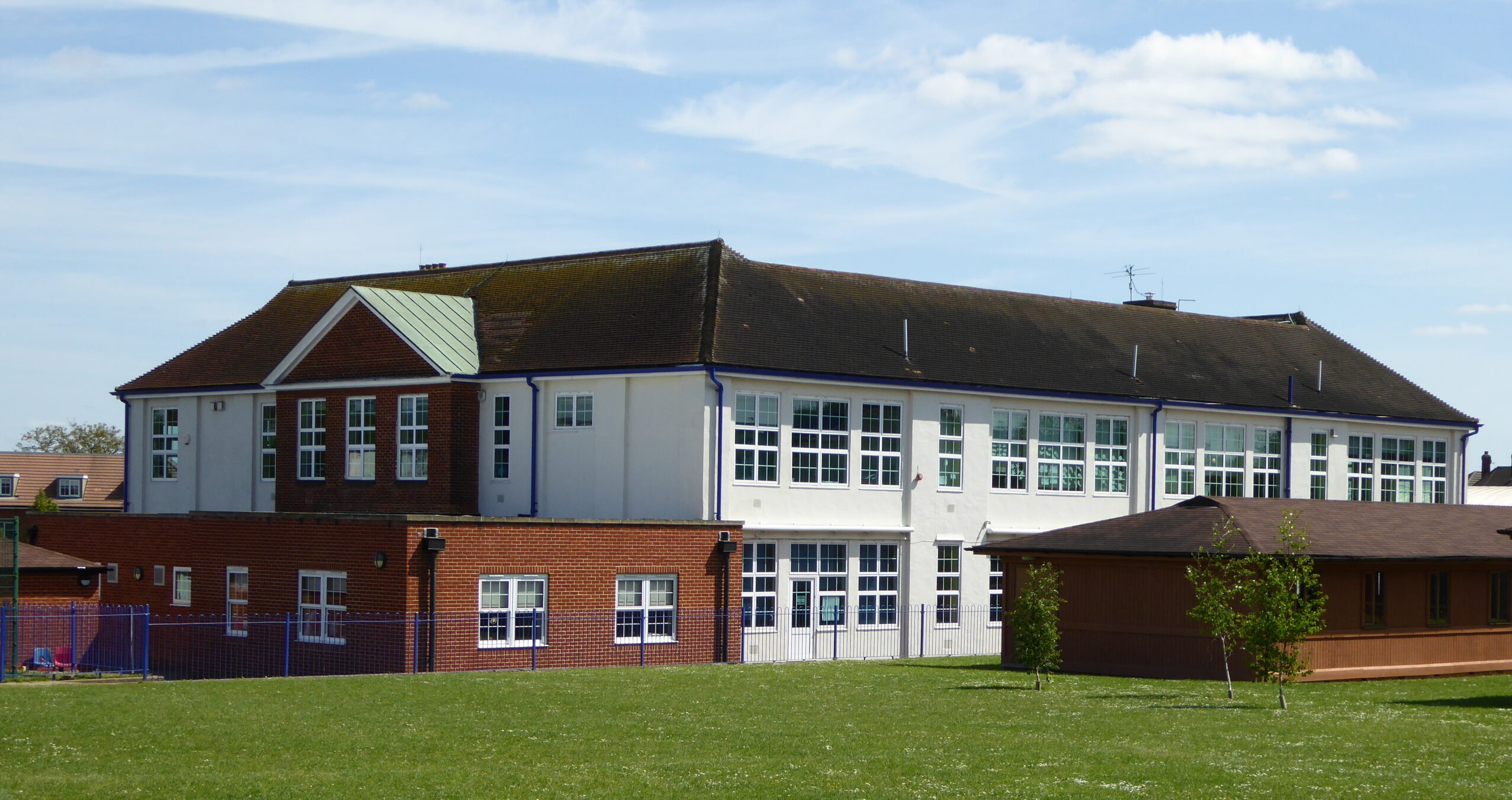 The former Stoneleigh West Senior School from Newbury Gardens 17 May 2015
Image courtesy of Epsom and Ewell
Local and Family History Centre
I remember the Cunliffe Road estate being built (c.1948), and the mysterious old Worcester Park brickworks behind the shops. The row of shops on Vale Road facing the school was built very much later – it was a rough open site for years. I only remember one family in Cunliffe Road, Mr & Mrs Vincent. She was a very nice sturdy lady who rode a bicycle that she called her “steed”, and she used to come and “do” for my mother. Her husband I seem to remember was in a tank regiment during the war, and served in North Africa.
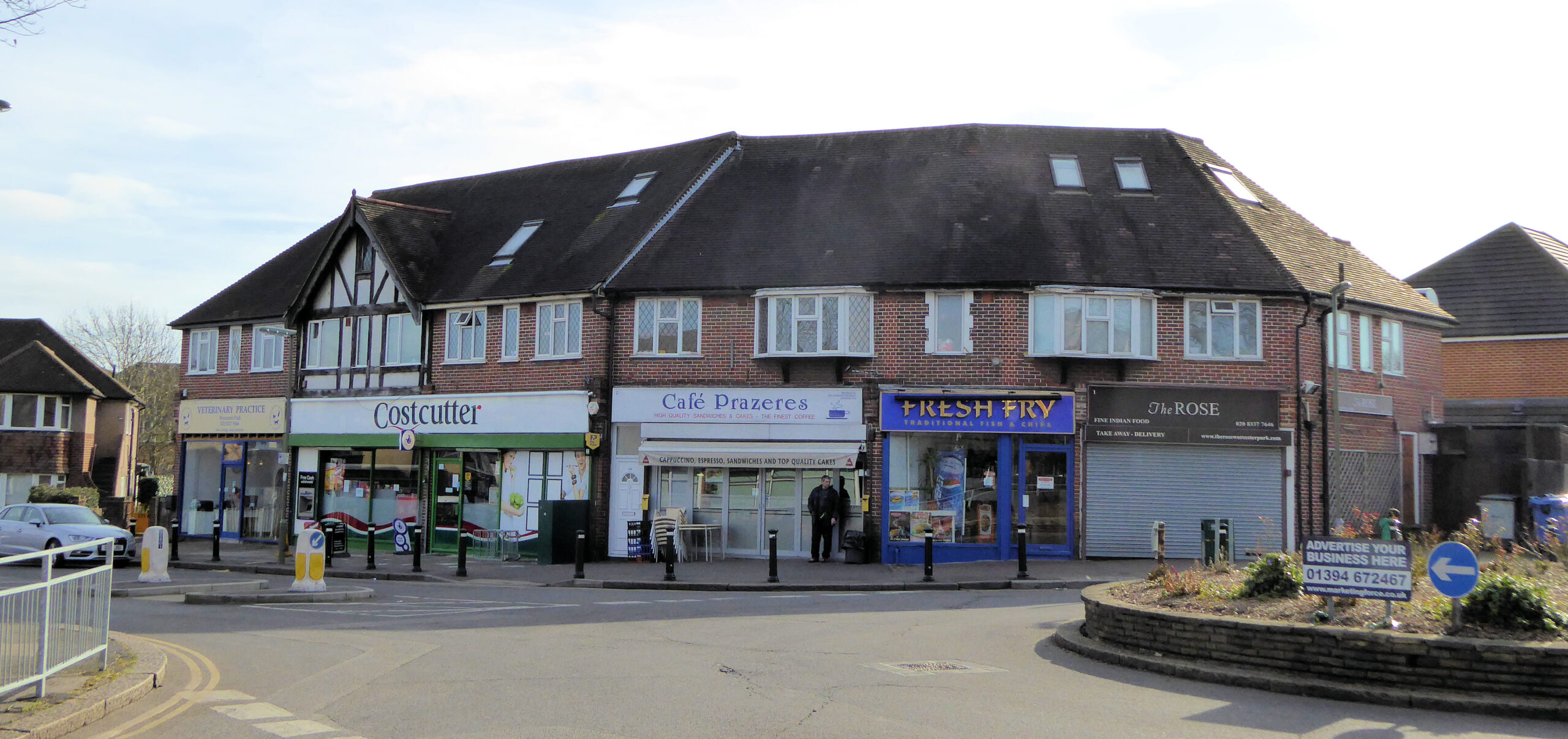 The First Parade of Vale Road Shops 06 March 2015
Image courtesy of Epsom and Ewell
Local and Family History Centre
The large site where the Game Cock pub was built at the top of Cuddington Avenue in my childhood was all still allotments, and The Parade opposite, with the Avenue Bookshop with Mr. Goddard and the Post Office, where I bought my Beano, and Mr. Rudkin the greengrocer whose shop was a concrete shell with vegetables displayed on stacks of old wooden fruit boxes. Mrs. Springett was the behind the post office counter – a very elegant slim lady who walked up from Newbury Gardens – the handsomest woman in Stoneleigh.
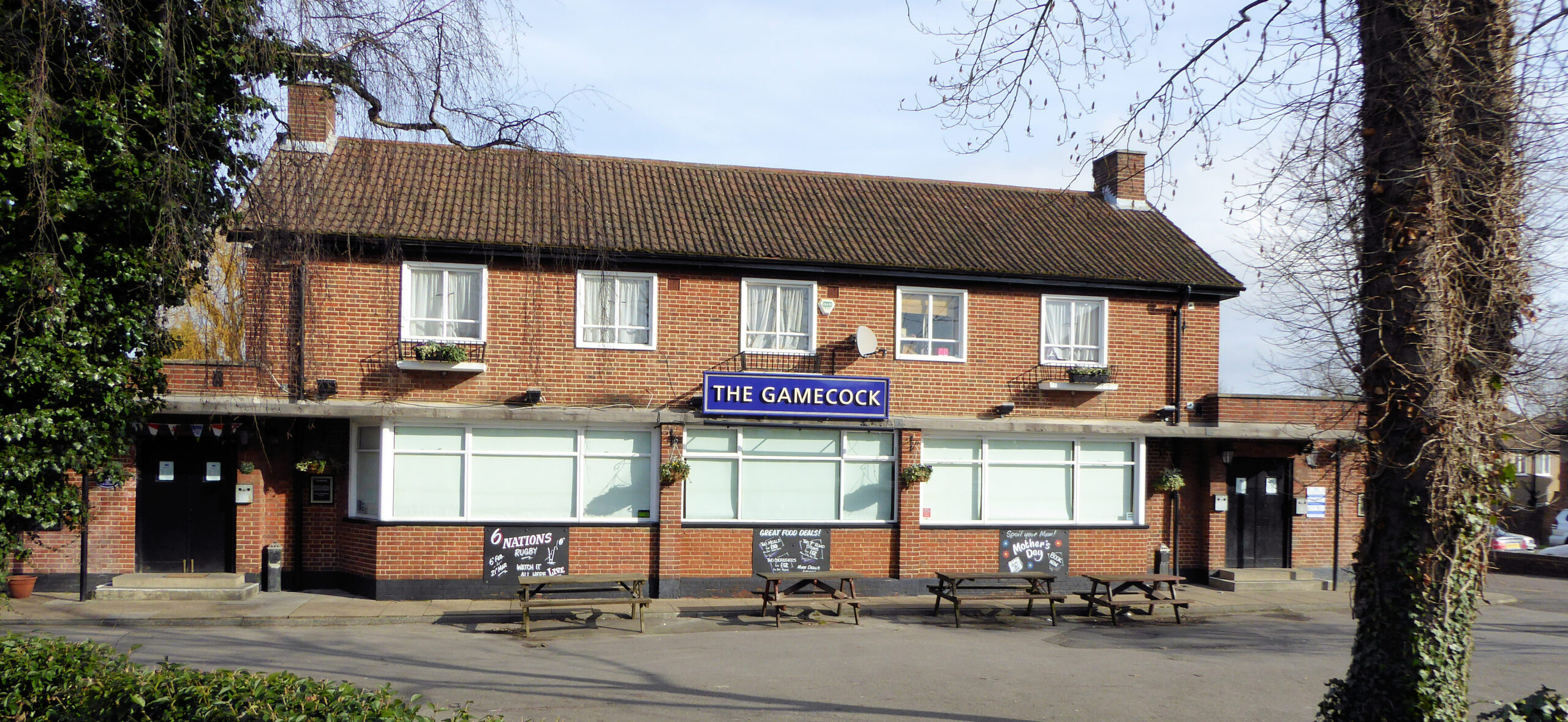 The Gamecock 06 March 2015 (later renamed to The Willow Tree)
Image courtesy of Epsom and Ewell
Local and Family History Centre
Everywhere there were large elm trees that marked the old field boundaries – one at the school gate – and then they all disappeared. It was as if the last link with the old Coldharbour Farm landscape had suddenly gone. Horse-drawn vehicles were still about after the War – the rag-and-bone man with his brass bell, and the United Dairies milkman whose horse, with a nosebag and blinkers, walked on by himself to the next drop and knew where the next customer lived. There was that clapped out old flat-bed coal lorry, misfiring with a cloud of blue smoke billowing after it, and the coal men with blackened faces, with sacks over their heads and shoulders. Then there were the “businessmen” first thing in the morning in pinstripe suits and bowler hats, with furled umbrellas and briefcases, walking out briskly to catch the train. Old pre-War rolling stock on the railway, with glass lampshades that rattled passing over points.

A corner of Stoneleigh Hill Estate from the air
Click on image to enlarge
Image source Stoneleigh Hill Estate Sales Brochure.
During the blitz, not that I knew much about it at the time, I was told that at least two bombs dropped in a “stick” down Westways, thought to have been jettisoned by a German bomber emptying the bomb-racks after a raid elsewhere. (For local WW2 bomb explosions see World War 2 Maps ) Going up the road, number 17 is on the left, and it is still noticeable that two pairs of the houses beyond on that side have roof-lines that are different from the rest, having a steeper pitch, and roof ridges that are higher and shorter than those neighbouring and opposite. When I was a boy the tiles were a different colour as well, so they stood out more than they do today. This was caused by a bomb which just about demolished the two pairs of houses – numbers 27-33 I think, if Google Street View is anything to go by – and they had to be rebuilt. To the inhabitants at No.17 the War would have seemed all too close, and it was a close shave.
See other people’s accounts of the war at World War 2 Memories
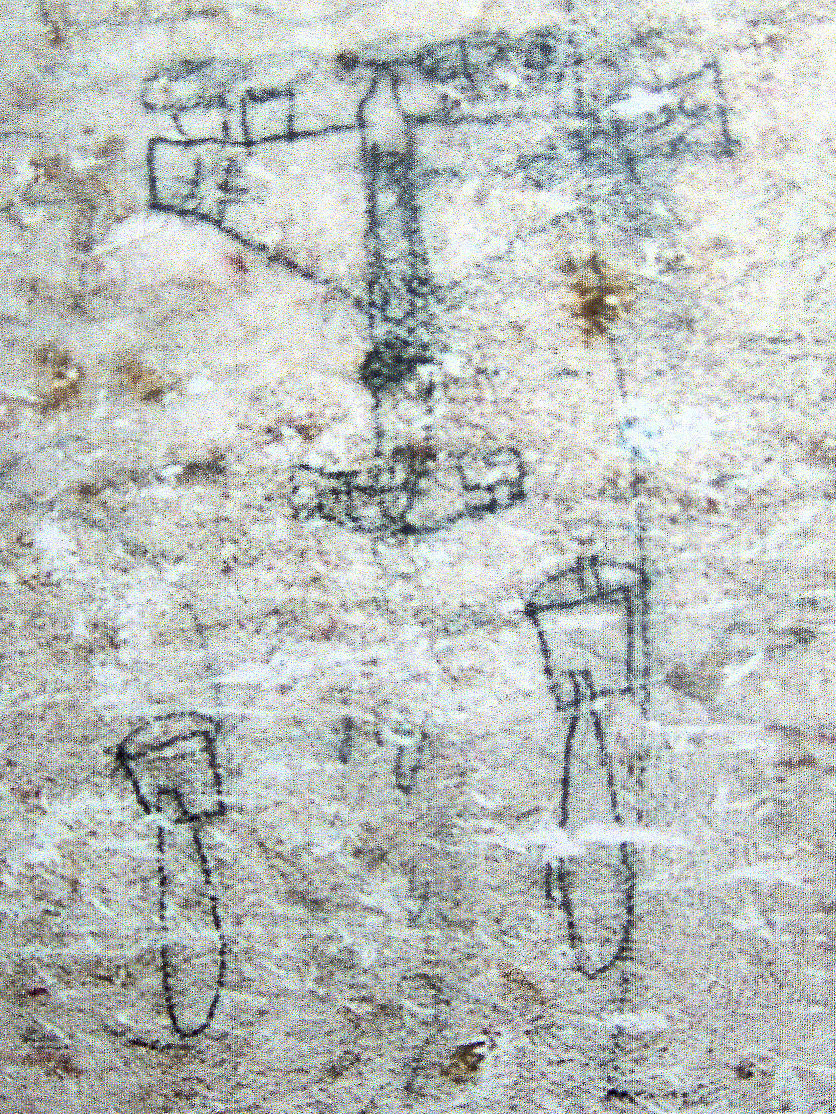 A photo of some graffiti found on a wall in 17 Westways
Image Courtesy of Bourne Hall Museum
Who was the graffiti culprit? Well, I think I can name him – young Derek Toop. His parents Edward and Violet Toop lived there in 1939, and were still there in 1945. Derek was born in 1930, and so was aged about 11 or 12 when the bomb dropped. He was their only child, one of twins but the other one died. I was too young to enjoy the war, but boys of his age had quite an exciting time, and drawings like that would have been quite common. A wonderful find!
The other bomb on Westways, I was told, was in the same stick, and dropped in old Mr Hutchins’ the watchmaker’s garden at 195 Vale Road, on the corner opposite 2 Westways, the house that now has that enormous hedge. It blew all the front windows in at 2 Westways, including the front door assembly, and that left a bruise on the post at the bottom of the stairs. I wonder if it’s still there.
Anyway, continuing on from the last, the find at 17 Westways was fascinating – sadly Derek Toop is no longer with us, as he died in Reading in 2015, aged 85. The story also reminded me of other wartime memories, like the flying bomb that came down in Stoneleigh West school’s playing field close to Newbury Gardens in July 1944. I was away in a caravan with my mother at Shere at the time, but the blast blew in all the back and side windows at 2 Westways, and brought the ceiling down in the back bedroom. A plasterer came to replace it only for my father’s cousin, who had poor eyesight, put her foot through the fresh plaster when she went up into the attic to find some of her belongings. The plasterer was not pleased, and his repair was clearly visible for years afterwards. The blast from the V1, equivalent to the 1000kg German parachute mine, also flattened five or six bungalows opposite on Newbury Gardens, and I remember them being rebuilt. They were still obvious years later, but recent UPVC windows, repairs and repainting have now made them almost indistinguishable from the pre-war buildings.
Bruce a golden retriever dog had arrived in 1939, and he was always around for the first dozen years of my life. He could hear the distant air-raid sirens long before my parents heard the more local ones, and came to warn them or wake them at night. After the bombing, he was always terrified by thunderstorms. Through the War and long afterwards he was fed on horse meat from a horse butcher near the station in Epsom – the distinctive smell of it cooking on the stove was one of the more enduring memories of my youth!
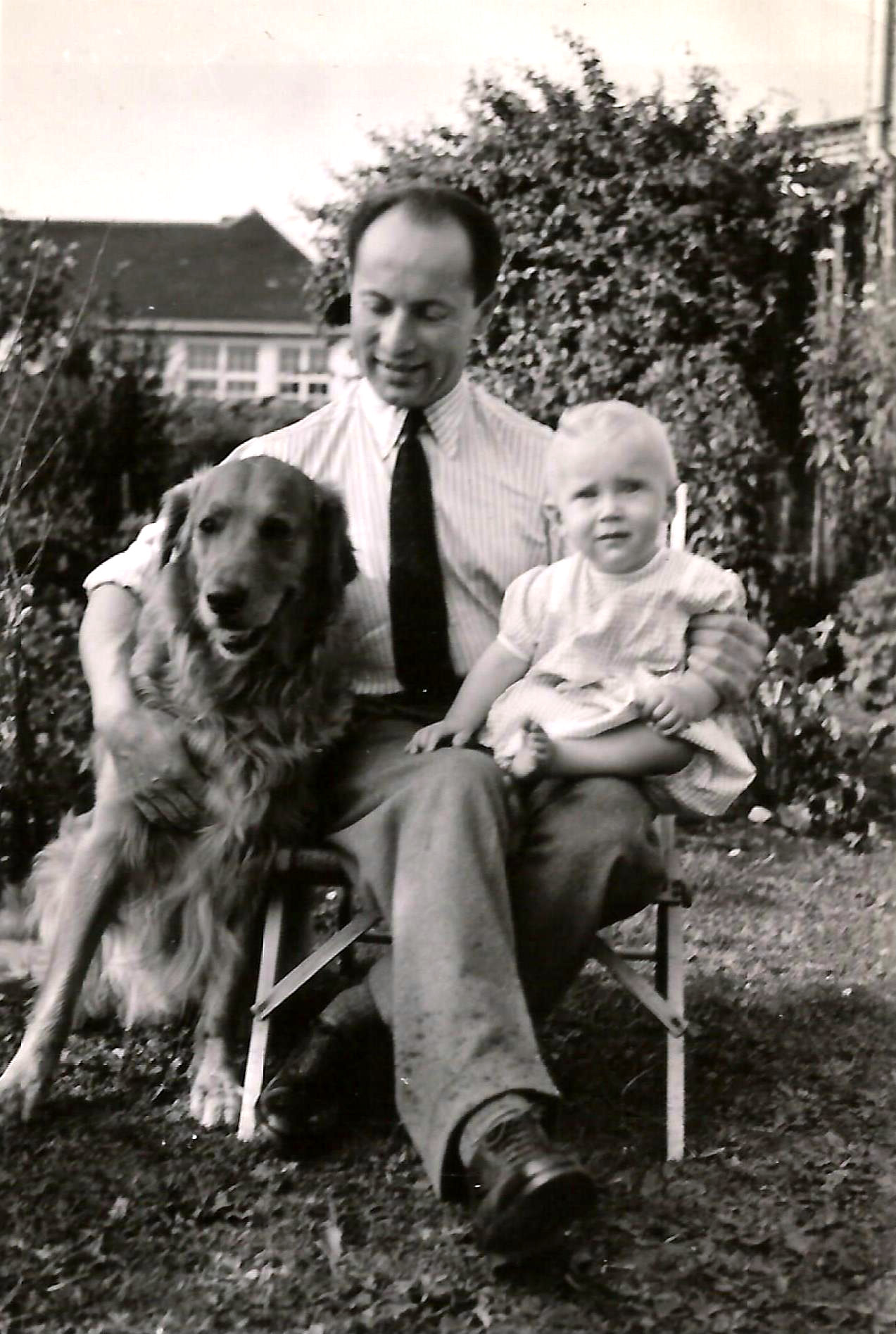 Dr Klein with son Peter and Bruce the dog
taken in the back garden of 2 Westways during 1943.
Image courtesy of Peter Klein © 2023
I also remember Nonsuch Park after the war: the carpark near the London Road gate was tiny then, and the fields to the north were still under plough, with acres of wheat and red poppies everywhere. We walked the dog there, and in those days the park seemed practically deserted – how it has changed.
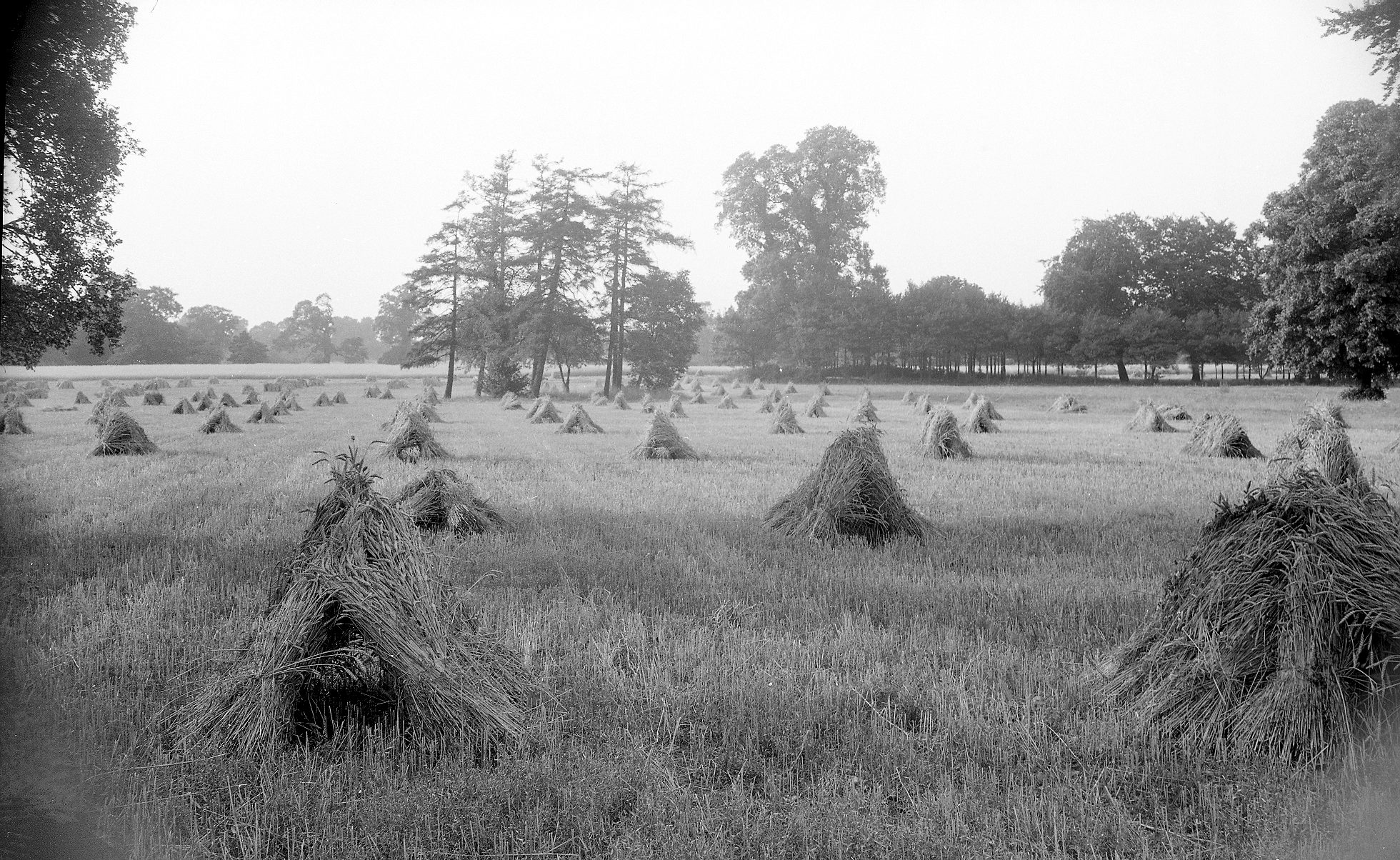 Sheaves of grain stood on end in Nonsuch Park c1940s
Image Courtesy of Bourne Hall Museum
I have great memories of it, and walks with my father and the dog, and all those massive elms too. It was a real tragedy that the Dutch elm disease caused such havoc with our historic veteran trees, although they are still there in our hedges, but nothing more than a few feet high survives now. I also missed them greatly in Stoneleigh, where they marked the old field boundaries of Coldharbour Farm. It’s rather hard to visualise now what it was like when William Holman Hunt and John Everett Millais might have walked the footpath from Worcester Park into Ewell, down what is now the line of Newbury Gardens!
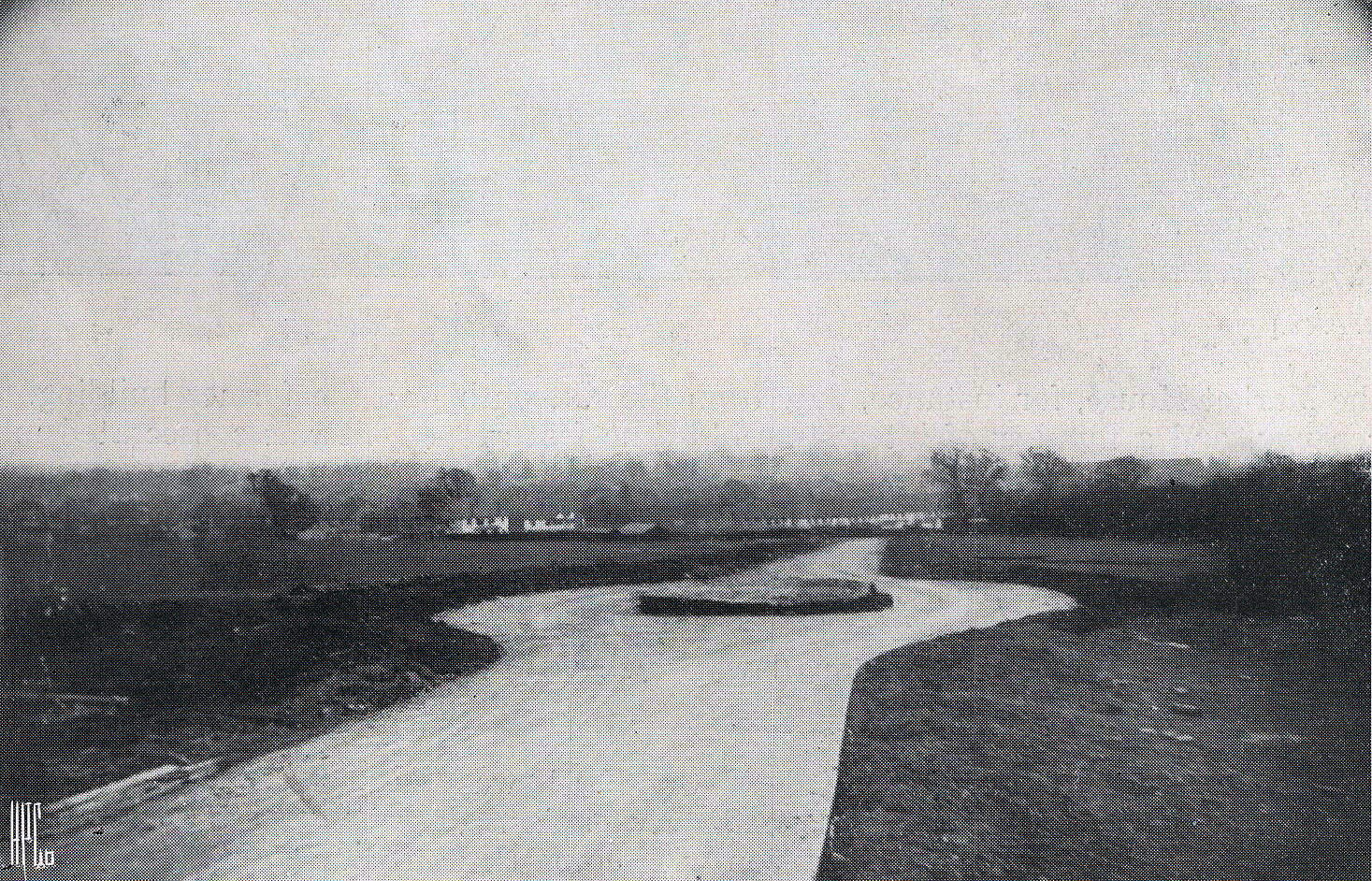 Seaforth Gardens
Image source Stoneleigh Hill Estate Sales Brochure.
 Aerial View of Cuddington taken in 1937.
Click on image to enlarge
Image source Worcester Park House Sales Particulars
An aerial view of Cuddington taken in 1937 shows Stoneleigh West school as still a building site and, curiously, the junction of Cuddington Avenue and Salisbury Road on its north eastern corner is still then unbuilt upon. I remember well the little footpath between Cudas Close and Salisbury Road, with what was and still is a grass field behind the Cuddington scouts, now Rowe Hall. The scouts used to hold fetes there, and I remember being very impressed with a painted wartime wooden model bomber that slid down a zip wire, strung from a tree to a pylon on the ground. The bomber was loaded with a “bomb” and, for sixpence or whatever, using a control you could see whether you could release the bomb to drop it into a box on the ground. Perhaps the scouts still have it. Salisbury Road was still a rough track of rammed pebbles and flints, and full of potholes all the way between Delta Road and Timbercroft, and Grafton Road was similar.
In 1937 the Drs Smith/Conn/Klein medical partnership bought Nos. 2 and 4, but it wasn’t until 1949 after the start of the NHS that my father bought No. 2 from the now dissolved partnership.
My mother Joyce Klein was a fire watcher during the blitz, and somewhere I still have her black tin hat, and a small fireside shovel mounted on the end of a long broom stail which she used for shovelling sand over incendiary bombs. Looking at the ARP post map she would have been attached to post 4 at the top of Cuddington Avenue (close to where the old red ‘phone box used to be), and she said they were terrified in case the large buildings of Stoneleigh West school would attract the attention of the German bombers, in which case number 2 Westways was a prime candidate for collateral damage. Any fire bombs that dropped were therefore very promptly put out!
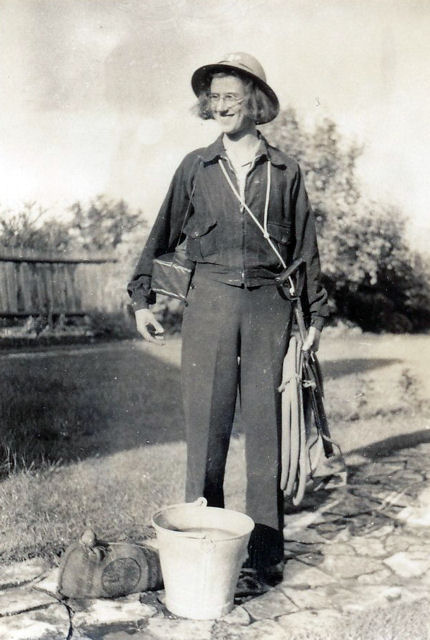 A ‘Fire Watcher’
This photo shows Eden King at her home at 6 Ridgeway
in her fire warden’s uniform with pump and bucket.
Image courtesy of Bourne Hall Museum.
Later on in the War, it would have been during the summer of 1944, I can remember being in my mother’s arms on the back step of the kitchen, and she and my father’s cousin were anxiously listening to the very distinctive noise of a doodlebug passing over somewhere nearby. I don’t remember hearing any explosion afterwards, but I do recall asking my mum if it was the sound of a Spitfire. I think they were rather too preoccupied to answer!
 A V-1 flying bomb (also known as a Buzz Bomb and a Doodlebug)
Image by Tlford2035 (CC BY-SA 4.0)
Looking out through my back bedroom window of No. 2 late on during the War, I remember watching two or three searchlight beams playing on the clouds to the west. The battery would probably have been based somewhere near Ruxley Farm, possibly on the open land now occupied by the Ewell Cricket Club. Perhaps my most vivid memory of around this time is of a squadron of heavy bombers passing overhead, probably Avro Lancasters, flying fairly low from the north-west, and the roar of some 60 Merlin engines in the air at the same time left a profound impression on a very small boy. Sadly, only two airworthy aircraft are flying today.
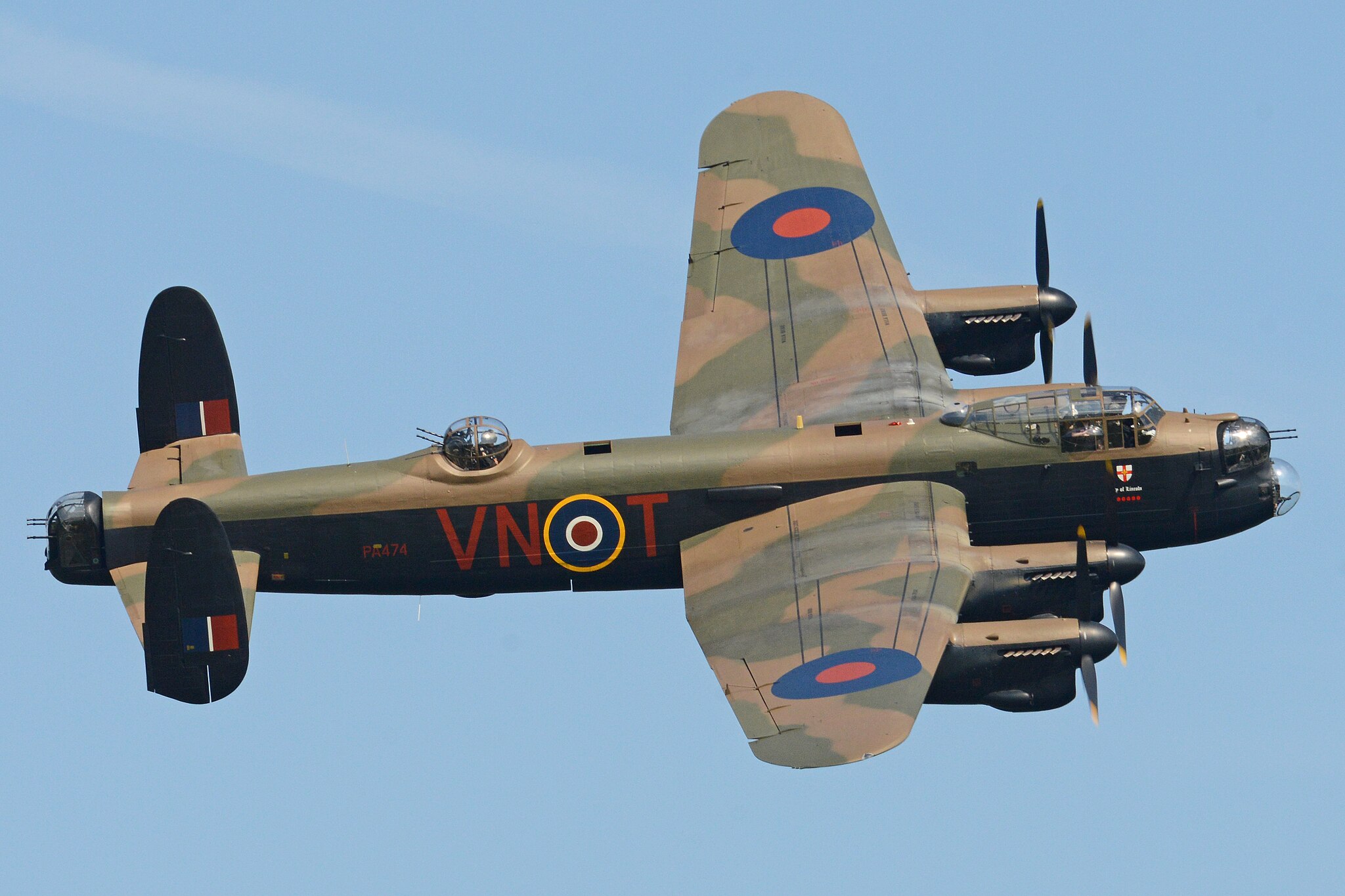 Avro Lancaster B.I ‘PA474 / VN-T’ “City of Lincoln”
Photo by Alan Wilson from Stilton, Peterborough, Cambs, UK,
CC BY-SA 2.0 , via Wikimedia Commons
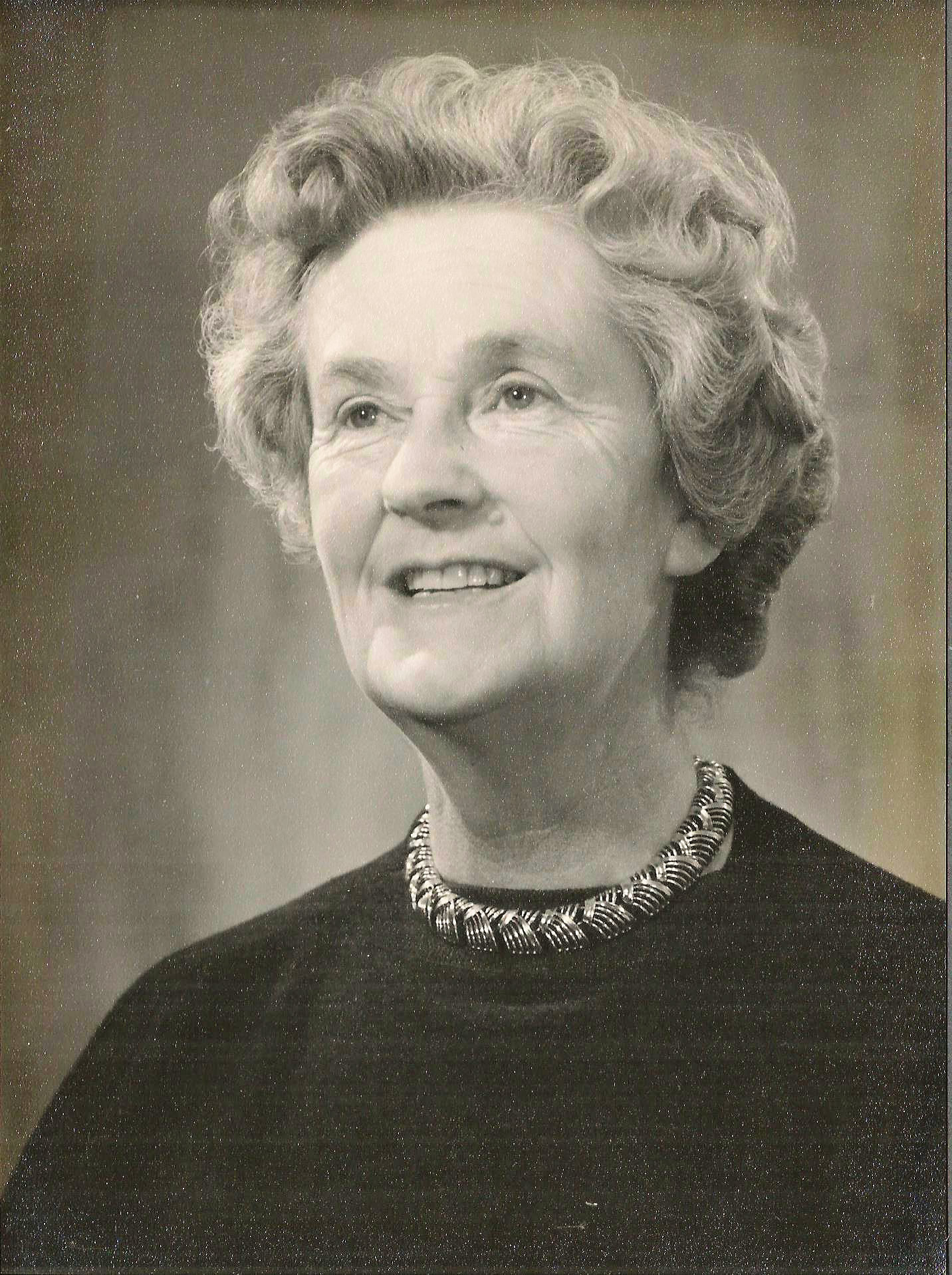 A 1970s Photo 0f Joyce Klein taken by Trevor Fry ARPS, Epsom
Image courtesy of Peter Klein © 2023
Other plans forming part of the original deeds to 2 Westways
Click on image to enlarge

Initial Road Layout
Note: Westways was initially to be called Murrayfield Gardens
 Amended Road Layout
The slightly lighter area is thought to be the whole
plot acquired by Lavender & Farrell.
Note: Westways was initially to be called Murrayfield Gardens
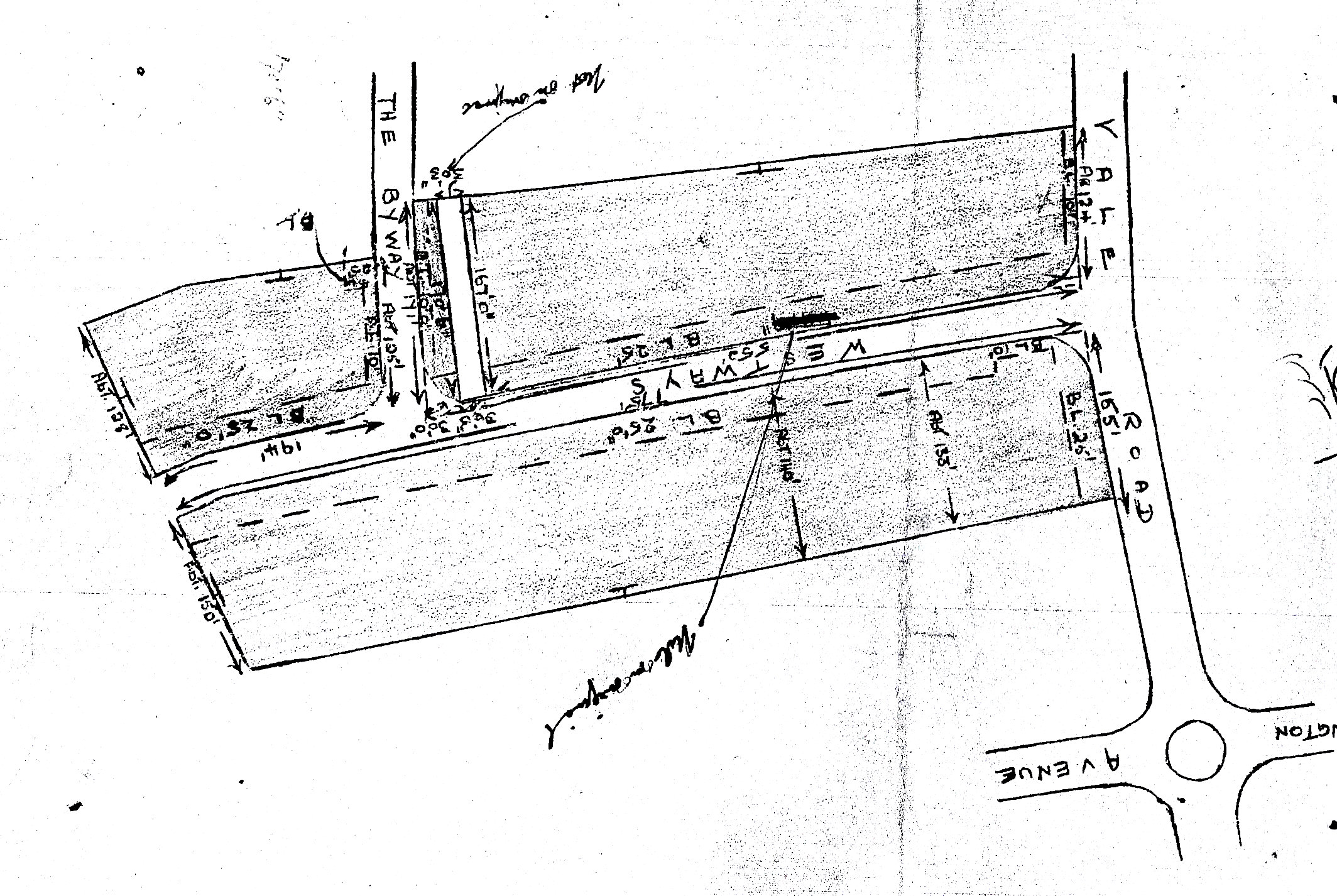 Outline of one part of the Stoneleigh Hill Estate
acquired by Lavender & Farrell
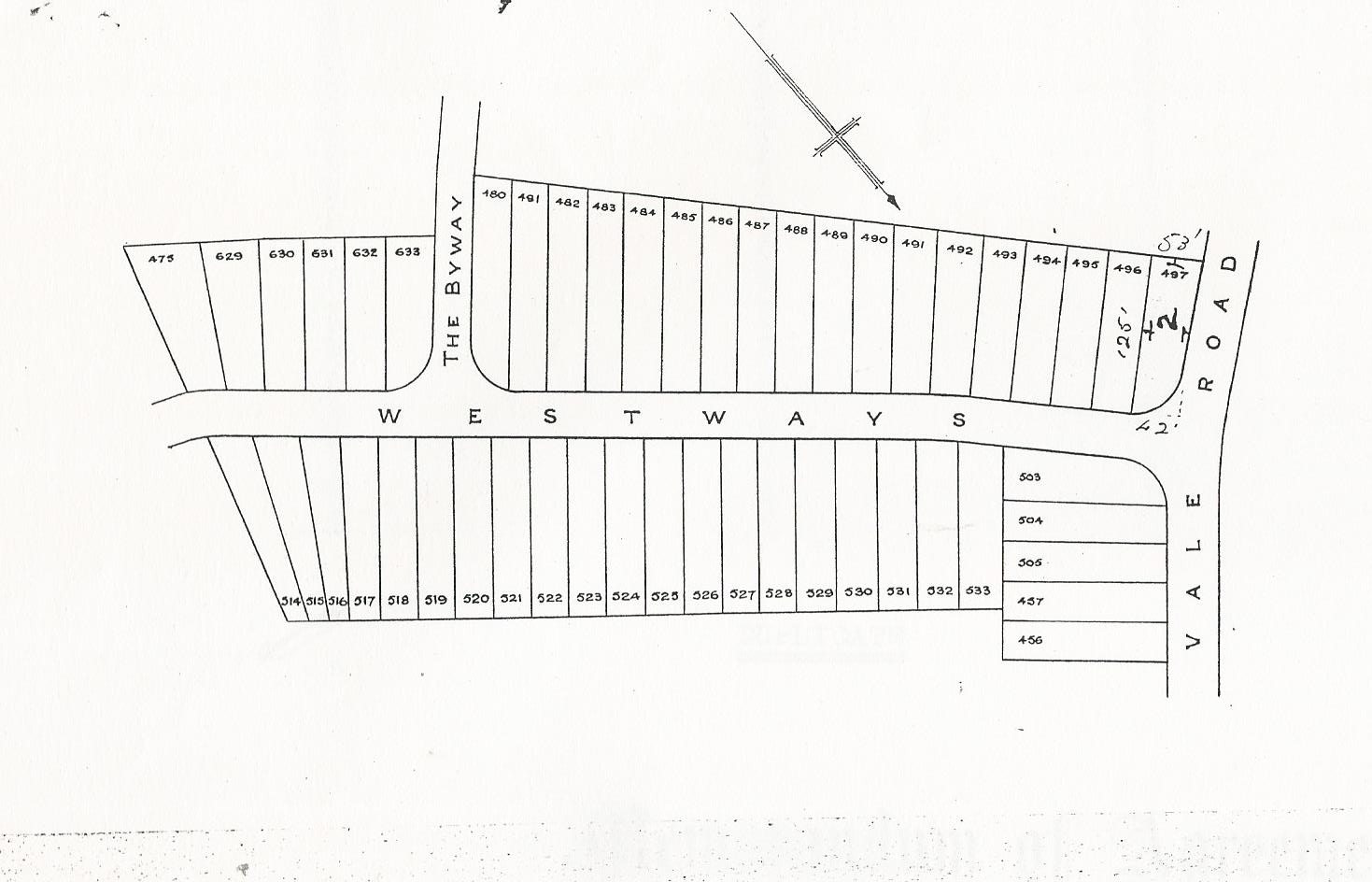 How Lavender & Farrell split this plot into sub-plots
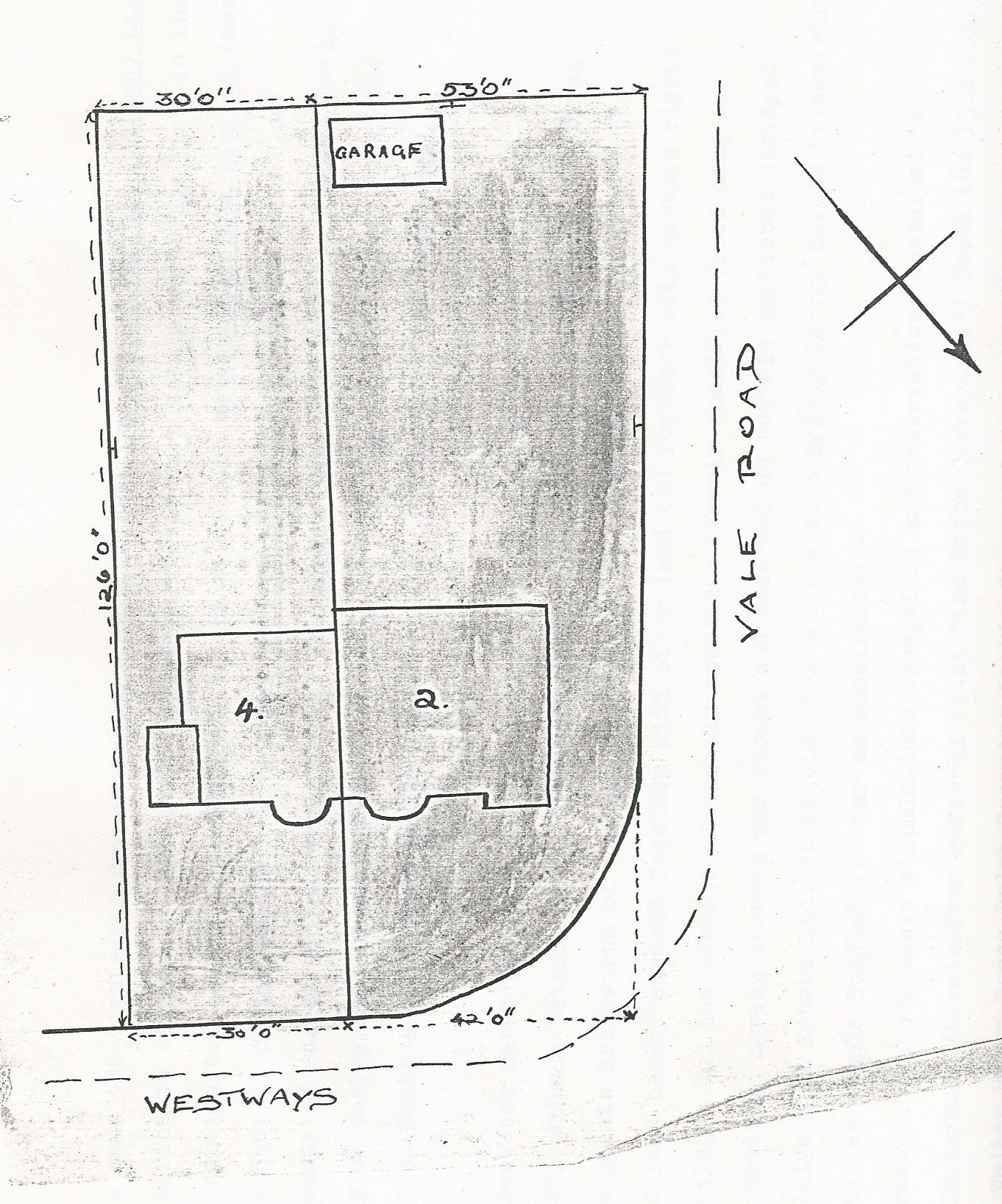 Westways numbers 2 and 4
(Lavender and Farrell plots 497 & 496 respectively)
2 and 4 Westways
Image courtesy of Peter Reed 2023