
‘HENDFORD’ AND THE ADAMS FAMILY
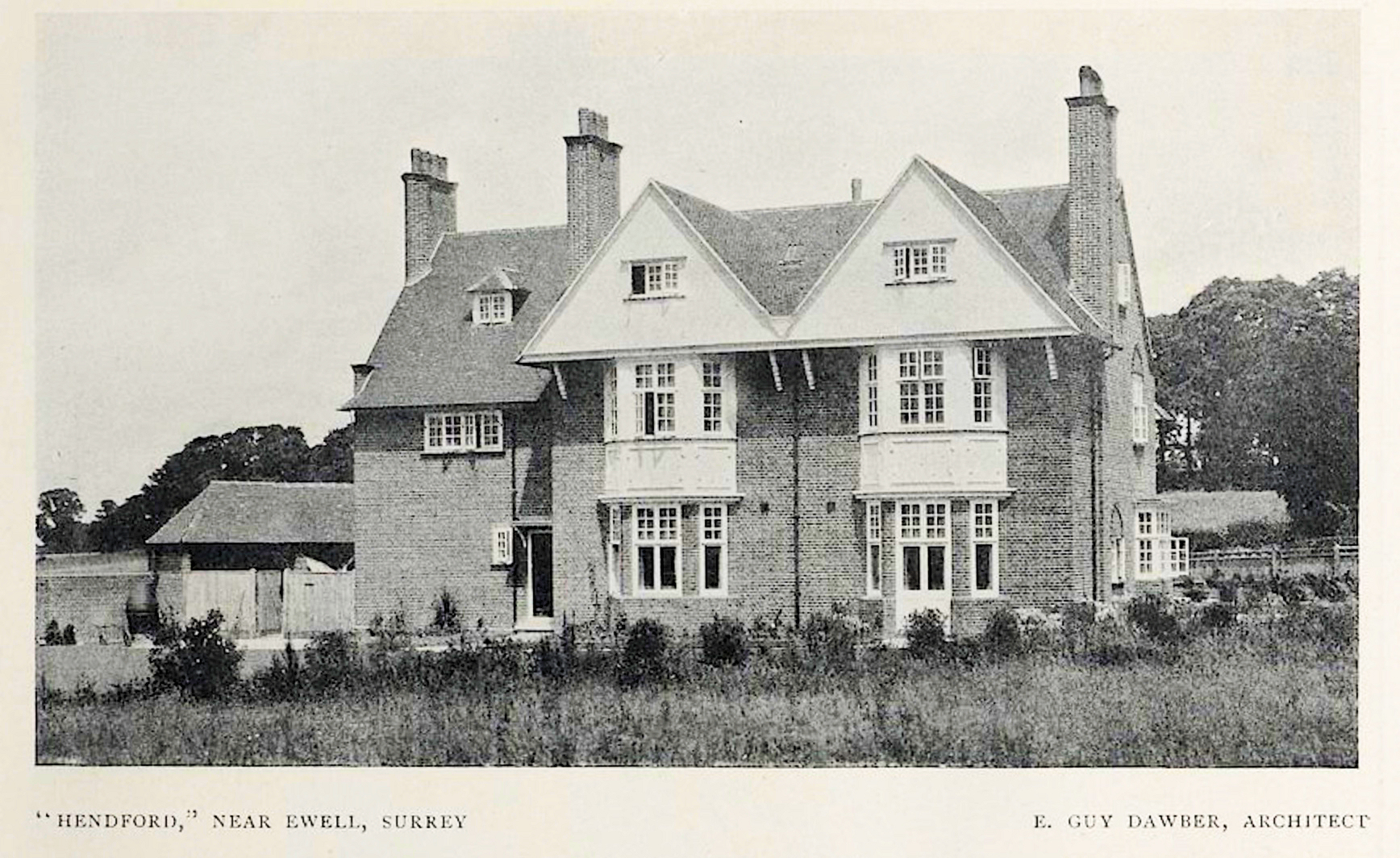 Postcard view of Hendford
Image Source Wikicommons
‘Hendford’ was, and still is, a house at Howell Hill Grove, Ewell, much of the nearby area now being a nature reserve. Please see our article on Priest Hill Nature Reserve for general information on the wider subject and the Surrey Wildlife Trust’s page on Howell Hill for more specific details, including visiting information. The architect of ‘Hendford’ would have been proud of these initiatives, but I am getting ahead of myself.
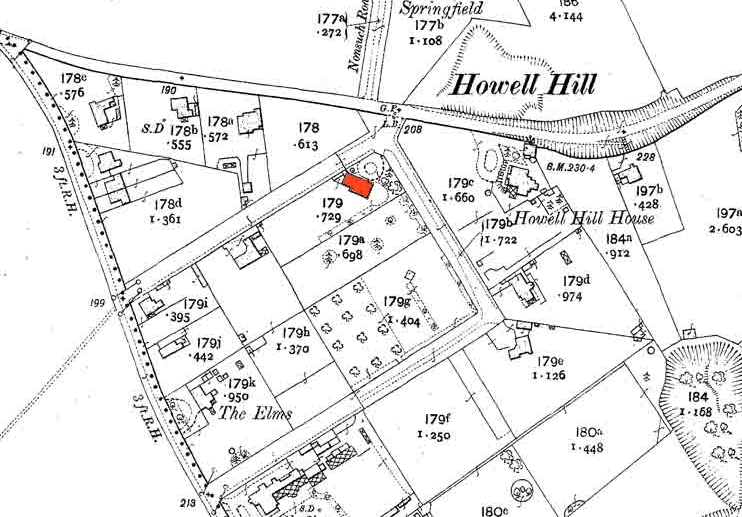 1913 map of Ewell/Cuddington, showing ‘Hendford’ in red
‘Hendford’ was designed in the early 1900s by E. Guy Dawber (more of him later) for Mr and Mrs Herbert Edward Adams. The house had been built by 1906 and the young Adams family moved in. Mr and Mrs Adams had settled in Ewell following their marriage at Barnes in 1897. Initially they lived at Holmfield, Cheam Road. Their two children, both born in Ewell, were Phyllis Mary (1898) and Edward Norman Sandell (1900).
Herbert, a solicitor, was a Londoner, born in 1866, but his family re-located to Sutton quite early on. The key to the naming of the house is Mrs Adams (Agnes Elizabeth): she was born in Yeovil in 1868, the only child of Thomas Oliver Sandell and his wife, Agnes Emma (née Fleuret), Mr Sandell was a pharmaceutical chemist from Biggleswade and, at the time of his daughter’s birth, his shop was in Hendford, Yeovil, although he subsequently moved his business to various addresses in London.
Sadly, the Sandell parents did not last very long. Thomas died in January 1890, aged only 45. The West London Observer (Fulham section) of 8 February 1890 carried the following illuminating snippet.
THE LATE MR T.O. SANDELL – The St Andrew’s Magazine referring to the death of the late Mr T.O. Sandell, recently reported in the West London Observer, says: – “His loss will be greatly felt. For years Mr Sandell had been a regular worshipper in St Andrew’s Church and has taken a warm and liberal interest in all church work. As a member of the Church Council, warden of May Street Parochial Room and Treasurer of Fane Street Mission Building Fund he has rendered valuable service. A deep sympathy is felt for Mrs Sandell and Miss Sandell in their great and sudden bereavement. Mr Sandell’s death also involves the loss of Mrs and Miss Sandell as church workers. The large and important Bible Class for young women, which Mrs Sandell has conducted with much success for some years, has been undertaken by Mrs Perkins and Mrs Sandell will be succeeded by Mrs Thompson in the treasurership of the Women’s Sick and Benefit Society. We also lose the services of Miss Sandell as a Sunday School Teacher and Provident Fund Collector.”
Mrs Sandell died at home in Wood Green on 25 June 1890, aged only 47: it had been just over five months since the death of her husband. Her only next-of-kin was Agnes Elizabeth, who went to live with her uncle, Alfred Fleuret, in Barnes. She was still there on 6 July 1897 when she married Mr Adams in the parish church.
Sutton’s Past on Glass project has yielded some photographs, taken by David Knights-Whittome, which we believe to be this Adams family.
 Probably Herbert Edward Adams (2 September 1907)
Image courtesy of Sutton Archives and their Past on Glass Project (CC BY-NC 2.0)
With thanks to John Court for spotting the connection.
 Probably Mrs Agnes Elizabeth Adams (8 March 1912)
Image courtesy of Sutton Archives and their Past on Glass Project (CC BY-NC 2.0)
With thanks to John Court for spotting the connection.
In the 1911 census Mr and Mrs Adams were at home with daughter Phyllis and just two servants for a 13-roomed house; Edward has eventually been located, notwithstanding multiple transcription errors (Norman Clark, female???), as Norman Adams, a pupil at Ripley Court, a private school in Ripley, near Woking, which still exists today.
 Ripley Court School in 2020
Photograph by Simon Burchell via Wikimedia Commons
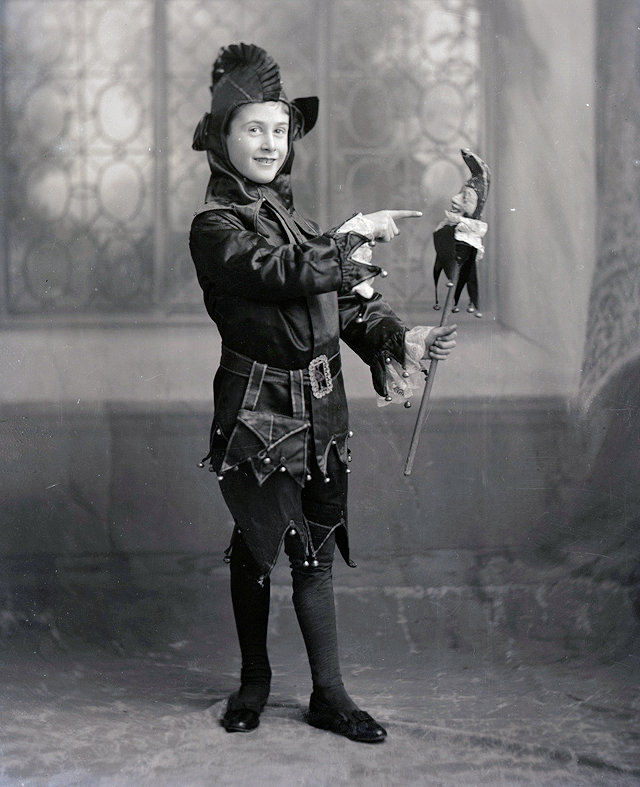 Probably Edward Norman Sandell Adams in costume for a performance (24 January 1908)
Image courtesy of Sutton Archives and their Past on Glass Project (CC BY-NC 2.0)
With thanks to John Court for spotting the connection.
 Probably Edward and Phyllis Adams (24 January 1908)
Image courtesy of Sutton Archives and their Past on Glass Project (CC BY-NC 2.0)
With thanks to John Court for spotting the connection.
Note: A comment by a lady on the Past on Glass flickr website suggests that Edward and Phyllis may have been in costume as Jack Point and Elsie Maynard from Gilbert and Sullivan’s ‘Yeomen of the Guard’. Having read up on the opera (I am not a fan of Gilbert and Sullivan in performance, having been put off terminally decades ago by being forced to sit through an amateur college production of ‘The Pirates of Penzance’, in which an extraordinarily talentless student, who desperately wanted to be an actor but was studying something else, swashed and buckled limply for what seemed like hours), I think that the lady is correct.
There are later photos of people believed to be Edward and Phyllis, which are shown below.
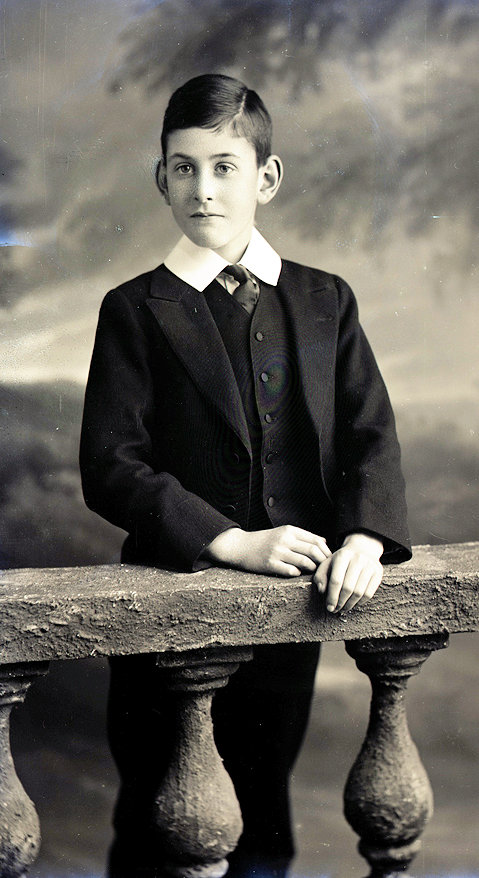 Probably Edward Adams (20 April 1912)
Image courtesy of Sutton Archives and their Past on Glass Project (CC BY-NC 2.0)
With thanks to John Court for spotting the connection.
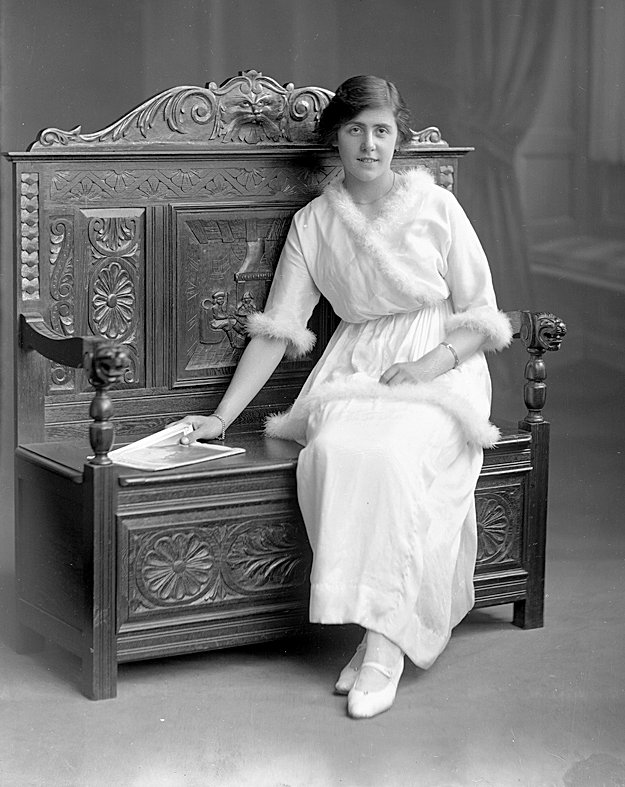 Probably Phyllis Adams (17 January 1914)
Image courtesy of Sutton Archives and their Past on Glass Project (CC BY-NC 2.0)
With thanks to John Court for spotting the connection.
This seemingly happy little family was about to be decimated. Herbert Adams died at ‘Hendford’ on Christmas Eve 1918. For some years his offices had been in Long Acre, Covent Garden, but at the time of his death he was operating from 102 Victoria Street, near to Westminster Cathedral (and Number 102 was a building that was virtually destroyed during the Blitz, a fact that Mrs Adams would have been aware of later on). You will gather from the prestigious addresses that Herbert was successful in his profession and, in fact, his estate was worth over £26k, which would be somewhere around the £2m mark nowadays.
As is often the case in stories like this, we need to take a diversion to introduce a different family, who will become relevant, and we shall return to our main subject-matter in due course.
The Batho Family
William Timperley Batho was born in 1867 in Birmingham, a son of the inventor/engineer William Fothergill Batho and his wife Elizabeth (née Timperley). William the younger was a civil engineer, roughly the same sort of age as Herbert Adams, so it’s a fair assumption that the families had things in common, especially when Mr Batho and family came to live at Fitznells, Ewell. Wikipedia says that Mr Batho purchased Fitznells Manor and immediate grounds in 1930, but he was there before that (probably from around 1926), perhaps leasing it to see if it suited.
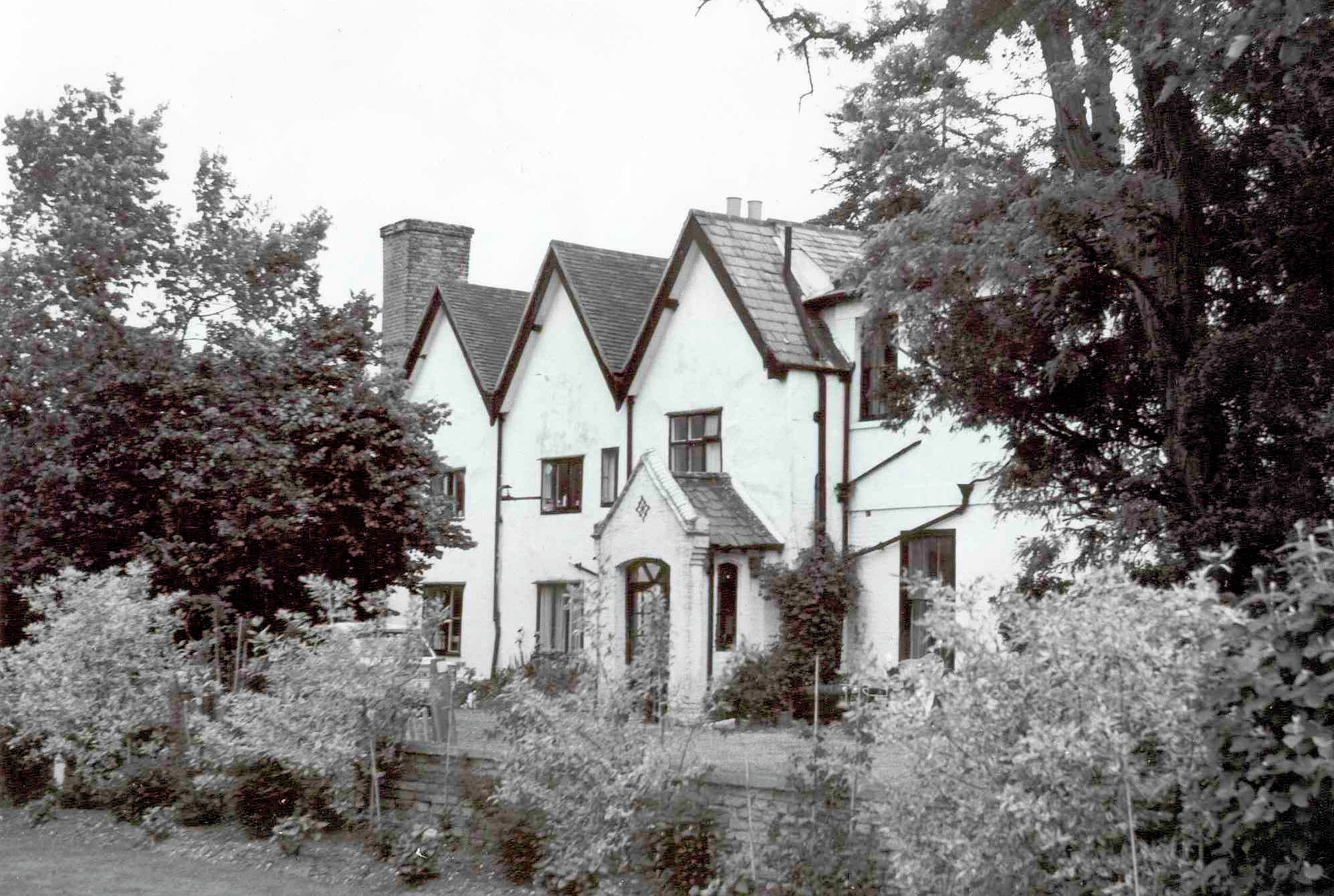 Fitznells (date unknown)
Image courtesy of Bourne Hall Museum
There’s no point in speculating idly on how the Batho/Adams connection arose, so we shall move on to 7 July 1928, when Phyllis Mary Adams married Dr (medical) Thomas Miles Moss Horsfall of Cheam at St Mary’s, Ewell. Nothing Batho about that, obviously, but her address was given as Fitznells. There was no sign of Mrs Agnes Adams or Edward Adams as witnesses on the marriage certificate, which strikes me as odd – they were still at ‘Hendford’ and presumably available. I am wondering if Mr Batho might have given Phyllis away, as she was fatherless.
Anyway, we must put our skates on and proceed to 1934, which was a watershed year for the Batho family. William had been on what I suppose to have been a business trip (perhaps a civil engineering project) and was on his way home on the SS Oceania, it seems, when he was taken to the Strangers’ Hospital, Rio de Janeiro, and he died there on 26 March 1934. This establishment was essentially a hospital for expat Brits and Americans and, presumably, any of that ilk who happened to be passing by or through and needed medical care. William was buried in the English Cemetery, Rio (or, to give it the proper title, Cemitério dos Ingleses, Gamboa). The CWGC, which has a smattering of war graves there (mostly connected with maritime casualties of both conflicts), says: ‘The British Consul advises that this area should not be visited after dark or alone at any time’.
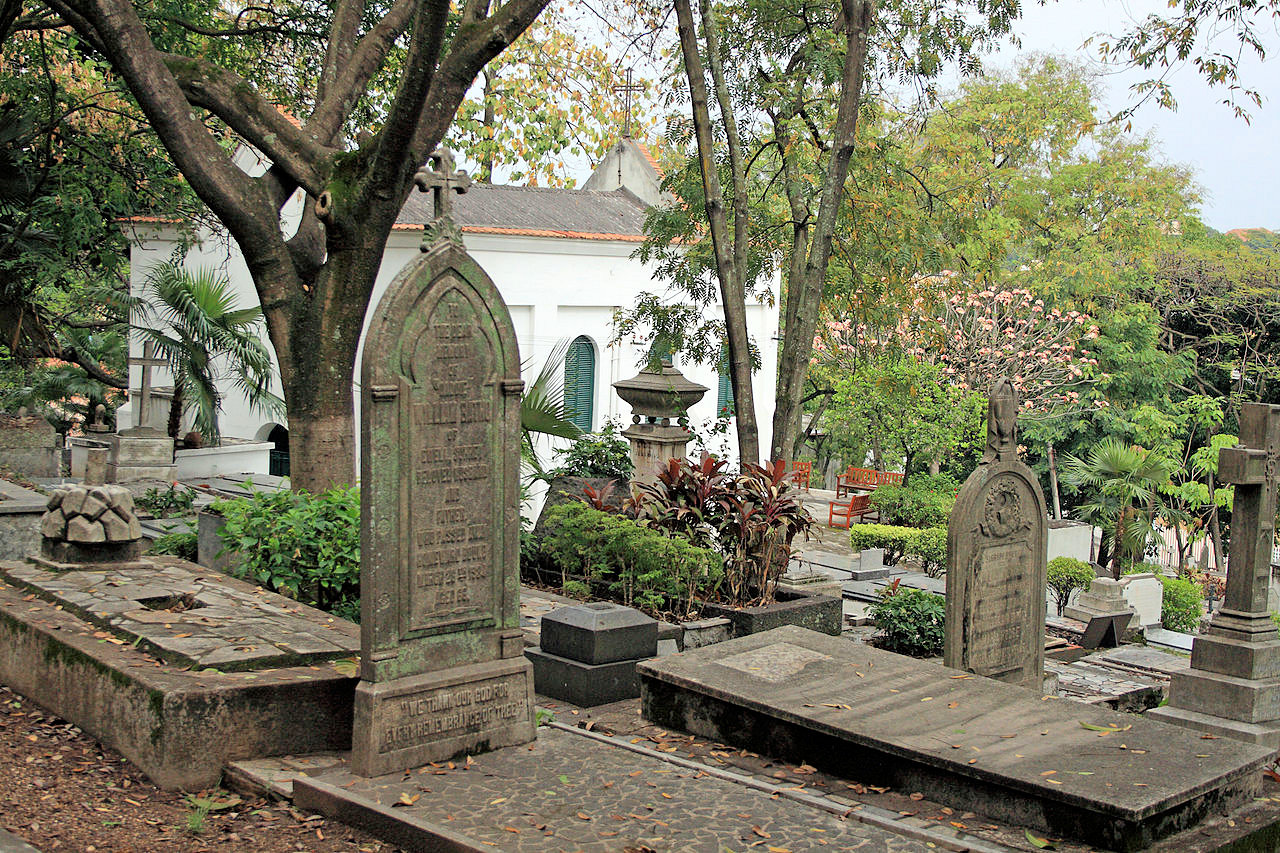 Grave of William Timperley Batho at Gamboa (front left), pictured in 2011
Photograph by Halley Pacheco de Oliveira via Wikimedia Commons (CC BY-SA 3.0)
The inscription on the stone reads as follows:-
‘To the dear memory of “Daddie”, William Batho, of Ewell, Surrey, Beloved husband and father, who passed away homeward bound 26th March 1934, aged 66. We thank our God for every remembrance of thee.’
We can’t know if William was returning to England to make sure he was at a particular wedding, but he might well have been. On 6 October 1934, at St Mary’s, Ewell, Edward Adams, by now a structural engineer, married William’s daughter, Elizabeth Fothergill Batho. They resided where you would expect – he at ‘Hendford’ and she at Fitznells. Once again, Mrs Agnes Adams made no appearance on the certificate, although Elizabeth’s mother, Mrs Helen Batho, was a witness.
I do find the seeming non-appearances of Agnes rather peculiar. Quite often on a marriage certificate for better-off people/professionals there are numerous witnesses named on the document, but not in this case. Mrs Adams was around the area and did not actually die until 1966, by which time she was 98 years old and living in Cheam. By then, both Edward Adams (died 1957) and Dr Thomas Horsfall (died 1951) were fairly long gone, leaving just Phyllis, who passed away in Cheam on 4 September 1987. Mrs Elizabeth Fothergill Adams had died in Alton, Hampshire, in 1983.
Briefly turning back the clock, in the 1939 Register Mrs Helen Batho (died 1963, then living in Surbiton), along with Edward and Elizabeth Adams, was residing at Dulverton, The Grove, Ewell. I am not getting involved with that property, but suspect it may have been fairly ‘modern’ for the time – we shall remain with ‘Hendford’.
So, who was living at ‘Hendford’ in 1939, you may ask? Mrs Agnes Elizabeth Adams is the answer, plus a couple of fairly ageing servants (cook and parlourmaid), and the three of them must have been rattling around in the house big-time. However, further investigation of the servants, the sisters Lucy and Emmeline Hainge, reveals that they were both sturdy Epsom folk, from a very large and no-nonsense type of family, and they were probably just the ticket for Mrs Adams.
How fortunate that I entitled this piece as I did, because I can now leave behind the inhabitants of ‘Hendford’, and the Adams family, and switch with relief to the architect of the house, E. Guy Dawber, who has been a very long time parked in this article.
(Sir) Edward Guy Dawber
 Sir (Edward) Guy Dawber
by Walter Stoneman
bromide print, November 1935
NPG x167020 © National Portrait Gallery, London
Let’s have another picture of ‘Hendford’, just to remind ourselves of what it looked like as a new build, more than a century ago.
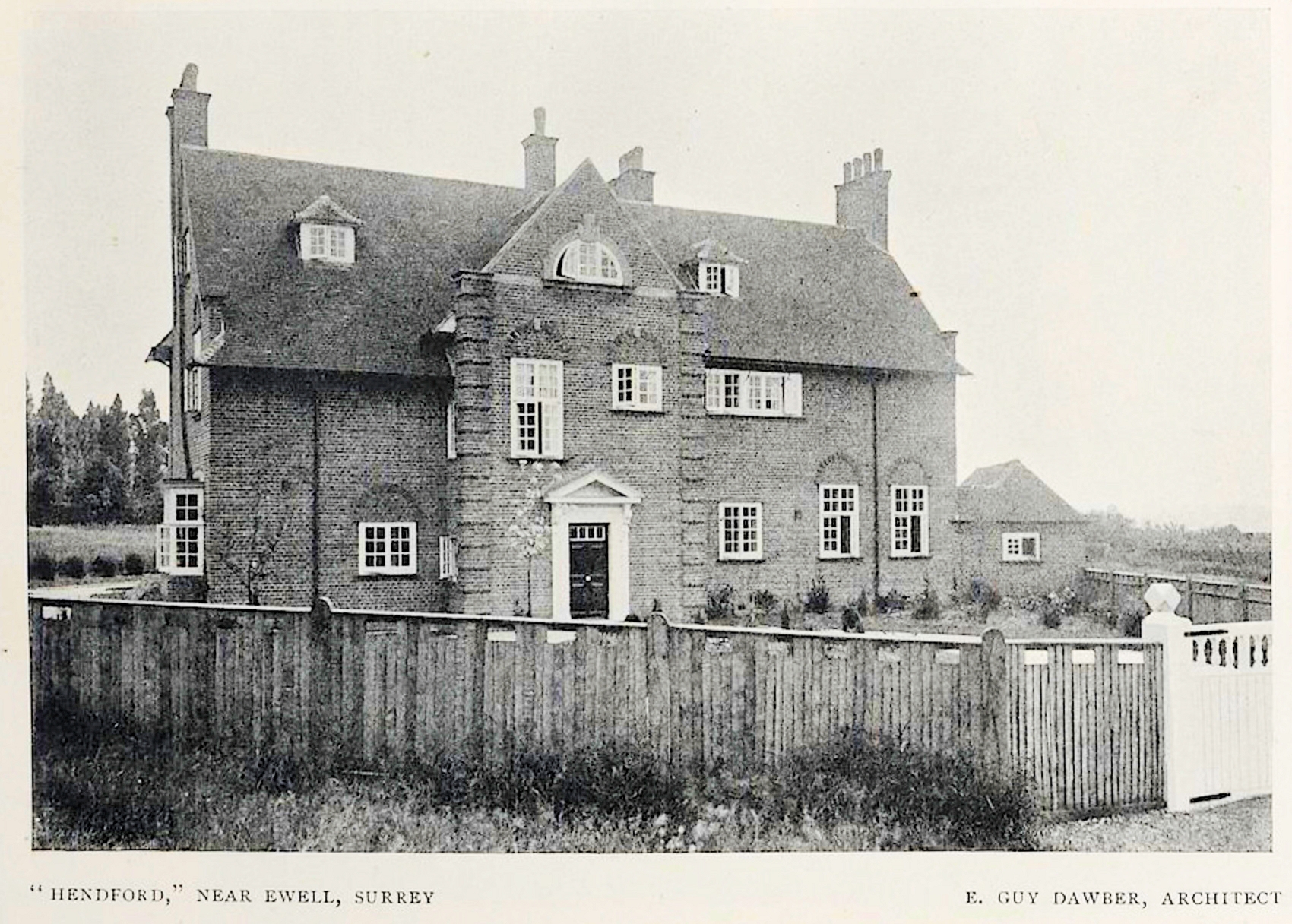 Postcard view of Hendford
Image Source Wikicommons
It is pretty impressive for a professional man’s country abode but, more than that, it’s indicative of a style and philosophy that existed from about the middle of the 19th century as a response to the industrialisation and brutalisation of architecture. Unfortunately, this worthy effort regressed in the 20th century, driven by wars, the need to house an ever-increasing population and, frankly, widespread political vandalism at both local and national level, plus the rabid nature of some commercial developers.
Landscape vandalism is not what we’re here for today. You may not have heard of Guy Dawber, but many of you will have heard of the Arts and Crafts movement, which was basically about design in its many aspects, one of those aspects being architecture. Some of you will know of William Morris, if only for his wallpaper and fabrics. Morris was into many things (if anything, he had too many irons in the fire), but the underlying point is that he and his circle were influential in advocating excellence in design, something which inspired legions of people around the world in one way or another. A few Morris associates/disciples are dotted around on this website – for example, Frederick Startridge Ellis, who married one of the local Moates girls; Edward Burne-Jones – see Aubrey Beardsley – ; architect Leslie Waterhouse and several more.
Waterhouse is connected to Dawber, albeit indirectly, so I now refer you to our article on the Burn family and the person you want is Mary Allan Burn, who is a long way down the page. Mary died very young but her husband was architect and artist (Sir) Ernest George, who, along with his partner, Harold Peto, was the key link in the architectural chain we are dealing with.
 Sir Ernest George
by Unknown photographer
carbon print, 1910s
NPG x11859 © National Portrait Gallery, London
Dawber trained under George and Peto, as did Waterhouse. Both George and Dawber were Presidents of the Royal Institute of British Architects (the former from 1908 to 1910 and the latter between 1925 and 1927).
Ernest George designed Limnerslease, the Compton home of George Frederic Watts.
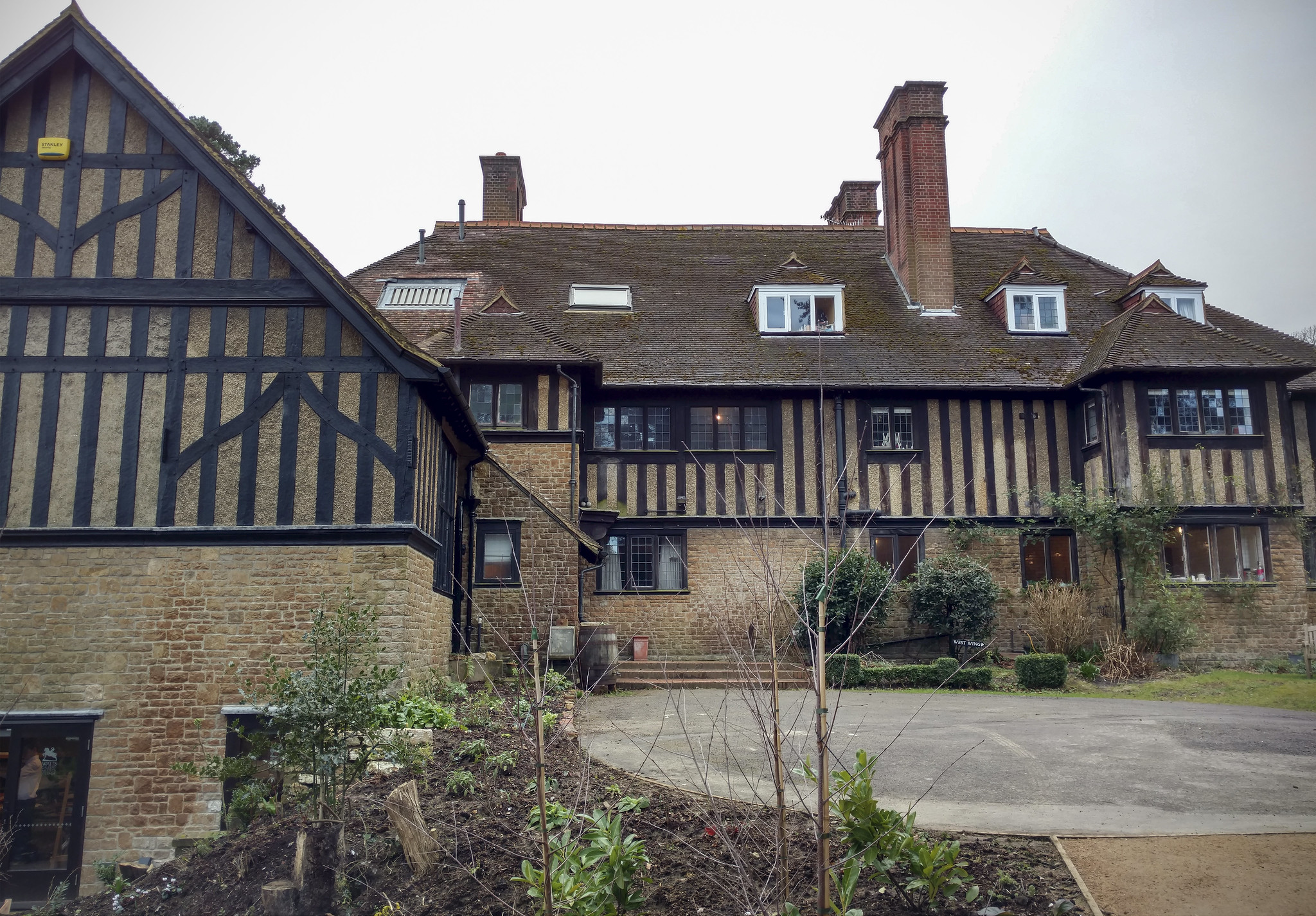 Limnerslease
Image courtesy of The Watts Gallery via flickr (CC BY 2.0)
One of the spectacular George/Peto collaborations is Sedgwick Park House, near Horsham.
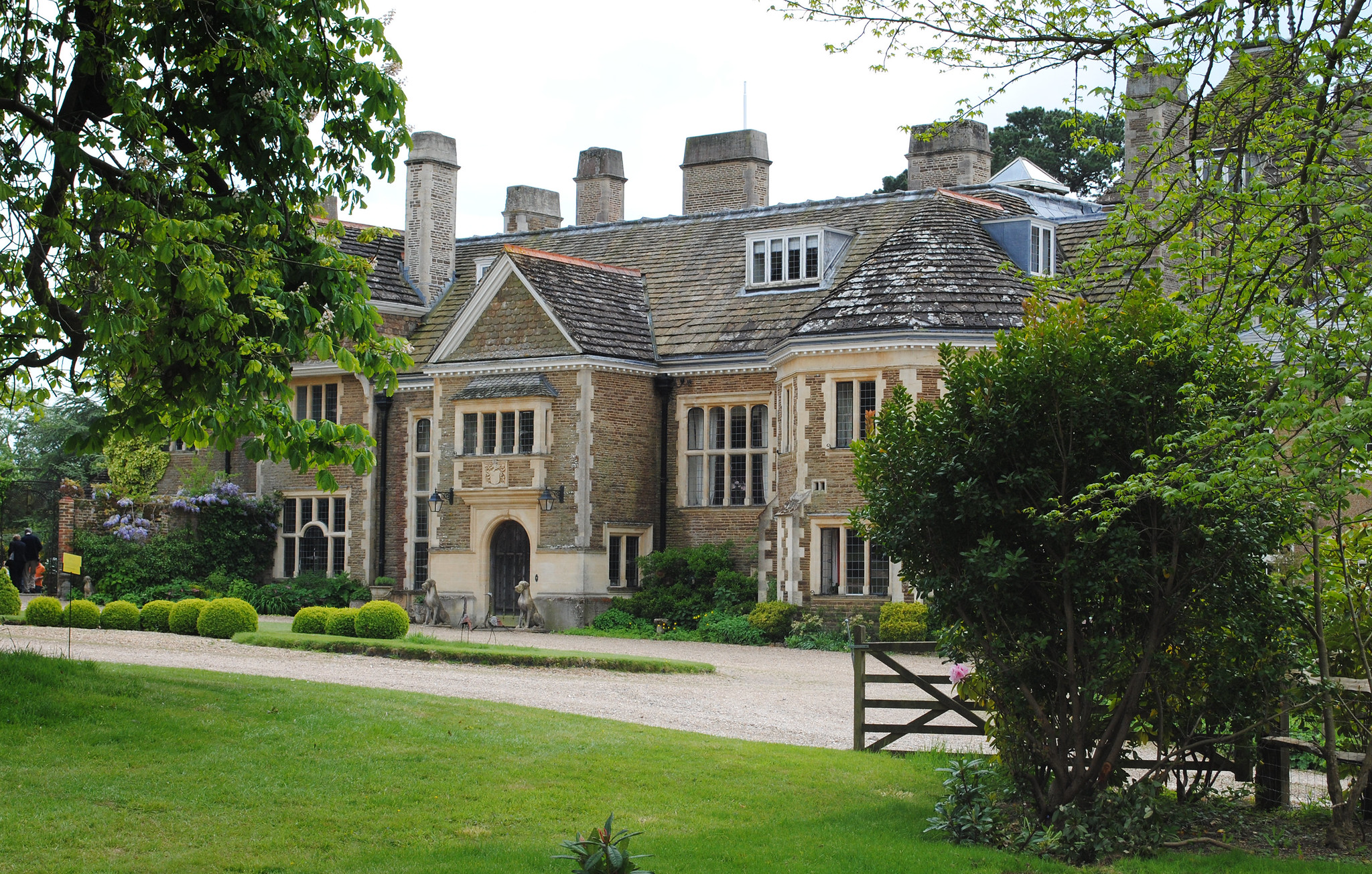 Sedgwick Park House
Photo by ‘Mark’ via flickr (CC BY 2.0)
You can probably see where we’re going here. There is something about these houses, whether they are on a grand or more modest scale – one-offs, durably built, tall chimneys etc.
Don’t be alarmed by this next photo. Dawber didn’t design a toy shop, but the building, at 25 High Street, Broadway, Worcestershire, was originally the Old Post Office (without a telecoms cabinet against the front wall, obviously). He was particularly noted for his work in the Cotswolds and was one of the founders of the Council for the Preservation of Rural England; the probably overdue knighthood arrived in 1936, shortly before his death in 1938.
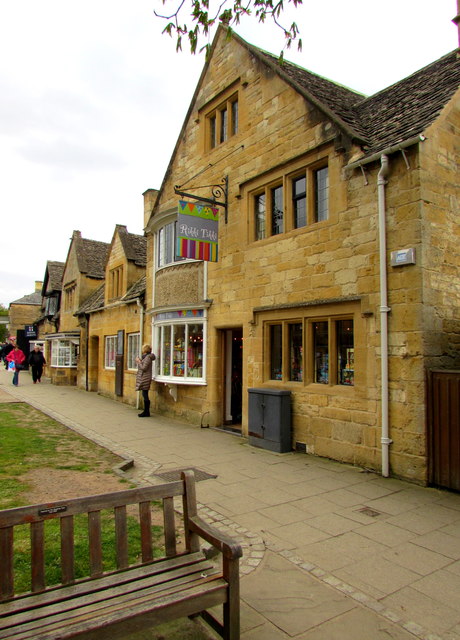 Rikki Tikki toy shop, 25 High Street, Broadway, Worcestershire
cc-by-sa/2.0 – © Jaggery – geograph.org.uk/p/5605033
You won’t find many huge commercial-type buildings or churches by Dawber, although there are a few war memorials, and, apparently, the largest project he ever undertook was Lord Wandsworth College in Long Sutton, Hampshire, although he gets little credit for it and there have been many additions and alterations over the years, but it is still there. The real point is that many of these buildings have survived more or less intact and that they retain a useful and financially viable function.
Which returns us to ‘Hendford’: it has been changed and extended, although most of the works have been functional to suit its use as a nursing home, which it has been for at least the past 30 years or more.
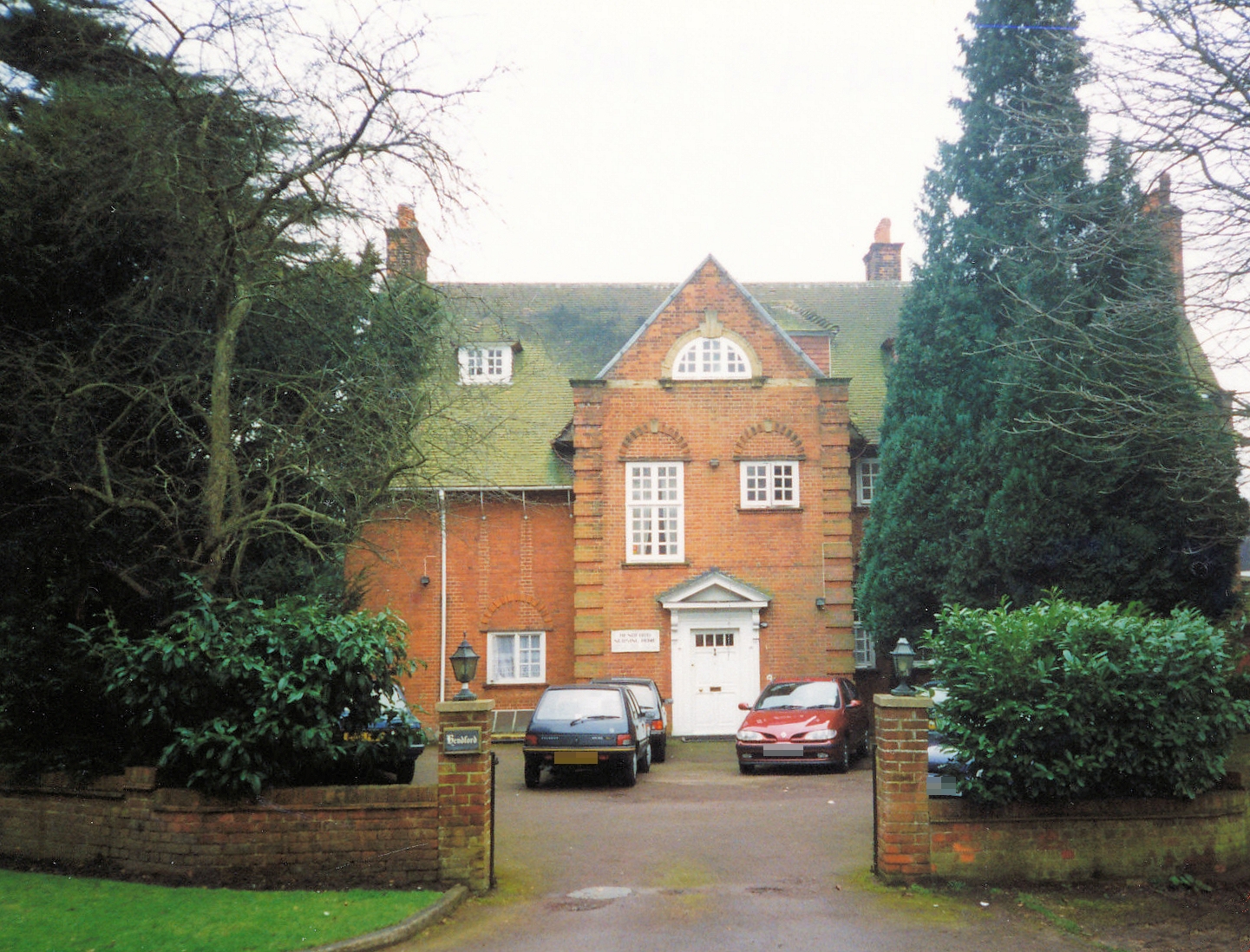 ‘Hendford’ in its incarnation as a nursing home
Image courtesy of Bourne Hall Museum
Linda Jackson 2022