Derby Toys
Pall Mall Gazette – 29 May 1888
THE “STRAIGHT TIP” CONCERNING DERBY TOYS.
A CHAT WITH A WHOLESALE DEALER.

To many men the annual recurrence of Derby Day means the loss of money: to some it means the winning of golden sovereigns, and by a large class it is always looked forward to as a prospective harvest of honest pennies. Among the last named class the vendor of popular toys is by no means the least important personage. If his stock be varied and new —the latter is an indispensable condition — he enjoys as good an opportunity as any man to retail his wares at a profit. For the love of toys is universal; and in no sense confined to children, as may at first sight appear. Indeed, it might be laid down as a thesis, and it would bear much discussion, that the cause which under lay the grand dramatic outburst of the age of Elizabeth and the cause which prompts a man returning from the Derby to put on a false nose or moustache are one and the same. Both are manifestations — far different in degree, it may be but nevertheless “arguably” manifestations — of that dramatic instinct which lies deep in the heart of the English race. The man who puts on the false nose and the woman who flaunts a gaily coloured paper parasol are both expressing in a rude fashion our national love for shows : our inherent weakness to see things, not as they are, but as they may under certain conceivable circumstances become. And there is another element in the popularity of toys which must be taken into account — namely, the humour that arises from incongruity. The revellers of Derby day not only desire but are willing to give amusement, and the sight of a full-grown man dandling a penny doll causes immense fun: there is something so infinitely absurd in the connection. From Shakespeare and the Elizabethan dramatists to an East-end toy merchant is a “far cry.” But even as Hamlet saw no reason why “imagination should not trace the noble dust of Alexander till he found it stopping a bung-hole,” so there is no reason why one may not trace the downward steps of our dramatic instinct from the well-trod stage of the past to the toys of to-day.

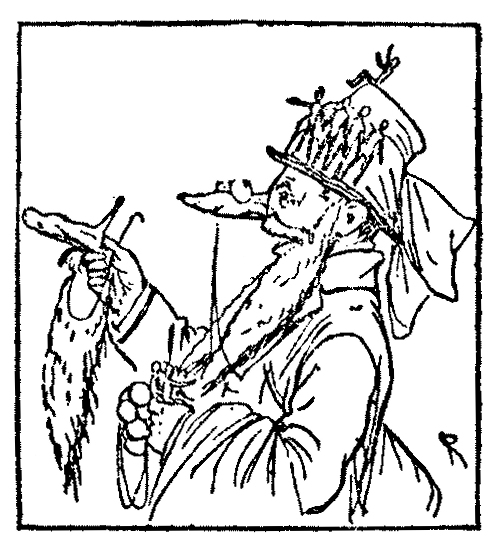
With a view of finding out what toys are likely to sell best on the course at Epsom to-morrow, a representative of the Pall Mall Gazelle recently called on Mr. W. J. Lawrence, of Houndsditch, an importer who supplies most of our street hawkers with their stock-in-trade. He was informed that this year’s novelties are chiefly from Japan; and that the toys which will sell best are Japanese umbrellas, Japanese fans, and a curious little thing called the Japanese juggler. The Japanese umbrella is pretty and useful, It is hand painted, is of convenient size, and can be sold in the streets for about 2d. Consequently the demand for it among the retailers is almost unprecedented. If twelve cases arrive from the docks one day they are sold out before the next. The Japanese fans also are likely to sell well. A new shape has been introduced, which folds up neatly and can be carried in the pocket. The success in toys proper is likely to be the Japanese juggler, an ingeniously constructed contortionist, whose most daring feats can be commanded by the slightest turn of the finger. Shake the hand gently and the mannikin will throw himself into antics as
… variable as the shade
By the light, quivering aspen made.
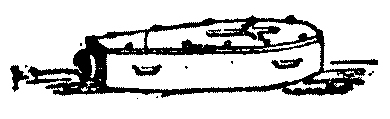
The sale of mechanical toys will also be in full swing to-morrow, will prove “a good line,” as Mr. Lawrence would say. The “walking postman” has a formidable rival in “la boulangère” — the baker’s wife, who trudges along the pathway delivering her husband’s loaves. Loaves suggest fishes ; and we may note that lobsters, turtles, crocodiles, lizards, and all manner of creeping things, will probably find themselves on the Epsom course. Noise is also a most desirable element with the pleasure seeker at the Derby. And, as if the stentorian throats of East-end costermongers were not enough, ingenious minds have devised fog-horns, rattles, back-scratchers — highly recommended to log-rollers and mutual admirers in journalism and literature — and last, but by no means least, bagpipes. “We sell an immense number of bagpipes of all sizes and prices at the Glasgow Exhibition,” said Mr. Lawrence to me. Thus does the national weakness manifest itself even in toys. The skin of a calf, after having done service as parchment for a deed, and still bearing its “Now this indenture witnesseth,” and its “As witness our hands and seals,” becomes the tympana of noisy tambourines to be beaten by rude hands at Epsom. Our readers may be interested in knowing that the latest thing in watches is a hunter at a penny. It now only remains for somebody to manufacture a demi-hunter at the same price. It would hardly be right to inquire why a toy “Biberon à soupape” should, cause shrieks of laughter when introduced into a mixed company. But it is confidently expected that it will do so; in fact, it may safely be pronounced “a good line” Dolls include clapping dolls, tumbling dolls, and dollies that squeak on being clasped around the waist. And speaking of dollies, it may be interesting to note that a new piece of doll’s furniture will shortly be on sale in the streets. This is “Dolly’s washing machine,” for which Mr. Lawrence has recently taken out a patent. Noses will sell well to-morrow; so also will a new toy in the shape of a coffin containing a pig. The puzzle is to get the coffin open; and it is ten to one that in the attempt to open it the baffled searcher after the unseen will receive a severe shock. Want of space prevents us from speaking of the inevitable “ladies’ tormentors,” of the rings and brooches, of the coloured bladders, tobacco pipes, and the rest. The curious may look for them on the Epsom racecourse to-morrow.