
“HE WANTS TO BE A JOCKEY”
I recently came across an article in the 6 May 1939 edition of Picture Post about the demanding life of an aspiring jockey. The article – set out in full below – is of particular local interest since the featured stables are those of Epsom’s Stanley Wootton.
The weekly Picture Post was established in 1938 by publisher Sir Edward Hulton and editor Sir Thomas Hopkinson. It was the first British magazine to record the lives of ordinary people rather than the aristocracy. It also emphasised pictures over words and is considered a pioneering example of photojournalism.
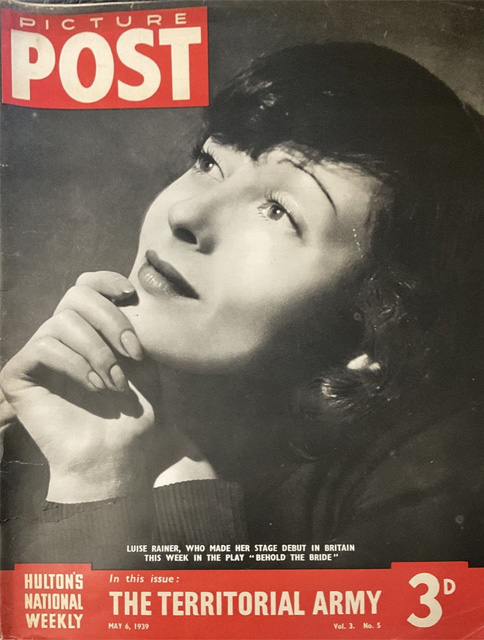 Cover of the 6 May 1939 Picture Post.
Copyright acknowledged.
The magazine was an immediate success, selling 1.7 million copies a week after only two months. It exerted widespread influence during WWII with its dramatic use of candid photographs and vigorous text – by 1943, its circulation was just short of 2 million. The magazine ceased publication in 1957.
Peter Reed 2022
“HE WANTS TO BE A JOCKEY”
(from the 6 May 1939 Picture Post )
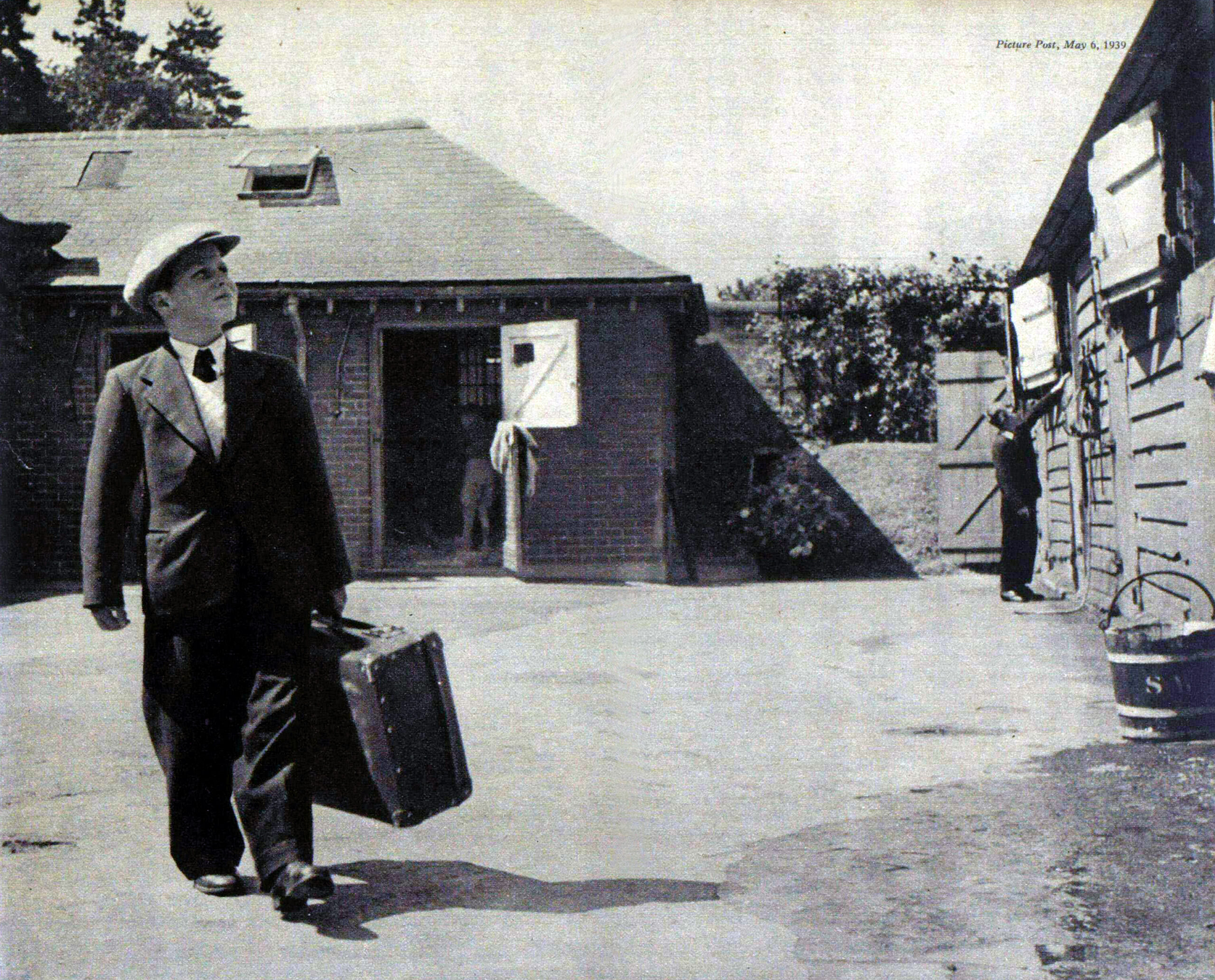 The Future Jockey Takes His First Look at the Stables Where He is to Work
Billy wants to be a jockey. He heard that one of the best ways to learn
was to get taken on as an apprentice at Stanley Wootton’s
training stables out at Epsom. Billy has seen Mr. Wootton who has
told him to turn up at the stables. So here he is in a suit a little too
big for him, carrying his suitcase.
One of the few short cuts to riches and success is to become a jockey. A jockey can be earning his thousands in his twenties. But the jockey’s life is one of hard work and strict obedience.
In racing stables throughout the country, more than a thousand youths between the ages of 11 and 21 are caring for horses, learning the ways of horses, living among horses, talking of horses, dreaming of horses, in the hope that one day they will be able to put on brightly coloured silk blouses and peaked caps and race horses to victory.
When a lad decides he wants to be a jockey, he is apprenticed to a racing stable until he is twenty-one — if he is of the accepted weight and height, well-mannered, well-spoken, and if there is a vacancy, for there are more applications than there are apprenticeships.
The hours of the apprentice are long, the work arduous; an apprentice receives only his board, lodging, clothing and from half a crown to five shillings a week pocket money; but always before his eyes is the vision of fame, glory and the fortune to be won by the star jockey.
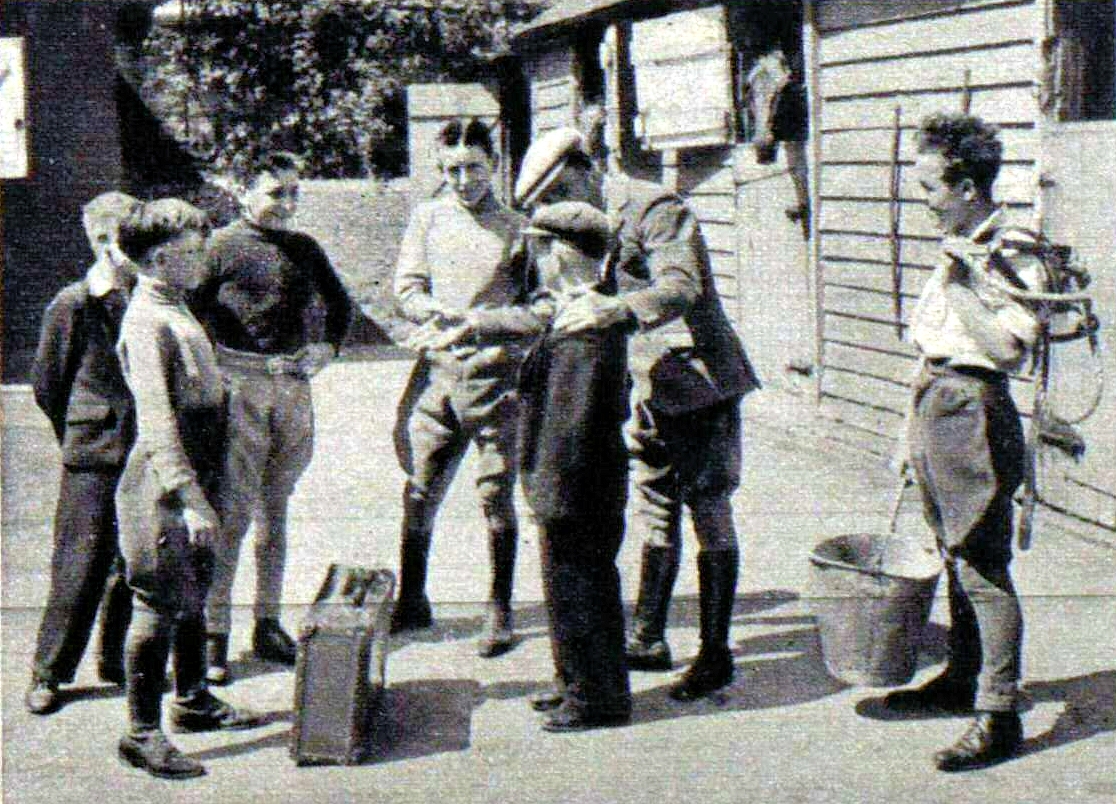 Billy Meets the Other Boys
The Head Lad introduces Billy to the other apprentices
Among whom he is going to live. “They are good lads”
he says. “But don’t believe everything they tell you”
The contract, which is signed by the boy’s parents or guardians and the trainer, provides that “the Master shall receive half his riding-fees and half of any gifts he may be given.” Thus does the trainer receive his reward for the years of patient training and the many opportunities he gives a boy to make a name for himself.
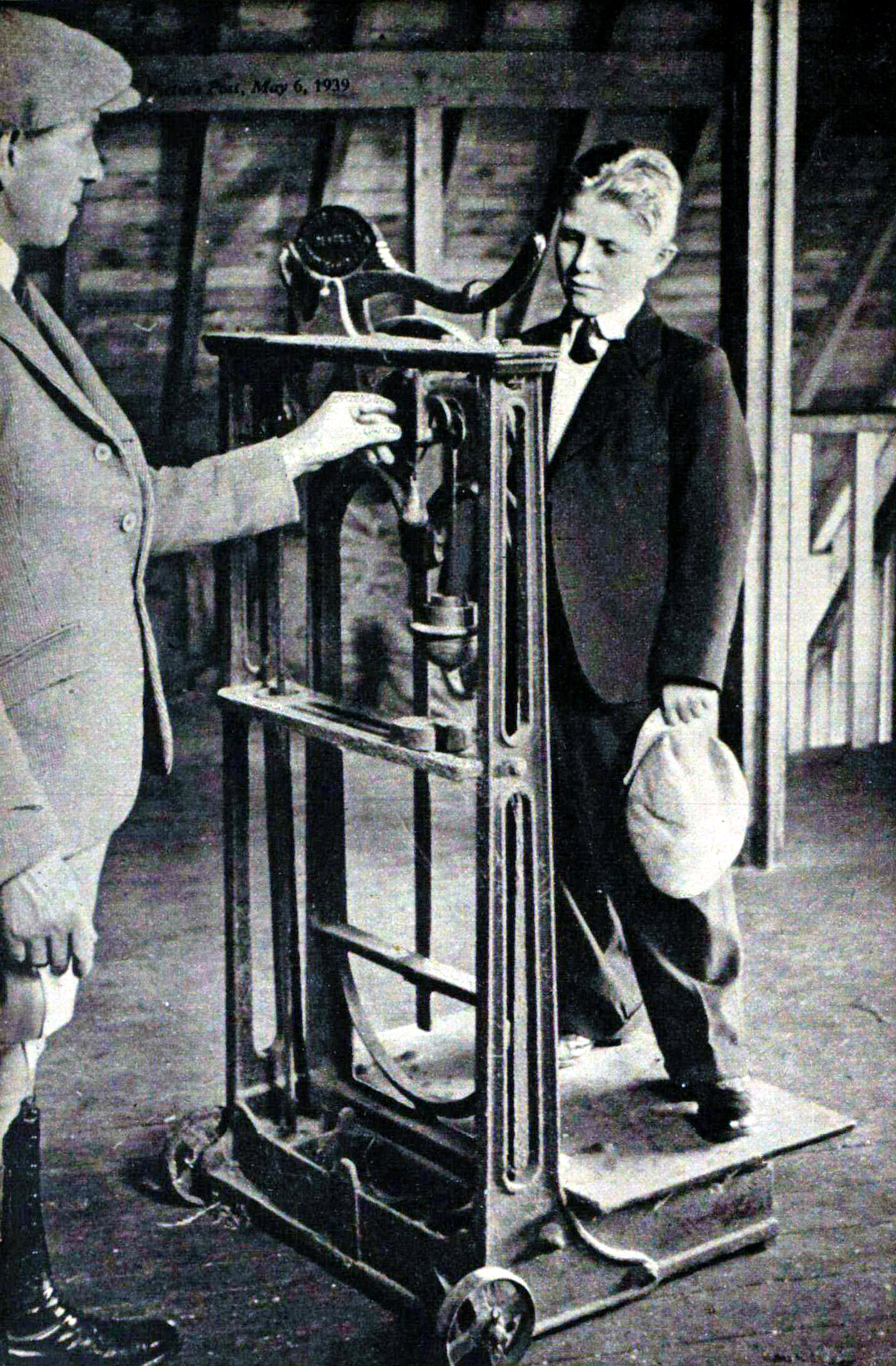 He Discovers His Lifelong Enemy – Weight
Billy goes into the weighing-room. He learns that his enemy from now
on will be weight! His ambition will be to tip the scales – when fully
grown – at about 7 stone 13 lbs (about 50kg)
Not all apprentices become jockeys. Some grow over the ideal 7 stone 13 lbs., some never develop a flair for horse riding. In many stables those who do not become jockeys at the end of their apprenticeships are allowed to stay on as stable-lads. In others, such as Stanley Wootton’s, where PICTURE POST’s pictures were taken, boys know they must make good or leave at the end of their time.
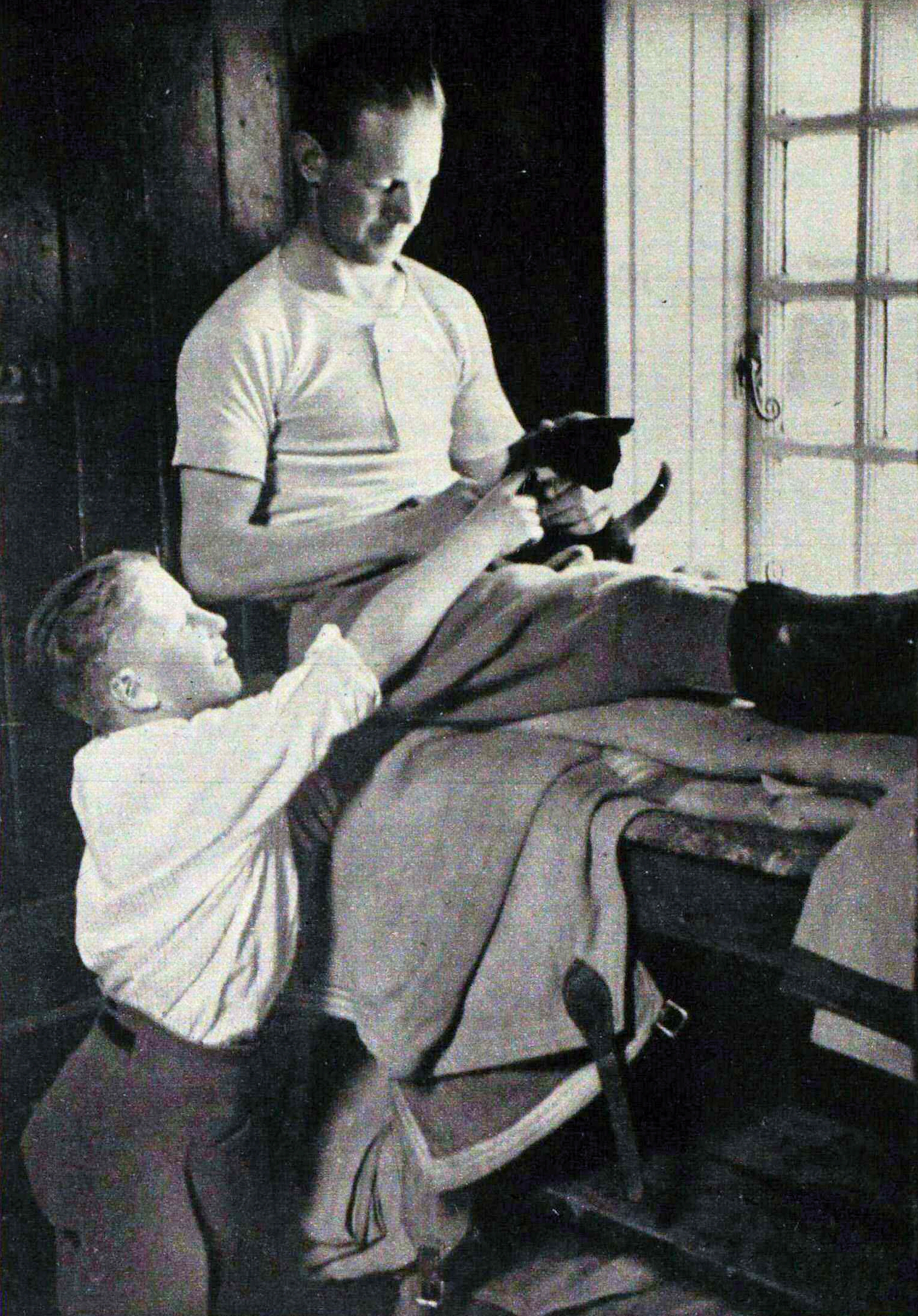 He Discovers a Friend – The Stable Cat
Every stable has its cats. Some say they bring good luck. In films
they have touching friendships with the horses. They’re there, however,
for business reasons – to catch the rats which come after the corn!
For young boys, the trainer frequently starts a school which they attend when they have finished attending to the horses. Boys either sleep on the premises or are boarded out with responsible people in the town, but wherever they are they must be up before it is light, grooming the horses, feeding them, saddling them for their early morning canter. Above all they must learn to obey. Training is a complicated and difficult business, and a mistake in a home gallop can lead to serious complications. The lad who misinterprets or disobeys his master’s orders is liable to instant dismissal. Horses’ speeds are known by various terms, such as first canter, sharp canter, half speed and exercise gallop. The lad who has the natural ability to estimate speed, or who can acquire it, is pretty certain of some success when he graduates to the racecourse.
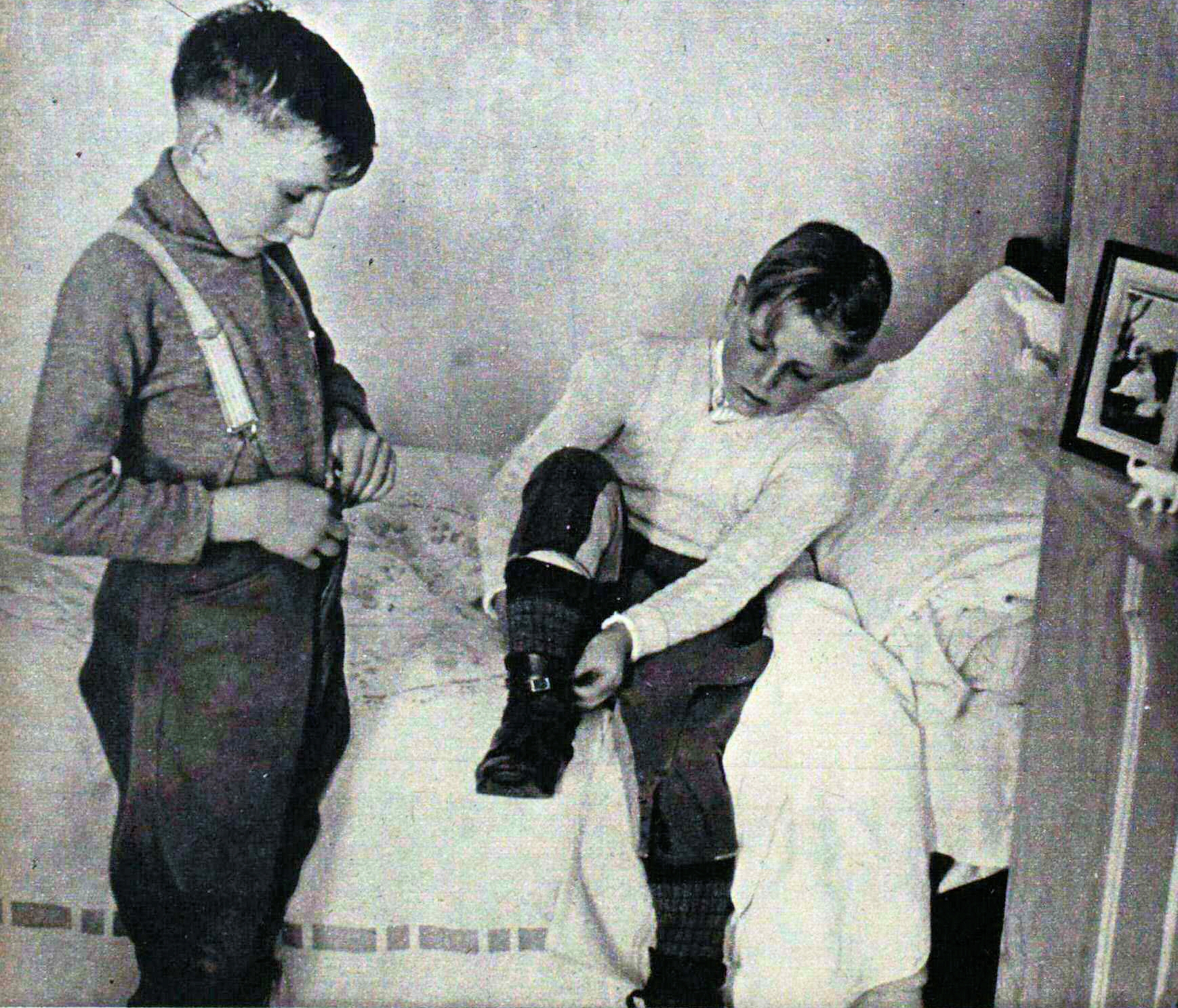 He Learns to Get Up Early
Billy is to be an early riser from now on. Often he will get up at five o’clock. Horses
are exercised in the early morning when the air is cool and there’s nobody about. And
there’s plenty of work even before they leave the stables,
Discipline is rigid. Handling race horses is like handling sensitive scientific instruments. The slightest mistake, and irreparable harm can be done.
The majority of the apprentices in British racing-stables (about one in five of the stable-hands are apprentices) are Cockney and come from respectable working-class families, usually with no previous racing connections. Notable exceptions are Steve Donoghue, who was born and reared at Warrington9 near Manchester, and Harry Wragg, who was called “Sheff” by his fellow-apprentices.
Donoghue has travelled the road of many successful jockeys when their riding-days are over, by establishing himself as a trainer.
To have been an apprentice is practically a necessity for the boy who becomes a jockey. Ninety-nine out of a hundred professional jockeys are first apprentices. From Wootton’s stables have developed names such as these: Smitke, Sirett Stott, Caldwell, Ingham, Magee, Nicholson, Marshall, Hawcroft, Rook, Gethin, Crouch, Field, and Hunter.
The trainer is entitled to a good reward for the trouble and expense involved in coaching an apprentice. He must be prepared to own and run horses so that a lad can be given mounts in public. Obviously, the patron of a stable does not want to run the risk of his horse being beaten because it has been ridden by an inexperienced boy. A boy who shows promise gets his full share of riding, though, for owners like to claim the five pounds’ weight allowance granted if they put up an apprentice who has not ridden more than forty winners.
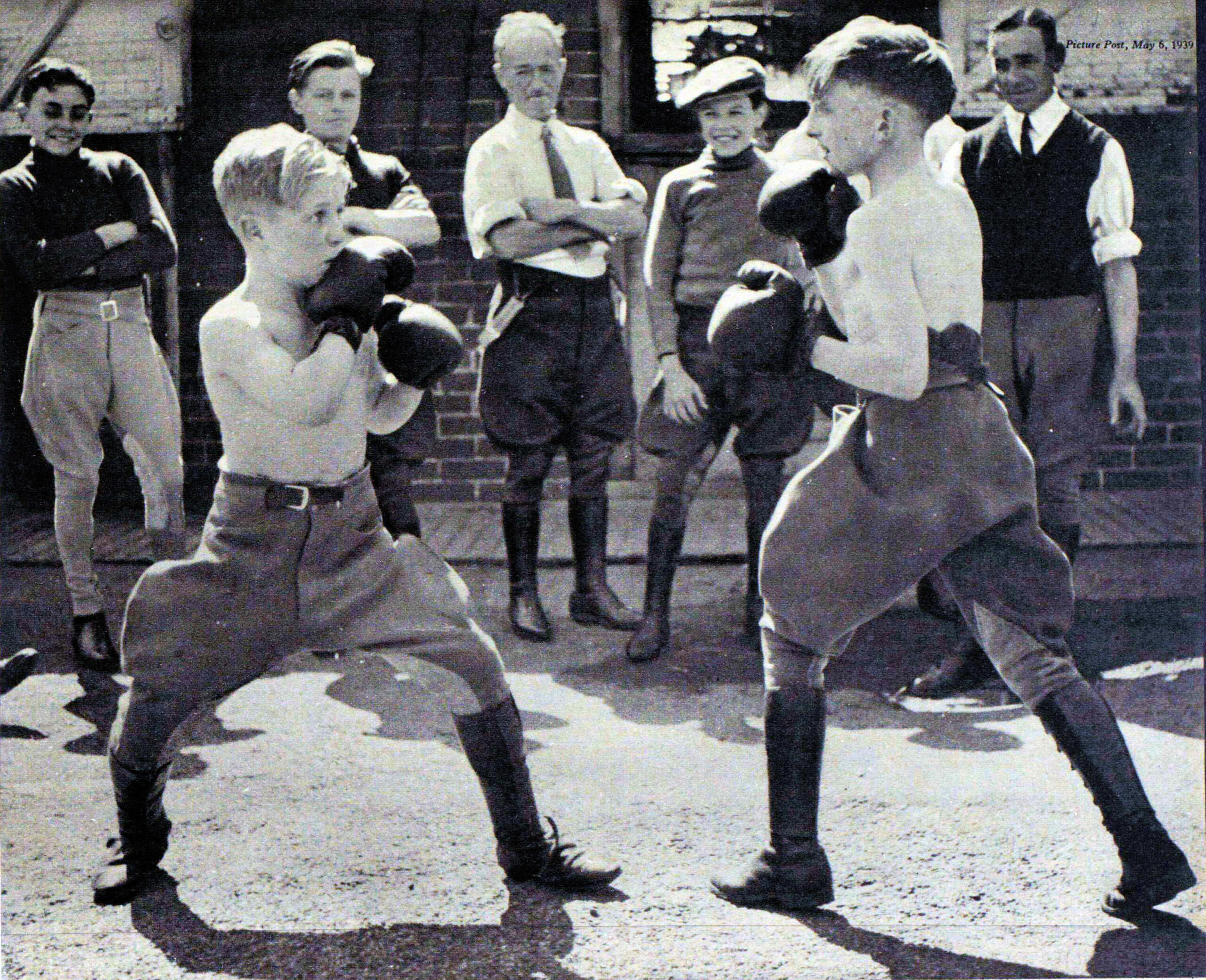 He Learns to Defend Himself
Most mornings before breakfast the boys spar together in the
yard. Horse-riding and boxing go together. There’s a
champion in every stable, and once a year the champions meet,
to box for the benefit of St. Dunstan’s
Apprentices are taught a different style of riding nowadays to the one taught during the latter part of last century. The present style can be directly traced to Ted Sloan, the Rieffs, Johnny and Lester, Skeets Martin, and Danny Maher, famous old-time jockeys who introduced the crouch or “monkey seat.” It is not pretty but it is effective, and it is here to stay.
Dieting methods, too, have changed and are less painful. Stories of fasts lasting forty-eight hours or more are no longer common. In the old days it was not unusual for a jockey to walk twenty miles at a breakneck pace, muffled up to the ears in thick clothing with nothing more to satisfy his thirst than a little gin and water or a cup of weak tea. Fred Archer used very severe methods to reduce. He was about five foot ten in height, and in the winter he would weigh between ten and eleven stone. In the season he would bring his weight down to eight stone ten. His efforts to ride in the Cambridgeshire at eight stone six pounds are said to have been indirectly responsible for his committing suicide.
Nowadays most jockeys weigh about eight stone. Their perpetual difficulty is to keep their weight down to the minimum, and to remain fit at the same time. Gordon Richards rides at seven stone eight pounds, and to keep down to this he has to discipline himself year in, year out.
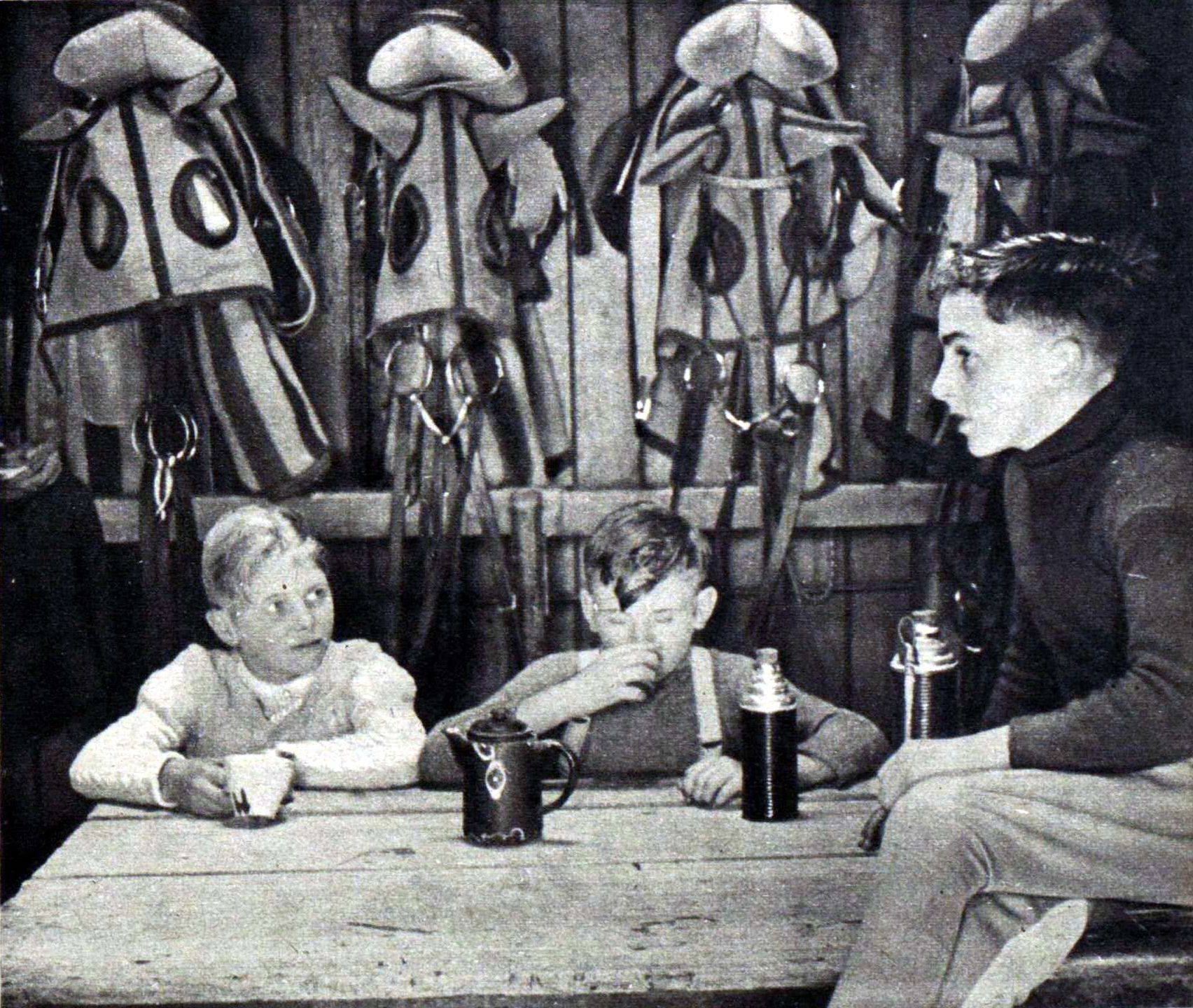 A Cup of Cocoa after the Early Gallops
There’s plenty to talk about in a training stable, and it’s always the same thing – the
horses and how they are getting on. Notice with what military care and neatness every-
thing in the stable has to be arranged.
Many jockeys keep themselves two stone lighter than they would naturally be if they belonged to some other profession. In the long run, this tells on the health of all of them. Carslake, for instance, if he is to ride at eight stone seven pounds, must only drink a cup of tea and eat a slice of toast throughout the whole day’s work. If he stopped “wasting” for three months, and ate three ordinary meals a day, he would be up to ten stone. A small cup of tea and a glass of sherry can add more than a pound in weight to a jockey who is wasting.
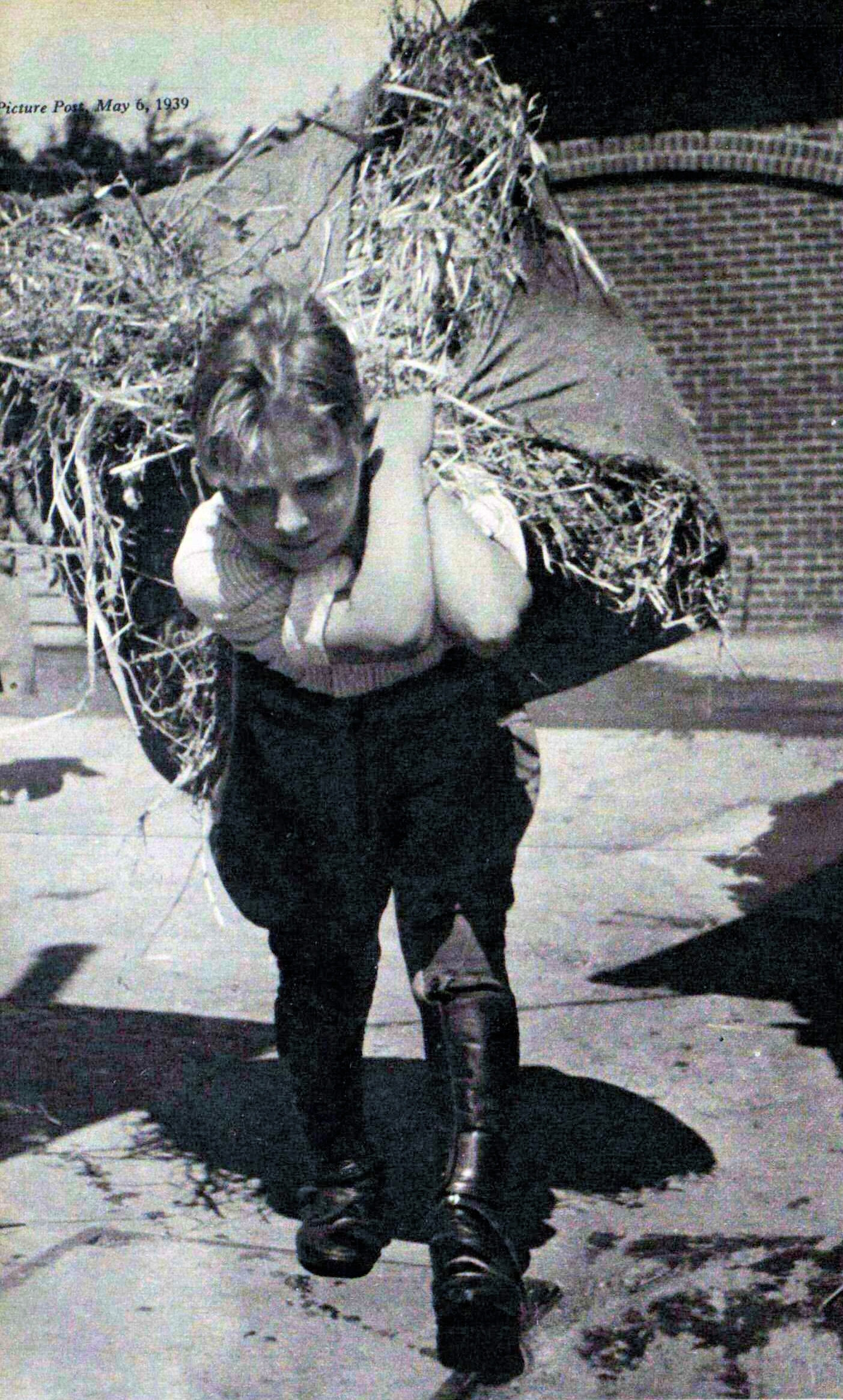 His First Day at Work: Carrying Straw
Horses need a lot of straw. After the stables have been cleaned out,
Billy brings a fresh load to strew in the stalls. This is only one of several
loads he will carry during the day.
“Wasting” is still arduous enough, but luckily science has made it no longer necessary for a jockey to live on a diet of warm castor oil, dry toast, with an occasional glass of champagne and Turkish bath sat every possible moment.
 He fetches Water From the Tank
Water, Bucketfuls of Water. Tubs of Water. Water to use in brushing
out the stable. Water to sluice down the yard. Gallons and gallons
of water – and Billy’s job to carry it.
The opportunities and rewards for the apprentice who succeeds are many. One of the richest, as well as one of the greatest, jockeys was Fred Archer. While he was racing he earned big money, and, though he lost a great deal of it, he managed to leave £100,000 at his death. In a career of seventeen years as a jockey, he won every race of importance, except the Cambridgeshire and the Ascot Gold Cup. He won two out of every five races he rode in, made 246 winners in one season, and made more than 2,770 winners in all. Before he shot himself at the age of twenty-nine, in a fit of melancholia produced by wasting, he had ridden the winners of five Derbys and two St. Legers. He won the Cesarewitch when he was only fifteen years of age.
Archer had a genius for judging risks and an uncanny understanding of horses. He was a very popular character with the racing nobility. Once, when the old Duchess of Montrose asked him why he did not come in sooner in a race, he replied: “I should like to have come in sooner, Madam; but, had I done so, I should have had to come without the horse.”
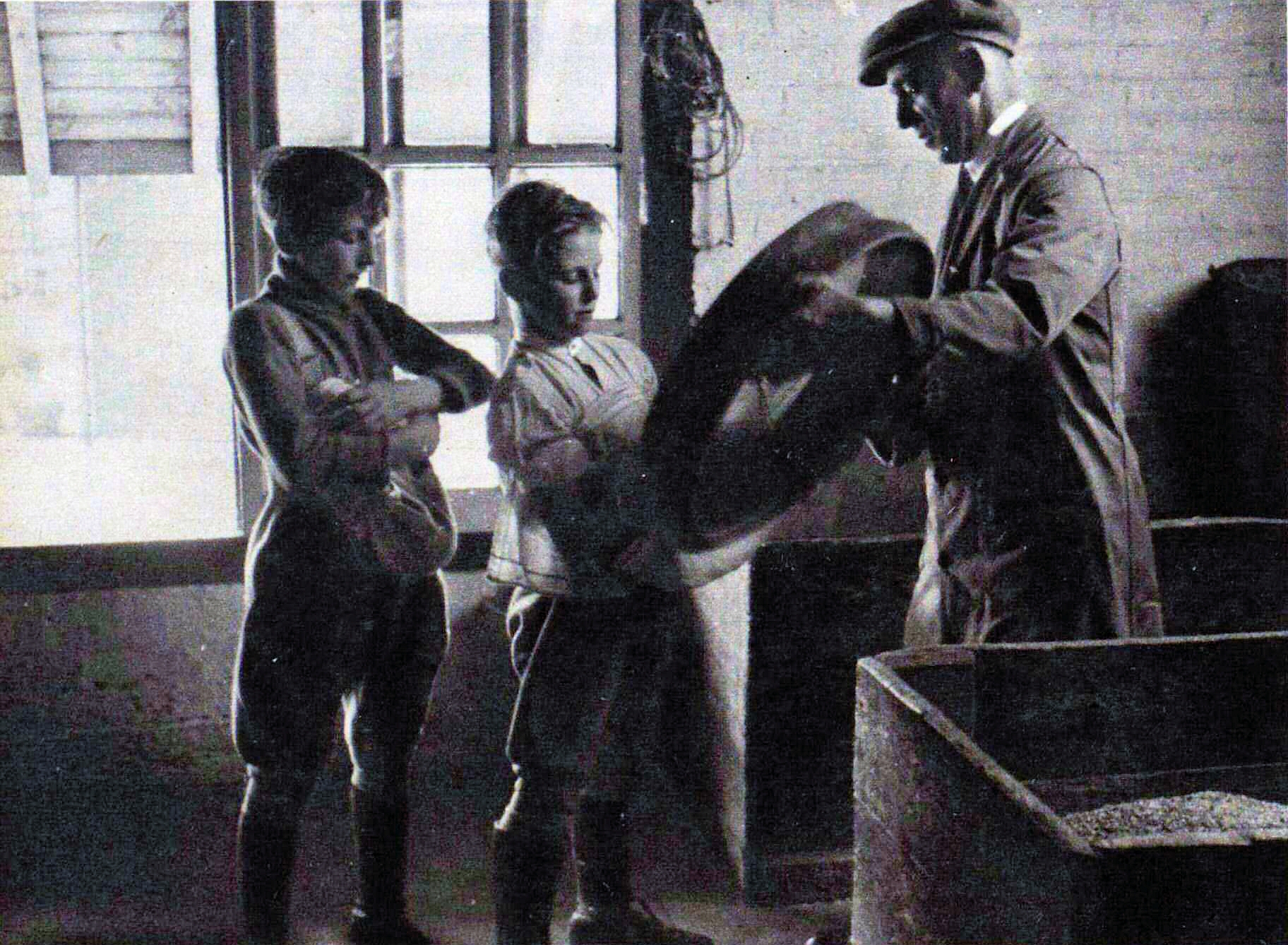 He Collects a Horse’s Feed From the Head Lad
An exact measure of corn i taken out for each of the horses, from the big bin which
is under the sole charge of the Head Lad. It is poured into the boy’s “rubber,” which
looks like a big tea-cloth.
Archer’s nickname was the “Tinman,” because he always went for the “tin.” His ghost is stated to be seen on certain nights galloping over Newmarket Heath. He was a gloomy looking person, an expression produced perhaps by his years of short rations. It was said of him that the gloom of his countenance would have lifted if he only could have discovered the secret of riding two winners at once.
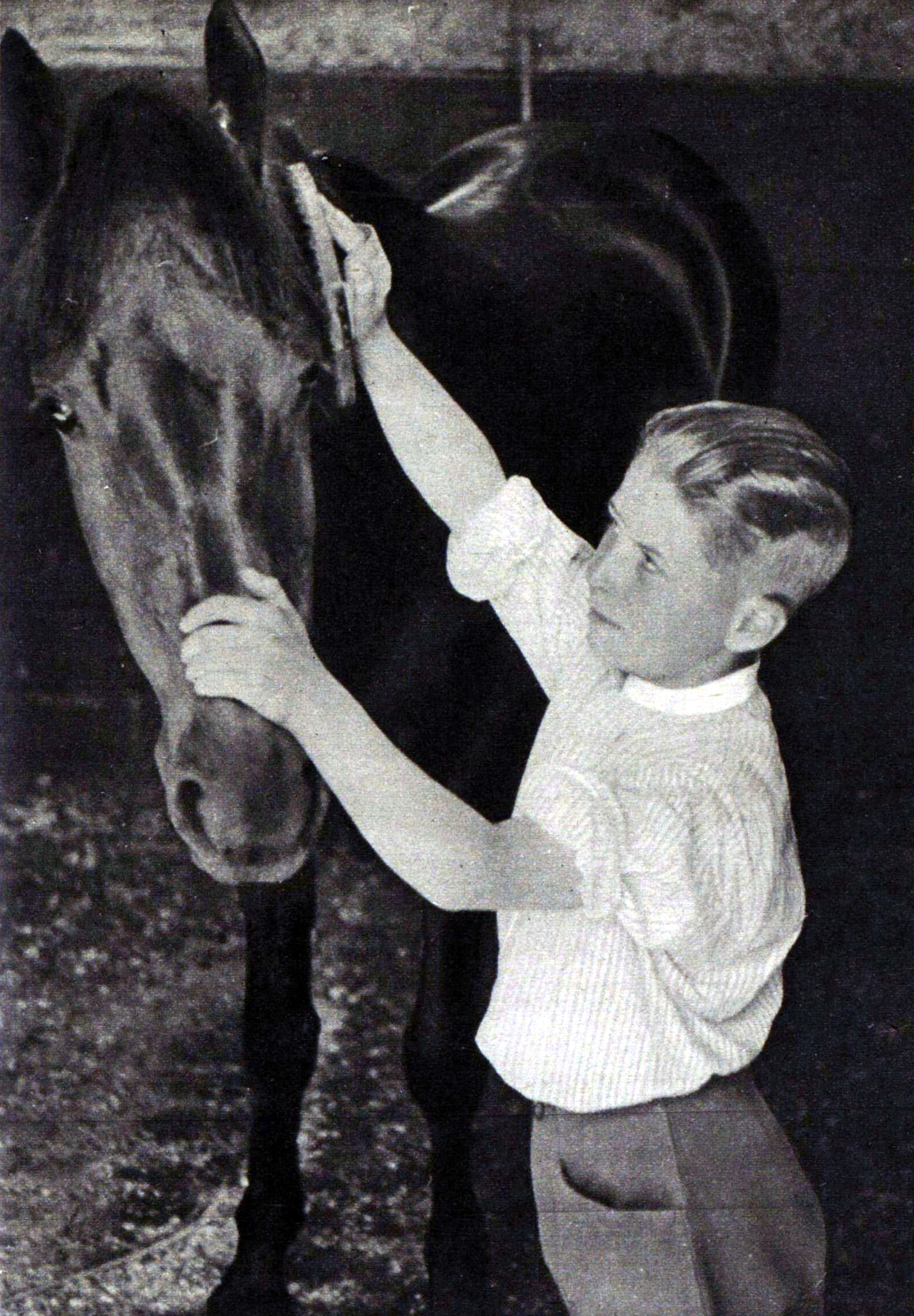 He grooms a Quiet Hack
It takes months of training and a real natural aptitude to become
a good groom. Stanley Wootton gives the beginners a quiet hack
to practice on. Boy and horse are soon on good terms
Perhaps the most famous family of jockeys was the Chifney family. Samuel Chifney was famous before the St. Leger and Derby were ever heard of as classic races. In 1773 he was the best jockey of his day. In 1790 Sam received a retaining fee of 200 guineas a year to ride for the Prince of Wales. The next year there was a scandal when the Prince of Wales’ horse, the favourite for a race at Newmarket, came in last in that race and next day won at 6 to 1. Old Samuel Chifney’s sons, Sam and William, also became famous jockeys. Sam trained the horses; Will rode them. They made huge sums of money, lived in luxury, and became the virtual kings of Newmarket, until they had a run of losses and gave up racing altogether.
 “Now, Where’s That Horse to Saddle?”
Carrying a saddle half as big as himself, Billy comes out to saddle
up. Each lad, when trained, is responsible for the grooming and
comfort of two horses
Every apprentice has an ambition to be a Chifney, or an Archer, or a Richards. But those who fail even to make competent jockeys may be glad to take a job as a stable lad, where the rewards are few, the work just as arduous.
The ordinary stable-lad receives £2 5s. a week. Last May, nearly 300 at Lambourn, Berkshire, decided this was not enough and asked for £2 10s., a Sunday off every other week, and for the custom in some stables to give the boy who attends a winner £5 to be made general. When the trainers refused to grant them their demands, they went on strike. Now, a year later, 140 are still on strike. The rest have found other employment — many in munitions — or have returned individually to their masters for £2 8s. a week and a guarantee that they will not be asked to leave the union.
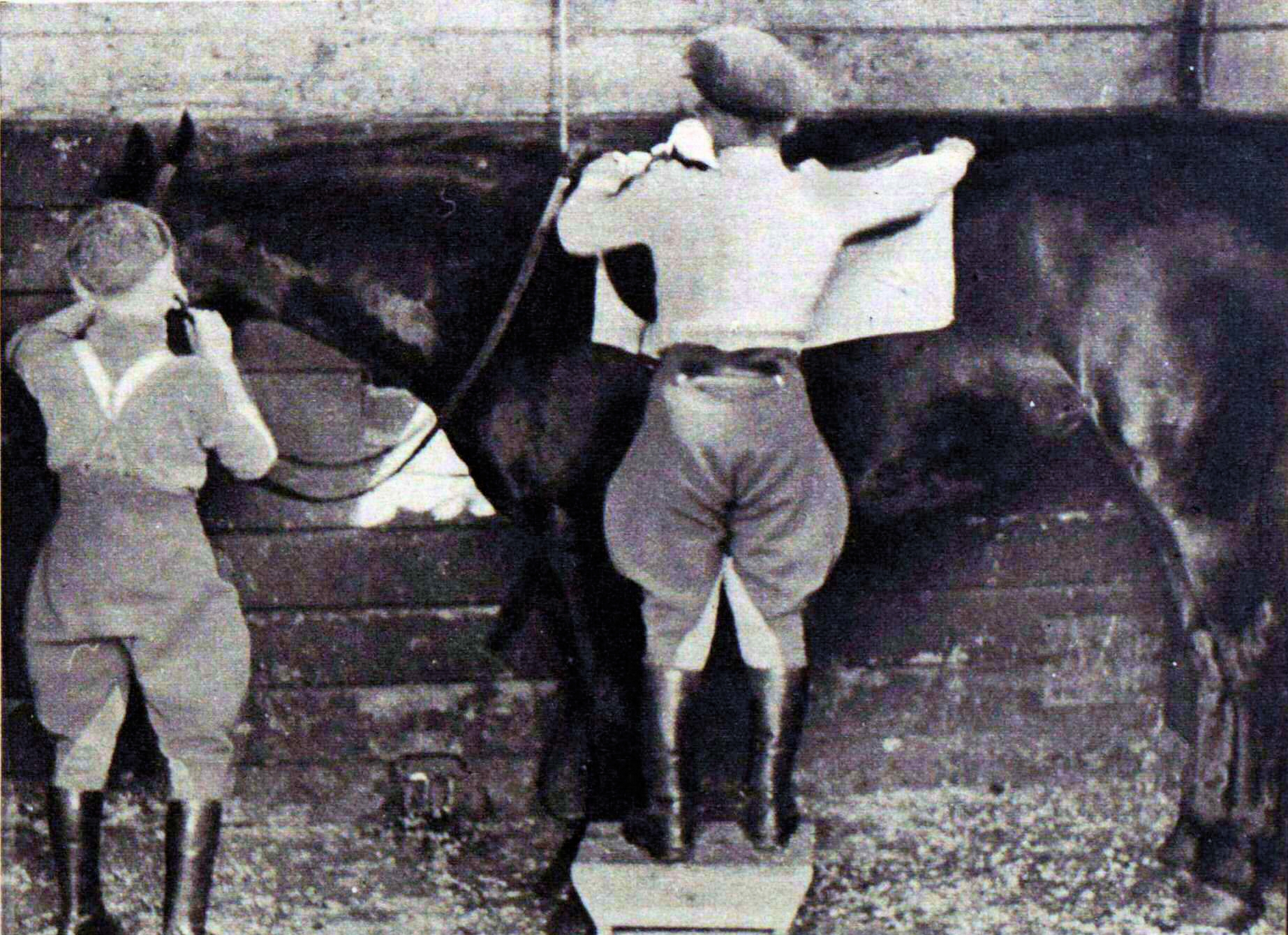 He Stands on a Stool to Saddle Up
An average horse stands about 15 hands 3 inches (a hand is 4 inches: height
is measured to top of shoulder), a good deal beyond Billy’s reach. With the help of
a stool he puts on the saddle-cloth, hoists the saddle into place above it.
The professions of stable boy and jockey are among the oldest in the country. Horse-racing existed in England long before the Norman conquest. During the Roman occupation legionnaires held races at Wetherby, near York. In 1377 , Richard II, when Prince of Wales, made a horse-racing match with the Earl of Arundel. Charles II was an accomplished gentleman jockey; he won a race at Newmarket in 1674. A famous woman jockey was Mrs. Thornton who, in 1805 at York, rode a match against Frank Buckle, the great professional jockey of the day, and beat him.
 The Big Moment: Billy Mounts for the First Time
The Head Lad isn’t going to help him, and it’s no part of the horse’s job to get the rider mounted.
Billy struggles for a minute or two, but he manages to get there in the end.
In a few weeks mounting will have no ore terrors for him.
At the present time, the outstanding jockey is 35-year-old Gordon Richards. None of his family ever had anything to do with horse-racing—his father was a miner. Richards, working in an office, idolised Steve Donoghue. One day, years later, he found himself working under Donoghue, when he applied for, and got, a job as a stable boy to Martin Hartigan.
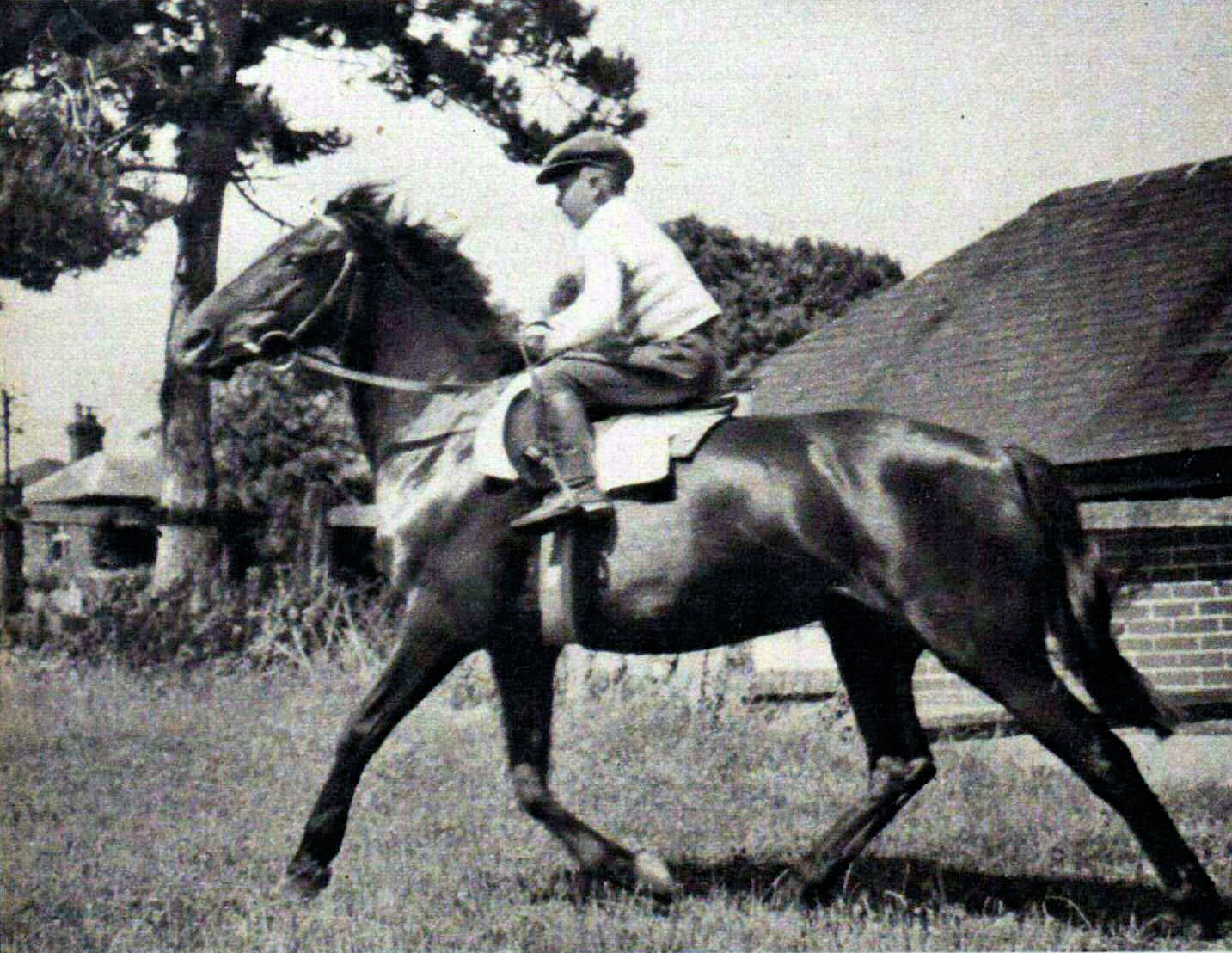 First Steps on the Road to Success
Billy’s getting on now. He’s able to keep his seat when his
horse walks and trots. He can manage an easy gallop. He thinks he
can manage anything …
He had his first mount in 1920. Up to now, Richards has been twelve times champion jockey. Fred Archer rode 2,748 winners in seventeen years; Richards, in seventeen years, rode 2,225 winners. So the competition goes on. Perhaps, among jockeys riding now, there is one, who in a few years time, will be another Richards. Somewhere, certainly, among the apprentices, is the Fred Archer or Gordon Richards of 1950.
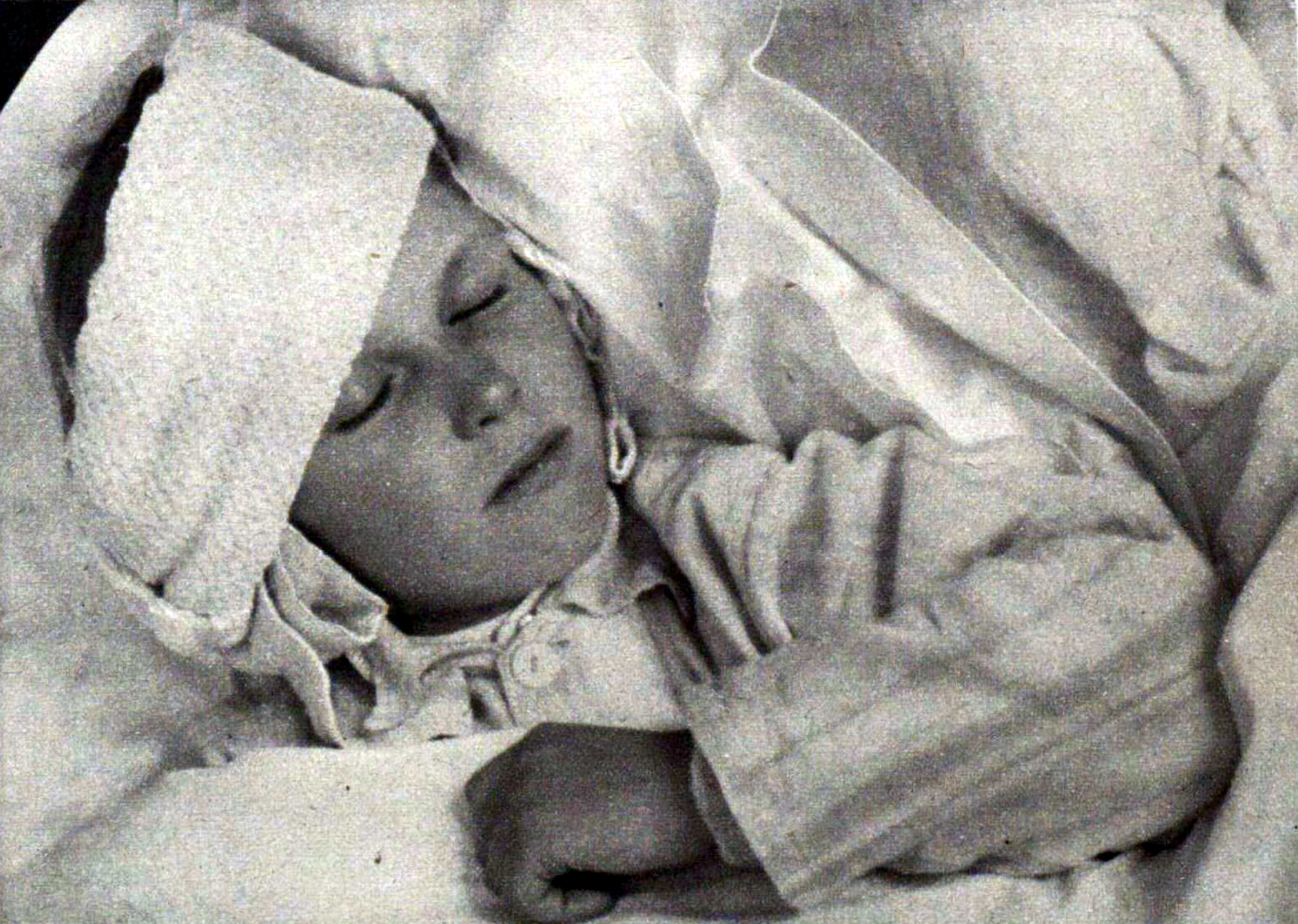 … and One Missed Step
Billy is not quite such a good horseman as he thought he was.
However, there’s no real harm done. When he wakes up to-morrow
he’ll be ready to ride again.
Mention is made above of the 1938-39 strike by Stable Lads at Lambourn. You may be interested in our article on the Epsom Stable Lads’ Strike in 1919