
The horse that caused a riot
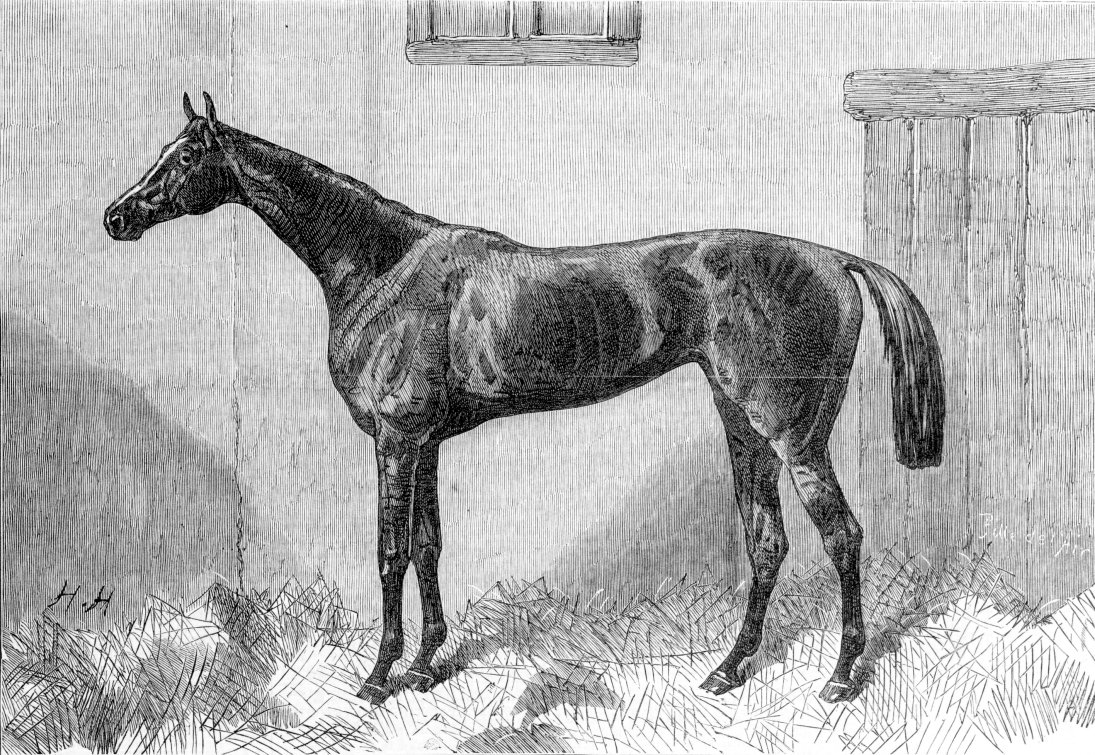 Fille de l’Air. The horse that won the 1864 Oaks.
Illustrated London News, 4 June 1864.
Much to the great annoyance of the English punters, a French horse Fille de l’Air beat the heavily backed English favourite to win the Epsom Oaks in 1864.
At the time, English racegoers held French horses and trainers in very low regard. Added to which, the previous performance of Fille de l’Air while on English soil had not been great. (For example, although the horse was the favourite for the Two Thousand Guineas at Newmarket, she did not win a place!) But it did much better on home soil, winning the French equivalent of The Oaks.
So, when it won the 1864 Oaks at Epsom, it is not surprising that numerous rumours of race fixing were soon circulating amongst the crowd. One widely believed rumour was that an older and more experienced substitute horse was run in her place. Feeling quickly got out of control and a mini-riot ensued near the winning post.
The rumour was untrue. The race officials took the unusual step of demanding to check the horse’s mouth to count the number of teeth. Nevertheless, ill feelings on both sides persisted and the following drawing appeared in Le Monde illustré.
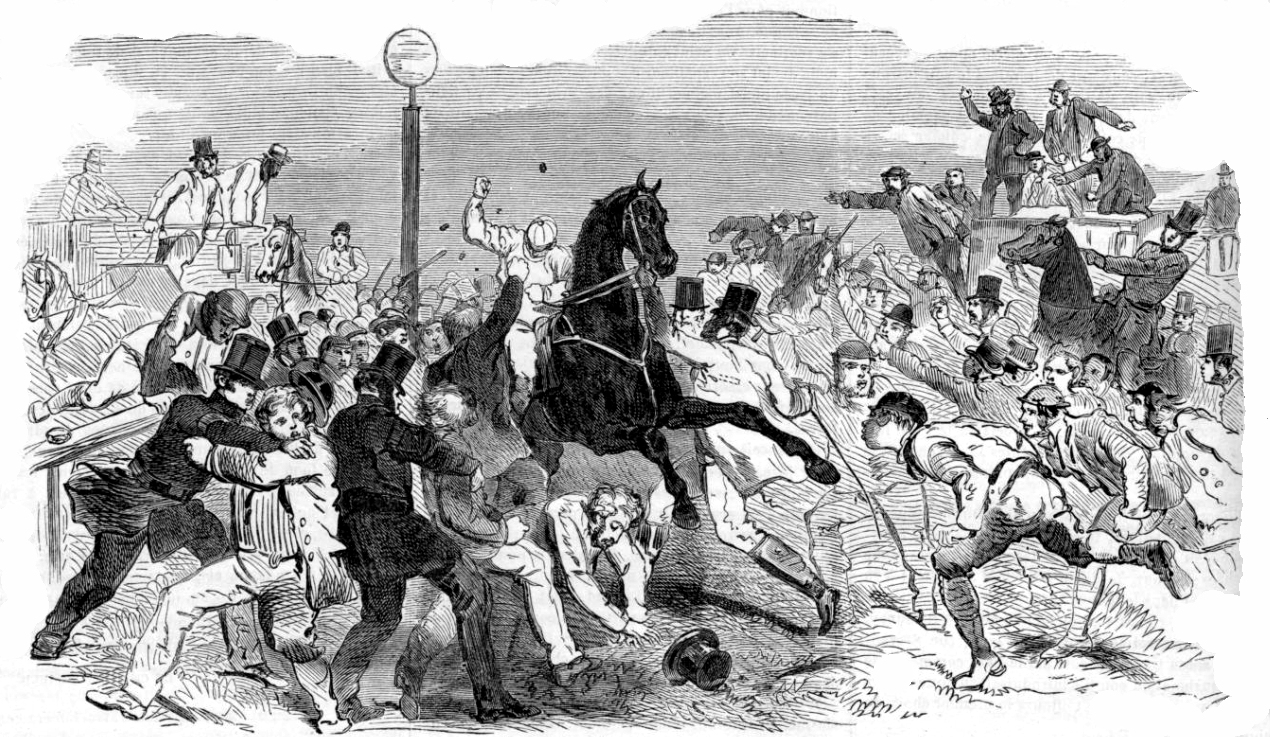 Episode de la course d’Epsom.
(Loosely, “Incident at the Epsom Races”.)
Source: Le Monde illustré, June 1864,
The Times of 28 May 1864 reported:
… There was a demonstration, not of a complimentary character, when Fille de l’Air’s number was hoisted. Great groaning and noises of all sorts greeted the announcement of the telegraph, and a very hostile-looking crowd pressed on horse and jockey as they returned to scale. Jennings, as if anticipating something of the sort, had taken care to provide a few extra policemen. At all events, horse and rider reached the ring in safety, where, however, they were not received with more favour, and some very strong opinions, which we will not repeat, were uttered. …
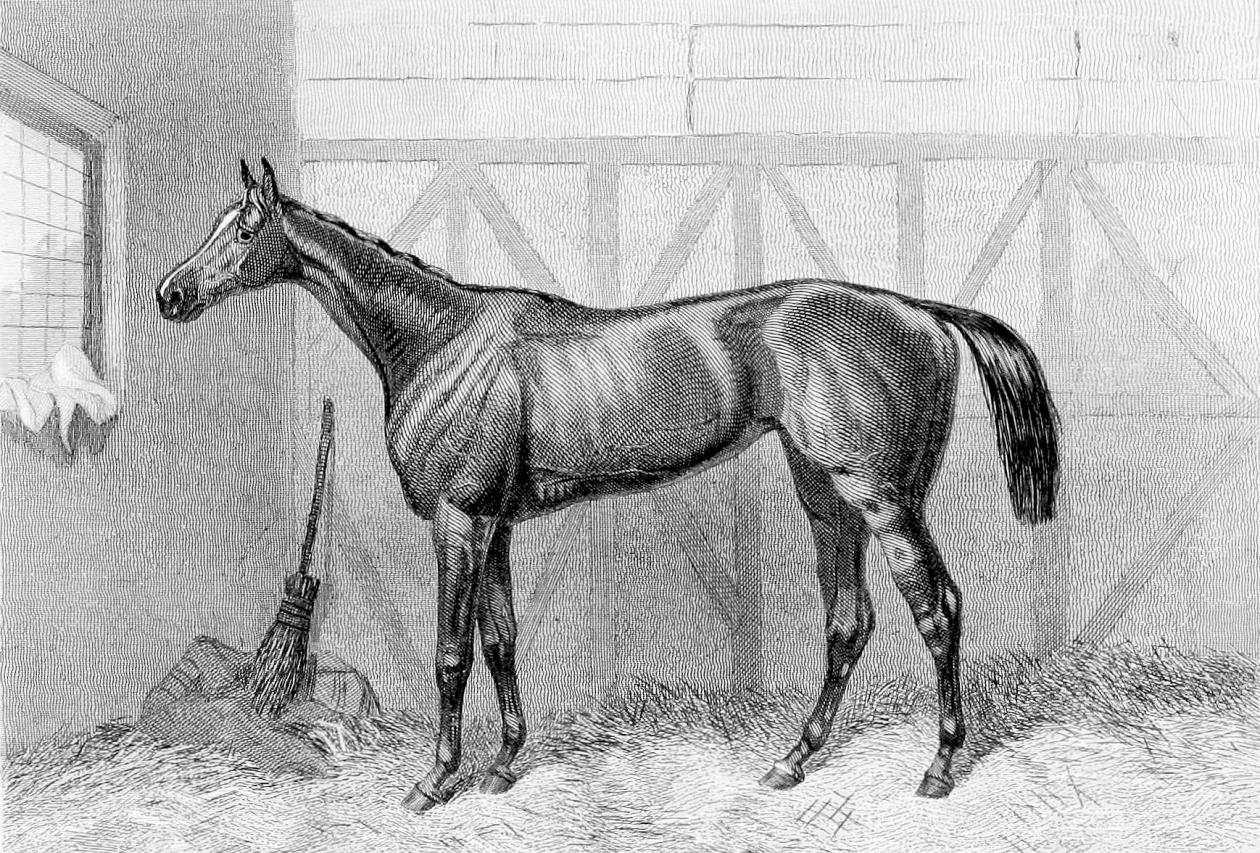 Another drawing of Fille de l’Air, winner of The Oaks, 1864.
Source not known.
(But note the similarities between the two drawings.)