
EXCURSION TO EWELL AND EPSOM.
SATURDAY, APRIL 10th, 1920
REPORT BY H. DEWEY, F.G.S. Director of the Excursion.
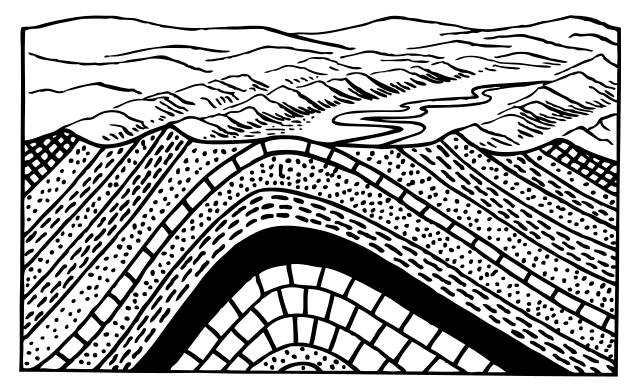
THE party, numbering about 50, assembled at Ewell Station, where they were met by the members of the Wimbledon Natural History Society. The springs in Ewell village were visited and the Director made some remarks upon their origin and the effect of them upon the water-level in the Chalk. Similar springs issue at the base of the Tertiary Beds at Leatherhead, Ashtead, Cheam, Carshalton, Wallington and Wadden, and formerly also at Croydon, but eastwards of Croydon they do not occur. Their restricted range seems to depend upon the presence of an anticlinal fold which diverts the normal outcrop due to the synclinal fold of the London Basin. The fluctuations of the water-levels in the Chalk of this anticlinal area are small, amounting on an average for normal years to only four feet, whereas over the area lying to the east of Croydon they attain as much as twenty feet. During wet seasons the range of fluctuation is much greater, reaching 70 feet on the cast, and 16 feet to the west of Croydon. The quantity of water emitted by the springs has been gauged by several observers, and its ratio to the water estimated to enter the chalk of the drainage area is as 1 to 6, or 16 per cent. It is this incessant leakage that permanently lowers the local water-levels. These springs determined the sites of the early settlements which have now become large residential suburbs.
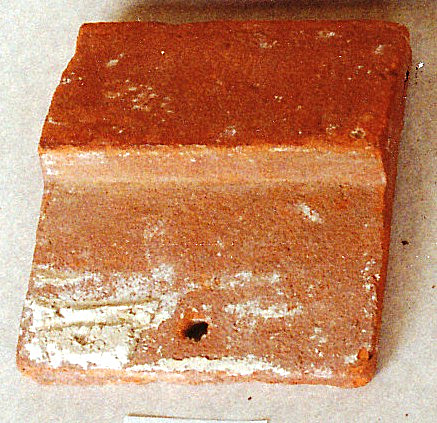
The Nonsuch Potteries were next visited, a halt being made en route to notice some houses built of the “brick-tiles,” formerly made to avoid payment of the tax on bricks. In the large claypits adjoining the Potteries the whole of the Reading Beds are exposed. In the pit next to the London road, the upper beds, consisting of the variegated clays with subordinate seams of sand, are worked for pipes, tiles and red bricks. At their base is a seam of highly refractory sand, which has been used continuously since the time of Henry VIII. Of this sand Leland states that “Crompton, of London, hath a close by Codington in Southerey, where the King buildith. In this close is a vaine of fine yerth, to make moldes for goldesmiths and casters of metale, that a loade of it is sold for a croune of gold. Like yerth to this is not found in all Englande.” This seam of fire-earth appears to be the only refractory earth in the south of England. It now supplies material for the manufacture of the N.N. refractory wares, which are employed at many London gasworks. The great Tudor palace of Nonsuch, near Ewell, (now demolished), was in part built of bricks made at the Ewell Kilns. The high value of good casting and moulding sands for goldsmiths’ work in the later Middle Ages is noted in the Autobiography of Benvenuto Cellini, so that there can be but little doubt that such sands were sought for with diligence, and it says a good deal for the powers of observation of the ‘geologists’ of that time that they discovered this thin bed of sand, and one would like to know what they thought of the sharks’ teeth which occur so commonly in the pits.
Other pits lying to the south of the kilns expose the lower beds, which consist mainly of glauconitic quartzose sand and loams and thin seams of clay and pebbles. In these beds the teeth of sharks occur, and many specimens were collected by the members. Some flattened shells of gasteropods, probably Melania inquinata, were also found. It was remarked that these marine beds do not occur in the Hampshire Basin, where the mottled plastic clays rest directly on the Chalk. At Nonsuch a bed of Thanet Sand upwards of ten feet thick lies between the Chalk and the glauconitic sand.

The influence of these sands and loams upon the crops grown was next noticed. The blending of the chalk with these materials supplies the soil loved by the plants from which some essential oils are distilled, and the wide-spread fields of lavender, peppermint, camomile and sage are characteristic of the country between Epsom and Croydon. Thyme is also grown and was formerly used as an infusion in place of tea. Sir A. D. Hall* states that these English oils, both of peppermint and lavender, are very highly esteemed and command the best price in the markets, the yield per acre being about 12 to 30 lbs. of lavender oil, and 8 to 25 lbs. of peppermint oil. Further east the great orchard country of East Surrey and Kent is situated upon the Lower London Tertiaries; and ground, bush and tree fruit appear to be equally contented with their environment. These sands, however, supply an equally congenial habitat to numerous weeds, and the fruits, without the co-operation of man, would probably succumb to the greater fertility of their rivals. The streams flowing from the Chalk are especially good for the growth of water-cress and it is even said that calcareous waters are essential for its growth.
The site of the old grounds, gardens and avenues of Nonsuch Palace was viewed. Pepys states that Nonsuch had a ‘ delicate park’ where was ‘ a great walk of an elm and a walnut set one after another in order.’ Part of the ancient demesne is still called “Cherry Orchard” although it is commonly stated that the cherry was introduced by refugee Flemings in the middle of the sixteenth century. This must refer to a noted variety as cases are on record of cherry orchards in England at that period. The chalk is essential for the proper growth of the cherry, and the light warm soils supplied by the Thanet Sands and Reading Beds allow of its quick rooting. Near Ewell the Tertiary Beds form a low escarpment, but this disappears at Sutton where the junction between th e Chalk and the Tertiary Beds is featureless. At Epsom the party was met by Mr. Coe, the Manager of the Brick Works , who had very kindly caused the “Oyster Bed” to be exposed by his workmen, and many fine specimens of Ostrea bellouacina were collected.
The sections in the pit display the whole of the Reading Beds, and show a slight non-sequence between the glauconitic sands and the mottled clays. Overlying the Tertiary beds are masses of Pleistocene clays which strongly resemble the Reading Beds and could hardly be separated from them were it not for an occasional seam of coarse gravel about twelve feet from the surface. Tusks of the Mammoth have been found in this clay.
Tea was taken at Messrs. Riddington‘s tea rooms and the party returned to town by the 7.4 train.
Mr. Epps acted as Excursion Secretary.
Proceedings of the Geologists’ Association
Volume 31, Issue 3, 1920, Pages 156-158
* Rept. Agriculture and Soils of Kent, Surrey and Sussex,” Board of Agriculture and Fisheries,1911, P.38.
REFERENCES.
Special Geological Survey Map of the London District , Sheet 3. One inch New Series Ordnance Maps. Small Series, Sheets 270 and 286 Large Series, Sheet 115.
WHITAKER, W. – ” The Geology of the London Basin .” (Mem. Geol, Surv., vol. iv., part 1.), 1872, p. 108.
WHITAKER, W. – “The Geology of London, ” vol. 1. (Mem. Geol, Surv.),. 1889, pp. 127- 128.
WOODWARD, H . B.- “The Geology of the London District ” (Mem. Geol, Surv., 1909, P: 23 .