
WATERHOUSE & SON
Percy Leslie Waterhouse and Ellis Kirkham Waterhouse
Introduction
In due course Ellis became Sir Ellis Kirkham Waterhouse, celebrated art historian, but, to appreciate this talented duo, we need to go all the way back to a Yorkshire – born Wesleyan minister called John Waterhouse, who emigrated to Australia with his family and ended up in Hobart, Tasmania. One of John’s children, born in England, was Rowland Skipsey Waterhouse, latterly a draper, and Percy Leslie, more usually known as Leslie, was his son.

Source: Museums Victoria © / CC BY (Licensed as Attribution 4.0 International)
Leslie
Leslie, born in Hobart on 15 January 1864, was awarded a Tasmanian Government scholarship to attend Cambridge University, where he was admitted to Christ’s College in 1883 and graduated with a B.A. in 1886 (M.A. 1890). He was destined for architecture and became articled to the firm of George & Peto in London: this firm was apparently nicknamed the ‘Eton of architects’, its alumni including Edwin Lutyens. ‘George’ was (Sir) Ernest George, who had been married to Mary Allan Burn, a daughter of Robert Burn, the Epsom ironmonger. Leslie completed his articles in 1892.
On 25 September 1902 at Cainscross in Gloucestershire he married Eleanor Margetson, a resident of Stroud, and they made their home at ‘Lodgemore’ in Lynwood Avenue, Epsom, where Ellis was born on 16 February 1905. Very sadly, Eleanor died that same day and was buried in Epsom Cemetery on 20 February (Grave A501). In May Leslie took his new son to Stroud for christening. Then, on 31 December 1907 at Cuddesdon, Oxfordshire, he married Nora Mallam, daughter of a local surgeon. Nora was a cousin of Eleanor’s and had been a bridesmaid at her wedding to Leslie.
 Nora Mallam
Image courtesy of Deborah Mullins © 2020
At some point between about 1907 and 1911, the Waterhouses moved into a new home, designed by Leslie, at 4 College Avenue. During their tenure it was called ‘Shotover’ (but, subsequently, ‘Lowesden’ and ‘The Garden House’). At first I imagined it might have been named for the 1882 Derby winner, but I think it probably had to do with Shotover House/Park in Oxfordshire. Nora came from Oxford and Shotover House was of significant architectural interest.
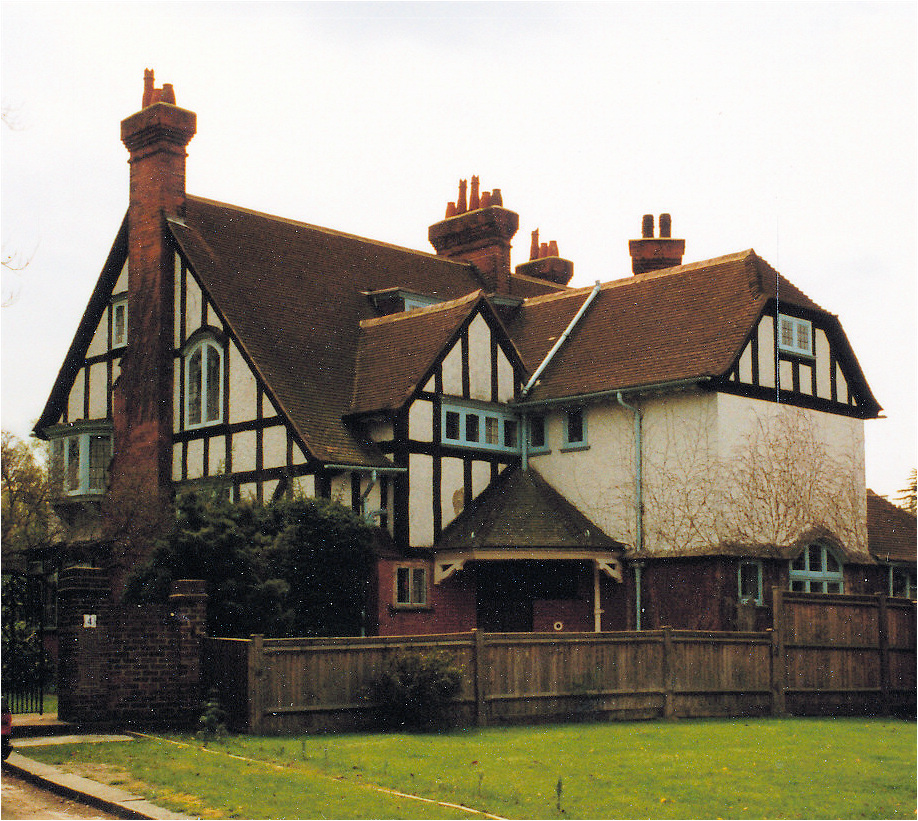
4 College Avenue
Image courtesy of Bourne Hall Museum
Architecturally speaking, Leslie was in partnership with Alfred Henry Hart, who had been an assistant to Sir Ernest George. Their main claim to joint fame may well be Willing House at 356-364 Grays Inn Road, Kings Cross, which, when completed in 1909, was the headquarters of an advertising company, but is now a Travelodge: however, the exterior is still a fine example of what is known as ‘French Baroque’.
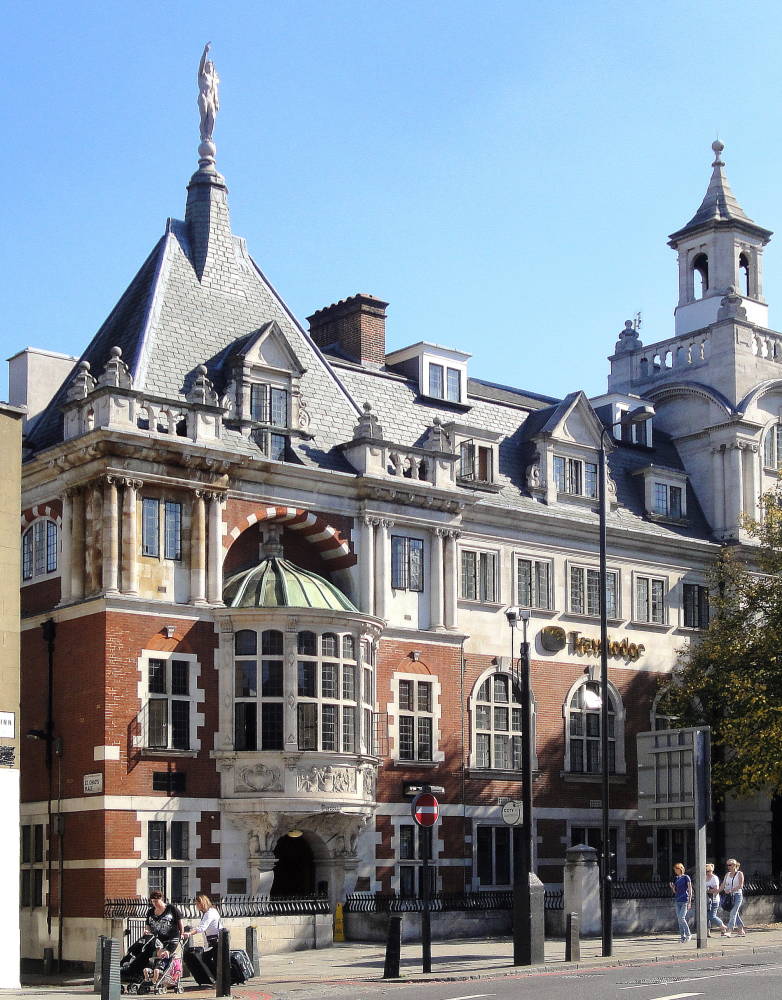
 Willing House
Photographs by Robert Freidus
Source victorianweb.org
Leslie wrote two well-received books, which were ‘The Story of Architecture’ (1899) and ‘The Story of the Art of Building’ (1901).
Leslie and Nora had no children together, but they raised Ellis, who had never known his natural mother. Leslie died on 20 October 1932. Nora remained in the house until she moved to a new abode called ‘Overshot’ in Badger Lane, Hinksey Hill, Oxford; she died on 28 June 1969. We shall come to ‘Overshot’ in the section on Ellis.
Ellis

Sir Ellis Kirkham Waterhouse
by Annan
bromide print on card mount, 1949
NPG x24429 © National Portrait Gallery, London (CC Licence)
It’s hard to know what to include and what to leave out concerning Ellis, as he did so many things, but there is a wealth of detailed information about him on the internet, so we’ll concentrate on some main highlights.
It’s fair to say that he almost always knew he would do something in the arts and, on leaving Marlborough College, he won a scholarship in classics to New College, Oxford, where in 1925 he achieved a first class in classical honour moderations (known as ‘Mods’ and in this case forming the first part of a literae humaniores – ‘Greats’ degree). He graduated with a second class degree in 1927 and became a Commonwealth Fund Fellow at Princeton, one of America’s oldest universities. He was tutored by the eminent Frank Jewett Mather Jnr and studied El Greco in particular, travelling to Spain for the purpose.
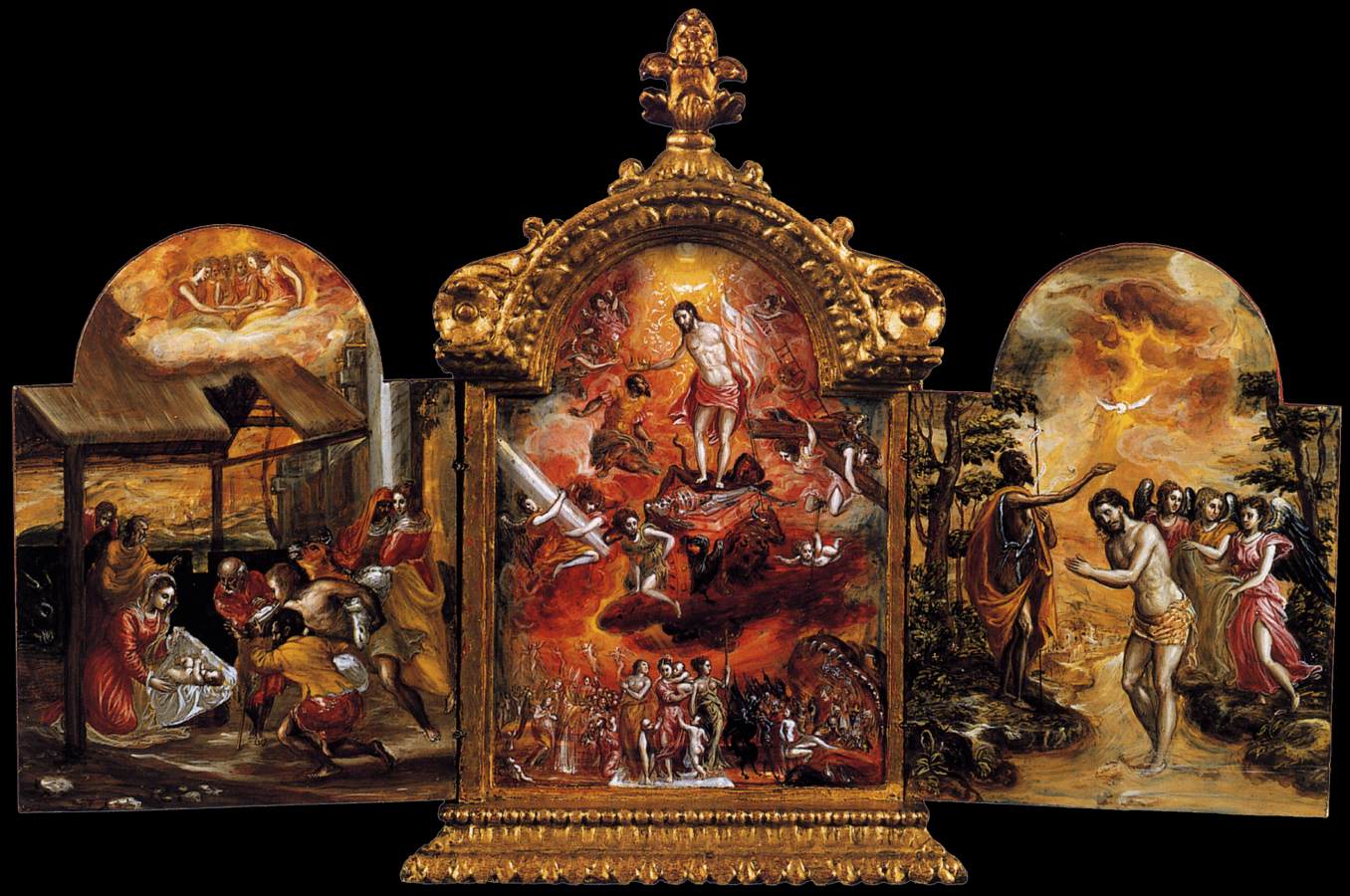
The Modena Triptych (c. 1568) by El Greco
Image source: Wikimedia Commons
Ellis also became an expert in Italian Baroque painting, especially in Rome, and one of the masters of the 17th century was Pietro da Cortona.

Battle of Alexander v. Darius (mid-17th century) by Pietro da Cortana
Image source: Wikimedia Commons
So, we get a general sense of where Ellis’s tastes and interests lay at the time, but what was he going to do after Princeton and Spain? The answer is that he became an assistant at the National Gallery in London, where he must have learned a great deal but found the approach of his colleagues ‘amateurish’. He stuck it out from 1929 to 1933 and then left to take up a position as librarian at the British School in Rome, which allowed him to continue his researches into Italian Baroque painting. (Interestingly, the British School was designed by the previously mentioned Edwin Lutyens.) He remained there until 1936 and subsequently worked on British art. He was then awarded a research fellowship at Magdalen College, Oxford, but was stranded in Greece by the outbreak of World War 2. Remaining there wasn’t a long-term option, since it was occupied by the Germans in the summer of 1941. He soon found himself in Cairo, commissioned into the Intelligence Corps, and was stationed there almost to the end of hostilities.
In 1945 Ellis, now a Major, became a ‘Monuments Man’, properly a member of the Monuments, Fine Arts, and Archives program: this was an American initiative, but relevant experts drawn from all the Allied powers were involved. Briefly, the idea was twofold: to prevent damage to structures of cultural significance by either the Nazis or the Allies and to prevent the looting of works of art. Another strand of the latter objective was to find artworks that had already been looted and, hopefully, restore them to their rightful owners. (There was a 2014 film on this subject, but it took great liberties with the true story and, as usual, the Americans did it all on their own.)
Ellis did his ‘Monuments Man’ work in Germany and the Netherlands and it was he who raised suspicions about the authenticity of ‘The Supper at Emmaus’, allegedly painted by Vermeer. It’s not surprising that any institution or collector would cut off their right arm for a hitherto unknown Vermeer, since there are only thirty or so which are acknowledged as genuine. Ellis was right to be suspicious – ‘The Supper at Emmaus’ was painted in 1937 by the art forger Han van Meegeren.
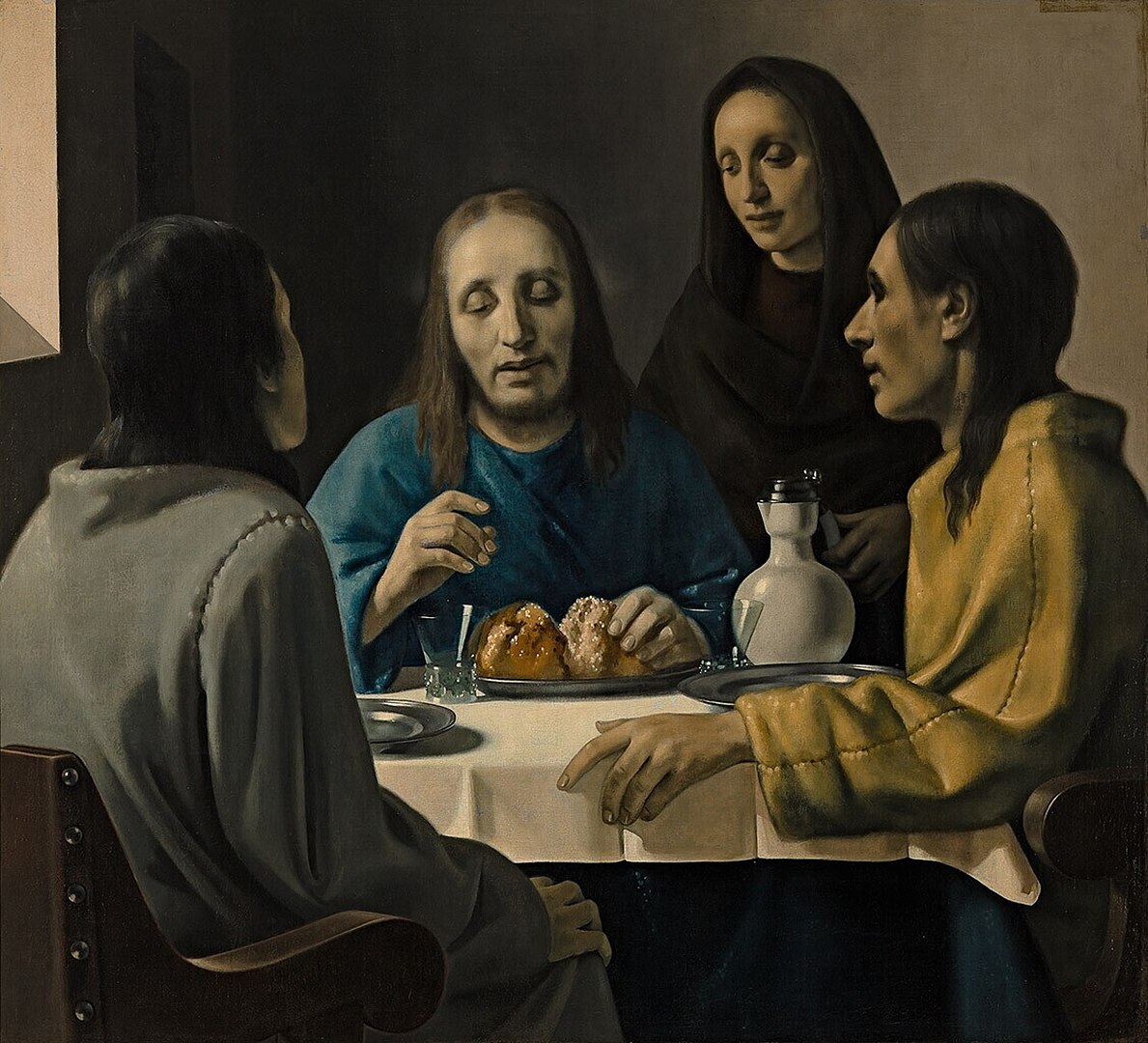
The Supper at Emmaus (1937) by Han van Meegeren (not Vermeer)
Image source: Wikipedia
Moving on swiftly, there were two big events in 1949. Ellis was appointed Director of the National Galleries of Scotland in Edinburgh and he married archaeologist Helen Thomas. (I shall tell you more about Helen a little later.) During Ellis’s Directorship in Scotland, two of the important acquisitions were El Greco’s ‘Salvator Mundi’ and the iconic painting below that you may well have seen on a Christmas card. – Sir Henry Raeburn’s ‘The Reverend Robert Walker skating on Duddingston Loch’.
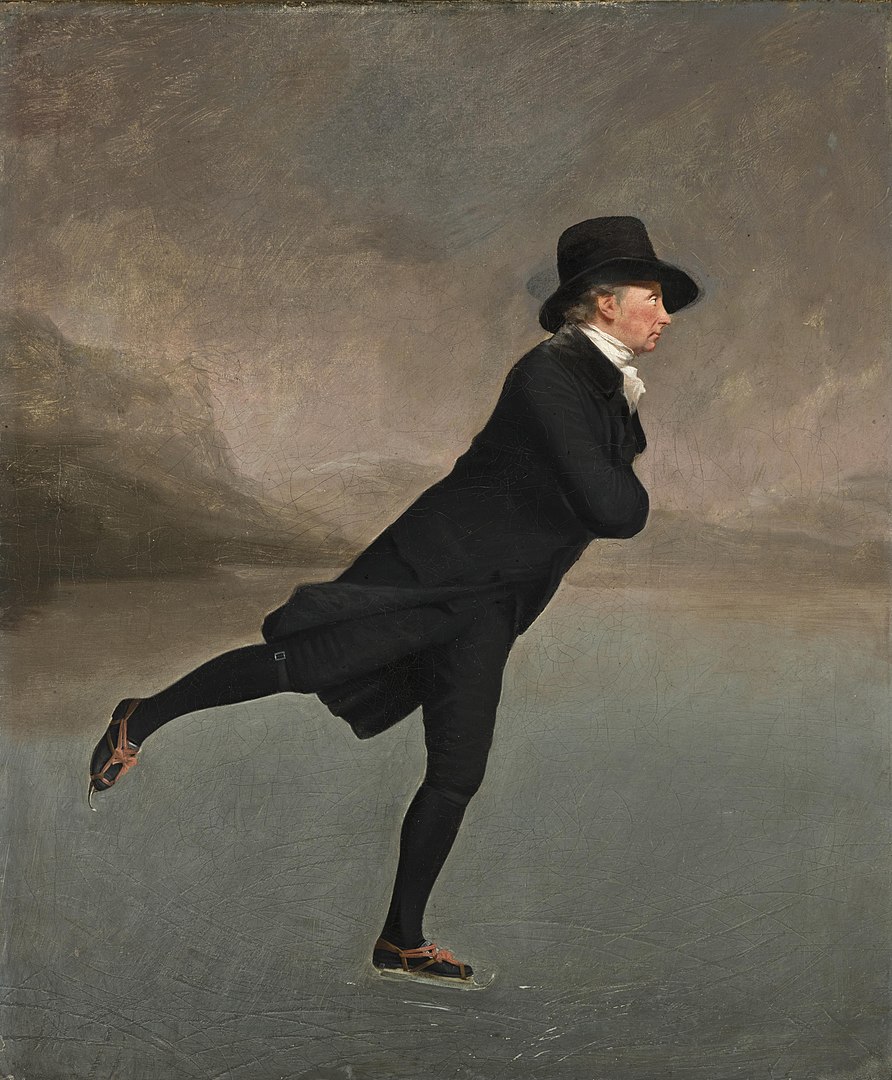
The Reverend Robert Walker skating on Duddingston Loch (1790s) by Sir Henry Raeburn
Image source: Wikipedia
In 1952 Ellis was appointed to the Barber Chair of Fine Art at the University of Birmingham and was also Director of the Barber Institute of Fine Arts. In 1970 he went to the United States and undertook prestigious posts there until his retirement in 1975. He was awarded a knighthood in that same year.
It would be remiss of me not to mention two books he wrote about important British artists, lest it comes over that he concentrated almost exclusively on European painters of a particular period/genre. The first one was Sir Joshua Reynolds and the second was Thomas Gainsborough, both of whom were mainly portraitists.
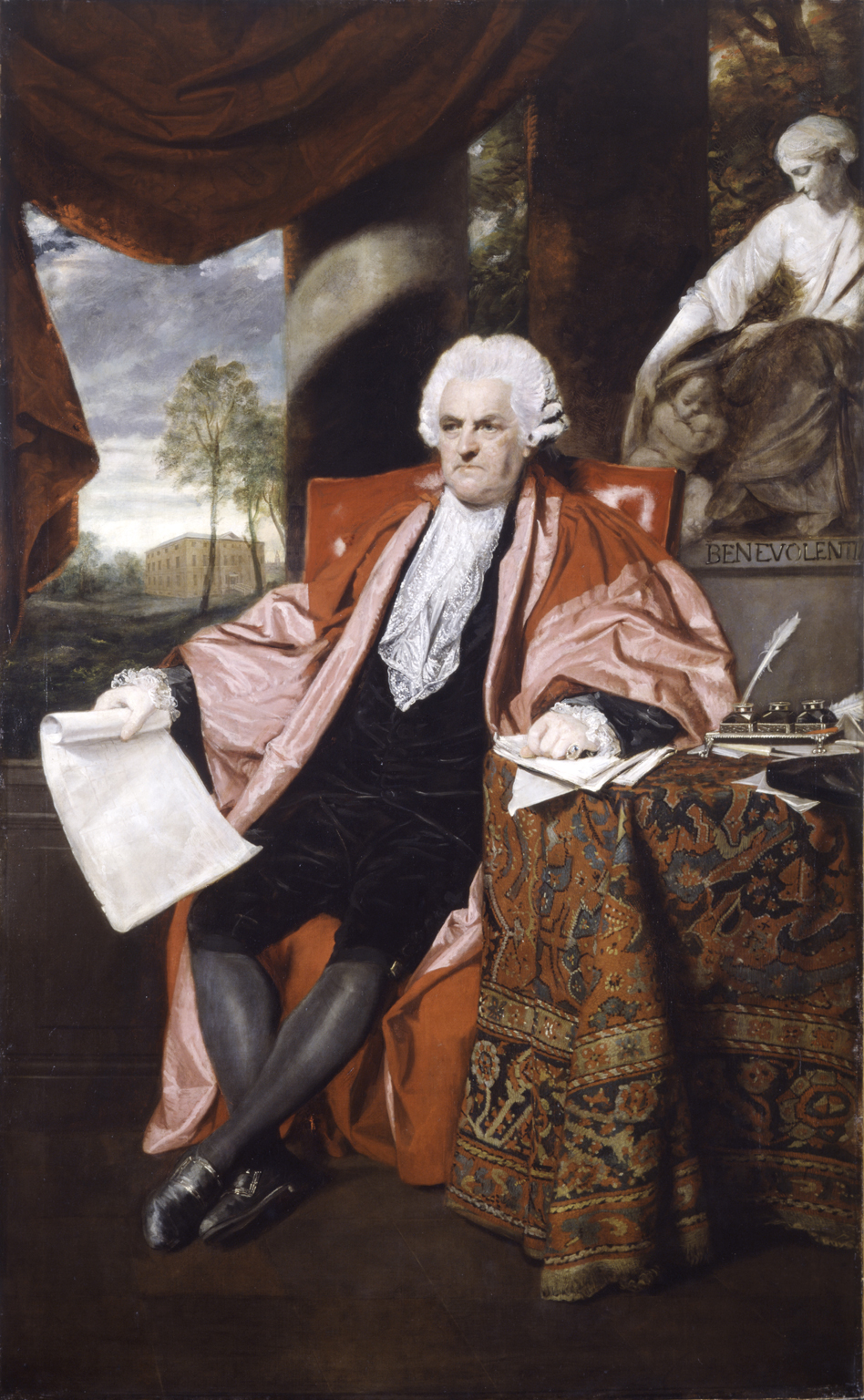
Portrait of John Ash (1788) by Joshua Reynolds
Image source: Wikimedia Commons
Gainsborough’s most well-known painting to the general public is probably ‘The Blue Boy’, so we’ll have something completely different.
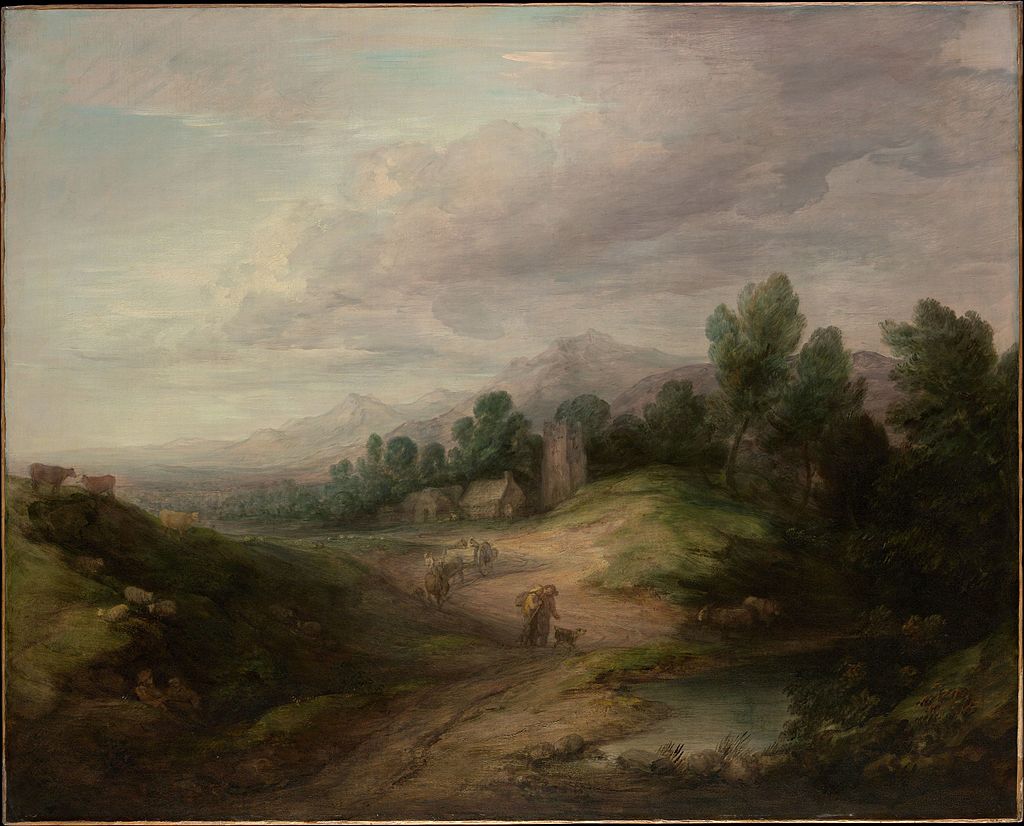
Wooded Upland Landscape (c.1783) by Thomas Gainsborough
Image source: Wikimedia Commons
Having to all intents and purposes completed Ellis’s career, we should now go back to ‘Overshot’, the house in Badger Lane, Oxford, since it provides a kind of symmetry with his father’s profession, but is the antithesis of ‘Shotover’ in Epsom, which may have been the point of reversing the name. Ellis commissioned the architects Godfrey Samuel and Valentine Harding to build it and Nora moved there after the sale of the Epsom property. Samuel and Harding were modernists and ‘Overshot’ is now Grade II listed. Unfortunately, I can’t show you a photo, but there are plenty on property websites and there is a description on the Historic England site.
One interesting fact that crops up concerning the house is that Ellis was a friend of Anthony Blunt: they were at Marlborough College together, remained friends thereafter and Blunt was entertained at ‘Overshot’. This is perfectly understandable as they both became eminent art historians and Blunt was ‘Surveyor of the King’s/Queen’s Pictures’ for nearly three decades. We all know now that art was only his ‘day job’ and that he was a spy for the Soviets.
Ellis died at ‘Overshot’ from a heart attack on 7 September 1985.
Helen
Helen was a considerable scholar in her own right: she was born on 5 March 1913 at Chaldon, near Caterham. Her father was the eminent philologist, Frederick William Thomas, and her mother was Eleanor Grace Hammond, daughter of Walter John Hammond, an interesting engineer. Helen graduated from Cambridge University before World War 2 with a first in classics and a starred first in archaeology. She worked at the political intelligence centre in Cairo in the early part of the war and then came home to take up posts in the War Office and Foreign Office. After the war she became librarian of the British School in Athens, followed by lectureships at Manchester and Birmingham Universities. She was a highly regarded specialist in ancient Greek civilisations.
Helen died on 9 September 1999. The Waterhouses had two daughters.
Linda Jackson 2020
Main sources on Ellis:
- Oxford Dictionary of National Biography
- The Monuments Men Foundation