
DERWENT LEES (1884-1931)
Artist
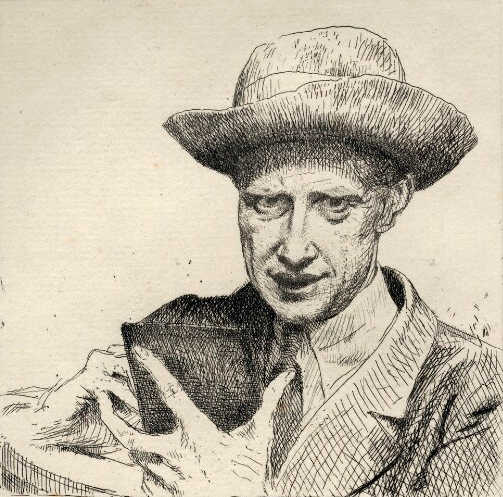
Derwent Lees by Derwent Lees
etching, circa 1917. NPG D5046
Image Source © National Portrait Gallery, London (CC BY-NC-ND 3.0)
Sometimes a town may have a very talented resident and not even know it. Derwent Lees was one such person, by virtue of the fact that he was a psychiatric patient in Epsom. He died in West Park Mental Hospital in 1931, but seems to have been in other institutions (for example, workhouses and the asylum/mental hospital at Claybury in Essex) since about 1918. West Park did not open officially until 1924, but was taking patients from 1921.
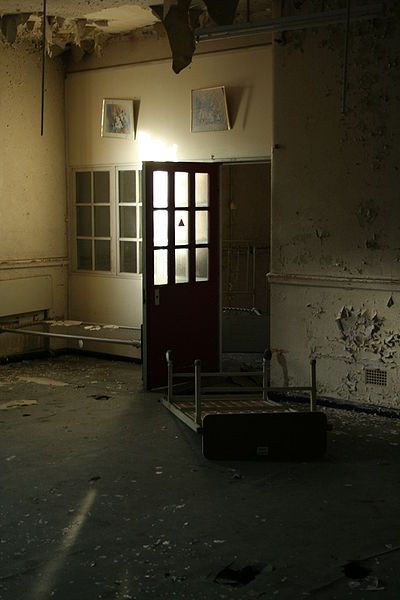 An abandoned bedroom at West Park Hospital.
Photo by Tuna-baron via Wikipedia
I doubt that you will have heard of him: I never had. Look at that bleak room in the picture above and then look at this.
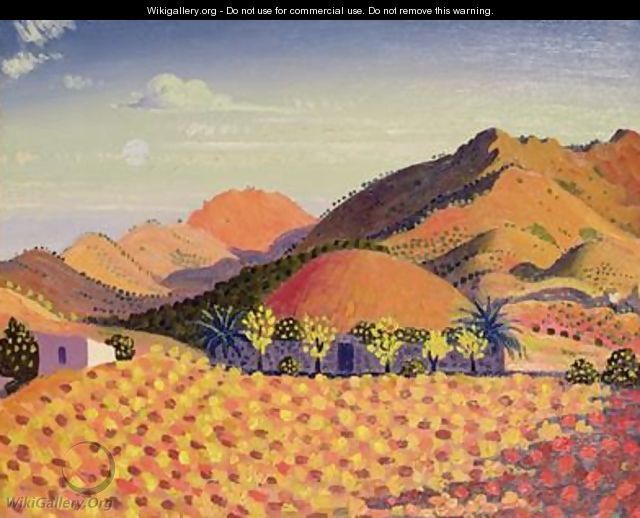 Spanish Landscape by Derwent Lees, 1912.
Image source: Wikigallery.org
It’s like night and day, isn’t it. So, what happened to this man, who painted pictures such as you see above? Several sources say that he painted nothing after being admitted to an asylum, but that is not true. For example, in 1919 he painted ‘The Drive to the Asylum’, but was effectively finished as an active artist by the time he was institutionalised for schizophrenia.
Derwent was born as Desmond Lees in Clarence, Tasmania (part of the Greater Hobart area) on 14 November 1884. His parents were English and his father was a bank manager. He called himself Derwent after the river on which Clarence stands. He had a riding accident in Australia, suffering a head injury and losing a foot; thereafter he wore a wooden prosthetic.
 The Derwent River from Mount Wellington, Tasmania.
Image source: Free Images Live
Derwent was educated at Melbourne Grammar School and then went to Paris, but in 1905 he enrolled at the Slade School of Fine Art, London WC, where he won many prizes; he studied particularly under Henry Tonks and Frederick Brown. Tonks was a surgeon, but also a fine artist and noted teacher, and had himself been Brown’s pupil (as was Aubrey Beardsley).
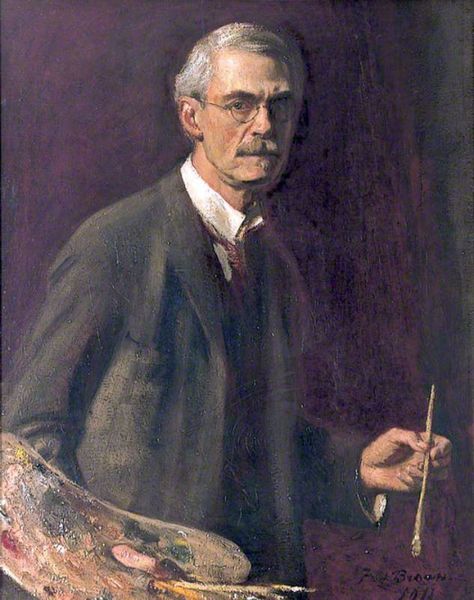
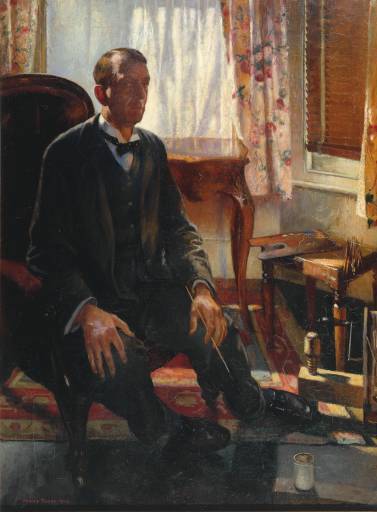
Left: Frederick Brown, self-portrait.
Right: Henry Tonks, self-portrait.
Image source: Wikimedia Commons
Derwent became close friends with a fellow student, the slightly younger Welshman James Dickson Innes, who was at one point a member of the Camden Town Group, as were Walter Sickert, Augustus John and Spencer Frederick Gore among others.
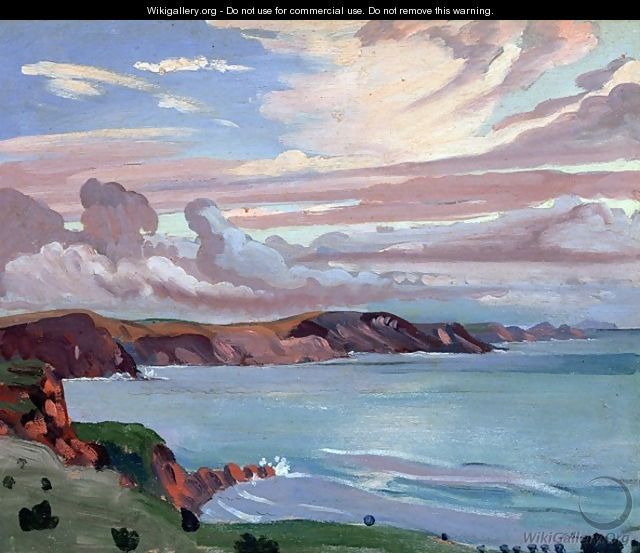 Pembroke Coast by James Dickson Innes.
Image source: wikigallery.org
Derwent and James took many painting trips abroad, particularly to Collioure on the Mediterranean.
 Near Collioure in the Pyrenees by Derwent Lees.
Image source: wikigallery.org
In Britain they stayed in Ffestiniog, North Wales from late 1910 until 1912 with Augustus John: they were known as the Arenig school of painters for that period, Arenig being a mountain in Snowdonia (Arenig Fawr).
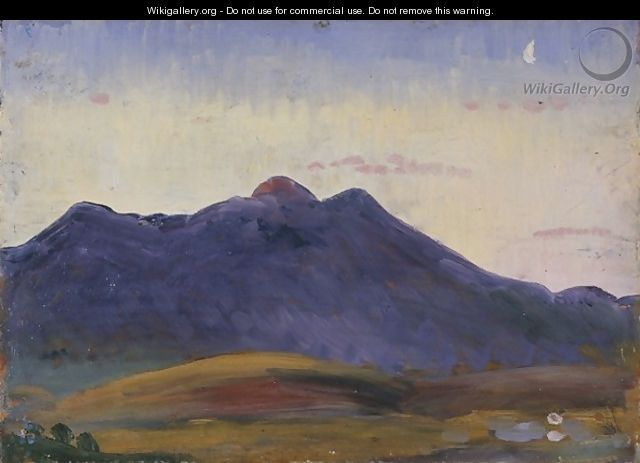 Arenig by James Dickson Innes.
Image source: wikigallery.org
The eccentric James was on a path to self-destruction: he was tubercular, mentally unstable (one of his friends described him as ‘mad as a hatter’), sometimes lived with gypsies and was having an affair with a married woman: he died of tuberculosis in 1914, aged just 27. There is a good account of his life here.
Derwent Lees taught at the Slade intermittently, from 1907 until 1918. He exhibited widely and at the seminal Armory Show of 1913 in New York: the importance of this exhibition was that it introduced Americans to the art movements that were happening in Europe, such as Fauvism and Cubism. He showed works often at Vanessa Bell’s Friday Club and belonged to the New English Art Club.
In 1913 Derwent married Edith Harriet Price (born 1890 Eastbourne), who by 1911 was earning a living as an artist’s model in London, at which time she was residing in Fulham with her widowed mother, Emma Price-Pierce. Her father, John, had been a house painter. Edith was a popular model and she had known the Arenig painters for some time, Augustus John having drawn her in the nude in 1910. He was surprised that she should marry Derwent.
Edith used the forename of Lyndra and was obviously one of Derwent’s favourite subjects. Here she is, darning Augustus John’s socks.
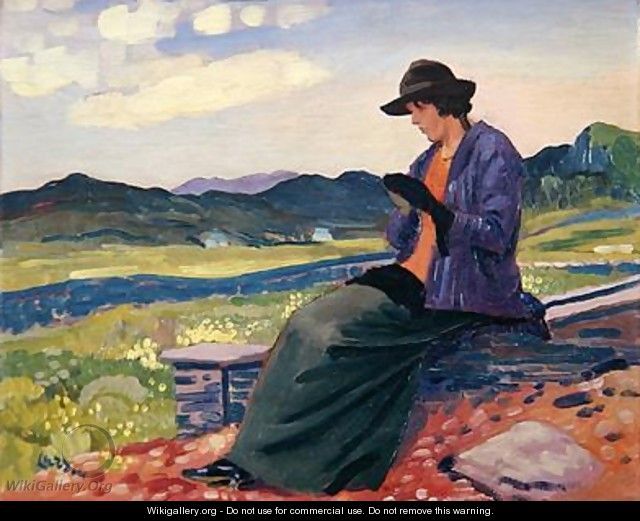 Lyndra in Wales by Derwent Lees.
Image source: wikigallery.org
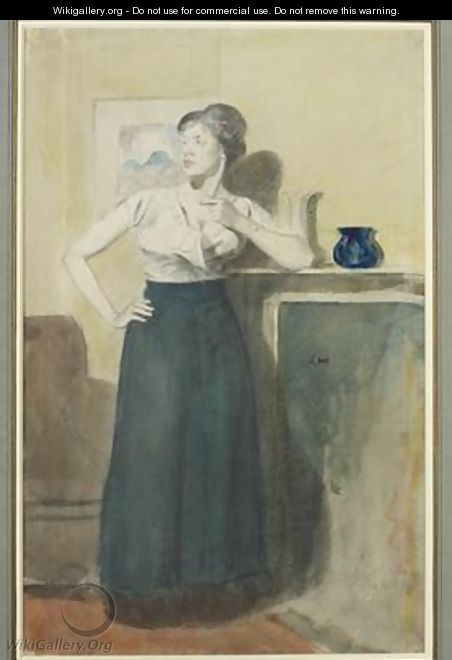 Portrait of Lyndra, the Artist’s Wife by Derwent Lees
Image source: wikigallery.org
In his biography of Augustus John, Michael Holroyd describes Derwent as a ‘copycat of genius’, claiming that James Dickson Innes said ‘I tired of seeing my own subjects so many times’.
It is said that Derwent’s mental disintegration began soon after his marriage and was hastened by the fact that, because of his artificial leg, he was unsuitable for service in the First World War; in 1918 he was placed in an asylum, never to emerge. He died in West Park Hospital on 24 March 1931. Lyndra apparently died in Croydon on 15 June 1984.
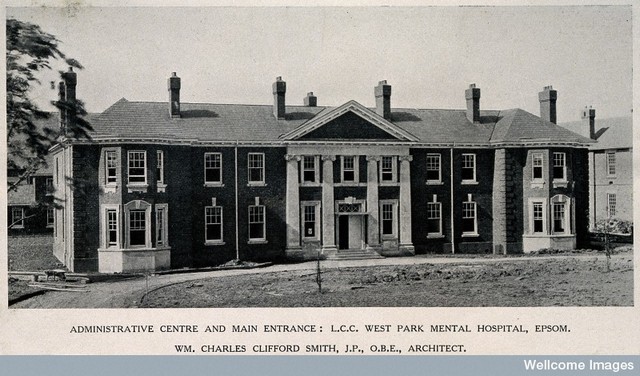 The hospital in 1926.
Image source: Wellcome Images
 Honiton and Hereford Ward after being gutted by fire in 2003
Photo by Tuna-baron via Wikipedia.
Linda Jackson
July 2013
Images updated July 2021